
Reklam




Ana SayfaHome › Hammadde & ÜrünRaw Materials & Products › Aroma
Flavours and fragrances are volatile compounds that give a product its smell and taste. Known as "flavour" in food and "fragrance" (or "essence") in perfumery, this product group is one of the most specialised areas of the chemical industry: the quantities used are measured in parts per million, yet they directly determine whether consumers accept a product.
Taste and smell are separate senses. Everything beyond the five basic tastes perceived on the tongue (sweet, salty, sour, bitter, umami) is actually smell; volatile compounds in the mouth reach the nose retronasally and are perceived as "flavour." For this reason, a flavour formulation consists mostly of volatile odour components rather than taste-imparting ingredients.
A flavour is rarely a single molecule. A natural strawberry flavour, for instance, contains hundreds of compounds; the formulator's task is to select the components that determine perception within this profile (character-impact compounds) and build a balanced composition.
The final step is generally formulation and carrier incorporation: the liquid flavour is either diluted in a solvent or converted into powder form through spray drying/encapsulation. Encapsulation is critical for preserving the flavour throughout shelf life and releasing it at the right moment in the product.
| Classification | Definition | Note |
|---|---|---|
| Natural flavour | Obtained from plant/animal sources through physical, enzymatic or microbiological means | Labelling rules vary by country |
| Nature-identical | Synthetic but molecularly identical to the natural equivalent | This category has been removed from EU regulation |
| Artificial flavour | A molecule not found in nature | Covered by an approved list |
| Essential oil | Obtained from plants by distillation | Used in both flavours and cosmetics |
| Oleoresin | Spice extract | Standardised flavour strength, microbiological safety |
| Process flavour | Produced through heat treatment | Meat, soup, snack applications |
| Encapsulated powder | Contained within a carrier matrix | Dry mixes and bakery applications |
In Turkey, the flavours and fragrances sector is well developed alongside a strong food and beverage industry. International flavour houses with local production and application laboratories operate alongside domestic flavour producers. The country's agricultural potential in essential oils and botanical extracts (rose, bay laurel, thyme, citrus) constitutes a separate export category.
Key issues on the sector's agenda include: demand for clean label products and how the "natural flavour" definition is reflected in regulation, fermentation-derived natural flavours, the compensatory role of flavour in sugar and salt reduction projects, and supply chain risks (climate impacts and yield fluctuations in agricultural sources such as vanilla and citrus). Related news items can be found below.
Since a flavour is not a "material" but a system, its data sheet contains perception, stability and compatibility parameters rather than mechanical values.
| Parameter | What it indicates |
|---|---|
| Dosage rate | Generally 0.01–0.5%; varies according to the product matrix |
| Perception threshold | The lowest concentration at which the compound can be detected (may be at ppb level) |
| Solubility / carrier | Water, propylene glycol, ethanol, vegetable oil or a powder matrix |
| Thermal stability | Resistance to pasteurisation, baking, extrusion |
| pH stability | A determining factor in acidic beverages |
| Volatility profile | Distribution of top, middle and base notes over time |
On the food side, a regulatory compliance file is added to these: approval status of the substances used, allergen declarations, and halal/kosher and non-GMO certificates. In practice, whether a flavour is "good" is determined not by laboratory analysis but by a trained sensory panel; instrumental analysis (GC-MS) serves as a tool supporting this judgment.
The difference lies not in the molecule but in the source and production method. Vanillin obtained from a natural source and synthetically produced vanillin are chemically identical. The "natural" designation indicates that the substance is obtained from a plant/animal source through physical, enzymatic or microbiological means, and is defined by labelling regulations.
The sense of smell is extremely sensitive; some compounds can be perceived at parts-per-billion levels. In addition, excessive dosage throws perception out of balance and causes the product to be perceived as "artificial." The goal of formulation is not maximum intensity but the correct profile.
Flavour compounds are volatile and prone to oxidation. Migration through packaging, heat, light and migration into the fat phase of the product alter the profile over time. Encapsulation, the use of antioxidants and barrier packaging are employed to slow this loss.
No. A flavour interacts with the matrix it is used in: fat content, pH, protein content and processing temperature all affect the perceived profile. For this reason, flavour selection is done on a product-by-product basis, and application trials are indispensable.
Food flavourings are regulated through lists of substances permitted for use and purity criteria; each substance has a defined identity and conditions of use. On the cosmetics side, allergen declaration and concentration limits are the main focus. For this reason, manufacturers prepare a compliance file alongside the formulation itself.



Rönesans Holding was included in Engineering News-Record's (ENR) "Top 250 International Contractors" 2026 list among th…

Indomie Instant Noodles, responding to consumers' evolving flavor expectations with a wide product range, offers its pr…

The Eastern Mediterranean Petrochemical Industrial Zone and Port (DAPEK), developed by Rönesans Holding in Ceyhan, Adan…

In food safety technologies, the "Retort" (sterilization) process represents the most demanding performance criteria fo…
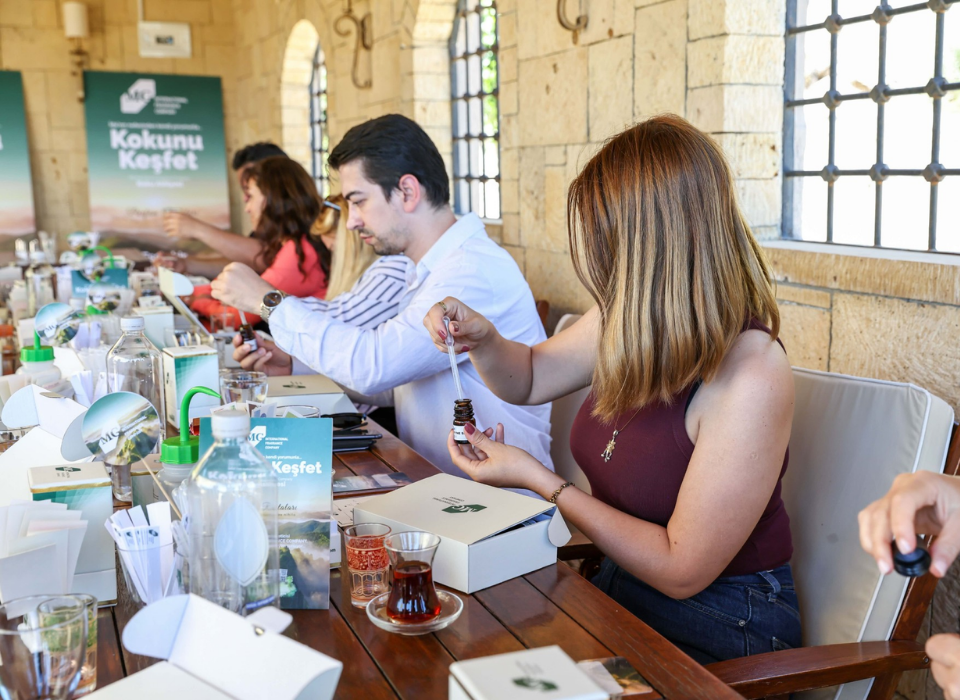
International fragrance producer MG International Fragrance Company has launched a pioneering project that documents na…

International fragrance manufacturer MG International Fragrance Company achieved a notable success in the results of th…

New research reveals that plants can sense the growth rates of their neighbours through aromatic cues known as volatile…

The 2026 General Assembly of the European Spice Association (ESA), held in Ghent, Belgium, brought together leading rep…

Rönesans Enerji, which continues its investments with the goal of becoming one of Türkiye's three largest green energy …
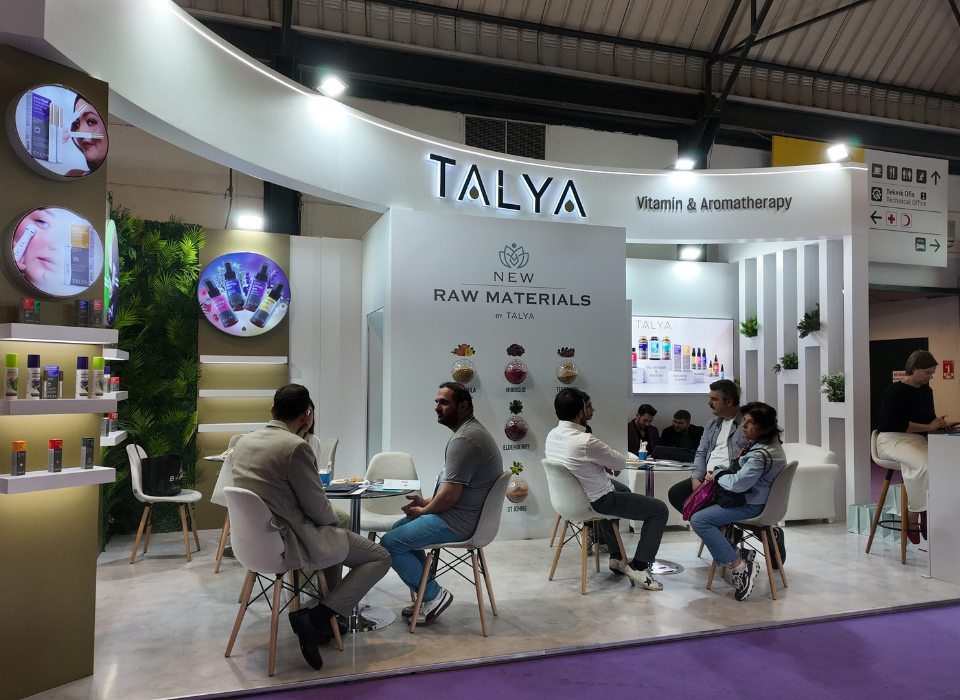
Interest in natural-content, functional and holistic wellness-oriented products is rapidly growing in the global beauty…

International fragrance producer MG International Fragrance Company took part in Beauty İstanbul 2026, one of the major…

Talya Bitkisel, which carries Türkiye's plant-based production power to international markets, is preparing to signific…

Rönesans Enerji has signed a major cooperation agreement with Alarko Gotion Green Energy as part of its energy storage …

Rönesans Enerji has launched its first investment in energy storage, beginning to strengthen its portfolio with next-ge…

Talya Bitkisel, which has been operating in the field of dietary supplements and aromatherapy products for approximatel…

Talya, one of the leading brands in the food supplements and aromatherapy sector, has introduced its Science Board to t…

CBR Unique Esans positions scent not merely as a chemical component but as a creative field where science, art and huma…

While food supplements, vitamins and aromatherapy products continue their rapid growth worldwide, Turkey stands out as …
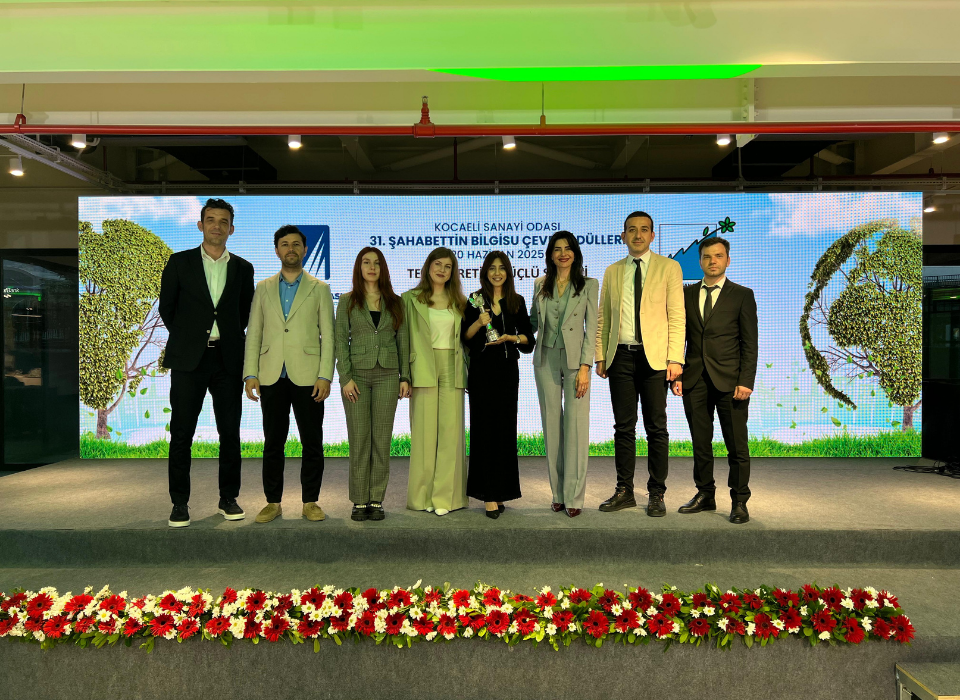
International fragrance manufacturer MG International Fragrance Company has received the "Environmental Award" in the l…

Rönesans Holding has secured the financing required for a polypropylene (PP) production plant and terminal project, whi…


Kimya sanayiini oynayarak tanıyın: her hafta yeni bulmaca, etkileşimli periyodik tablo, sektöre özel oyunlar ve ücretsiz hesaplayıcılar.
Deneyiminizi iyileştirmek ve site kullanımını ölçmek için çerez kullanıyoruz. Ayrıntılar Çerez Politikası ve KVKK Aydınlatma Metni'nde.