Uludağ İçecek Shared Its New Production Facility Investment in Malatya and Sustainability Vision at COP31
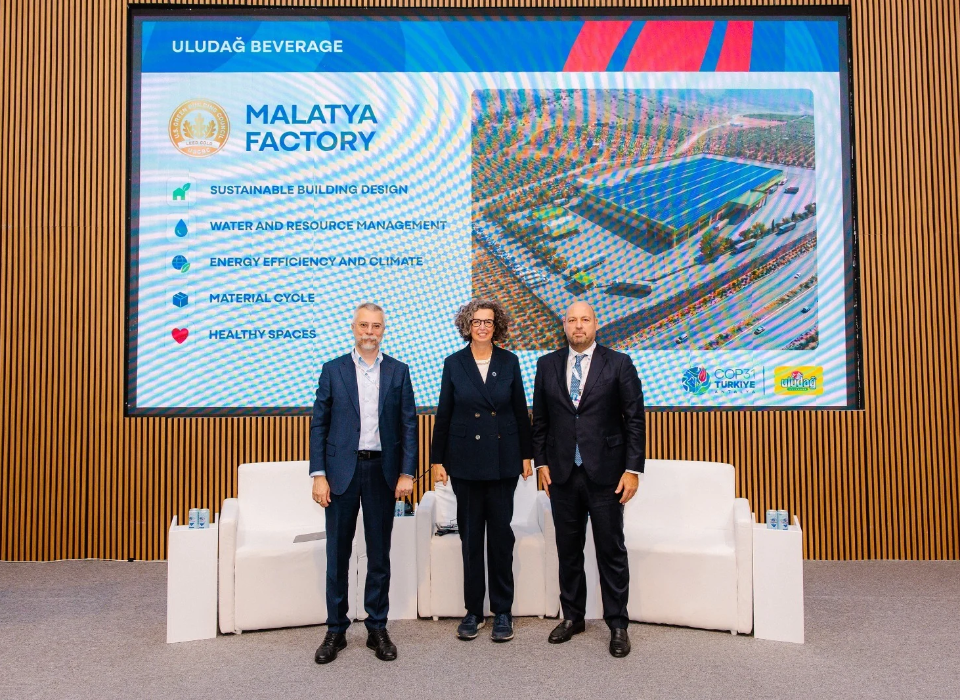
Uludağ İçecek Türk A.Ş. shared its new production facility investment to be realized in Malatya, its regional development goals, and sustainable industry vision with the international public during a panel held within the scope of the United Nations Climate Change Conference (COP31) organized in Antalya.
The panel, held on 9 November 2026, the first day of the summit, in Resilient Cities Programming Area 2 of the Green Zone, focused on green transformation in industry and sustainable investment models. The session titled “Investing in a Sustainable Industrial Future in Malatya” was moderated by Harvard Business Review Editor-in-Chief Serdar Turan. Uludağ İçecek Türk A.Ş. Chairman of the Board Ömer Kızıl and European Bank for Reconstruction and Development (EBRD) Managing Director for Türkiye and the Caucasus Elisabetta Falcetti took part in the panel as speakers.
The session addressed topics such as supporting economic recovery in earthquake-affected regions with permanent investments, the contribution of climate finance to industrial investments, and tracking environmental performance with measurable indicators.
55 Percent of the Malatya Facility’s Energy Needs Will Be Met by Solar Power
Speaking at the panel, Uludağ İçecek Türk A.Ş. Chairman of the Board Ömer Kızıl stated that they were proud to be one of the supporters of COP31 and to share their new production facility project to be realized in Malatya on this platform.
Noting that the Malatya investment would both increase the company’s production capacity and contribute to the region’s economic recovery, Kızıl said the following:
“With our Malatya investment, we aim to increase our production power while also contributing to the region’s future. We are happy to contribute to the region’s recovery through a long-term investment in Malatya. Our new production facility will complement our production power in Bursa, bringing us even closer to Eastern and Southeastern Anatolia and increasing our distribution flexibility. At the same time, we aim to meet 55 percent of our Malatya production facility’s energy needs from solar panels. In addition to energy and water efficiency, the investment will also contribute to reducing our carbon footprint by decreasing shipment needs. In the first phase, we anticipate an annual production capacity of approximately 140 million liters and over 110 direct jobs. While strengthening our operational resilience, we aim to support the region’s economic recovery.”
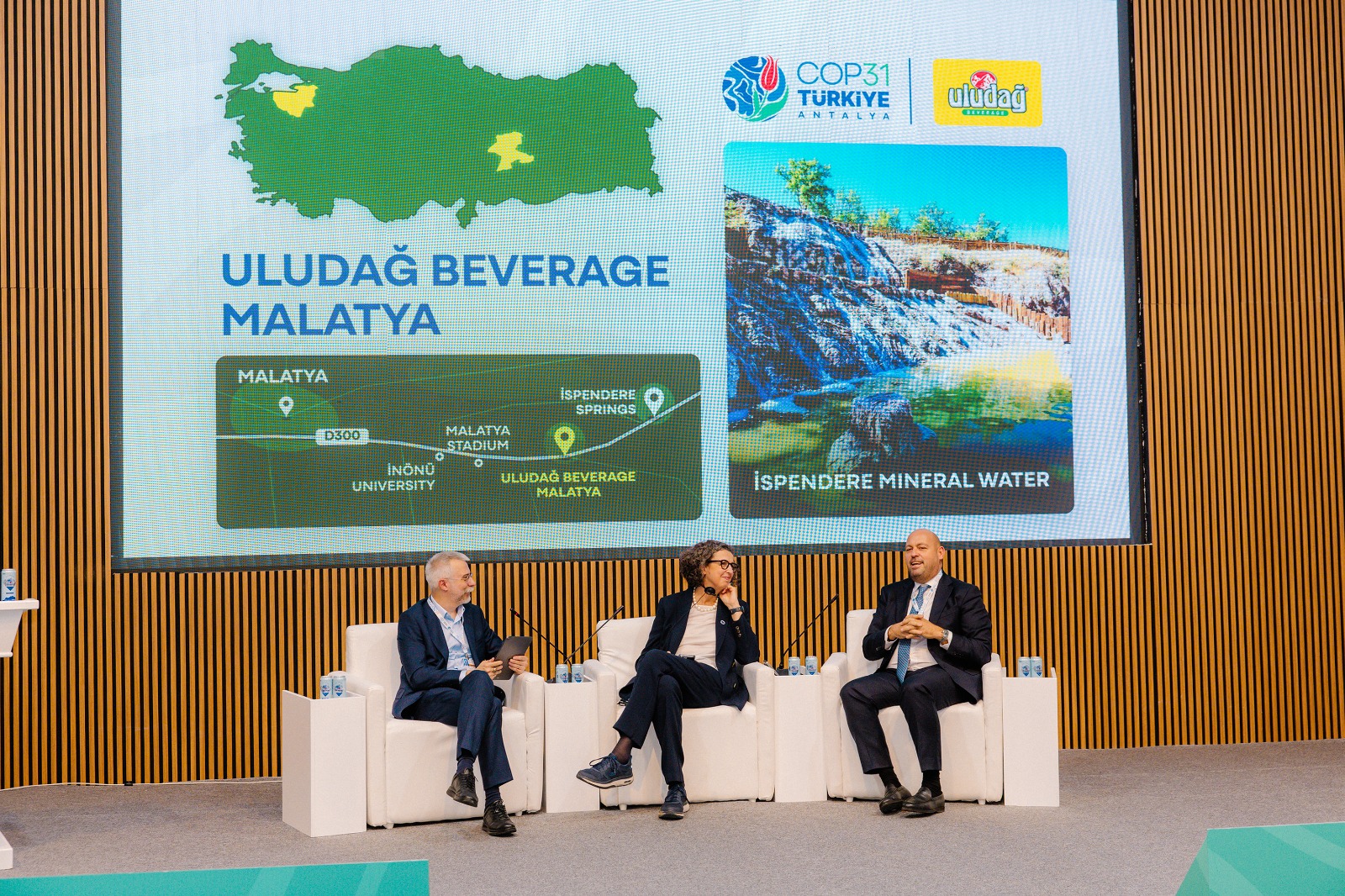
LEED Gold Target for Sustainable Production
Stating that they prioritized resource efficiency from the design stage onward in the Malatya investment, Kızıl emphasized that the facility’s sustainability goals would be demonstrated with measurable results.
Kızıl stated that the facility was designed with an approach based on resource efficiency, ranging from energy and water use to production losses, and made the following assessment:
“A factory’s claim to sustainability begins in its design and is reflected in its operational results. In Malatya, we are addressing resource efficiency from the very beginning of the investment, from energy and water use to production losses. We are designing our facility with the goal of LEED Gold certification, and we are planning a 4 MWp solar energy system along with digital applications that support efficiency. What matters to us is measuring the on-the-ground equivalent of these goals and presenting them with verified results.”
EBRD Cooperation Supports the Long-Term Management of the Investment
Stating that the cooperation carried out with the EBRD was not limited to the financing dimension alone and also contributed to the project’s long-term management approach, Kızıl noted that the partnership covers environmental and social performance as well as corporate governance processes.
Kızıl used the following statements in his assessment of the cooperation:
“A long-term investment requires a strong management approach as much as it requires financing. We built our partnership with the EBRD on this understanding. The process we carried out together contributed to our developing a perspective that covers the entire life of the investment, from environmental and social performance to corporate governance. We defined more clearly which outcomes we are targeting, our responsibilities, and how we will measure progress. We see the value of this partnership in its contribution to the long-term nature of our investment.”
EBRD: Climate Finance Should Also Improve the Quality of Investment
EBRD Managing Director for Türkiye and the Caucasus Elisabetta Falcetti drew attention to the potential the Malatya investment holds in terms of economic recovery, employment, and regional supply chains.
Noting that commercially sustainable investments can support regional development, Falcetti emphasized that climate finance should not be directed solely at the purchase of equipment, but should also improve the environmental and social quality of investments.
Falcetti made the following assessment on the matter:
“The project’s potential lies in its combining economic recovery with stronger industrial performance. A commercially sustainable investment can support employment, skills development, and regional supply chains. These effects should not be assumed simply by looking at the project’s location; they should be evaluated over time. Climate finance should not only finance the purchase of equipment, but should also improve the quality of the investment. The strongest partnerships are those in which companies view environmental and social requirements as tools that improve the investment. Development finance creates the highest value when the company and the bank share this perspective.”
About Uludağ İçecek Türk A.Ş.
Uludağ İçecek Türk A.Ş., whose foundations were laid in 1930 by company founder Mehmet Hakkı Erbak, continues its operations by building on the legacy of his son Nuri Zafer Erbak, who developed the formula for Efsane Uludağ Gazozu.
Among the company’s iconic products, Efsane Uludağ Gazozu and Uludağ Limonata are produced at the beverage facilities located in the Bursa Yenice Industrial Zone, which cover a total area of 106 thousand square meters, including 51 thousand square meters of enclosed space. Uludağ Doğal Maden Suyu, on the other hand, is bottled at the facilities in Uludağ Çaybaşı Village.
Uludağ Frutti, Uludağ Frutti C-Max, and Uludağ Frutti Extra products, which are produced from natural mineral water, are also manufactured at facilities covering a total area of 50 thousand square meters, including 11 thousand 500 square meters of enclosed space, and reach consumers.
With a filling capacity of 224 thousand 500 glass bottles, 205 thousand PET bottles, and 36 thousand cans per hour across its current 11 filling lines, Uludağ İçecek Türk A.Ş. continues its operations in domestic and international markets under the “Uludağ” umbrella brand with 6 categories, 11 sub-brands, and 45 product varieties.
Gallery
Advertisement
Ad Space728 × 90