Interview with Haluk Erceber, President of the Turkish Chemical Manufacturers Association
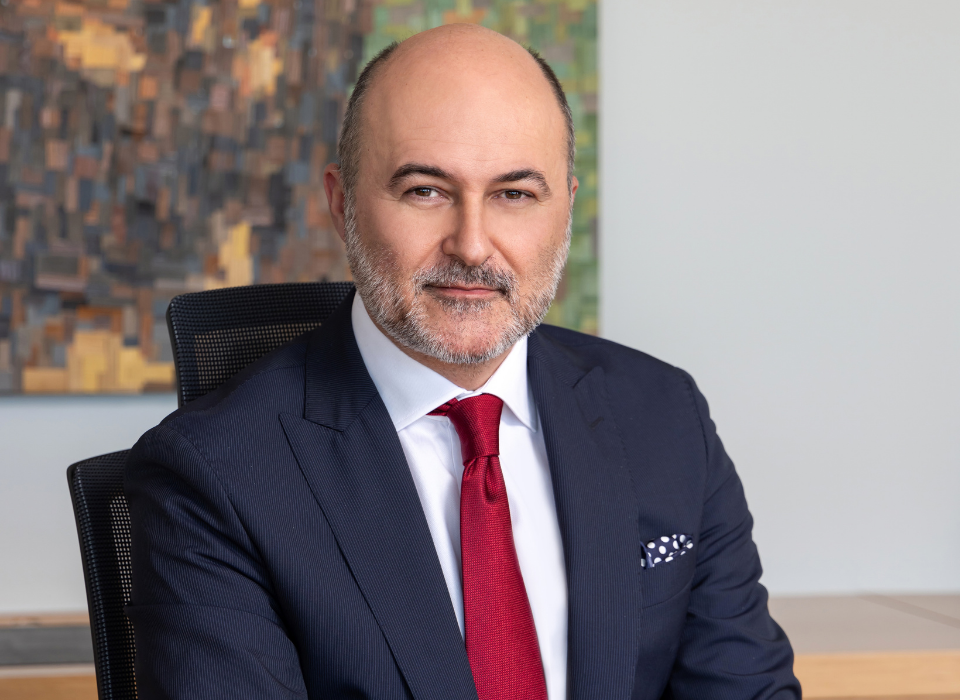
Turkey Chemical Manufacturers Association Chairman Haluk Erceber spoke with us in a pleasant interview about the association's activities and the future of the chemical sector. Erceber also discussed what needs to be done to advance the sector further.
[caption id="attachment_105278" align="aligncenter"] Haluk Erceber[/caption]
Mr. Haluk, could you tell us about yourself and your professional background?
I was born in Istanbul. After graduating from Vefa High School, I studied Chemical Engineering at İ.T.Ü Chemical Metallurgy Faculty and graduated in 1982. I began my career in the chemical sector in 1985 at Organik Kimya San. and Tic. A.Ş. Production Department. Between 1989 and 1997, I worked as Production Manager at Türk Hoechst Chemical Division. During this period, I played an important role in making Türk Hoechst a sector leader by expanding production capacity for water-based acrylic polymer dispersions. I received training in Factory Management, Occupational Safety, and Research and Development and Production at the Frankfurt headquarters. Following Hoechst's decision to cease operations worldwide, I was appointed Factory Manager at Organik Kimya in July 1997. Over a fifteen-year period, I believe I played important roles in achieving significant capacity increases at the Kemerburgaz facility and in establishing and commissioning two new facilities in Rotterdam and Istanbul Free Zone (2007). From the beginning of 2014, I assumed additional responsibilities as Facility and External Relations Manager reporting to the CEO. For the past 12 years, I have served as Chairman and Board Member of ISO 28 Basic Chemicals Vocational Committee. Additionally, since 2014, I have continued as Founding Chairman of Chemport Chemical Manufacturers Association. I currently continue as a member of TOBB Chemistry Council. I was appointed Chairman of the Turkey Chemical Manufacturers Association at the General Assembly held on 22 February 2018. At the General Assembly on 19 February 2020, my chairmanship for a three-year term was unanimously reelected. I am currently a CEFIC representative and natural member of the AFEM Board of Presidents. I have a 19-year-old daughter and am interested in basketball, horse riding, and football.The Turkey Chemical Manufacturers Association (TKSD) is one of the important associations that serves as a bridge between Turkish Ministries and the European Chemical Federation. Could you tell us about the activities you have carried out in this capacity?
The Turkey Chemical Manufacturers Association (TKSD) was founded in 1986. With its distinguished, experienced staff and Board of Directors members who are leading businesspeople in their respective fields, it aims to expand its service network throughout Turkey. Strengthening and growing our sector with new members from all industrial regions of Turkey is an important dimension of our vision. Our association became a member of the European Chemical Manufacturers Council CEFIC in 1993. Our most important goal in Turkey is for Turkish chemical industry to develop rapidly and approach and catch up with European chemical industry. In this regard, we have received strong support from CEFIC, particularly in recent years. Additionally, by creating a bridge between important institutions in Turkey such as the Ministry of Industry and Technology, Ministry of Environment and Urbanization, Ministry of Commerce, and CB Investment Office and our members, we play an important role in solving problems at every stage from production through supply chain to exports. Particularly during the pandemic period, we have carried out very important information sharing to advance Turkish chemical industry in areas such as REACH and GHS, new investments and investors, legislation related to sector development, incentives, the European Green Deal, Climate Act, Carbon Border Tax, Sustainability, export expansion, Digitalization, and Circular Economy. Turkish chemical industry has a USD 62 billion market. We work with a very rapid and regular strategy to develop this market and increase its share in the global market, with the idea of getting even closer to the European Union.How is the chemical sector progressing through the pandemic? What would you like to say about the positive picture prevailing in the sector, particularly in July and August?
Looking at the first three months of the year, we saw a positive picture for the chemical sector. The increase of around 5.5% in exports, the realization of production, and 70% capacity utilization demonstrated this positive environment. Some of our companies even achieved 80% capacity utilization. However, like every sector, the chemical sector was also affected by the pandemic. Particularly, with lockdowns beginning in April and May, production disruptions occurred. Of course, everyone was aware that protecting employees from this epidemic was essential, and this period was handled with extreme care. With companies rapidly implementing measures and employees quickly adapting to the situation, production continuity was maintained. As a result of certified health measures companies obtained from TSE and foreign companies, and with the fulfillment of necessary obligations, accelerating production became easier. Frankly, Turkish chemical companies acted quickly and were much more successful compared to Europe during the pandemic. This was a highly commendable and encouraging development for us. Our sector never gave up the fight with these measures. As a result of working at nearly full capacity with security measures, we matched the 2019 export figures. At the end of June 2020, the 2% decline was reduced to zero by the end of July with the gap closing.What are your expectations for the chemical sector in 2021? What topics will be emphasized in the sector?
First, looking at the European side, 2021 forecasts for Europe do not look good. Increased demand is an important benchmark in terms of sector expectations. Current expectations point to zero growth in the EU during the first six months of 2021. However, we must acknowledge that Turkey is a much luckier country than Europe in terms of domestic market. We have always had a domestic market that can recover quickly and is conducive to progress. Even if there may not be much sales in the first three months of 2021, in the remaining months of the same year—especially if a vaccine becomes available—there will be much greater increases in the chemical sector's performance. We could even face a positive growth similar to the 2017 picture. Although the pandemic has affected the sector, the Turkish chemical sector continued its production this year much better than expected. Our expectations are for 2021 to progress in a better manner. Thinking long-term, with new investments in the sector and attracting foreign investors to our country, minimizing problems faced in the sector and taking precautions against risks, we can make 2021 more productive with higher production and exports.What needs to happen in the sector to advance the chemical industry further?
As the Turkey Chemical Manufacturers Association, we have always stood beside our Ministries and relevant official institutions and provided all possible support related to chemistry. For the chemical industry to advance further, new and technological investments must be realized in our country. The presence of clusters both close to the market and near the sea creates a magnet effect especially for foreign investors. Foreign investors place great emphasis on two elements before making investments. These are: proximity to ports and proximity to markets. One of the countries that best utilizes these two elements—important in terms of both time, transportation, and price performance—is China, the global leader with USD 1 trillion 193 billion in chemical sales. China has 66 chemical clusters. Looking at the global landscape, we see a transition to 'specialty chemicals.' The biggest reason the European Union stands firm today is that it switched to specialty chemical production earlier than everyone else in the 2000s. To break this down into numbers, 27% of the European Union's total EUR 565 billion in chemical sales in 2018 belonged to specialty chemicals. These products, based on research and development and innovation, are completely technological and add value to both customers and users. Turkish chemical industry must proceed along this path. While growth in the EU remains low due to mature markets and aging populations, the EU's trade surplus maintains high levels. Migration, digitalization, populism, and other structural factors will deeply affect the development of chemical trade in the coming years. Besides increased competition from other regions, other possible causes of this relative decline include high energy prices, delayed innovation, currency depreciation, and failure to reach the desired level in research and development as obstacles ahead. However, the future of Turkish Chemical Industry still needs to be strengthened through new commercial and reciprocal investment ties directed at the EU.Advertisement
Ad Space728 × 90