50-Year Journey: Kayalar Kimya Continues Its Steady Growth
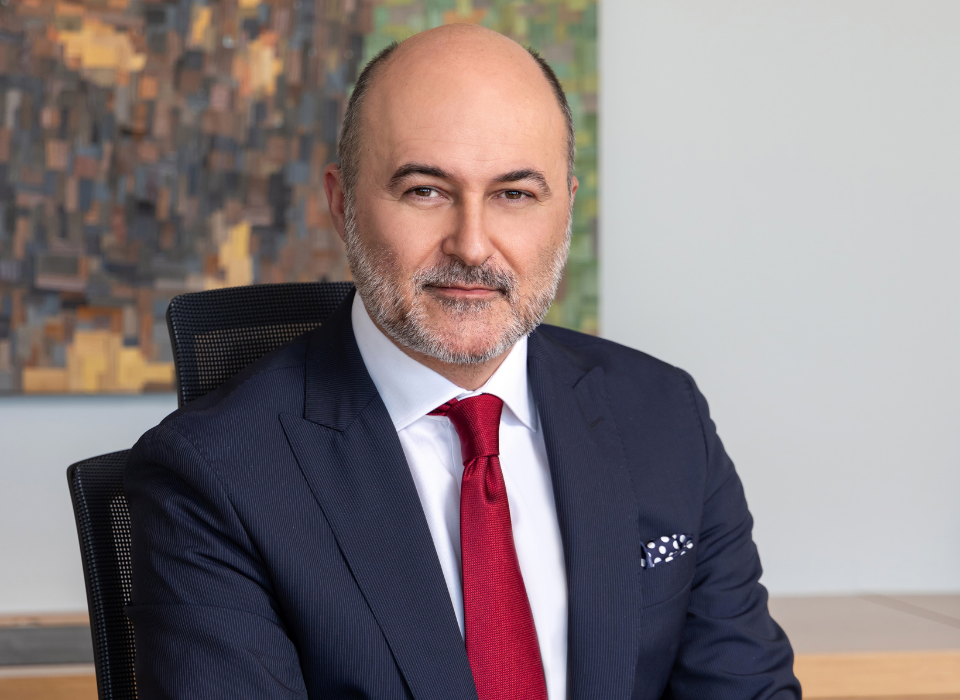
Celebrating its 50th founding anniversary in 2026, Kayalar Kimya offers world-standard paint and varnish products to its users, drawing strength from its 142,000-ton production capacity and R&D center. In our interview, Kayalar Kimya Board Member Tolga Kayalar evaluated the company's founding process, its activities in international markets, and the transformation the paint sector has undergone for our readers.
Two areas in particular have been decisive in my career: international growth and technology. I took an active role in developing Kayalar Kimya's export structure, which today reaches approximately 55 countries. I also managed the process of our strategic partnership with Noroo, one of South Korea's leading paint manufacturers, and today I continue to serve as Chairman of the Board of Kayalar-Noroo. Working with different business cultures has shown me that in global competition, producing well alone is not enough; technology, speed, innovation, and the right partnerships are just as important as production power.
My interest in technology and new business models is not limited to Kayalar Kimya either.
I follow ventures and make investments in different sectors in Türkiye and abroad. Under the roof of the BOSAD Board, I find the opportunity to evaluate the transformation of our sector and the business world from different perspectives. I believe all of this continuously feeds my perspective on our own business and the future.
Today, the main issue for me is how we will carry a strong 50-year industrial legacy into the next 50 years. By combining Kayalar Kimya's production experience with R&D, digitalization, and next-generation technologies, we want to become not just a Turkish industrial company that sells products from Türkiye to the world, but one that develops knowledge and technology in Türkiye, competes on a global scale, and sets the standards in its field.
I also see my professional journey largely as part of this goal.
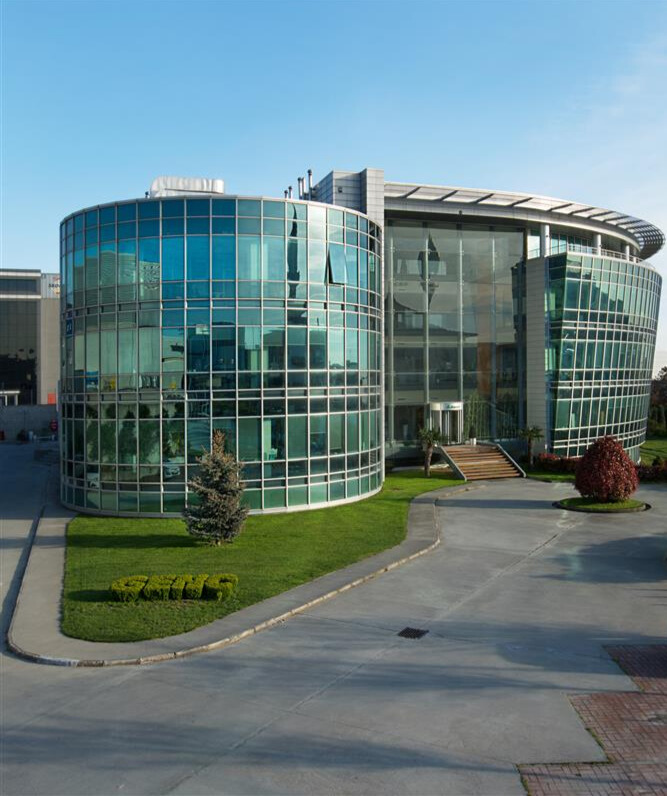
Kayalar Kimya is celebrating its 50th founding anniversary in 2026. Looking at Kayalar Kimya's development story extending from 1976 to today, what have been the most important turning points that brought the company to where it is today?
It is a great source of pride for us that the foundations laid by our founder Yılmaz Kayalar in 1976 have turned into a 50-year industrial company today. However, when I look at this journey, what impresses me most is not the size of our company, but the courage to redefine itself in every period.
I believe there have been several important turning points in Kayalar Kimya's history. The first of these was scaling up our production infrastructure. Our transition to production at our Tuzla factory in 2005 was one of the important investments that carried us toward bigger goals. Afterward, international collaborations started a new era in our company's development. Our collaboration that began with Meffert under the Düfa brand, and later the strategic partnership we formed with South Korea's Noroo, played an important role in transforming Kayalar Kimya into a company that closely follows not only its own market but also technology, ways of doing business, and different markets around the world.
I think one of our truly important turning points was our decision to transform from a manufacturing company into a company that develops technology. Our receiving the title of the first R&D Center in the furniture paints sector in Türkiye in 2011 is one of the most concrete indicators of this. We then launched the first Technical Support, Application and Simulation Center in our sector as well. Because we saw very early on that long-term competitive advantage in the paint sector does not come only from the size of your factory, but from the formulation knowledge you possess, your application experience, and how quickly you can develop solutions for your customer.
Another important turning point for us was our decision to open up to the world. Our young brand being the first brand accepted into the Turquality program in its field in 2016 was not just about being included in a support program for us; it was an important indicator of Kayalar Kimya's claim to becoming a global brand. Today, we export to 55 countries, generate more than half of our total sales from international markets, and are among Europe's five largest furniture paint and varnish manufacturers. I believe that an important factor in reaching this point was that we viewed exporting not merely as selling products, but as a long-term globalization strategy.
In recent years, we have been carrying our growth into new areas. With our investment in Gebze, we started producing industrial adhesives and binders; we accelerated our sustainability, energy transformation, digitalization, and automation investments. In other words, the journey that started 50 years ago by producing paint is today transforming into a much broader industrial ecosystem encompassing different technologies and markets.
But there is one unchanging element behind all these investments and milestones: people. I believe it would be incomplete to explain Kayalar Kimya's 50-year success only through factories, production capacity, or export figures. What truly grew this company was the entrepreneurial culture passed down through generations, the accumulated knowledge of our employees, the trust we built with our customers, and our constant desire to do better.
Looking at our 50th year today, I see our past not so much as a result, but as a strong starting point we have for the future.
In the first 50 years, we created a strong industrial company that sells products from Türkiye to the world. Our goal for the second 50 years is to transform into a global technology and materials company that competes worldwide with technology we develop in Türkiye, one that contributes to the formation of standards in its field rather than merely following them.
For us, the true meaning of the 50th year is exactly this: using the strength we gained from our past to build the future.
As a paint manufacturer expanding from Türkiye into global markets, how do you evaluate the international competitiveness of the Turkish paint and coatings sector?
I believe the Turkish paint industry has today reached an important point on an international scale. Our being Europe's fifth largest paint manufacturer is not a coincidence; behind it lies a strong production culture, trained human resources, technical knowledge, and a serious industrial infrastructure formed over the years. Therefore, we now need to discuss Türkiye not merely as a regional production center in this sector, but as a country that can also have a say on a global scale through its technology and product development power.
However, the world's competition model is changing very rapidly. In the past, production capacity, scale, and cost advantage could set companies apart. Today, these are necessary to compete but are not sufficient on their own. R&D capability, sustainability, digitalization, supply security, speed, and the ability to develop customer-specific technology are now the new parameters of competition.
China is one of the most striking examples of this. For many years, we evaluated China for its low-cost production power. Today, however, there is a China that is investing very seriously in technology, R&D, advanced materials, and economies of scale. Therefore, I don't think trying to compete only on cost with production giants like China is a correct and sustainable strategy for Turkish industry.
We need to play a different game.
Türkiye has very important advantages. We are at the intersection of Europe, the Middle East, North Africa, and Central Asia. Our proximity to Europe not only provides logistical advantages; it enables us to respond to customers faster, produce more flexibly, and offer technical support much closer. When we add our strong engineering and R&D capability on top of this, a quite valuable competitive model emerges for Türkiye.
Kayalar Kimya's experience in international markets shows us this as well. In different geographies, we no longer talk only about product and price. Customers now expect from us solutions suited to their own production processes, technical support, sustainable products, higher performance, and faster innovation. In the global market, real value is measured not by how much you sell a can of paint for, but by how much value you add to your customer's production process.
For this reason, I believe the real opportunity ahead for Türkiye is moving from "Made in Türkiye" to "Developed in Türkiye."
We will of course continue to produce in Türkiye; but our goal from now on should be to increase the number of products whose technology is developed in Türkiye, whose formulation is created here, whose intellectual property originates here, and which are preferred in different countries around the world. Because it is this transformation that will permanently raise our export value per kilogram and the added value created by our industry.
In the coming period, I see significant opportunities especially in sustainable raw materials, water-based systems, functional surfaces, high-performance coatings, and next-generation material technologies. Digitalization and artificial intelligence will also redefine the competitiveness of our sector from product development to production. Indeed, we see that the sector today addresses innovation, sustainability, functionality, digitalization, and artificial intelligence as the main topics of the future.
I believe the real question facing the Turkish paint sector should not be "Can we compete with the world?" but rather "In which areas can we lead the world?"
Our approach at Kayalar Kimya is exactly this. By combining our 50 years of production experience with our R&D, technology, and international market knowledge, we aim to become one of the companies that not only participates in global competition but also sets the standards of competition in certain areas.
I believe that Türkiye's real leap forward in the paint and chemical industry will come not from producing more, but from producing more technology, intellectual value, and added value.
How do the automation and digital transformation applications that Kayalar Kimya has implemented at its production facilities improve the efficiency of production processes and quality control? What advantages does this transformation provide the company in responding to customer needs more quickly and flexibly?
Digital transformation is not a new agenda item for us. At Kayalar Kimya, we started investing in automation and digital technologies well before Industry 4.0 or artificial intelligence were discussed as intensely as they are today. Because we believe sustainable competitiveness in production can be achieved not only by increasing capacity, but through efficiency, standardization, data, and technology.
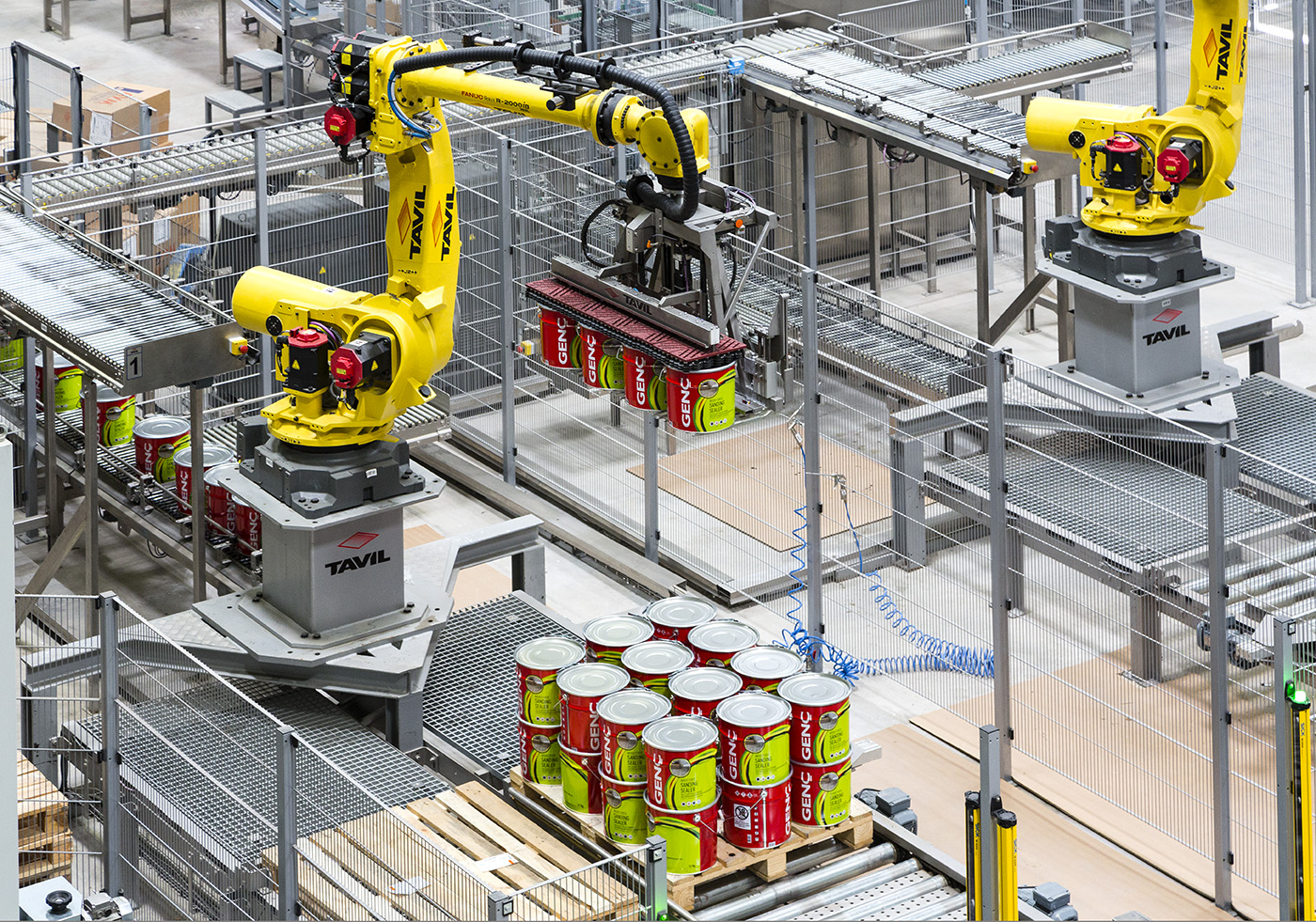
Today, our production facilities operate with advanced automation systems, robotic production lines, and digital monitoring infrastructures. However, for us, the real value lies not in how advanced the machines are, but in how measurable, traceable, and manageable production has become.
In the paint and coatings sector, quality requires many variables to be managed correctly at the same time. The entire process, from raw materials to recipe, from production parameters to application conditions, needs to be under control. Automation provides us a very important advantage here; it reduces human-induced variability, strengthens process standardization, and enables us to reproduce the same quality sustainably.
The second important dimension of digitalization is data. We now see data not as a tool that reports the past, but as a strategic resource that determines what we will do in the future. By connecting our processes from our ERP infrastructure to our production and quality systems, we are creating a much more visible structure from raw material intake to production, and from inventory to shipment. In this way, we are moving toward a production model that can see problems in advance as much as possible, rather than one that intervenes after a problem arises.
I believe the aspect of this transformation that is reflected to the customer is much more important: speed and flexibility.
Today, industrial customers are not just purchasing a paint or varnish. They want a solution suited to the speed of their own production line, their equipment, their application method, and the surface performance they expect. Our Technical Support, Application and Simulation Center, which we established in 2007 as a first in Türkiye in the field of furniture paints and varnishes, was actually an early example of this approach. We can simulate our customer's process on a pilot scale, testing different products and application parameters to reach the right system faster.
Therefore, for us, technology is not an investment that begins and ends inside the factory; it is a competitive advantage that extends all the way to the customer's production line.
Now we are moving to the next stage of this transformation: artificial intelligence. Within the scope of the AI Transformation Program we have launched at Kayalar Kimya, we are bringing different functions into the process, from production to R&D, and from sales to information technologies. Our aim is not to limit artificial intelligence to individual applications, but to make it part of our data-driven decision-making culture and way of doing business.
I believe artificial intelligence will create very important opportunities in the coming period, especially in areas such as formulation development, production optimization, quality management, predictive maintenance, demand forecasting, and supply chain. For us, the real issue is not having used artificial intelligence, but how we can make our 50 years of production and formulation knowledge more valuable through technology.
Because I believe the competitive advantage of the future in industry will not come only from the size of the factory. The real competitive advantage will be transforming the production knowledge you possess into data, learning from that data, and turning what you have learned into value for your customer faster.
Our goal at Kayalar Kimya is exactly this: beyond producing more, to produce more intelligently, more predictably, and closer to the customer.
Interview: Murat Soygür
Gallery