PÜRKAY: A Formulation and Production Culture Spanning From 1978 to Today

PÜRKAY Boya ve Kimya Sanayii A.Ş., founded in İstanbul in 1978 by Cevat Gökşin, has continued its work for nearly half a century in the development and production of polyurethane and epoxy based industrial coating systems.
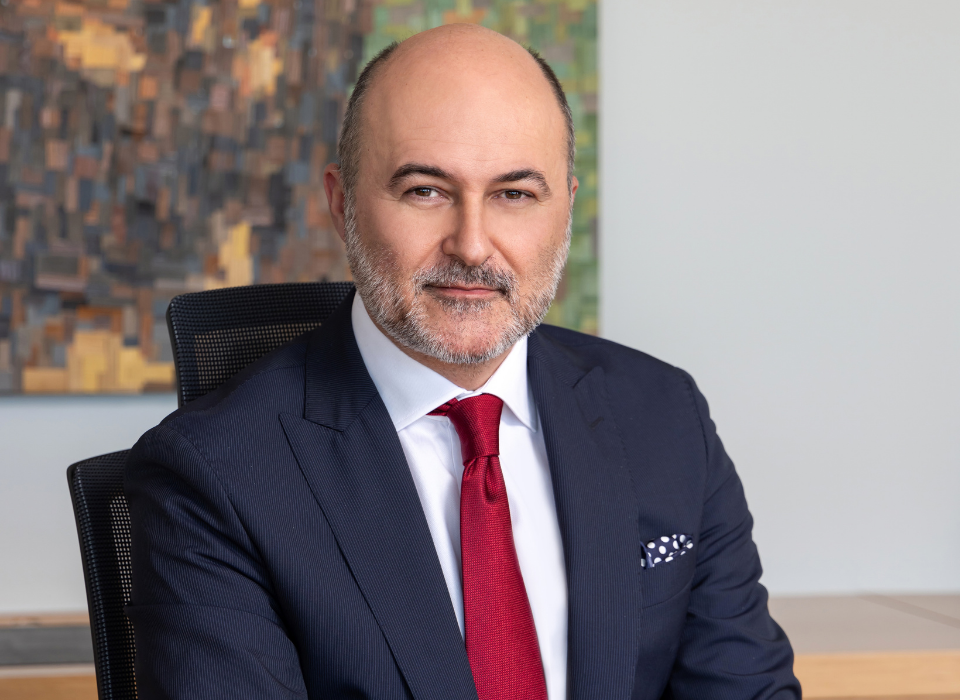
We spoke with General Manager Saydun Gökşin, who has led PÜRKAY, a family company, since 1992, about the company's founding story, the production and formulation culture passed down between generations, the advantages of polyurethane flooring technologies, R&D efforts, and the future of artificial intelligence in the chemical industry.
Could you briefly tell us about yourself and your professional background?
I am Saydun Gökşin. I serve as General Manager of PÜRKAY Boya ve Kimya Sanayii A.Ş. I took over the management of PÜRKAY in 1992, and since that date I have been actively involved in managing the company's production, product development, sales, export and technical application activities.
The majority of my professional life has been spent within polyurethane and epoxy based industrial/decorative and sports coating technologies. During this process, I have been directly involved not only in company management, but also in raw material selection, formulation evaluation, product development, production processes, review of technical specifications, and field applications.
In my view, general management, especially in the field of industrial chemistry, does not simply mean making administrative and commercial decisions. It requires evaluating together the chemistry of the product, its manufacturability, application conditions, field realities, and the technical problem the customer is trying to solve.
In polyurethane and epoxy systems, there is a very strong relationship between the laboratory and the field. A product that appears successful under laboratory conditions may behave differently in the field due to surface moisture, ambient temperature, application thickness, mixing method, equipment used, or the habits of the applicator. For this reason, my professional approach has always been built on evaluating theoretical knowledge, production experience, and field observation together.
Today, when examining a new project, I first look not at which product the customer is requesting, but at which technical problem they are actually trying to solve. Because the correct solution is not always the product requested at the outset. Some projects may require a more flexible system, others a harder one, one that cures faster, one that shows higher chemical resistance, or one more suitable for outdoor environmental conditions.
How would you briefly summarize PÜRKAY's founding story and its current position in the sector?
PÜRKAY was founded in İstanbul in 1978 by my father, Cevat Gökşin. The company's founding dates back to a period when industrialization in Türkiye was accelerating and the need for polyurethane based technical products was beginning to increase.
The basic approach my father adopted when founding the company was not merely to trade standard products, but to understand and develop chemical systems and to produce solutions suited to industry's needs. The foundations of the formulation and production culture that PÜRKAY has preserved to this day were laid during this period.
Over time, the company's activities developed in the direction of polyurethane based paints, varnishes, coating materials, resin systems, and industrial floor coatings. Epoxy and polyurethane flooring systems also gradually became one of the company's core areas of expertise.
I took over the management of the company in 1992. Since then, we have tried, on the one hand, to preserve PÜRKAY's production and technical knowledge accumulated from the past, and on the other hand, to adapt the company to changing industry needs and new technologies.
PÜRKAY today is a joint stock company with three partners. I am one of the company's partners and its General Manager. For this reason, I regard PÜRKAY's development not as the result of a single person, but as the joint result of the partners working within the corporate structure, the technical team, production personnel, the sales team, and application experience.
Today, it is not sufficient to describe PÜRKAY merely as a company producing paint or resin. Our core field of work is to create technical systems that bring together the right products by analyzing a project's conditions of use.
The performance of an industrial floor does not consist of the performance of a single product alone. Primer, intermediate coat, filler, main coating, top coat, application thickness, and surface preparation must be evaluated as a whole.
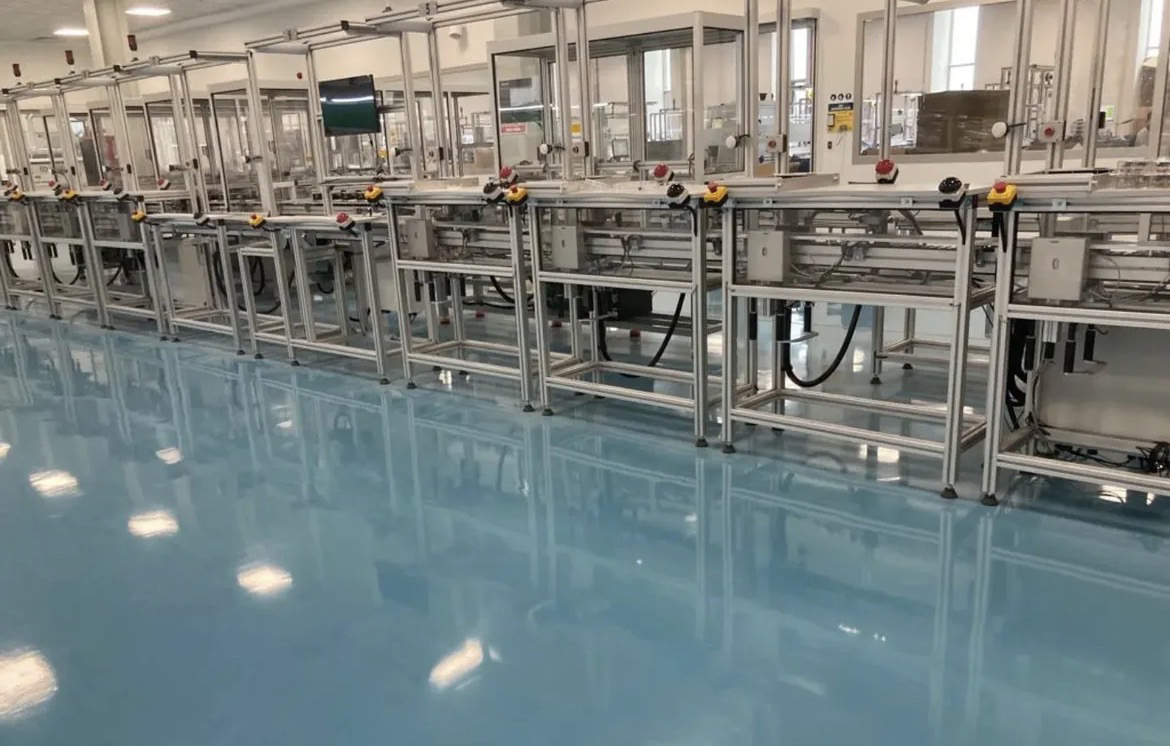
For example, chemical resistance may be the priority in a production facility, while abrasion, vehicle traffic, tire movements, slip resistance, and crack behavior may become important in a parking garage. Electrostatic discharge control is decisive in electronics manufacturing areas, thermal stresses in cold storage facilities, mechanical impact and slip resistance on ramps, and jointlessness and cleanability come to the fore in hygienic areas.
PÜRKAY's product portfolio includes epoxy and polyurethane self-leveling systems, primers, textured top coats, elastic coating systems, industrial paints, and electrostatic-controlled flooring systems. However, what really matters to us is not the individual products themselves, but bringing these products together correctly within a system.
The point I place the most importance on when describing PÜRKAY's position in the sector is its ability to bring together nearly half a century of formulation and production experience with field application knowledge within the same structure. This body of knowledge is the continuation of the venture my father, Cevat Gökşin, started in 1978, and of the technical working culture passed down from generation to generation within the company.
PÜRKAY has been developing polyurethane flooring systems for many years. In your view, what are the most important advantages that distinguish polyurethane from other flooring technologies?
Polyurethane's most important characteristic is that its chemical structure can be designed across a very wide performance range. Within the same chemistry family, it is possible to develop a soft, elastic membrane, a highly abrasion-resistant floor coating, a UV-resistant top coat, or a high-hardness cast system.
Looking at flooring applications, one of the main advantages of polyurethane is the balance it can achieve between flexibility and mechanical strength. While epoxy systems generally provide high compressive strength, hardness and chemical resistance, polyurethane systems can be more tolerant of limited floor movement and impacts.
This characteristic is particularly important in floors exposed to vibration, areas with thermal movement, parking garages, ramps, cold storage facilities, and concrete surfaces at risk of cracking. However, it would not be accurate to make a general assessment that polyurethane is better than epoxy under all conditions. The correct system should be selected according to the conditions of use.
Another important advantage of polyurethane is top-coat performance. When properly formulated, aliphatic polyurethane systems provide significant advantages in terms of UV resistance, color stability, scratch resistance, and outdoor performance. Aromatic polyurethanes, on the other hand, offer different cost and performance balances, but may show color change under sunlight. For this reason, the term "polyurethane" alone is not sufficient. Whether the system is aromatic or aliphatic, its binder structure, cross-link density, pigmentation, and intended use must be evaluated together.
Another advantage is that surface texture and mechanical properties can be adjusted to a great extent. Glossy, matte, smooth, orange-peel textured, or slip-resistant surfaces can be created. Shore hardness, elongation, tensile strength, elastic modulus, and abrasion resistance can be optimized according to the area of use.
At the same time, polyurethane systems can be sensitive to moisture during application. Particularly in isocyanate based products, surface and ambient humidity must be carefully controlled. Otherwise, foaming, bubbling, surface defects, or adhesion problems may occur. Therefore, the high performance offered by polyurethane requires not only correct formulation but also correct surface preparation and application discipline.
Which areas do you prioritize in your R&D efforts? Are there any new products or technologies you plan to bring to market in the near future?
The starting point of our R&D efforts is usually a real problem encountered in the field. For us, R&D does not simply mean creating a new product code. It means developing systems that can be applied faster, that are safer, have lower emissions, have a longer service life, or that show more controlled performance in a particular area of use.
One of the areas we prioritize is low-solvent and solvent-free systems. The importance of this area is increasing due to worker health, indoor applications, environmental requirements, and emission limits. However, removing solvent from the formulation alone is not sufficient. The product's viscosity, surface spreading, air release, curing speed, and application tolerance must also be maintained.
Another area of work for us is fast-curing primers and repair systems. In industrial facilities, it is often not possible to halt operations for extended periods. For this reason, there is a need for products that can cure even at low temperatures, that allow subsequent coats to be applied within a short time, and that provide the applicator with sufficient working time.
There is an important technical balance here. A very fast curing product is requested; however, when the pot life becomes too short, application safety decreases and it becomes harder to achieve a homogeneous result on large surfaces. Therefore, the goal is not simply to accelerate the reaction, but to establish a controlled balance between pot life and early strength.
We are also working on flexible epoxy and polyurethane systems. Particularly in parking garages, ramps, industrial floors exposed to heavy vehicle traffic, cold storage facilities, and areas where limited crack movement is expected, it is not enough for the coating to simply be hard. It must be able to absorb impact energy and adapt to limited movements in the substrate.
Electrostatic-controlled systems are also one of the areas to which we attach technical importance. In electronics, defense, pharmaceutical, and precision manufacturing facilities, not only the mechanical and chemical resistance of the floor but also its electrical resistance must be kept under control. In these systems, resin, conductive filler, copper strip network, grounding connections, application thickness, and ambient conditions must be evaluated together.
In addition, we continue to work on high color-stability aliphatic polyurethane top coats, thin coatings with high abrasion resistance, flexible self-leveling products, and primer technologies that adapt to different floor conditions.
I believe that in the near future, the sector will move toward modular systems rather than a single product. Adapting the same core product family to different performance classes through different accelerators, fillers, top coats, and application thicknesses will be more efficient for both manufacturers and applicators.
What role do you think technologies such as artificial intelligence, digital laboratories, and data analytics will play in polyurethane formulation development processes?
I believe artificial intelligence will play an important role in polyurethane formulation development processes. However, I do not think it is accurate to view this as AI replacing the chemist or formulator. AI's main contribution will be to analyze the relationships between numerous variables more quickly and to make experimental design more efficient.
In a polyurethane formulation, there are numerous parameters such as polyol structure, hydroxyl value, functionality, isocyanate type, NCO/OH ratio, catalyst, moisture, filler, pigment, additives, and application temperature. Each of these parameters can affect pot life, viscosity, hardness, elongation, adhesion, foaming tendency, surface appearance, and curing time.
In the traditional method, the formulator carries out a certain number of trials based on experience and compares the results. When data analytics and machine learning are used, results obtained from past formulations can be gathered in a database. The system can show which parameters are more decisive for performance and can suggest a narrower working range for new trials.
For the digital laboratory approach to succeed, standard and reliable data are required first and foremost. It is not possible for AI to interpret results meaningfully without recording the raw material lot, ambient temperature, humidity, mixing time, sample thickness, test age, and the test method used.
For this reason, in the laboratory of the future, not only test equipment but also data collection discipline needs to develop. Every failed trial is as valuable as every successful trial. Because AI systems must also learn which combinations produce undesirable results.
Another area where AI will provide benefit is raw material changes. In the chemical industry, it is common for a raw material to be discontinued from supply, for its cost to change, or for its use to be restricted due to regulations. AI-assisted systems can help the formulator determine the closest alternatives to the existing formulation and predict the likely effects of the change on performance.
AI can also be used to translate customer requests into technical formulation targets. Customers often want a product that is "harder," "faster," or "more durable." Yet these expressions must be converted into measurable criteria such as Shore hardness, elastic modulus, abrasion loss, pot life, recoat time, or chemical resistance.
That said, I do not think any digital model can fully replace genuine field validation. A product should first be evaluated in the laboratory, then in a controlled pilot application, and finally under real operating conditions. AI can reduce the number of trials and enable us to move in the right direction faster; but the final decision must still be made by evaluating chemical knowledge, test results, and field experience together.
"Not a single product, but the right system must be designed"
I can say that the most important approach PÜRKAY has carried from 1978 to today is a culture of technical curiosity and continuous learning. In the chemical industry, no formulation can be considered fully finished. Raw materials, regulations, application methods, and customer expectations are constantly changing.
For us, the fundamental condition for progress is keeping the flow of information open between the laboratory, production, the applicator, and the end user. A problem coming from the field can turn into a new laboratory study, and a product developed in the laboratory can turn into a new application method in the field.
In the future, sustainability, low emissions, fast application, energy efficiency, and digital formulation management will gain even greater importance in the polyurethane sector. However, the fundamental principle that will remain unchanged amid all these developments is this: a successful floor coating consists not merely of a good product, but of correct diagnosis, correct system design, correct surface preparation, and correct application.
Gallery
Advertisement
Ad Space728 × 90