Dr. Selçuk Denizligil: "The sector should prioritize R&D investments"
Dr. Selçuk Denizligil, currently serving as General Manager of Alkim Alkali Kimya, is one of the sector's most prominent figures. Despite significant advances made by Turkey's chemical industry over the past 20 years, Denizligil points out that no Turkish firm has yet reached the scale to rank among the world's largest by economic size. He emphasizes that the chemical sector must prioritize R&D investments.
Dr. Selçuk Denizligil completed his doctorate in Polymer Chemistry in 1992 and boasts a distinguished career in both academia and industry, including positions at Henkel, BASF and Polisan Kimya. In an interview conducted with us, Denizligil stressed the importance of strengthening university-industry collaboration to advance R&D in Turkey and shared recent positive steps taken in this direction. He also underlined that Turkish chemical companies must adopt artificial intelligence and digital technologies to remain competitive, and drew attention to Alkim Kimya's contributions to the sector through its work on high-quality, sustainable products such as sodium and potassium sulfate.
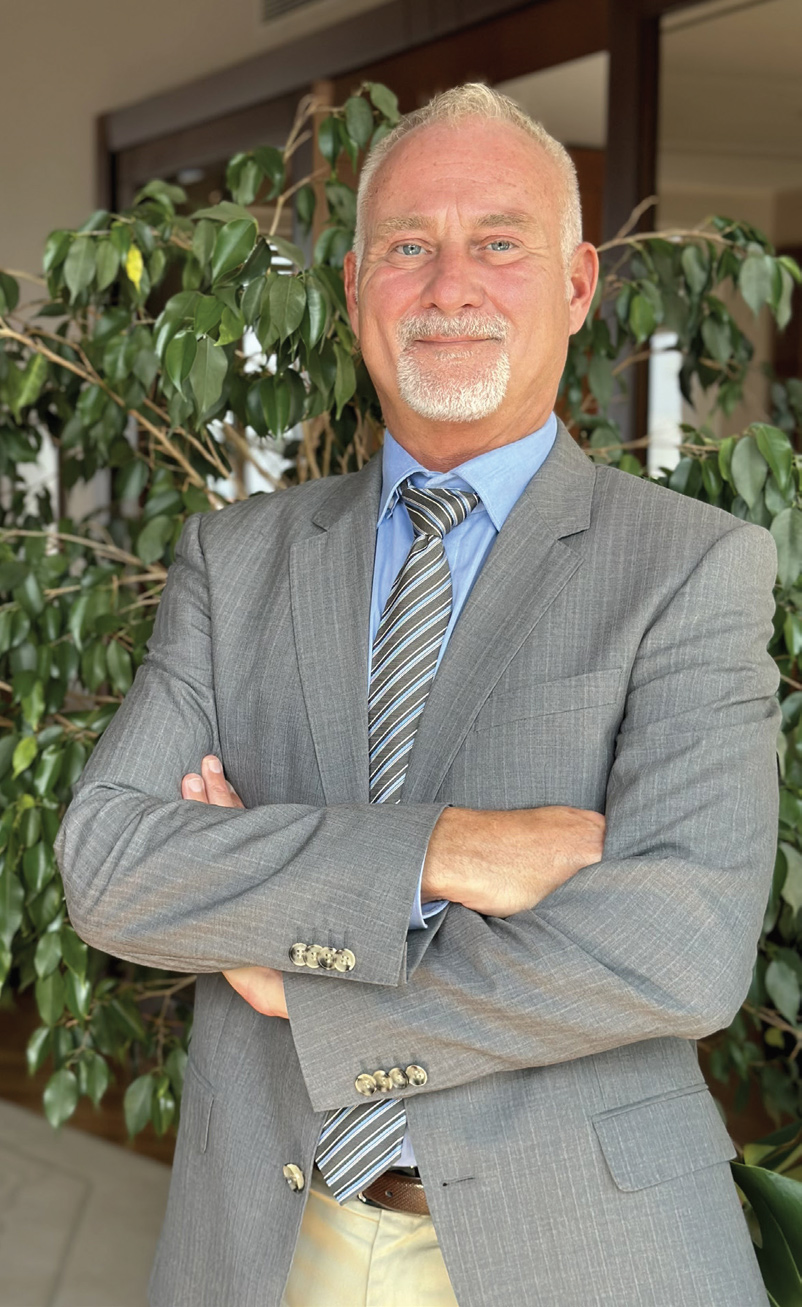 Dr. Selçuk Denizligil
Before your career in the private sector, you also had an important academic career as a faculty member. Could you share your thoughts on university-industry collaboration, which we always emphasize the importance of in our magazine, and how this relationship could be strengthened?
My first international R&D experience was with Exxon. The outputs of that project are still in use at Exxon today. My project at Mainz University was a joint collaboration with BASF, and before starting work at the company, we obtained patents together and developed materials still in production today. In Turkey, the private sector generally wants to implement R&D work very quickly, but unfortunately this goes against the nature of the work. Minor modifications can be implemented in short timeframes, but original research requires time. There are companies in Turkey that develop and implement university-industry collaboration, and these companies will undoubtedly benefit from the results. Particularly in recent periods, very serious steps have been taken within R&D incentive programs to increase university-industry collaboration. In the private sector, mutual trust has been established through contributions provided by universities and positive outcomes of these contributions. I believe this collaboration will develop further in the long term.
As one of those who knows the sector best, could you assess the past and present of Turkey's chemical industry? Has the development in the sector been satisfactory in your view, and what have been the right and wrong steps taken during this period?
Turkey's chemical sector has made significant advances over the past 20 years, but in terms of scale, there is still no Turkish firm that would rank among the world's largest by economic size. 80% of the chemical sector continues to operate at SME scale. Although Turkey's chemical exports reach the level of USD 14-15 billion, most of these products consist of what we call commodities—low value-added products. To increase the share of high value-added medium or advanced technology products, the sector needs to attach greater importance to R&D investments. Recent R&D investments will contribute to the production of medium and advanced technology products in the coming years.
How are chemical companies benefiting from artificial intelligence and digitalization? What impact do these technologies have on productivity and innovation in the sector? In the near and distant future, how do you think these technologies will develop and how will they affect the sector?
In recent years, Turkey has made investments in digitalization in the production field. However, these investments are primarily used for monitoring production parameters. Despite this, artificial intelligence is not yet being used in new product designs and new factory designs. One of the biggest reasons for this is that the sector consists of medium and small-sized firms. Considering the competitive environment globally, increasing productivity is possible through the use of artificial intelligence and digital infrastructure. Companies unable to adapt this important development will not be able to survive and compete. Looking at large chemical companies, we see them taking serious steps toward designing self-managing factories using artificial intelligence in the future. Turkish chemical companies also need to adapt to this in order to compete with these firms.
Raw materials are, of course, a crucial component of the chemical sector. What role does Alkim Alkali play in this context? Could you provide detailed information about your production facilities, the product groups you offer, and their areas of application?
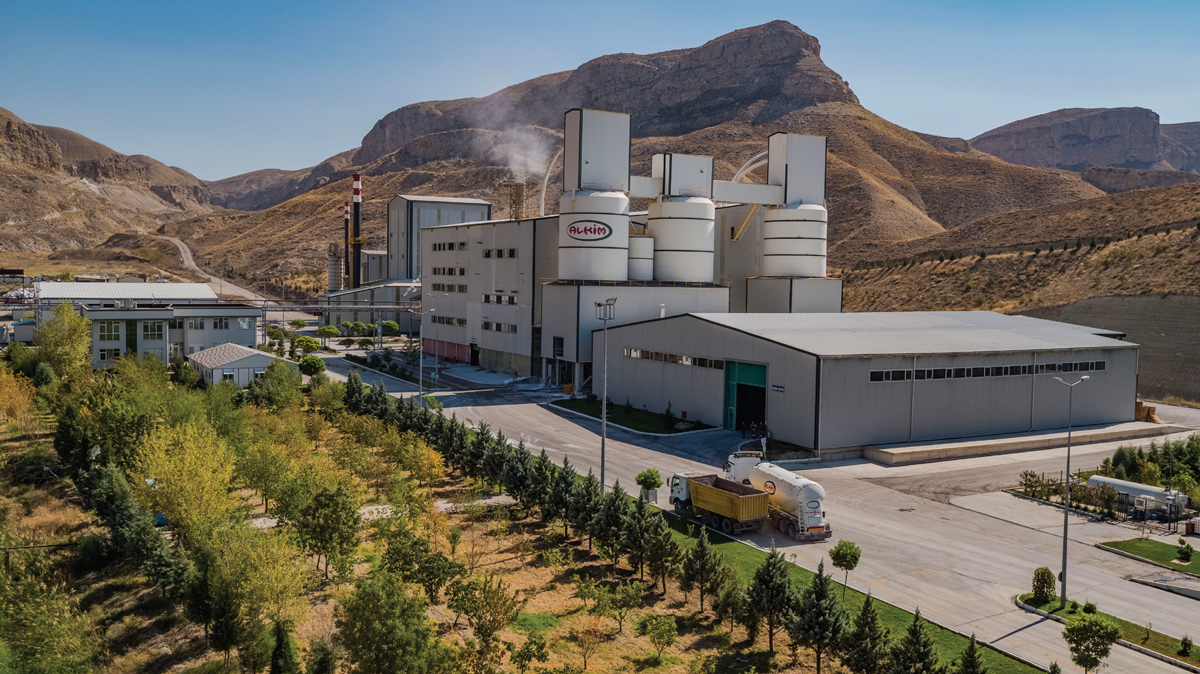
When we talk about the chemical industry, we know it is a sector serving many different areas. As Alkim Kimya, we have been producing sodium sulfate for 70 years. The main raw material for sodium sulfate is obtained from natural resources in our country. Alkim Kimya operates three production facilities. Two of these facilities (Cihanbeyli-Konya, Dazkırı-Afyonkarahisar) produce raw material from lake operations, while our facility in Ankara Çayırhan obtains it from underground mining.
Alkim's total sodium sulfate production capacity is 480,000 tons/year. With this capacity, we rank among Turkey's largest and the world's leading sodium sulfate producers. Sodium sulfate is primarily used in the detergent sector, but also serves as a raw material in the textile, glass, paper, animal feed and other industries.
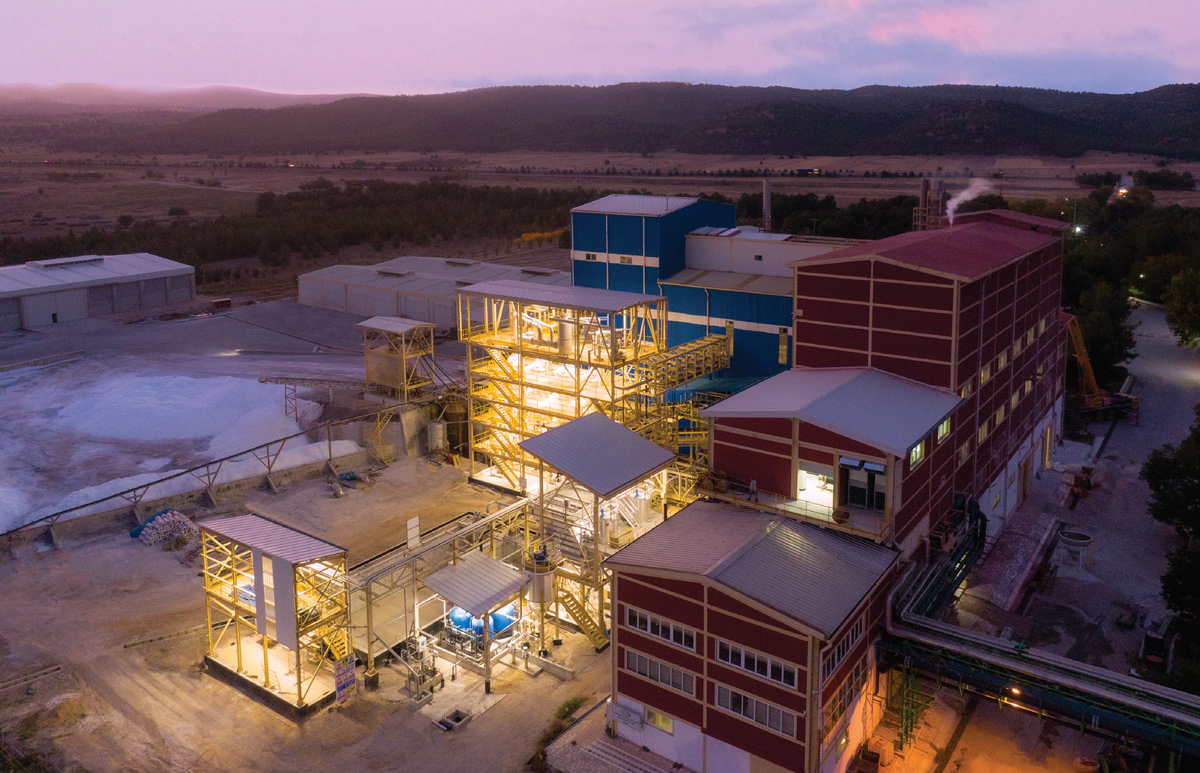
To produce potassium sulfate, the most special fertilizer used in the agriculture sector, Alkim Kimya completed our 50,000 ton/year capacity facility in Afyonkarahisar Dazkırı in 2021 with an investment of EUR 18 million. Potassium sulfate is an extremely important product for both Alkim and our country. Feeding the world population approaching 10 billion, or more precisely, ensuring the continuance of life, makes agriculture and its extension—food—the most fundamental issue of our current century. Together with the increasing global population, we face vital problems that can be summarized as global warming, climate change, increasing drought, and the need to use water resources very carefully. As all stakeholders of society, we must act with collective wisdom and consciousness. The product obtained for this purpose is extremely high quality, and highly advanced technology has been selected for potassium sulfate production.
One of the two raw materials used in potassium sulfate production is sodium sulfate, which is our company's main activity, and the other is potassium chloride imported from abroad. Since both raw materials are obtained directly from natural sources rather than through chemical methods, a very high value-added product suitable for organic farming is targeted. Alkim-produced potassium sulfate, with its high potassium oxide content and virtually zero chlorine content, is extremely suitable for organic farming, and with its 100% water solubility characteristic, it is completely compatible with drip irrigation technology in agriculture. This product, which carries organic farming certification, is a valuable natural fertilizer on the market. With this investment, our country meets all its potassium sulfate needs and also exports to other countries. In this context, meeting domestic farmers' demand is our primary goal. By producing potassium sulfate domestically for the first time—previously met entirely through imports—we are making very important contributions to our national economy.
What criteria does Alkim Alkali prioritize in its investment plans? What kinds of investments are you considering undertaking in the coming periods?
The three main criteria in Alkim Kimya's investment plans are making investments in areas aligned with its medium and long-term strategy, ensuring investments comply with sustainability criteria, and appropriate financial returns. Particularly, our new investments will focus on converting our own raw materials into high value-added products.
Finally, could you share your thoughts on Turkchem magazine, which has continuously contributed to the development of Turkey's chemical sector for 18 years?
I carefully read each issue of Turkchem magazine. I follow the coverage of new investments made in the sector, new product groups beginning production in our country, and information about international trade fairs. I want to note that your magazine is very important for tracking developments in the chemical sector, and I would like to express my thanks for these contributions.
Dr. Selçuk Denizligil completed his doctorate at Istanbul Technical University in 1992 in the field of Polymer Chemistry. Parallel to his university position, he spent two years at the Hahn Meitner Institute in Berlin on Exxon's R&D project, and two more years on an Alexander von Humboldt scholarship at Johannes Gutenberg University in Mainz continuing his research. In 1996, he received his associate professorship in polymer chemistry. In 1997, he began work in the R&D department at Henkel and took on the additional role of technical manager one year later. With the sale of Henkel's chemical division to the newly founded Cognis company, he served as manager of a global marketing project at Cognis headquarters in Germany from 2001 to 2003. When BASF acquired the company in 2010, he was appointed manager of all BASF facilities in Turkey. After retiring from BASF in 2019, he served as general manager at Polisan Kimya for 2.5 years. Since 2023, he has held the position of general manager at Alkim Alkali Kimya.