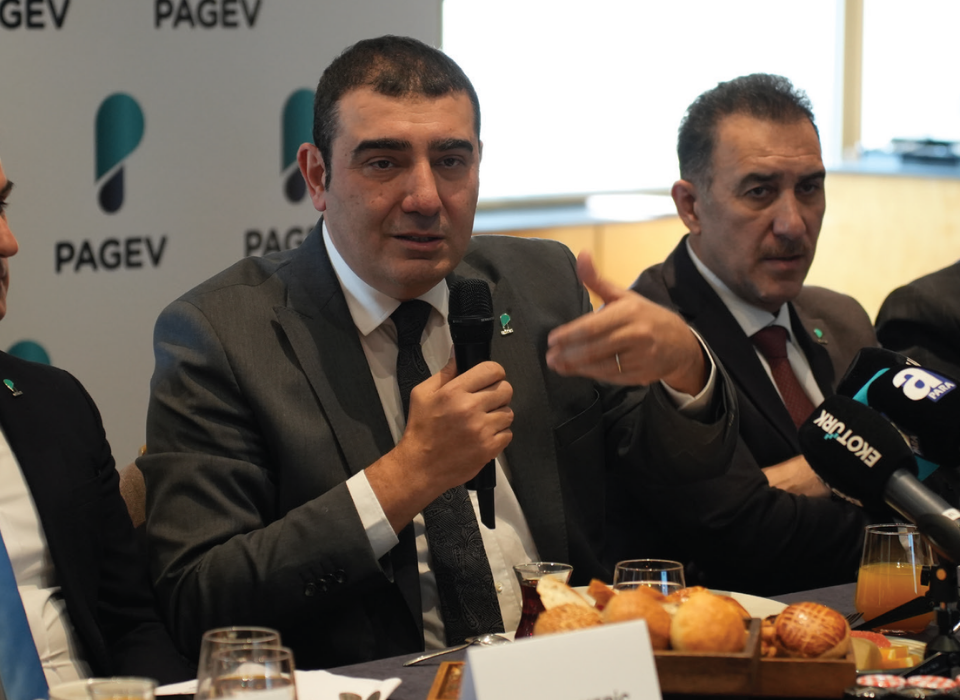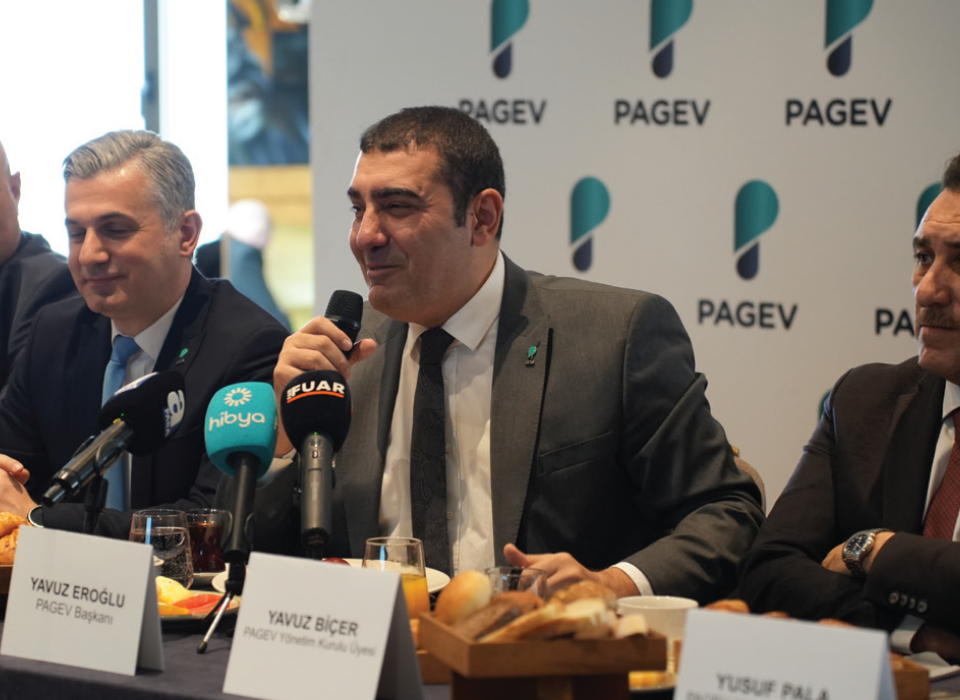
PAGEV Chairman Yavuz Eroğlu: The Turkish Plastics Industry Continued to Grow PAGEV Chairman of the Board Yavuz Eroğlu shared his assessments at a press conference organized by PAGEV - Turkish Foundation for Plastics Industrialists' Research, Development and Education. Following the meeting, we spoke with Eroğlu about the sector in an interview.
Report: B. Serhat Cengiz
Photographs: Taner Dalkılıç
At a press conference organised by PAGEV - Turkish Plastics Manufacturers Research Development and Education Foundation, PAGEV Board Chairman Yavuz Eroğlu made assessments. Following the meeting, we conducted a report with Eroğlu where we discussed the sector.
Turkey's plastics sector demonstrated impressive performance in 2024 by continuing its growth. Production volume reached 9.9 million tonnes, while production value was realised at USD 40.9 billion. The sector's direct and indirect exports exceeded USD 15 billion, providing significant economic contribution.
According to data from the "Turkey Plastics Sector Monitoring Report 2024" prepared by the Turkish Plastics Manufacturers Research Development and Education Foundation (PAGEV), an 8% increase was experienced in both production and value compared to 2023. Capacity utilisation rate rose from 75.7% to 76.1%. On the import side, a 2.6% decline was observed in value terms, and plastic product imports of USD 4.06 billion were realised in 2024. With these developments, the sector's foreign trade surplus increased by 16% to above USD 3.4 billion. While Turkey delivered plastic product exports to approximately 200 countries, Iraq, United Kingdom, Italy, Germany and the United States ranked among the largest markets; these countries accounted for 45.3% of total exports by volume and 48.1% by value. Romania, Spain, Greece and Libya also ranked among the top 10 export destinations.
PAGEV Board Chairman Yavuz Eroğlu made assessments regarding the future of the sector, emphasising that green transition, legislative arrangements and incentive policies hold vital importance for sector growth. According to Eroğlu, Turkey's plastics sector is showing rapid growth, but the incompleteness of legal arrangements on the use of recycled materials is limiting potential. Noting that 21 companies made total investments of EUR 500 million for food-contact recycled plastics production, Eroğlu stated that implementation of these investments would provide significant contribution to exports. Advocating that Turkey should take a leading position in the green transition process, Eroğlu said, "Regulatory timeframes for sustainable production must be accelerated, incentive policies must be updated and investments towards green transition must be increased. These steps have critical importance for the sector to continue its growth in the coming period."
The report noted that the sector's machinery investments increased at an annual average of 16.6% between 2019 and 2024, but declined by 7.7% in 2024 compared to 2023, falling to USD 1.57 billion. Nevertheless, the plastics sector retained first place, accounting for 30.6% of chemical industry exports. While Turkey imports plastic products from over 100 countries annually, it exports to nearly 200 countries. Eroğlu attributed the main reasons for export growth to increased sectoral competitiveness and intensive efforts supporting exports. Speaking on the matter, Eroğlu said, "The plastics sector, which has been continuously growing over the past 20 years, has achieved a strong position in international markets. Turkey has gained a foothold in high-standard markets such as the EU and USA with quality and competitive products," emphasising that focusing on exports of high-value-added products is unavoidable.
Noting that the Ministry of Industry and Technology Incentive Implementation Directorate is working on a new incentive model, Eroğlu stated that this model will focus on strategic sectors rather than regional priorities and will be designed for high-value-added, export-potential products. Saying "We can directly benefit from this incentive," Eroğlu added that the sector, which is growing in areas such as automotive, medical and electronics, is developing through recycling-focused activities. Emphasising the importance of increasing the use of recycled materials in food-contact packaging, Eroğlu noted that this practice, which is widespread globally, should be incorporated into Turkish legislation. Stating that the EUR 500 million investment has been completed but the regulatory process has not yet been finalised, Eroğlu argued that completion of these arrangements will further increase exports.
Also addressing sustainability and environmental issues, Eroğlu responded to claims that plastic products cause environmental problems: "The root of the problem lies in waste management. Strengthening recycling systems and preventing waste from entering nature can reduce carbon emissions. Plastic products manufactured in Turkey comply with health and environmental standards, even exceeding these standards." Noting that Turkey, aiming for leadership in green transition, must rapidly harmonise its regulations, complete certification processes and transform production infrastructure, Eroğlu drew attention to the importance of a deposit system for waste management, announcing that the system launched through joint work by the Environmental Agency and TOBB will go into operation with a pilot application in Sakaria on 21 February. Concluding his remarks by saying, "Waste has become the most valuable raw material in the world. Turkey must accelerate recycling processes to take a strong position in this area," Eroğlu ended his speech.
Following the meeting, we conducted a report with PAGEV Board Chairman Yavuz Eroğlu.
How did 2024 go for the sector? Can you briefly evaluate it?
Yes, I can say that we successfully navigated a difficult year for the sector, both in our country and globally. Especially with exports to the region, regional export growth and domestically. Together with investments made particularly in defence industry and medical industry in terms of value-added production, we as a sector managed to maintain our position in 2024 and advance somewhat.
What studies are you conducting for the sector regarding compliance with global regulatory rules and regulations?
Our sector is a leading sector, particularly in recycling and green transition adaptation. We are operating at the forefront with work in these areas. Particularly, Turkey's recycling industry has developed very rapidly in recent years, and as PAGEV we are conducting work in our sector on recycling investments and their EU compliance. Together with our Environment and Urbanisation Ministry, we have signed important work on complete renewal of legislation, development of recycling facility infrastructure in line with green transition, bringing waste imports under controlled inspection and regulation, organising fairs and establishing technological cooperation aimed at turning Turkey's recycling value chain into a marketplace. We have made significant contributions.
Regarding sustainable plastics, what do you consider the most promising recent developments?
We are particularly pleased with recent developments in this deposit management system in recycling. Because the deposit management system itself is work that changes consumer perception regarding recycling, makes people understand that their waste is actually an economic value, a value in the new economic order. Our country's transition to a deposit management system, the pilot application we started in Sakaria as of the end of February, excites us greatly. We hope it becomes one of the important examples in the world.
Can we learn your thoughts on regional networks and supply chain matters in terms of raw materials?
Turkey is the largest plastic processing technology centre in the region, Turkey produces nearly 10 million tonnes of plastics and this means we are the second largest producer on the European continent after Germany. We have little oil, neighbouring countries with significant oil resources produce significant petrochemicals but no plastic products.
For this reason, we support our country's efforts with these countries to build stronger joint investment structures that support the plastics sector and increase competitiveness with petrochemicals. We are trying to contribute to the public in this regard. Indeed, there is currently an ongoing investment designed around purchasing natural gas from Algeria and producing here. Beyond this, we want Turkey to become a global plastics competitiveness centre through new regional investments and see the economy here grow, and we are working towards this.
What are your expectations and forecasts for 2025?
2025 will be especially a year of major reorganisation and preparation. Because through its innovations and investments in the recycling industry, Turkey is preparing for major transformation after 2025. It wants to play an important role in green transition. In world markets, particularly North America and the European Union have recently focused on providing sustainability while not straining the economic household values of their own consumers too much. In this sense, together with plastics, they are creating a new order, a sustainable order. We see a very strong structure in this respect with plastics. In 2025, Turkey will make these preparations. From 2026 onwards, we forecast very large rapid growth.
Gallery