Building Lifespan That Should Be 100 Years Drops to 24 Years in Structures Without Waterproofing
SU YALITIMI BİNA ÖMRÜNÜ UZATIYOR
Insulation is one of the most critical factors in the construction of earthquake-resistant buildings. Waterproofing, which protects buildings from corrosion, thermal insulation, which acts as a protective shield for building façades, and fire insulation, which serves as a precaution against fires that may break out during an earthquake, are all of vital importance.
Insulation plays a critical role in constructing buildings safe from earthquakes. Water insulation that protects buildings from corrosion, thermal insulation that serves as a protective barrier for exterior facades, and fire insulation as a precaution against fires that may occur during earthquakes are all vital.
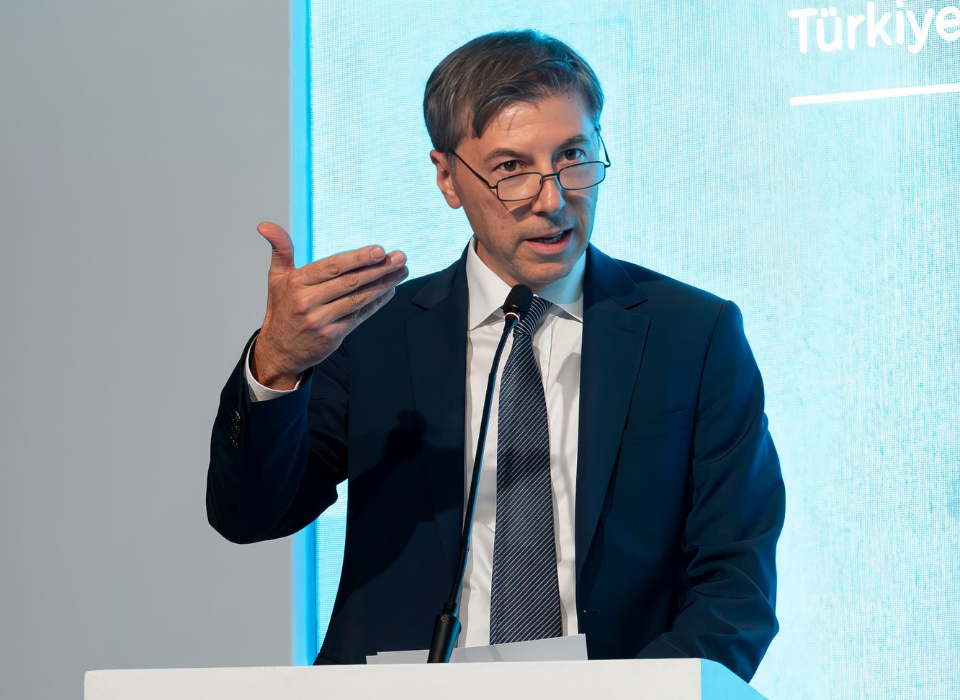
According to research, a building without water insulation loses 66% of its load-bearing capacity within just 10 years, and loses it completely within 24 years. Moreover, the cost of water insulation represents only 3% of total building construction costs. In Turkey, an earthquake-prone country, water insulation became mandatory in June 2018, and since then the number of constructed buildings with insulation has not exceeded 5% of the total building stock. For our country, which has over 10 million buildings and more than 30 million households, this is undoubtedly an insufficient rate. Alper Doğruer, Turkey Director at Ravago Building Solutions, speaking during the 1-7 March Earthquake Week, emphasized that qualified insulation is an investment in the future for Turkey, where danger bells are ringing, and drew attention to steps that must be taken urgently.
The losses we experienced in major earthquakes centered in Marmara, Van, Elâzığ, Izmir and Kahramanmaraş over the past 30 years deeply affected our country. New earthquakes unfortunately continue to remain on the agenda. Precisely at this point, alongside correct project design and soil investigation, water, thermal and fire insulation play a vital role in constructing buildings safe from earthquakes. Especially in buildings where water insulation is lacking or insufficient, concrete and reinforcement deteriorate rapidly and the load-bearing system completely loses its effectiveness within 24 years. Yet the ideal lifespan of a building should be minimum 100 years. Alper Doğruer, Turkey Director at Ravago Building Solutions, emphasizing the importance of insulation for long-lasting buildings within the scope of 1-7 March Earthquake Week aimed at raising awareness about structural safety, underlined that the use of effective insulation solutions, particularly in foundations, roofs and exterior facades, is critical.
Water insulation should be questioned as much as soil investigation and correct design
"Turkey, which faces the reality 'Earthquakes do not kill, negligence does' after each major earthquake, continues to prioritize the need for earthquake-resistant, sturdy and reliable structures, but insulation may be overlooked in inquiries," said Alper Doğruer, continuing his remarks: "The results presented in the 'Istanbul Metropolitan Municipality Possible Earthquake Loss Estimation Update Project' prepared by Istanbul Metropolitan Municipality and Boğaziçi University Kandilli Observatory and Earthquake Research Institute Earthquake Engineering Department reveal the seriousness of the situation.
Within the scope of this research, in a 7.5 magnitude earthquake scenario, an average of 26% of buildings in Istanbul are expected to suffer light damage, 13% moderate damage, 3% severe damage and 1% very severe damage. These figures showing that an average of 17% of buildings in Istanbul, approximately 194,000 buildings, will suffer medium and higher level damage, highlight the need to examine and secure the existing building stock throughout Turkey. For the construction of safe buildings, important factors such as the loads the building will be exposed to, soil conditions and material selection must be analyzed in detail during the design phase. When the building process following soil investigation is brought together with correct water insulation solutions, we can achieve durable structures.”
In 64% of damaged buildings examined after the 1999 earthquake, corrosion was the main problem
Drawing attention to how the load-bearing system weakens over time due to corrosion of concrete and reinforcement in buildings without water insulation, Doğruer stated: "A study conducted by Karadeniz Technical University shows that in buildings without water insulation, load-bearing columns lose 66% of their load-bearing capacity within 10 years and all of it by the end of 24 years. In inspections conducted by the Istanbul Metropolitan Municipality Damage Assessment Commission after the 17 August 1999 earthquake, of 55,651 residences and workplaces found to be 79% damaged, corrosion damage caused by moisture was identified as the main cause in 64% of them.
Yet water insulation, which plays such a vital role for buildings, costs only 3% of total building construction costs. In Turkey, water insulation became mandatory with the Water Insulation Regulation for Buildings that came into effect on 1 June 2018, but since then the number of buildings constructed with water insulation has not exceeded 5% of our total building stock. When we consider that our country has 10 million buildings and over 30 million households, the resulting picture is concerning," he said.
Thermal and fire insulation also serve as a protective shield for buildings
Noting that thermal insulation is also important for protecting buildings against external impacts, Doğruer said: "Thermal insulation performed using correct materials protects building facades from the damage caused by moisture and water, increasing the durability of the load-bearing system. Thermal insulation applied in an integrated manner with water insulation supports building comfort and longevity. Additionally, different hazards such as fires that may occur during earthquakes, even if buildings are not destroyed, can lead to loss of life and property.
Therefore, materials with high fire resistance class and correct fire insulation applications reduce the risk of fire spread and increase building safety. As Ravago Building Solutions, we aim to contribute to a safe and sustainable building stock. At this point, all industry stakeholders have important responsibilities. Through approaches that do not compromise on quality in insulation applications, correct material selection and regular inspections, losses can be prevented. Considering that our country is located in earthquake geography, we can safely say that protecting our structures is the same as protecting our future," he concluded.
Galeri