WFK SBL2004 is a soil/dirt load used to simulate “normal dirty laundry” in detergent and washing performance tests. This soil load was washed together with clean towels without detergent, allowing the dirt to transfer onto the towels and produce bad odor formation (moisture/mold). Afterwards, the towels with the induced bad odor were washed with softener products, and their performance in removing the bad odor from the towels was examined.
Abstract
WFK SBL2004 is a soil/dirt load used in detergent and washing performance tests to simulate "normally soiled laundry". This dirt load was washed with detergent-free clean towels, allowing the soil to transfer to the towels and create malodor (moisture/mold). Subsequently, towels with malodor were washed with fabric softener products, and their performance in removing malodor from the towels was evaluated.
Introduction
If laundry does not dry completely after washing or remains in the machine for an extended period, moisture becomes trapped on textile surfaces and microorganisms proliferate. This condition leads to the formation of a characteristic moisture or mold odor, particularly on absorbent fabrics such as towels. The moisture odor that develops after washing varies depending on the fabric type. Polyester fabrics in particular tend to retain odor more than cotton fabrics.
In the first stage of this study, WFK SBL 2004 dirt load simulates normal soiled laundry load. This dirt load contains different types of soil including sebum, pigments, greasy soils, proteins, starch and salts.
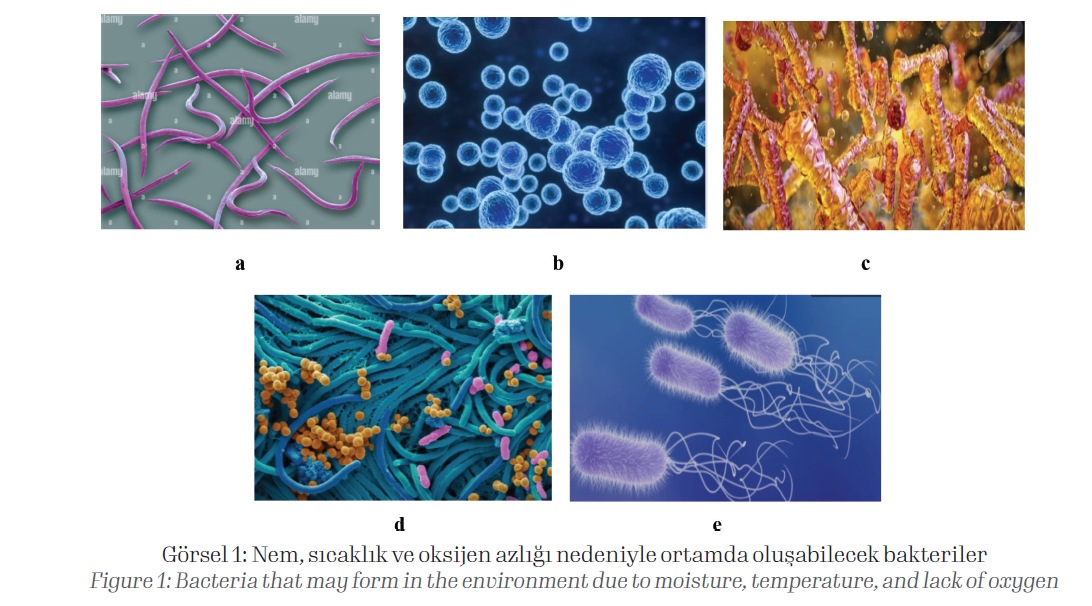
Bacterial density increases due to moisture, temperature and lack of oxygen. Bacteria that may develop in the environment are: Moraxella osloensis (a), Staphylococcus spp (b), Corynebacterium spp.(c), Micrococcus (d), Pseudomonas spp (e).
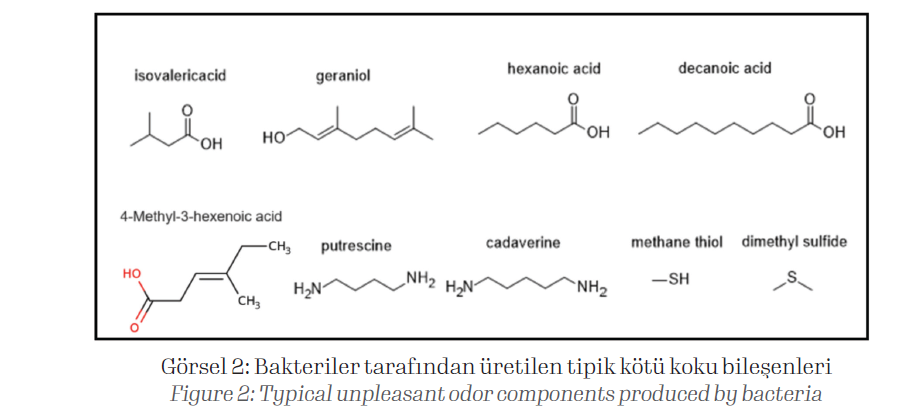
Typical odor compounds produced by bacteria:
4-methyl-3-hexenoic acid (mold/moisture odor), isovaleric acid (foot odor compound), geraniol derivatives, short-chain fatty acids (C4–C8), amine derivatives (putrescine, cadaverine), sulfur compounds (thiols). Common characteristics of these molecules: they are hydrophobic, absorb into textile fibers particularly cotton fibers, and therefore cause malodor even when completely dry.
Methods Used
Malodor Development:
Twenty clean towels, each 30x30 cm in size and weighing approximately 44g, were washed with 6 units of WFK SBL 2004 dirt load without detergent at 40°C for 1 hour 49 minutes on the cotton program. The washed towels, still wet with the dirt load, were placed in a clean transparent bag, sealed tightly and left in a cabinet for 24 hours. The towels developed a strong malodor (moisture-mold).
Washing Conditions:
Four towels with developed malodor were washed with 65 ml base liquid (fragrance-free) detergent + 24 ml concentrated fabric softener at 40°C for 1 hour 49 minutes on the cotton program. After washing was complete, towels were hung and left at room conditions (5-6 hours) until slightly damp.
The towels were placed in a clean transparent bag and sealed, and left in a cabinet for 1 day. After day 1, panelists evaluated odor. For this study, fabric softener products made with approximately 30 fragrances sourced from 6 different fragrance companies were washed under these conditions and tested by panelists.
Fabric Softener Panel Test:
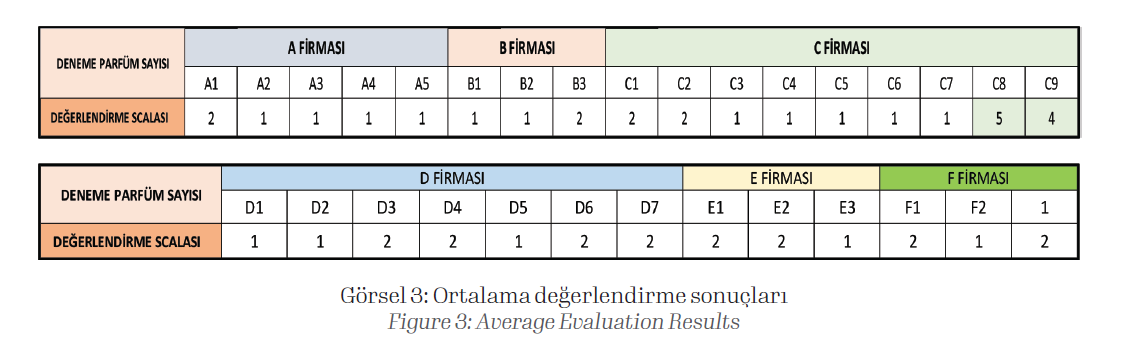
Ten towels washed with fabric softener were scored by users at the end of washing. Scoring was conducted as 5 points for no malodor, 3 points for slight malodor, and 1 point for towels with strong malodor.
Results and Discussion
Thirty fragrance samples from 6 different fragrance companies were adapted into fabric softener formulations. The study was conducted under the conditions specified above, and each test was evaluated by a panelist group of 10 people.
According to this result, 2 fragrances sourced from company C were found successful. The results and methodology of this study were shared with fragrance companies and contributed to malodor prevention efforts.
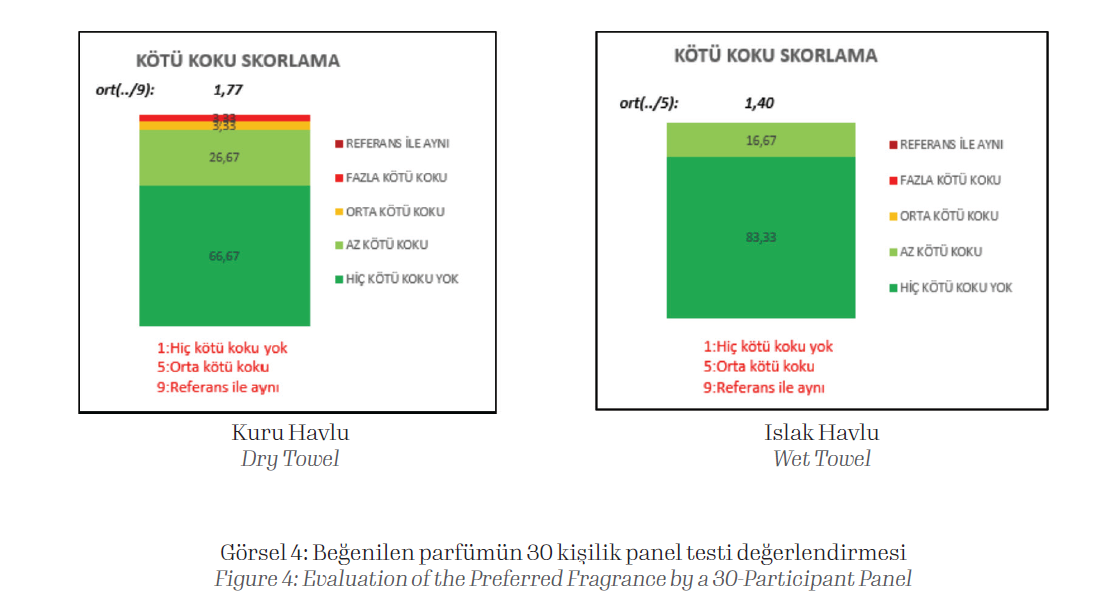
The malodor prevention capacity of company C's most successful fragrance in the panel test on dry and wet towels was also measured in a larger panel study with 30 people.
According to the results below, the agreement rate with the statement "no moisture odor remains" on dry laundry was measured at 77%, while on wet towels it was 87%.
References
Impact of antibacterial detergent on used-towel microbiomes at species-level and its effect on malodor control. PMCID: PMC10989987.
Kubota, H., Mitani, A., Niwano, Y., Takeuchi, K., et al. (2016). Complete genome sequence of Moraxella osloensis strain KMC41, a producer of 4-methyl-3-hexenoic acid, a major malodor compound in laundry. Genome Announc. PMCID: PMC4956460.
Analysis of biofilm and bacterial communities in the towel environment with daily use. PubMed PMID: 37165063.
Gallery