
The quality, shelf life and market success of cosmetic products depend not only on the effectiveness of the formulation and the raw materials used, but also on the ability of the packaging materials to maintain the product's physical and chemical stability throughout its shelf life. In this context, packaging materials should be regarded not merely as carriers but as components that play an active role in protecting the product from external factors and ensuring the chemical integrity of its contents.

The quality, shelf life and market success of cosmetic products depend not only on the effectiveness of the formulation and the raw materials used, but also on the ability of the packaging materials to maintain the product's physical and chemical stability throughout its shelf life. In this context, packaging materials should not be regarded merely as carriers; rather, they are an active component that plays a key role in protecting the product from external factors and ensuring the chemical integrity of its contents.
Interactions between packaging material and product can affect numerous critical parameters ranging from sensory characteristics to chemical stability, from microbial resistance to active ingredient performance. For this reason, the evaluation of formulation-packaging compatibility in the cosmetics sector is becoming a fundamental step in ensuring product safety and regulatory compliance. Increasing modern consumer expectations and rising sustainable packaging trends make it necessary to examine these interactions in greater scientific detail. Plastic packaging is among the most commonly preferred materials in the cosmetics sector. Polymer types such as polyethylene (PE), polypropylene (PP), polyethylene terephthalate (PET), polystyrene (PS) and polyvinyl chloride (PVC) are frequently used in the packaging of creams, lotions, shampoos, perfumes and color cosmetics due to their advantages including low cost, formability, chemical resistance, break resistance and lightness. However, additives such as monomers, plasticizers, antioxidants, UV stabilizers and pigment components used in the production of plastic materials can create certain risks when in contact with product formulations. For this reason, scientific evaluation of plastic-product interactions forms an important part of the cosmetic product safety file (Product Information File, PIF). Particularly when considering the chemical composition and additives of plastic-based packaging, scientific testing of packaging-product interactions has become mandatory from a regulatory perspective.
In Turkey, cosmetic packaging tests are conducted in accordance with applicable legislation and guidelines in line with Law No. 5324 on Cosmetics and its Regulations (EU (EC) 1223/2009), REACH (EC) No 1907/2006, TS EN ISO standards and TİTCK guidelines. Additionally, although cosmetic packaging is not classified the same as materials in direct food contact, the principles relating to the risk of material migration and safety assessment requirements are similar. Manufacturers are expected to submit packaging-product compatibility tests proving that the packaging material will not affect the safety of the cosmetic product.
Tests to be Applied Before Packaging-Formulation Interaction
Stability Studies:
• Finished Product Stability Study: Determination of the resistance of the cosmetic product in its original packaging to chemical and physical degradation under recommended storage conditions or accelerated (forced) conditions (high temperature, humidity, etc.). Accelerated stability tests and long-term stability tests are generally conducted in the recommended final packaging and cap/closure system.
• Finished Product Physical Tests: Observation of whether the sensory characteristics of the product in packaging such as appearance, odor, color and consistency change over time.
Packaging Chemical Analyses
(Migration Studies):
• Total Migration: Determination of the total amount of substance transferred from the packaging material to the formulation.
• Specific Migration: Examination of the transfer of potentially harmful chemicals listed in Annex II (Prohibited Substances) and Annex III (Restricted Substances) of the regulations.
* Heavy Metals: Residues of toxic elements such as Lead (Pb), Cadmium (Cd), Mercury (Hg), Chromium VI (Cr VI).
* Phthalates: Phthalate compounds (DBP, DEHP, etc.) whose use is restricted or prohibited in cosmetics.
* Other Residues: Vinyl Chloride monomer residue, Bisphenol A (BPA) and azo dyes and other impurities and residues.
• REACH Compliance: Examination of the compliance of information regarding residues and impurities in packaging raw materials with the REACH Regulation (Registration, Evaluation, Authorization and Restriction of Chemicals).
Packaging Performance and Physical Tests
The packaging's resistance to use and storage conditions, its ability to protect the product from external factors (light, humidity, air) and its ease of use by consumers are evaluated.
• Plastic Performance Tests:
o Mechanical Tests: Testing the packaging's resistance to impacts, pressure, tension and breakage that may occur during transport and use.
o Thermal Analyses: Examination of the packaging's performance against extreme temperature changes (Aging analyses).
Microbial Analyses
The role of packaging is important in maintaining microbiological safety after the product is opened. Control of the total bacterial, mold and yeast load and any pathogens that may come from the packaging itself to the product is performed by the Preservative Efficacy Test (Challenge Test). Evaluation of the cosmetic product's resistance to microbial degradation; this test plays a critical role in determining the shelf life of the product and the period of use after opening (PAO). During this period, the product's packaging must be resistant to microorganism entry.
Circular Economy Test in the Cosmetics Sector: PCR Challenges and Innovative Solutions
In response to the global climate crisis and plastic pollution, the cosmetics sector is rapidly transitioning to the "circular economy" model. Particularly the Packaging and Packaging Waste Regulation (PPWR) prepared within the framework of the European Union Green Deal and expected to come into force soon is changing the rules of the game for the cosmetics sector. According to the regulation, by 2030, minimum PCR usage obligations will be introduced ranging from 10 percent to 35 percent depending on the plastic packaging type, and this is forcing manufacturers to design "circular" packaging. However, access to PCR sources of sufficient quality and purity in PCR materials stands as the largest technical and economic barrier in front of the sector.
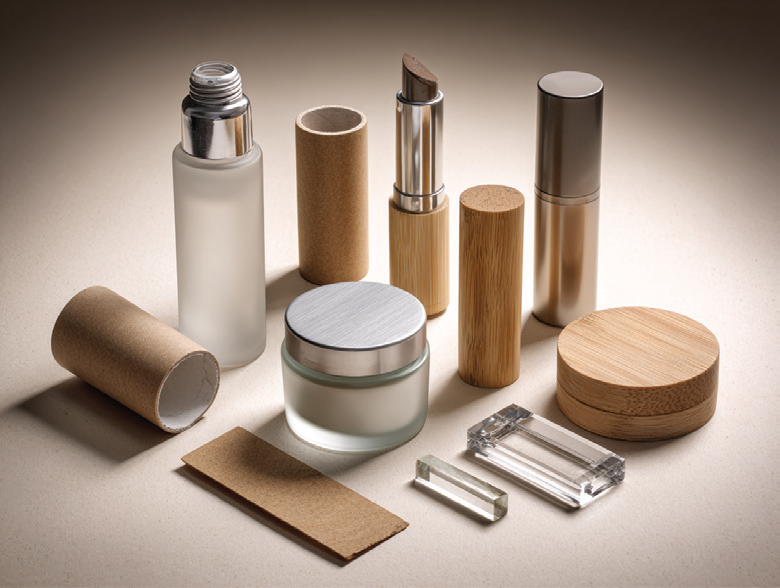
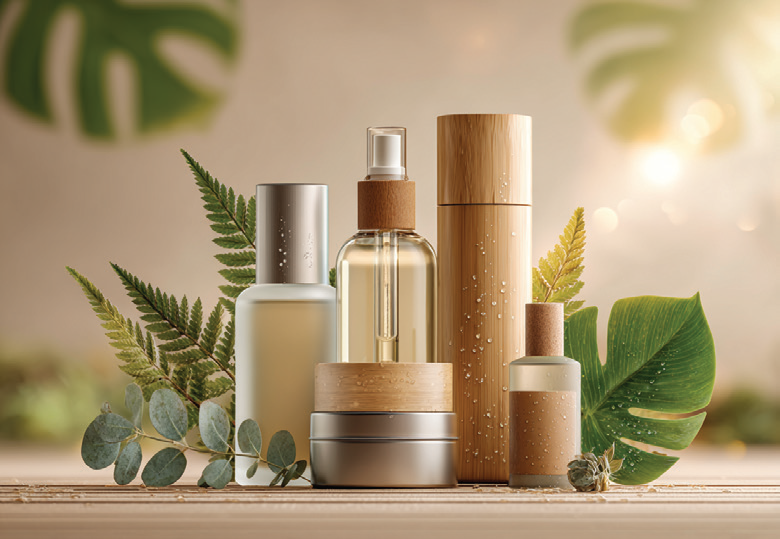
Furthermore, this environmental transformation brings with it new challenges in terms of packaging-product interactions. The higher impurity and contamination risk of PCR materials compared to virgin plastics makes migration tests and safety assessments more critical than ever. This is because PCR plastics are obtained from products that consumers throw into waste bins. In their previous lives, what purpose these waste plastics served (for example, a shampoo bottle, motor oil container or insecticide container) may not always be 100 percent identifiable. It is difficult to determine during the recycling process whether a consumer used the cosmetic bottle to store a toxic chemical.
The biggest disadvantage of PCR materials is the high load of "Non-Intentionally Added Substances" (NIAS). Polymers tend to trap (sorption) chemicals they come into contact with during their initial use into their matrix. Standard mechanical recycling processes (washing and re-melting) may not completely remove these contaminants embedded in the polymer structure, decomposition products or legacy banned additives. This makes migration testing and safety assessment in PCR packaged cosmetic products mandatory to be much more comprehensive and sensitive compared to virgin plastics.
In the process of transitioning to sustainable packaging, the greatest technical barrier that cosmetic manufacturers must overcome is to reduce the packaging's environmental footprint while not sacrificing the product's chemical stability and microbiological safety. As technological advances are achieved, smart and active packaging—the cosmetics packaging of the future—brings a different perspective to the subject because packaging goes beyond being passive protectors and gains technological functions. Nanocomposite materials developed using nanotechnology provide higher gas and moisture barriers with thinner and lighter packaging, minimizing the product's oxidation risk. Additionally, "active packaging" systems in which antimicrobial agents are integrated into the packaging polymer and "smart sensors" that inform consumers of the product's freshness or degradation status through color change are adding a new dimension to the concept of stability.
In summary, cosmetic packaging processes should become a multidisciplinary field at the intersection of materials science, toxicology and environmental engineering. Materials and packaging test strategies that address formulation and packaging as a whole, taking into account both human health (safety) and global and environmental health (sustainability), will be the key to the sector's future success and reliability.
Sources
1-Potosí-Calvache, D. C., et al. (2020). "Stability of Cosmetic Formulations Containing Natural Extracts: Packaging Interactions." Cosmetics, 7(4), 86.
2-SCCS (Scientific Committee on Consumer Safety). (2023). The SCCS Notes of Guidance for the Testing of Cosmetic Ingredients and Their Safety Evaluation, 12th Revision.
3-Nerín, C., et al. (2013). "The challenge of identifying non-intentionally added substances (NIAS) in food contact materials: A review." Analytica Chimica Acta, 781, 1-15.
4-Cinelli, P., et al. (2019). "Cosmetic packaging to save the environment: Future perspectives." Cosmetics, 6(2), 26.
Gallery