2020-2021 Sector Assessment (Paint&Surface)
2020 was a difficult year for our world in every respect. All sectors were affected by this challenging period. The hot-dip galvanising sector did not feel the effects of the pandemic heavily in the first half of the year, because there were ongoing projects and pre-arranged work. The existence of these projects maintained the workload in our sector until the summer months. When we consider 2020 and the impact of the Covid-19 pandemic on the global market, we can say that the pandemic increased our chances of competition with China and the Far East, our most important rivals in the metal sector.
Countries that reduced their commercial relations with China due to the pandemic, with European customers coming to the fore, turned to Turkey's iron, steel and metal manufacturing sectors. The relevant sectors successfully met these demands. Although the US and EU countries reduced their quotas, they nevertheless preferred Turkey, particularly for galvanised metal manufacturing products.
This situation also had a positive impact on galvanising, which is a complementary service sector. Thanks to the effect created by exports, we had the opportunity to close 2020 at the sector level with minimal damage despite pandemic conditions, or even at a normal sector level. We can also say that it was a productive period, especially for companies that primarily supply products and services abroad.
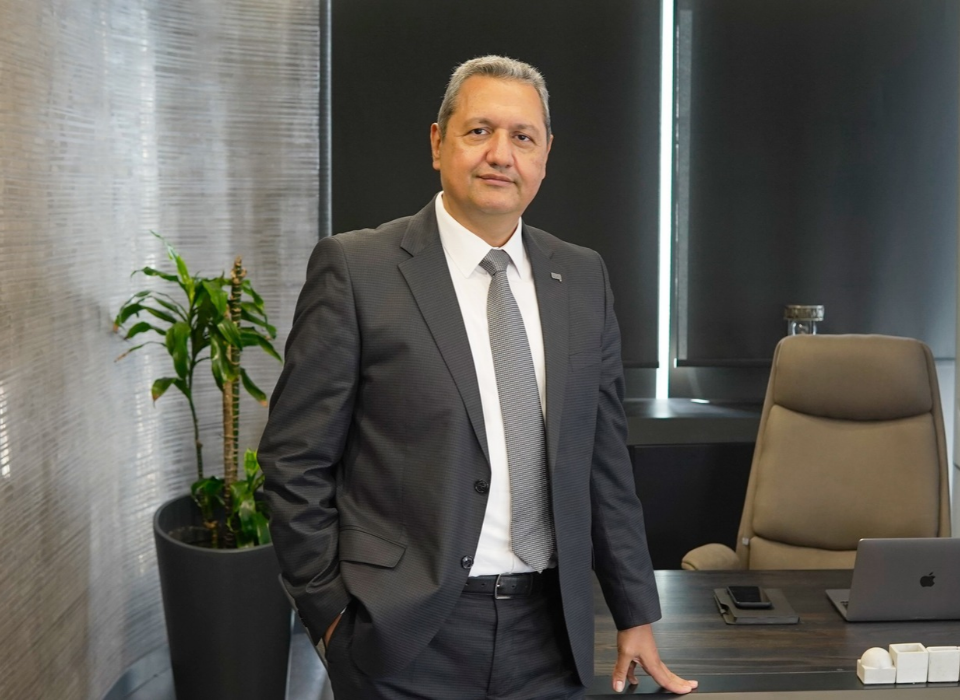
[caption id="attachment_125231" align="alignleft"] M. Cihan Yıldırım Chairman of the Board General Association of Hot-Dip Galvanisers (GALDER)[/caption]
Our greatest expectation for 2020 was that the pandemic would end in 2021 and we would return to our old normal. However, unfortunately we are now far from this expectation. New variants, delays in vaccination, and a picture showing that the pandemic cannot be brought under control until the next year are all indicators.
Accordingly, we first planned all activities of our Association accordingly. We launched the GALDER Webinar series and decided to bring our members and relevant sector professionals together through online seminars throughout 2021. The series has had 3 seminars so far, and all have been met with keen interest from participants.
In the fourth event of our series, we will address the economic, environmental and structural problems caused by corrosion through a "Corrosion Awareness" panel and seek solutions to these problems. Ümit Yasin Güven, Head of the Metal Industries Department at the Industrial Affairs General Directorate of the T.C. Ministry of Industry and Technology, will also honour our panel with their participation.
This panel will take place online on 26 May 2021, Wednesday at 13:30. Participation will be free and registration will be available through the GALDER website. We have also postponed the 4th International Zinc Conference, which we planned to organise jointly with IZA (International Zinc Association) in June, to 8–10 May 2022, again depending on pandemic conditions.
From a sectoral perspective, when we evaluate this year; we foresee it will be a year similar to 2020. Major breakthroughs or investments in the sector will not come onto the agenda depending on current conditions. In addition to the pandemic, economic conditions, problems in collection processes, currency fluctuations that directly affect our main inputs, will be decisive in the sector's course throughout the year. It is also important for us that investments and projects come onto the agenda in the domestic market in the coming period.
On the other hand, the share that Turkey's iron, steel and metal manufacturing sectors filled in 2020, particularly in the place left by China on the global market, provided us with an advantage. The business quality in Turkey and logistical advantages will make it possible to preserve this share gained on the global market and to continue increasing it in the medium and long term. Therefore, it is necessary for us to make very good use of this opportunity created by the crisis, both for 2021 and beyond. As industrialists, the best thing we can do for our country's economy will be to export high-value-added products like galvanised steel.
*********
The Turkish steel sector produced 35.8 million tonnes of crude steel in 2020. The fact that 35.8 million tonnes of crude steel production was reached with a 6% increase under the severe pandemic conditions experienced in 2020 once again demonstrated the high performance of the Turkish steel sector in adapting to changing conditions. Turkey's finished product production, particularly due to the recovery observed in domestic demand in the final months of 2020, increased by 9% compared to 2019, rising from 33.7 million tonnes to 36.8 million tonnes in 2020. Final product consumption, which had decreased by 15.4% to 26 million tonnes in 2019, reached 29.4 million tonnes in 2020 with a 12.9% increase. In 2020, our steel product exports to EU countries, which constitute our largest export market, decreased by 19% due to EU quota applications, declining from 5.6 million tonnes to 4.6 million tonnes. Our exports, which came to a standstill due to former US President Trump increasing the tariff on steel product imports to 50%, rose by 283% to 584 thousand tonnes with the effect of the removal of an additional 25% tariff, while exports to the Far East/South Asia region increased by 4.2% to 1.7 million tonnes. Exports to CIS, Middle East/Gulf and North Africa countries showed decreases of 5.2%, 1.4% and 14% respectively. By country, Israel became Turkey's largest steel product export market with 1.6 million tonnes of exports, followed by Italy with 1.2 million tonnes, Yemen with 967 thousand tonnes, Spain with 844 thousand tonnes and Egypt with 738 thousand tonnes. The total share of these five countries in our exports was 32%. Steel product imports, which increased by 10.5% in the first half of 2020, showed a declining trend in the last quarter due to product shortages caused by rapid demand growth in international markets. However, for the year as a whole, imports increased by 4.5% in volume terms, rising from 12 million tonnes to 12.5 million tonnes, while remaining at USD 7.7 billion in value terms with a 2.9% decrease. Turkey's semi-finished product imports rose to 4 million tonnes in 2020 with a 16.9% increase compared to the previous year. Due to the high amount of imports, a significant portion of crude steel production capacity remained unused. [caption id="attachment_125232" align="alignleft"] Dr. Veysel Yayan General Secretary Turkish Steel Producers Association (TÇÜD)[/caption] According to the latest data released by the World Steel Association, Turkey, which ranked 6th among the world's largest steel exporters in 2019, ranked 12th among the world's largest steel importers. We assess that 2021 will be a better year than 2020. We expect domestic consumption and production to compensate for the losses of the last 2 years and exceed the 2017 level. We estimate that the capacity utilisation rate, which stood at 67.2% in 2020, will rise to 75% in 2021, crude steel production will be around 39 million tonnes, and steel product consumption will be around 36 million tonnes. In 2021, we expect our exports, including iron and steel goods and tubes, to show an increase of around 20% compared to the USD 14.7 billion level in 2020, reaching USD 17.5 billion. In order to overcome temporary supply difficulties in steel supply due to ad hoc demand, it is of great importance that steel-consuming sectors inform steel-producing companies of their seasonal needs in advance in the coming period when production plans are being drawn up. In order to create a long-term and stable structure between producers and consumers in the steel sector, we need to review the inward processing regime that encourages imports and to take measures that will enable the vitality in the automotive and white goods sectors to be directed towards domestic steel consumption.**********
2020 and the ongoing pandemic process have been and continue to be very different experiences for both companies (corporate life) and individual life. In many ways it was an interesting and equally challenging period that allowed us to look at the picture differently, question many of the things we do, and add new methods to our lives, perhaps even causing us to abandon some of our habits forever. [caption id="attachment_125233" align="alignleft"] Dr. Tayfun Sığırtmaç General Manager Kromaş Metal and Machinery[/caption] The challenging aspect was fundamentally rooted in our attempts to manage the human's natural sense of closeness, relationships and contact with controlled distance. In fact, we tried to teach ourselves things contrary to human nature. Being alone, being isolated, being distant, trying to understand others without seeing their facial expressions and holding meetings for hours without seeing faces, etc., were quite challenging to integrate into our lives. Our only hope is that we no longer continue to live alone with concepts that contradict our nature, and that after the pandemic we will once again be reunited with the warmth, embraces, hugs and kisses that nourish what it means to be human and our spirits. The pandemic created parallel effects, albeit with a phase difference, in the world and in our country. First came the shock wave, halted lives and economies, support packages, then normalisation processes, and second and third waves followed by increasing cases and closure processes. With the discovery of the vaccine, particularly high-welfare countries began to enter a faster normalisation process. They first experienced this in social life, then in the economy and industrial sectors. However, in countries less developed or developing like ours, natural in-betweenness was experienced due to the country's economic concerns. Neither full precautionary measures could be taken nor full freedom. While serious measures were taken for the service sector on one side, on the other side, there was partial freedom to prevent the machinery from stopping in the industrial sector where thousands of people worked together. While somewhat right, this process, in crude terms, neither killed nor revived. Particularly during full lockdown periods in Europe, our industrial sector created industrial growth for the country while operating with extra capacity to meet the emerging needs. Our country and structure, which has developed immunity to crises, has passed through perhaps the largest crisis of this scale, which European societies may have experienced in the Second World War, with relatively less psychological and industrial economic damage. What needs to be done now is to complete the vaccination period as quickly as the developed countries have already completed their processes for 80% of the population and move into the normalisation phase. As Kromaş, we too successfully passed 2020 as part of the industry, with the first period focused on domestic demand and support with a vibrant domestic market, and 2021 with a moving foreign market focus. We caught up with the 2020 targets we set before the pandemic and left behind a very successful period. Since the surface treatment sector does not serve only one specific sector and has a stake within every sector, as Kromaş we also created solutions for the surface treatment needs of different industrial sectors in 2020. In 2020, we offered our machinery and consumables solutions to many sectors such as defence and aviation, foundries, heavy industry, automotive sub-industry, natural stone surface aging, furniture accessories and textile accessories. I think 2021 will be a year when we say goodbye to the pandemic. We have learned that we can be productive with less mobility, we have seen that some departments in companies have found home-office applications not as difficult as we thought, and we are entering a new period where we will implement virtual meetings, trade fairs and activities more. We have seen the world economy attempting to weather this period by having large economies print large amounts of money without contracting too much. These support programmes are important for periods of crisis. However, they subsequently create side effects such as inflation. Starting with especially the last quarter of 2021, the world will begin to heal the wounds of the pandemic. The opening in large economies will boost the global economy. However, in developing and least developed countries, this wound-healing process will always be somewhat incomplete without completing vaccination and treatment solutions. We are passing through 2021 not with very ambitious growth rates, but rather as preparation for the new growth period after 2021. This year, growth of 10% in euro terms will bring us to our targets and allow us to prepare for the next fast-paced period. The results we obtained in the first quarter of 2021 also show a trajectory consistent with our targets so far.*******
The coronavirus pandemic, which emerged in China and spread throughout the world, had a negative impact on the global economy. Parallel to its effects on human health, the coronavirus, starting from its country of origin and China, dealt a severe blow to economies and also triggered stagnation and contraction in the global economy. Isolation measures taken led to slowdowns in production and foreign trade, while investments came to a halt. Some sectors had their activities suspended. The halt in production and trade led to the breakdown of supply chains, while mass job losses were experienced and continue. One of our main sectors, the automotive industry, was already shaken during a difficult period. New registrations plummeted. Since August 2020, the German government, offering a highly attractive purchase and scrapping bonus of up to EUR 10,000, caused a temporary purchasing boom. However, this surge flattened again in September, as many private financing and bonuses were limited in conditions. Starting from March 2020 and lasting until the end of August 2020, we experienced approximately 70% decline in our monthly average business volume and turnover. With Covid-19, referred to as a global pandemic or pandemic, we believe that many things in the world will not be as they were before. It is possible to see the signs of this in the period we find ourselves in. Considering our situation in the first quarter of 2021, we are satisfied, but it seems difficult to make a prediction for the rest of the period at the moment. It can also be said that many companies currently view the current situation as an opportunity to position their organisations for the future. As before, new technologies, cloud, robotics or strategic projects related to automation are being advanced and preparing companies for the "new normal", i.e. the situation after Covid-19, making them competitive in the long run. In addition, it is already emerging that many companies increasingly relying on service business in addition to new machine business may emerge from the crisis with relatively light impacts. Particularly during economic crises, machinery and plant engineering services will play an important role in balancing sales and profits. The pandemic continues to pose unprecedented challenges to the manufacturing industry. However, the crisis also has the potential to overcome it even more powerfully. This requires strategic action options for the future. The post-corona period should be characterised by more agile structures. For industry, this means making production processes more flexible, optimising value-added structures and supply chains, and increasing flexibility and efficiency while conserving resources. Dealing with the corona pandemic in companies will require agility, proactive action and pragmatism. Mobile work between departments and managers, digital training and good communication will be very important here.*******
2020 was a period when very different experiences were lived throughout the world due to the pandemic. The epidemic, in particular, changed all the economic balance. Stones were moved in the economy. Many sectors were very negatively affected by this epidemic. Production mechanisms, especially in Europe, were congested. During this period, Turkish metal manufacturers relieved Europe's congestion. We, as their complementary sector, carried out our work. For these reasons, 2020 did not negatively affect the galvanising sector in general or our company in particular. We maintained our targets. In 2020, we performed 70 thousand tonnes of galvanising work within our targets. 80% of the work we did was exported abroad. We are a complementary sub-sector of a product (metal manufacturing). Therefore, the work we do can be considered as indirect exports. From this perspective, this finding is important; with the pandemic, China, which is the supply centre in virtually every sector around the world, lost its effectiveness and importance. It was cut off from the supply chain. European countries, in turn, first strained their own stocks and then their production centres in Eastern Europe. And ultimately they saw the advantages of our country. Because during this period, there was no halt in our sector (metal manufacturing and coating) in our country. They became aware of the manufacturing quality of our metal manufacturing sector. The high exchange rate also supported this. As a result, the mobility of metal product manufacturers engaged in exports increased, which also reflected in our sector. In summary, the galvanising sector closed 2020 in a stable, indeed even good position. Of course, the human side of the business was experienced very dramatically. In particular, I present my respect, gratitude and thanks to healthcare sector workers, who served at the cost of their lives, and who lost their lives. The prediction made towards the end of 2020 that "by mid-2021 the pandemic would lose its effect" unfortunately did not hold true. Mutant viruses, measures taken, shortcomings in vaccination applications, the isolation of lagging countries, etc., all indicate that this process will extend into 2022. 2021 will pass like 2020 for the whole world. Although we have no great expectations or growth for our sector, I do not think it will be worse than 2020. Excluding the pandemic, economic difficulties experienced in our country and problems such as exchange rate uncertainty unfortunately prevent us from seeing the future more clearly. We shall see. Without losing hope.Advertisement
Ad Space728 × 90