




The Power of Thermoplastic Polyurethane (TPU) in the Mobility of the Future
BAYEGAN's manufacturing company BYCHEM contributes to lighter, more durable and more sustainable vehicle technologies with its TPU and polyester polyol solutions for the automotive industry. TPU solutions, with their wide range of applications, play a critical role in the transformation of mobility.
BAYEGAN's manufacturing company BYCHEM contributes to lighter, more durable and more sustainable vehicle technologies with TPU and polyester polyol solutions for the automotive sector. TPU solutions, which have a wide range of applications, play a critical role in the transformation of mobility.
The automotive sector is undergoing significant transformation centered on electrification, sustainability and lightweight vehicle design. In line with targets for lower emissions, extended range and higher performance, manufacturers are reassessing the materials used in vehicles. TPU, which is at the heart of this transformation, creates value throughout the entire lifecycle of vehicles with its high wear resistance, flexibility across a wide temperature range, superior mechanical performance and recyclable structure.
BYCHEM, which has implemented one of Turkey's first domestic TPU and polyester polyol production investments, meets the growing performance and sustainability expectations of both conventional and electric vehicle manufacturers with its newly developed next-generation TPU solutions.
The Material Shaping the Future of Mobility: Thermoplastic Polyurethane
Advanced engineering polymers play a critical role in achieving objectives of driving safety, passenger comfort, durability and lightweight design in modern vehicle design. Among these materials, thermoplastic polyurethanes stand out; due to their high mechanical strength, flexibility and long service life, they become one of the most important performance materials in the automotive sector.
Due to its superior wear resistance, ability to maintain flexibility across a wide temperature range and resistance to harsh environmental conditions, TPU is preferred in many applications such as electric vehicle charging cables, cable sheaths, suspension bellows, gasket profiles, protective films, interior and exterior trim parts and impact-absorbing technical components. Particularly in the automotive sector where electrification is accelerating, TPU combines lightness and durability to contribute to vehicle performance and energy efficiency.
Polyester polyols, which form the basis of these high-performance solutions, are among the critical raw materials in TPU production. Through its TPU and polyester polyol production capabilities, BYCHEM develops high-performance material solutions needed by the automotive sector through an integrated approach and offers reliable and sustainable alternatives to its customers.
Applications of Thermoplastic Polyurethane in an Automobile
Today, thermoplastic polyurethanes stand out as one of the most important engineering materials that improve performance, durability and user experience in the automotive sector. Thanks to advancing material technologies, TPU has a wide range of applications in both interior and exterior components of a vehicle.
TPU is widely preferred in the outer sheaths of high-voltage cables used in electric vehicles and in cable protection systems; it stands out with its superior wear resistance, flexibility and resistance to harsh environmental conditions. In addition, it plays an important role in window and door gasket profiles, suspension bellows, protective film applications and various impact-absorbing technical components.
In vehicle interiors, TPU is frequently used in pedal coverings, cup holders, storage areas and interior trim parts requiring soft-touch feel. Additionally, TPU-based solutions used together with engineering plastics such as ABS and PC/ABS offer both aesthetic and durability advantages in dashboard and door panel applications, contributing to modern vehicle design.
The Thermoplastic Polyurethane Revolution in Electric Vehicles
The rapid increase in the market share of electric vehicles (EV) is reshaping expectations from the engineering materials used. Manufacturers are turning to performance-focused material solutions in line with targets for greater range, higher safety, lower weight and longer service life. In this transformation, thermoplastic polyurethanes stand out with their structures that combine durability, flexibility and lightness.
In next-generation electric vehicles, TPU is widely used in the outer sheaths of high-voltage cables, cable protection systems, charging cables, charging equipment and various sealing applications. Due to its superior wear resistance, ability to maintain flexibility even at low temperatures and resistance to harsh environmental conditions, TPU contributes to the reliability and service life of electric vehicles.
While reducing vehicle weight is considered one of the most critical parameters for extending range in electric vehicles, high-performance TPU solutions offer design flexibility and lightweight advantages compared to conventional materials. The TPU and polyester polyol technologies developed by BYCHEM add value to future mobility solutions while contributing to the automotive sector's sustainability, performance and efficiency objectives.
Lighter Vehicles, Lower Carbon Footprint
Sustainability is now closely associated not only with the use phase of vehicles, but also with the materials preferred in production processes. Long-lasting materials that can maintain their performance throughout the vehicle's lifetime and show resistance to wear, UV rays, temperature changes and chemicals; by providing reduced maintenance, fewer part replacements and more efficient resource use, they contribute to reducing the carbon footprint.
BYCHEM's sustainable product strategy is based on three pillars: recyclable TPU solutions, next-generation formulations with increased bio-based content and product development approaches with reduced environmental impact.
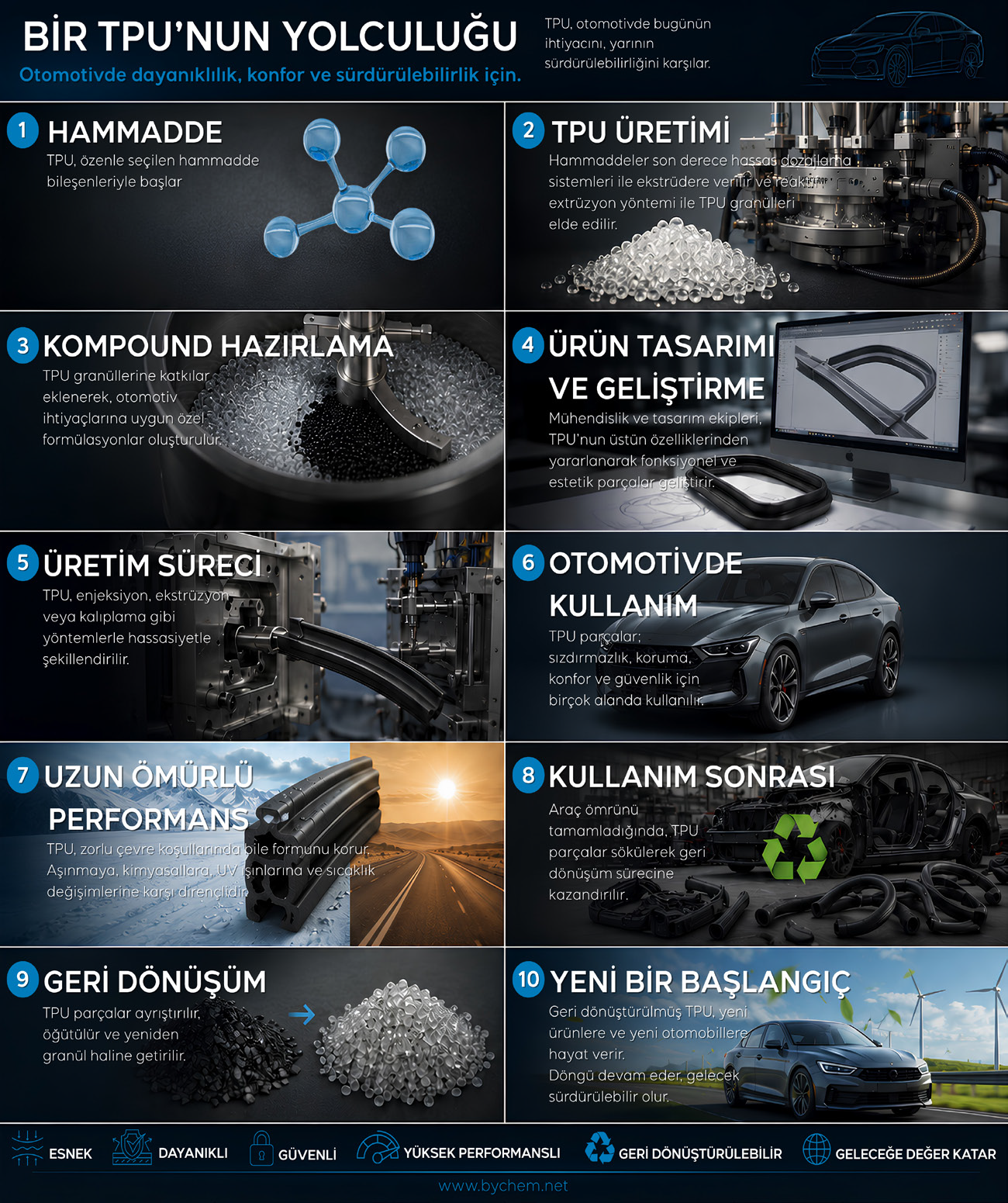
Due to its thermoplastic structure, TPU is reprocessable, allowing end-of-life parts to be recovered and supporting the circular economy. At the same time, its long service life and high durability contribute to reducing resource consumption. BYCHEM contributes to the transformation of sustainable mobility ecosystems through its innovative TPU and polyester polyol technologies, while continuing to develop more environmentally friendly material solutions in line with nature-based solutions approach.
From Laboratory to Road: Research and Development and Innovation The automotive sector, which has some of the world's highest quality and safety standards in material technologies, requires developed materials to pass rigorous testing procedures and to fully meet OEM expectations.
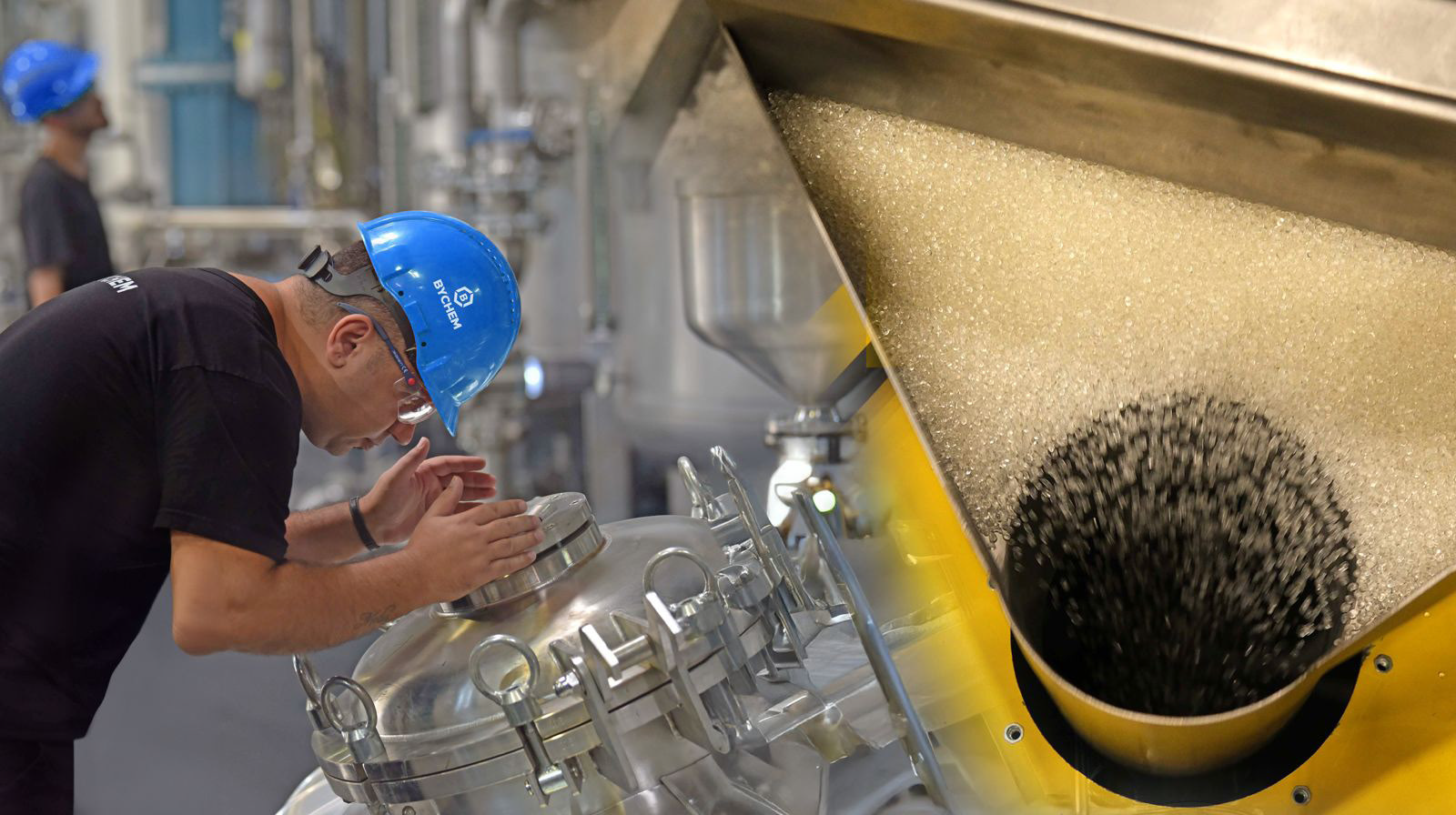
Turkey's first reactive extrusion pilot production line, located within BYCHEM's R&D Center, enables the development of next-generation TPU formulations compliant with these high standards and allows rapid scaling. Through this infrastructure, BYCHEM can develop molecule-level customized TPU solutions faster and validate customer-specific formulations at industrial scale in a short timeframe. The company carries out work on critical parameters such as mechanical performance, wear resistance, UV resistance, hydrolysis resistance, chemical resistance and thermal performance to develop innovative solutions for the automotive sector's changing needs.
TPU solutions developed by BYCHEM stand out with high tear and rupture strength, superior wear resistance, wide hardness range and adaptability to different manufacturing processes. Developed for injection molding, extrusion, film and technical profile applications, these materials combine design flexibility with high performance, placing them among material technologies that shape the future of the automotive sector.
Gallery
Related News
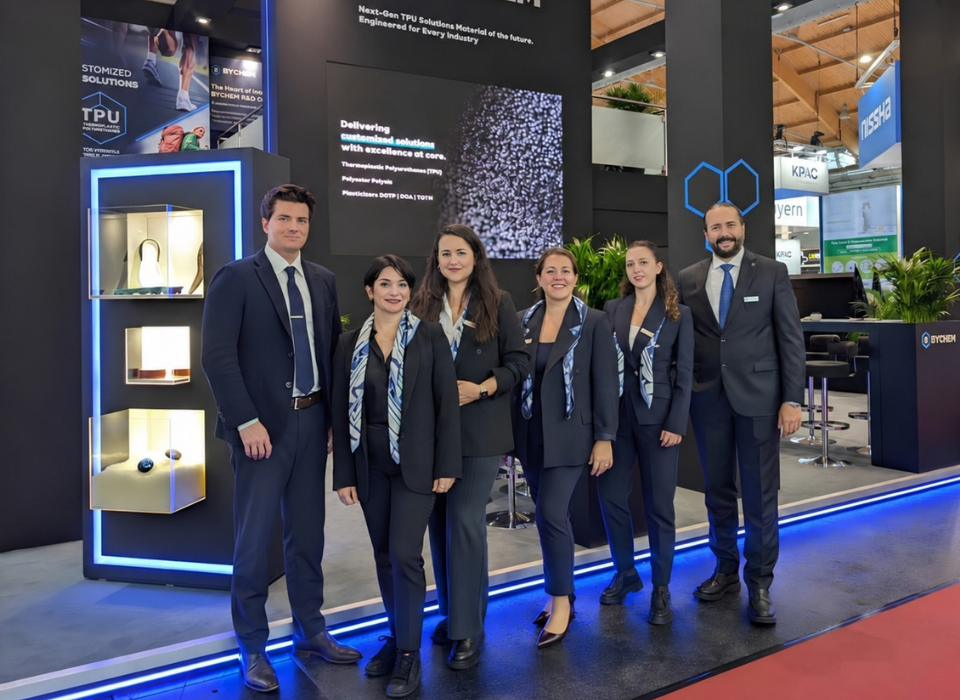
BYCHEM Showcased Its Product Portfolio and Production Technologies at Fakuma 2026

Composite Material That Stops Vibrations and Noise
Kimpur Publishes 2025 Integrated Report Themed "Sustainable Progress"
Toray, IGCS and Lacks Carbon Fiber Launch Composite Collaboration for Drone Production
Oyunlardan ve bulmacalardan öğren
Kimya sanayiini oynayarak tanıyın: her hafta yeni bulmaca, etkileşimli periyodik tablo, sektöre özel oyunlar ve ücretsiz hesaplayıcılar.
Deneyiminizi iyileştirmek ve site kullanımını ölçmek için çerez kullanıyoruz. Ayrıntılar Çerez Politikası ve KVKK Aydınlatma Metni'nde.