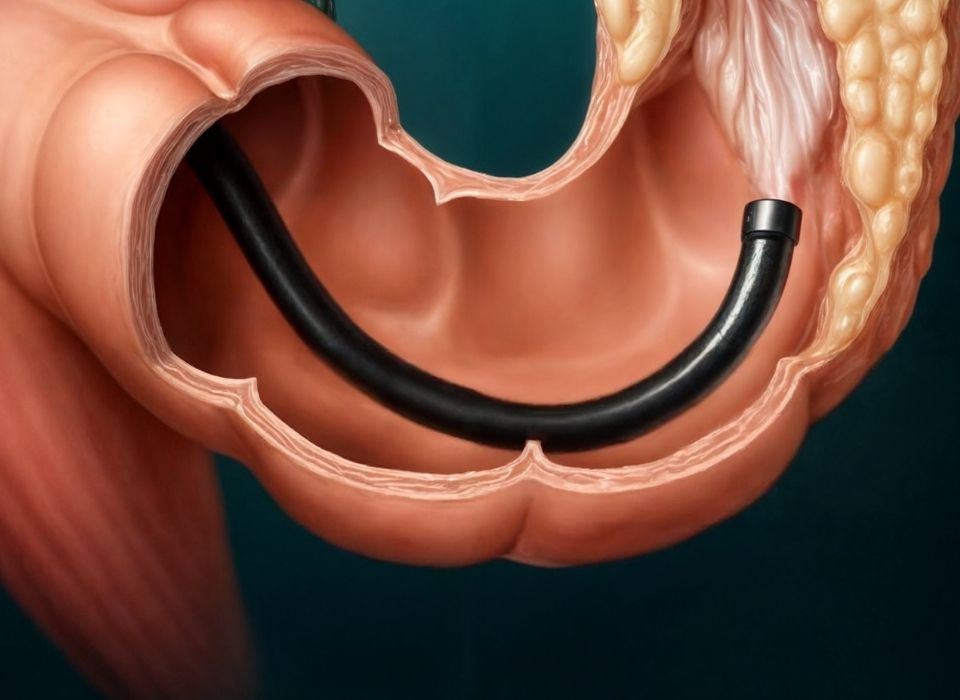
Colon Cancer Can Be Prevented with Colonoscopy

Prof. Dr. Arzu Tiftikçi says that polyps with the potential to turn into cancer can be removed by cutting them out during the same colonoscopy screening procedure, thereby preventing colon cancer.
Acıbadem Maslak Hospital Gastroenterology Specialist Prof. Dr. Arzu Tiftikçi emphasizes that colon cancer can actually be prevented through regular colonoscopy screening, stating: "The malignant transformation process of polyps, which are the most common cause of colon cancer, takes more than ten years. For this reason, polyps can be detected before they transform into tumors through colonoscopy. During colonoscopy, polyps that have the potential to develop into cancer are cut and removed, thereby preventing tumor development. Therefore, it is recommended that everyone undergo colonoscopy at age 50, or according to recent guidelines at age 45, even if they have no complaints. If there is a family history of colon cancer, colonoscopy should be performed at age 40, and in cases of risk factors such as the presence of inflammatory bowel disease, it may need to be done even earlier depending on the individual's age."
Polyps are the most common cause, but…
Colon cancer, in other words colorectal cancer, is associated with many risk factors. Environmental factors trigger inflammatory conditions in the bowel, while hereditary factors can initiate cancer formation through genetic mutations. Age, race, being male, presence of inflammatory bowel disease (such as ulcerative colitis, Crohn's disease), family history of colon cancer or polyps with genetic syndromes constitute non-modifiable risk factors for colon cancer. Tobacco and alcohol use, consumption of red and processed meat, sedentary lifestyle, and obesity are among the modifiable risk factors in colon cancer.
Gastroenterology Specialist Prof. Dr. Arzu Tiftikçi notes that approximately 85-90% of colon cancers are caused by formations called polyps, stating: "However, only one in ten of these polyps removed during colonoscopy will progress to colon cancer. Depending on the country's health policies, either an annual fecal occult blood test should be performed and if positive, colonoscopy should be done, or colonoscopy should be performed directly. Furthermore, to protect against colon cancer, it is extremely important to take precautions against risk factors such as poor eating habits, obesity, tobacco use, and sedentary lifestyle."
If there is family history, risk can increase 4-fold!
Family history of colon cancer is an important risk factor for colon cancer. There is a relationship between family history of colon cancer, particularly in one or more first-degree relatives, and increased colon cancer risk. Additionally, the age at diagnosis of the family member and the age of the person at risk are influential in colon cancer risk. According to a study conducted in Sweden, having a history of colon cancer in a mother or father increases the risk of colon cancer in a person 2-fold. If the diagnosis age in a mother or father is younger than 60 years, this risk increases 3-fold. In the same study, it was shown that in individuals aged 30-39 with a family history of colon cancer in both parents, this risk can increase 4-fold compared to their peers.
Never ignore these symptoms!
Colon cancer often progresses insidiously in the early stages, or even up to very advanced stages, without causing any complaints. Gastroenterology Specialist Prof. Arzu Tiftikçi summarizes the most common symptoms of colon cancer as follows:
● More frequent or less frequent bowel movements
● Constipation or diarrhea
● Continuous feeling of needing to defecate
● Sudden urge to defecate
● Painful defecation
● Feeling of incomplete bowel emptying
● Fresh blood in stool or blood from the rectum
● Sudden abdominal bloating, gas, and pain
● Weakness, nausea, and unexplained weight loss
● Anemia
Cancer development is prevented through colonoscopy!
The reason colon cancer is a preventable form of cancer is that polyps, the most common cause, can be detected before transforming into cancer through regular colonoscopy screening. In the surveillance strategy for colon polyps established by the Cancer Department Head of the Public Health Directorate under the Ministry of Health, the goal is to screen all individuals aged 50-70 in our country. It is recommended to first perform a fecal occult blood test, and if positive, to perform colonoscopy.
Gastroenterology Specialist Prof. Dr. Arzu Tiftikçi advises that everyone should undergo colonoscopy starting from age 45-50, even if they have no complaints, to prevent colon cancer, stating: "Individuals with a family history of colon cancer should begin screening programs no later than age 40. If no polyps are detected in screening, the next colonoscopy should be performed in 10 years; if low-risk adenoma is found, in 5 years; if high-risk adenoma is present, it should be done every 3 years."
Prof. Dr. Arzu Tiftikçi states that during colonoscopy screening, polyps with potential to develop into cancer are cut and removed in the same procedure, thereby preventing colon cancer.
Polypectomy is sufficient in early stages!
When colon cancer is detected in the early period, thanks to recent developments in treatment, it is a form of cancer that can be completely cured. After histopathological diagnosis is made and the disease stage is determined through various imaging methods such as CT and PET (Positron Emission Tomography), treatment approaches are determined. In early stages, the goal of treatment is to achieve cure; in advanced cases, the goal is to stop tumor growth and prevent metastasis.
Gastroenterology Specialist Prof. Dr. Arzu Tiftikçi notes that in a tumor that has not yet advanced to the polyp stalk, the polypectomy method (non-surgical, endoscopic removal of the polyp) is sufficient, stating: "In very advanced cases, the goal of treatment is to improve quality of life. Surgical intervention is the main treatment for colon cancer. The goal with surgery is to remove all cancerous tissue. After surgical procedure, depending on the tumor stage, chemotherapy and radiotherapy treatment are administered."
Gallery