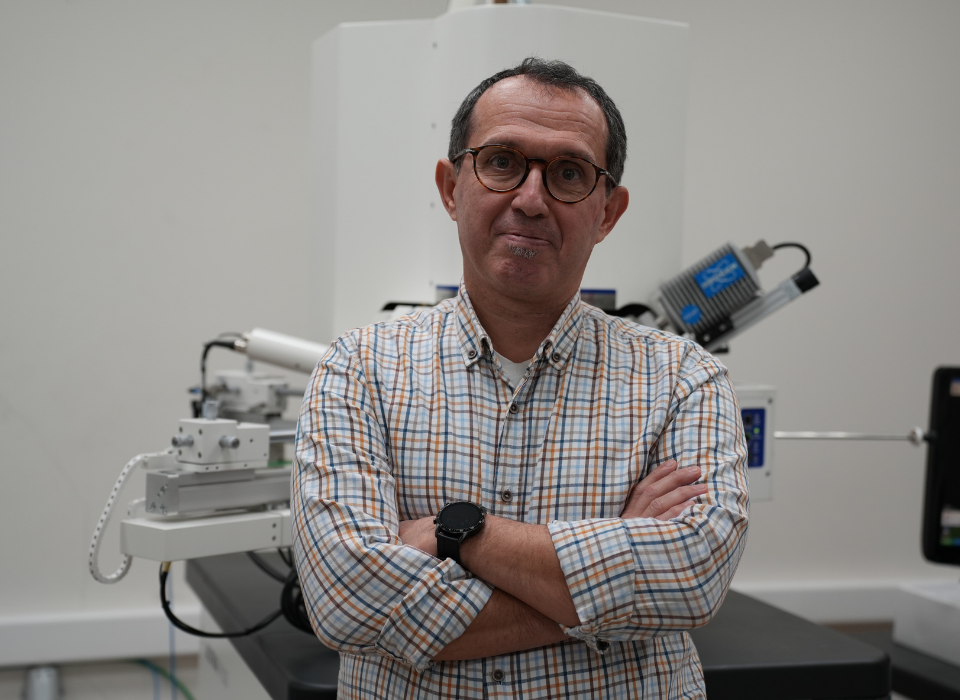
Koç University Surface Science and Technology Center (KUYTAM) was established in 2010 with initial funding from the State Planning Organization (DPT) and additional funds from Koç University, as Turkey's first research center and central laboratory focused on surface science and surface characterization of materials. KUYTAM Director Assoc. Prof. Uğur Ünal provided information about the center's features and the work it carries out.
Report: Gamze Ünal
Koç University Surface Technologies Research Centre (KUYTAM) was established in 2010 with initial funding from the State Planning Organization (DPT) and supplementary funds from Koç University as the country's first research centre and central laboratory focused on surface science and surface characterization of materials. KUYTAM Director Assoc. Prof. Dr. Uğur Ünal provided information about the centre's characteristics and the work it has conducted.
Our centre plays a key role in enabling the implementation of scientific research projects conducted within Koç University, while also providing characterization services, expert opinions, joint projects and other support to many industrial and academic institutions. It responds to approximately 5,000 analysis requests annually and provides over 16,000 hours of characterization services. KUYTAM is established on 600 m² of enclosed space at Koç University's Rumelihisarı Campus and comprises seven thematic surface characterization laboratories (Surface Analysis Laboratory, X-ray Laboratory, Spectroscopy Laboratory, Ultrafast Laser Spectroscopy Laboratory, Wet Chemistry Laboratory, Atomic Force Microscopy and Nanophysics Laboratory, and Coating Laboratory). Its current infrastructure includes more than 40 state-of-the-art characterization instruments such as scanning electron microscopes, atomic force microscopes, X-ray fluorescence spectrometers, X-ray diffractometers, X-ray photoelectron spectrometers, Raman microscopes, ultrafast pump-probe laser spectrometers, FTIR spectrometers, coating systems, ellipsometers, organic elemental analysis, nanoindentation, BET, and inductively coupled plasma mass spectrometers. With this infrastructure, KUYTAM can perform measurements and analyses with high precision on surfaces at different depth scales ranging from several atomic layers to micron levels. Our instruments are regularly maintained annually by both our expert personnel and authorized service providers and are continuously maintained in a calibrated state.
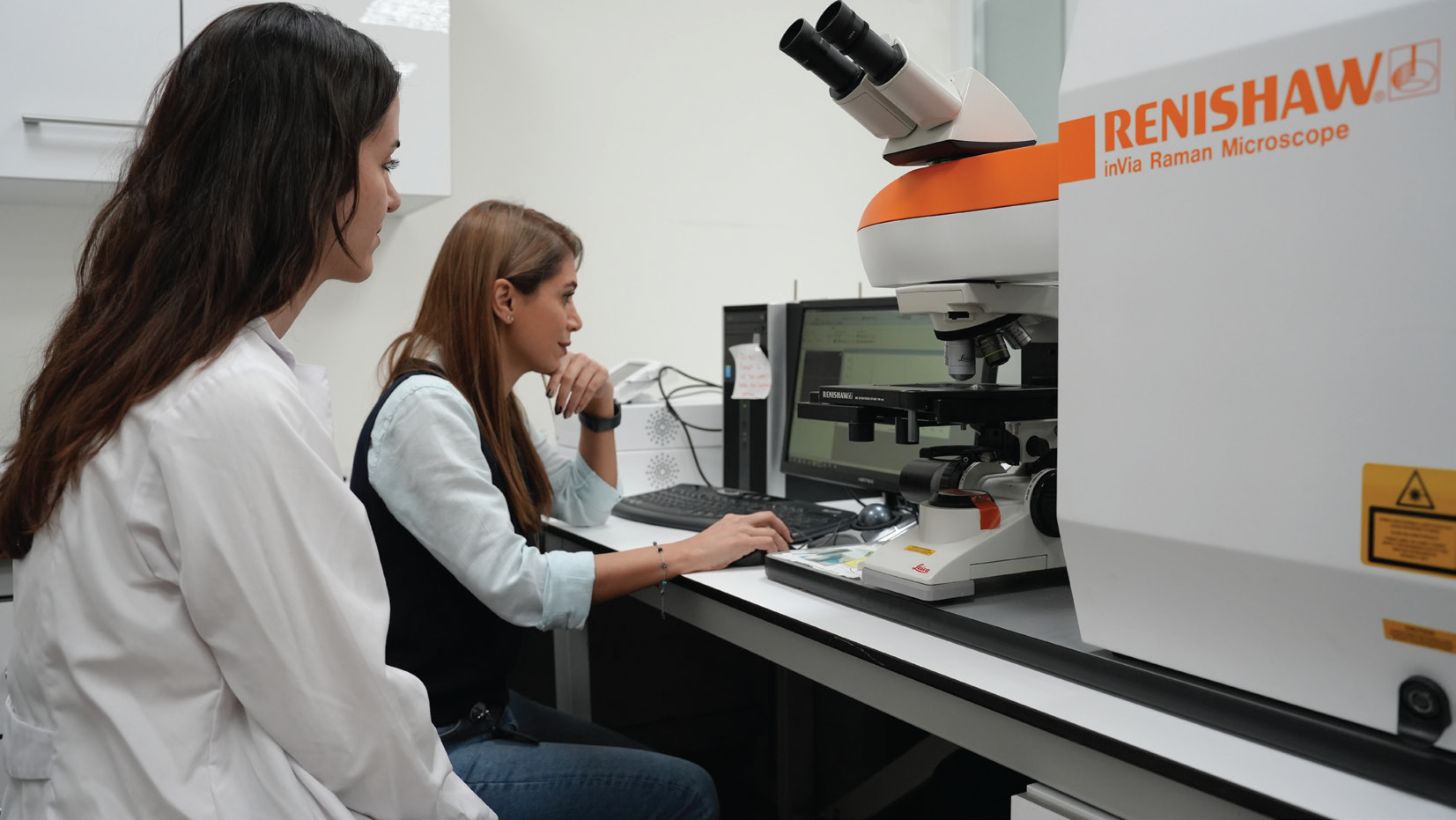
Rheological measurements can be performed at different temperatures in the wet chemistry laboratory. In addition to equipment for particle size and surface charge analysis, samples can have their carbon, hydrogen, nitrogen, oxygen and sulphur content quantitatively determined using a CHONS analysis instrument. This laboratory also features a Langmuir-Blodgett film coating apparatus capable of operating in both aqueous and organic phases to produce molecular-level films, as well as a robotic-arm film coating apparatus through which different molecular layers can be formed into films.
The ultrafast laser spectroscopy laboratory houses an ultrafast and tunable femtosecond laser system. This laser system allows for advanced absorption spectroscopy experiments, pump-probe experiments, nonlinear optical experiments, and numerous different optical experiments along with surface processing of various materials. Additionally, there is a nanosecond laser system. The nanosecond laser system is also used to reveal the optical properties of materials. It is also used in pulsed laser coating methods for producing thin films of various materials. The laser laboratory also features a spectrometer capable of performing absorption and photoluminescence measurements in the 200-5500 nm range. This system also enables single-photon level spectroscopic studies.
In our spectroscopy laboratory, various spectroscopic measurements of materials in different sizes and in solid, gas and liquid states can be performed. These include revealing the electronic structures of materials, colour measurements, and revealing the bonding and chemical structures of materials. The instruments in this laboratory are an absorption spectrometer, a Raman microscope and infrared spectroscopy equipment.
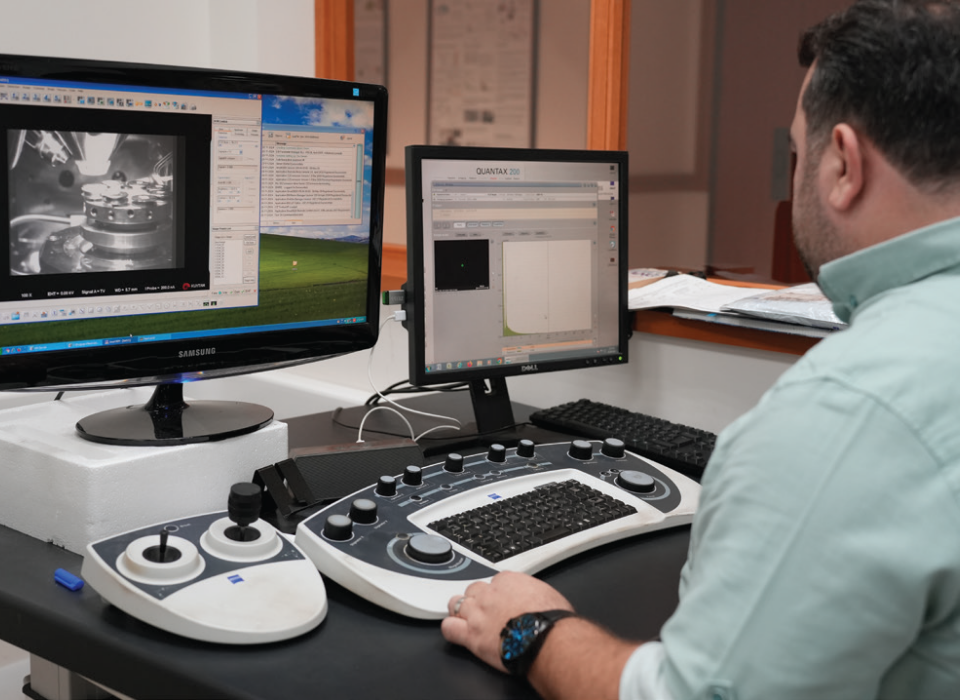
Using X-ray photoelectron spectroscopy and electron microscopes in the surface analysis laboratory, chemical structure analysis, morphology, and quantitative elemental analysis of materials and surfaces with various structures such as powders and thin films can be performed. Morphological analysis of materials can be carried out in the temperature range of -20°C to +60°C. Morphological analysis of biological materials such as living tissues can also be performed. Cutting, polishing and coating equipment are available for surface or interfacial preparation as required for these analyses.
Our atomic force microscope (AFM) laboratory contains two AFM units. With these instruments, not only morphological analysis of surfaces can be performed but also surface properties depending on magnetic, electrical and physical forces can be revealed. Material mechanical properties can be analysed using the nanoindentation instrument in this laboratory.
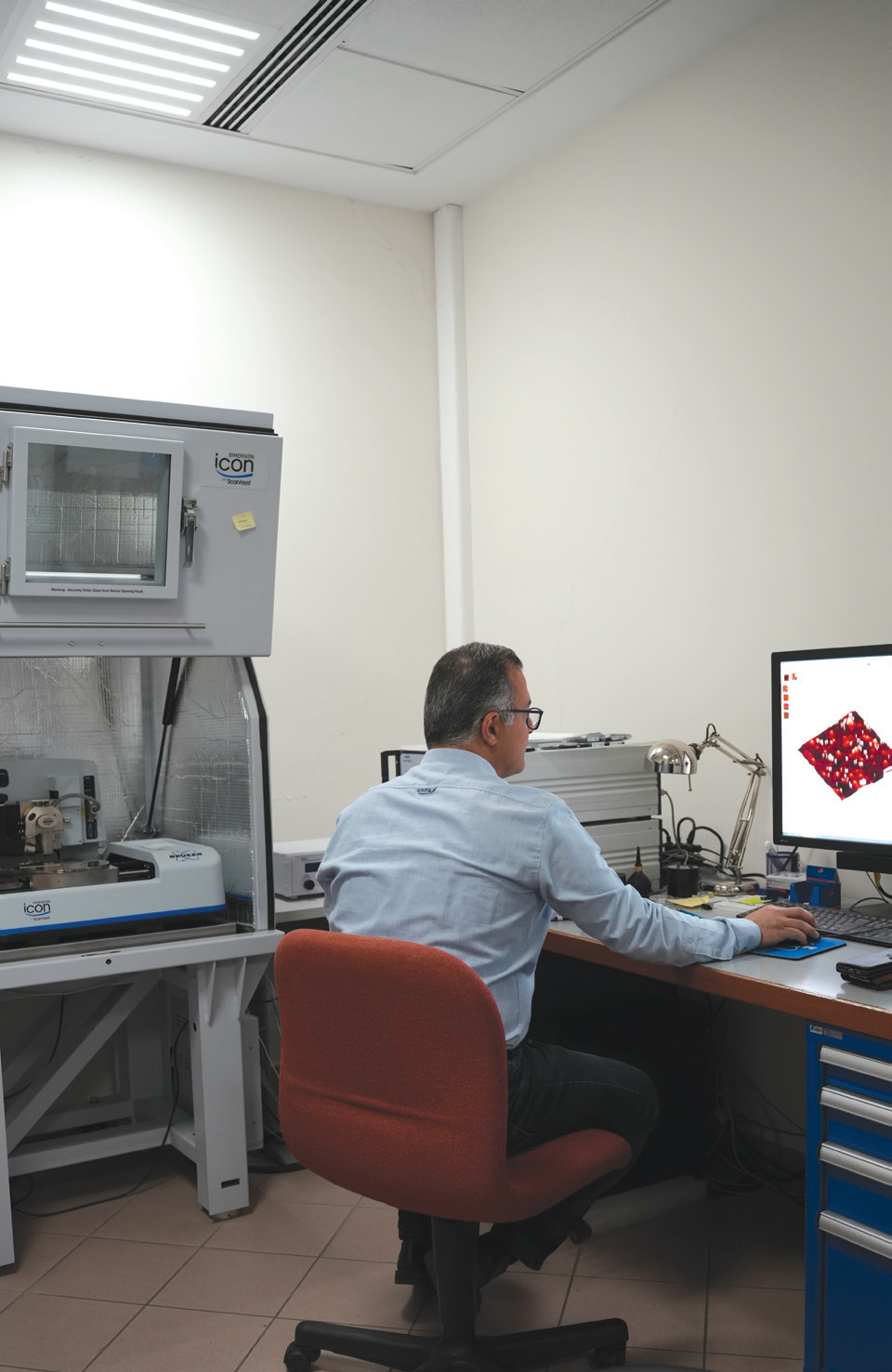
Our X-ray laboratory contains three X-ray diffraction instruments and one X-ray fluorescence apparatus. With the diffraction instruments, crystal structures of materials are revealed. Additionally, thin film thicknesses, densities, crystal structures, interfacial properties, crystal orientation in metal materials, and residual stress distributions can be analysed. With the X-ray fluorescence apparatus, quantitative analysis at ppm level from boron to uranium can be performed and the distribution of elements within materials can be determined. Our full-time staff, each composed of doctoral researchers specializing in their respective fields, respond quickly and competently to all requests from within and outside the university, producing highly precise results.
Our experts evaluate data obtained from the instruments in detail when necessary and provide users with detailed reports. Our experts also provide equipment training for users, regularly organize workshops, and participate in industrial fairs (Turkchem, Paint Istanbul, Euronanoforum, etc.) to inform both academic and industrial groups about novel surface analysis techniques.
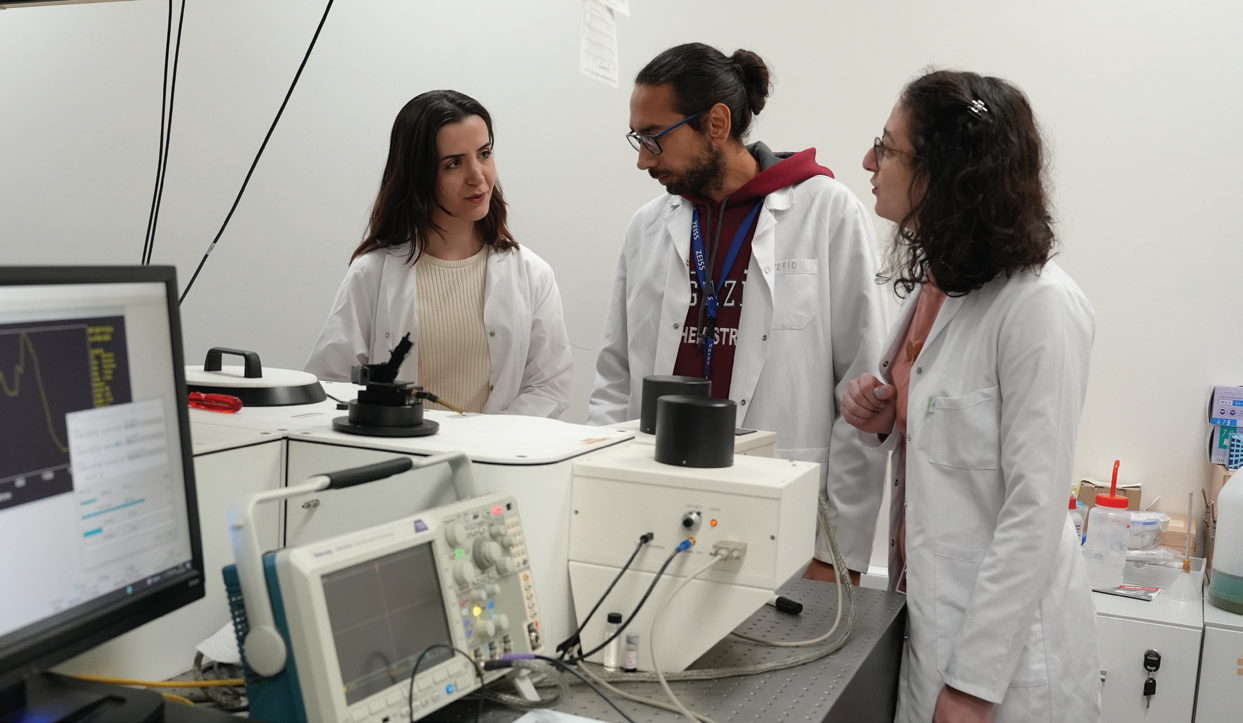
KUYTAM not only provides services but also conducts projects on various topics. Projects are developed at KUYTAM in accordance with requests from different academic circles and industrial organizations. At KUYTAM, solutions to problems are sought through advanced-level analyses using the equipment in its infrastructure and the knowledge accumulated by our experts.
In summary, KUYTAM is equipped with complete and state-of-the-art infrastructure for conducting surface science research and performing characterization of all types of material surfaces. With the aid of the equipment at our centre, information on structural, chemical, optical, electronic, magnetic and mechanical properties of many materials in solid, liquid and gas phases can be provided, and these characterizations can be performed on samples in many forms from thin film structures to powder forms. Our centre is open to requests from all universities, public institutions and industrial companies. Without being held up by lengthy sample acceptance protocols, all requests received at the [email protected] e-mail address are promptly evaluated by our expert team.
Gallery