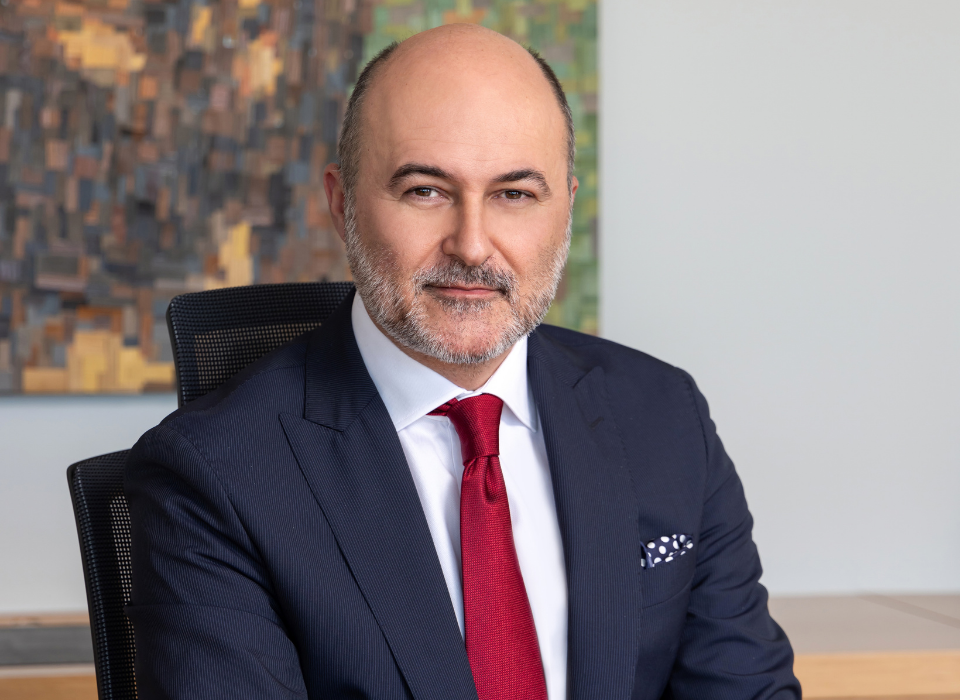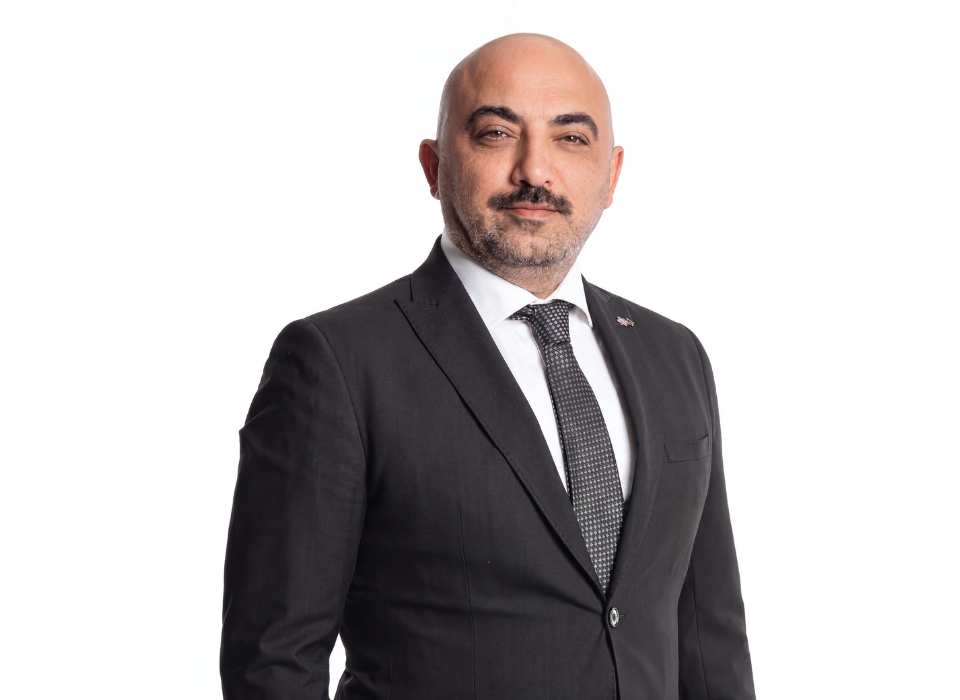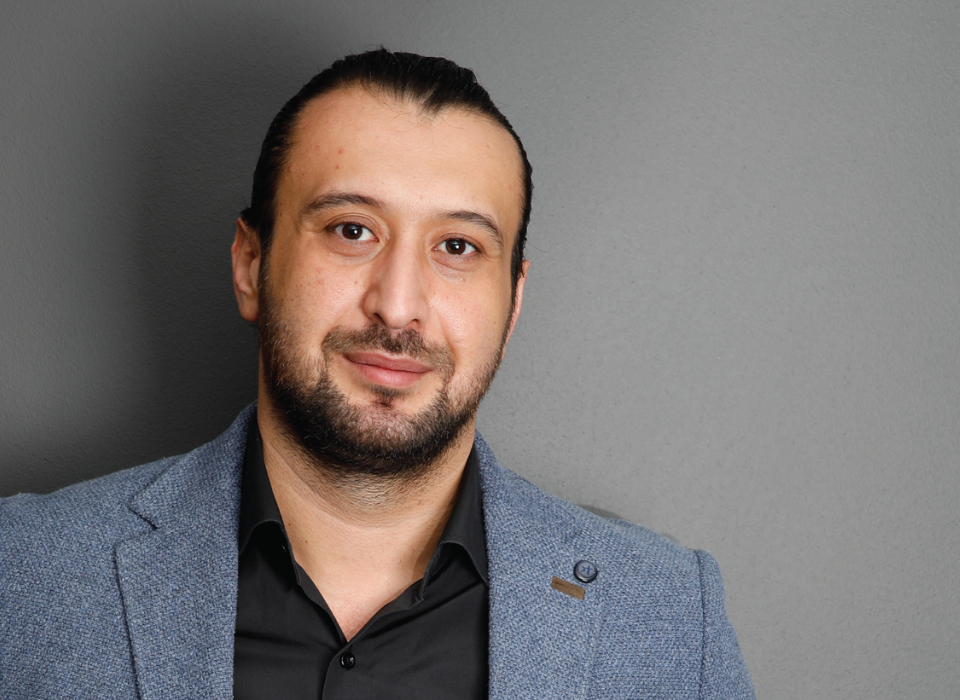
We conducted an interview with Mehmet Yolcu, co-founder of Chemleg. Yolcu stated that, with the fast and reliable consultancy services they offer, they stand by companies throughout complex chemical regulatory processes, and that they facilitate compliance procedures by addressing the industry's gaps in knowledge.
Report: B. Serhat Cengiz
We would like to know you better. Could you provide information about your educational background and professional career?
I was born in Istanbul in 1987. After graduating from the Chemistry Department of the Faculty of Science and Letters at Kocaeli University, I completed my master's degree in Occupational Health and Safety at Marmara University. Since 2013, I have been working on chemical legislation and product safety processes. During this time, I have actively participated in project management, technical file preparation and strategic compliance processes with numerous domestic and international chemical companies under both national and EU legislation. I transferred the experience I gained to a more institutional structure through Chemleg Consulting, of which I am a founding partner, and Chemleg Europe B.V. Additionally, through our software startup Melgosoft, which develops digital solutions specific to the chemical industry, we provide technology-based services to the sector.
Chemleg was founded by a team with extensive experience in R&D, quality control and regulatory consulting. Could you tell us how Chemleg was established and has developed?
Chemleg was founded in 2017 under the leadership of General Manager Elif Koç, with a focus on women entrepreneurship. Among the founding partners are Gökhan Ardıç and myself; we laid solid foundations for the company with our sector experience in areas such as REACH, biocidal products, SDS preparation, R&D, quality control and EHS. In the initial period of our establishment, we had a structure where only the founding partners were actively involved. However, as the number of clients we served increased rapidly, we expanded our expert staff. As Chemleg, thanks to the importance we attach to digital technologies, continuous training and regulatory monitoring, we have achieved an effective position both in the Turkish market and in the European market.
The chemical sector is constantly evolving and faces frequently updated legislation at both national and international levels. As Chemleg, how do you ensure that your team and clients keep pace with these changes?
As Chemleg, we are aware of the dynamic nature of chemical legislation. We keep our team's knowledge up to date by providing regular training, current technical content and case analyses. We provide support to our clients through sector bulletins, early warning systems and one-on-one technical guidance. Additionally, thanks to our Melgosoft software infrastructure, we digitalize compliance processes by providing automation in areas such as regulatory monitoring, KKDIK registration procedures, KKDIK data management, SDS and PCN management. This way, our clients not only comply with regulations, but are also able to manage these processes from a strategic perspective.
You provide a wide range of services from KKDIK compliance to biocidal product risk assessment and technical translation. Which of these services is currently most in demand and what do you think is the reason?
Among our services with the highest demand in recent times are SDS compliance work, PCN notifications and compliance services with the Biocidal Regulation. From the second half of the year onwards, we expect this intensity to shift to KKDIK services. This is because the Procedure and Principles Regulation by the Ministry regarding KKDIK registration procedures has not yet come into force. After its publication, we anticipate that KKDIK compliance services will enter a particularly intense period, especially until the end of 2026. The main reason for the seasonal variation in demand intensity for legislation is the implementation dates and transition periods. The compliance efforts shown by the industry in response to continuously updated legislation give rise to this fluctuation.
Additionally, since regulatory compliance services progress on a process basis, seasonal differences can occur even within the same regulation. For example, the 2018–2020 period, which we can describe as the first phase of the KKDIK Regulation, involved single representative appointments, pre-SIEF notifications, inventory work, information and training. In the 2021–2023 period, the focus was more on identifying lead registrants, preparing lead dossiers and submitting a limited number of joint registration dossiers. During the phased registration period lasting until 2030, we anticipate an intensification of operations such as lead registrant selections for substances without a lead registrant, preparation of lead dossiers, determination of data sharing fees and completion of joint registrations.
Chemleg emphasizes providing fast, reliable and quality consulting. Could you share a recent example where your team's expertise made a significant difference for a client in complex chemical legislation?
I would like to share a recent example we encountered. When a client who had previously worked with a different consulting firm approached us, they had already completed KKDIK registration and pre-registration procedures in the importer role. However, this step, taken without detailed analysis of the company's commercial structure and operational model in Turkey, was strategically incorrect. Once Chemleg became involved in the process, we examined the company's business cycle in detail and presented a comparative analysis of the advantages and disadvantages of different role scenarios. Following the evaluation, it became clear that the company's continuing its registrations under the sole representative role would be both more cost-effective and more advantageous in terms of long-term sustainability. Thanks to this guidance, a more solid KKDIK registration strategy was built for both the company's clients in Turkey and its own legal entity.
Education and information services stand out among your sector support activities. What are the most common knowledge gaps you encounter among chemical sector professionals and how do your training programs address these gaps?
Compliance processes for chemical legislation are an area where it is quite difficult to stay current. Since regulations vary significantly depending on the country and region where business is conducted, continuous training and regular monitoring are of great importance. At this point, the contributions of our trainer Haydar Hazer, who has been working in Chemleg since 2019 and is recognized in the sector for his deep knowledge in REACH and CLP areas, are very valuable. Particularly starting with CDT training, we have developed numerous specialized training programs by analyzing companies' areas of operation and deficiencies. We observe that training customized according to participants' experience and company needs is much more effective in addressing knowledge gaps.
However, the basis of knowledge gaps is not only regulatory complexity, but also the influence of organizational structures. Unfortunately, many chemical legislation professionals must carry out these processes as "additional work" alongside their primary responsibilities. However, in EU member states, in firms with high chemical regulatory obligations, there are typically separate "compliance" or "REACH departments". In fact, within the same regulation in these departments, personnel specialized in different areas often work.
In Turkey, such specialized structures are very limited in number. The fact that chemical legislative processes are generally carried out as additional responsibilities in companies makes error-free and effective compliance more difficult. For this reason, not only training activities but also the need for managers to recognize the difficulty level of these processes and create structures that will allow the development of specialist professionals in the field is critical.
Looking at your expertise in preparing Safety Data Sheets (SDS), technical documentation and product notifications, what are the most common mistakes companies make in their compliance processes? How do you help them avoid these errors?
The most common mistake companies make is not giving sufficient importance to time and budget planning. Yet compliance with chemical legislation is a time-consuming and multi-step process. It includes many stages such as contract preparation, fee planning, technical work and authority reviews. However, companies often become involved in this process too late, compressing actions into a period close to the deadline. This results in insufficient time and necessary budgets not being allocated, consequently leading to non-compliance or delays in processes.
These delays can put companies in a commercially disadvantageous position. Moreover, companies acting under time pressure cannot adequately evaluate their choice of consultant and are forced to make decisions hastily. As Chemleg, to prevent these errors, we guide our clients with a proactive approach. We ensure that companies take early action by sharing estimated timeframes and stages of processes in advance. At the same time, we contribute to the development of specialists within the company who can understand and carry out regulatory processes, and support the creation of a technical infrastructure that will allow consultants to speak the same language.
What do you think will be the main regulatory trends or challenges that will affect the chemical sector in Turkey and Europe in the coming period? How is Chemleg preparing to help your clients adapt to these changes?
We anticipate that the regulation that will most impact the chemical sector in Turkey in the coming period will be the KKDIK Regulation. Despite the fact that there is a very short time remaining until the end of 2026, which is the final date of the phased transition period, the Chemical Registration System (KKS) remains closed. Although registration dossiers have been ready for approximately 17 months, they cannot be submitted to the Ministry because the system is closed. It appears that after the Procedure and Principles Regulation is published, the initial registration period, which normally should take three years to complete, will be compressed into approximately 1.5 years. This indicates a particularly intense period for both companies and consultants.
On the European side, the comprehensive changes to be made in the CLP Regulation and digitalization steps are attracting attention. Under the REACH Regulation, test updates are being requested for many registration dossiers submitted in the past and inspection procedures are accelerating. Additionally, efforts to include polymers within the REACH registration scope continue to be a critical issue for the sector.
As Chemleg, with the aim of ensuring our clients' effective compliance with European legislation, we established our legal entity Chemleg Europe B.V. in the Netherlands. Our company partner Gökhan Ardıç moved to the Netherlands as General Manager of Chemleg Europe. Through this, we aim to monitor European regulations on site and provide advance information to our clients, giving them a competitive advantage.
Gallery