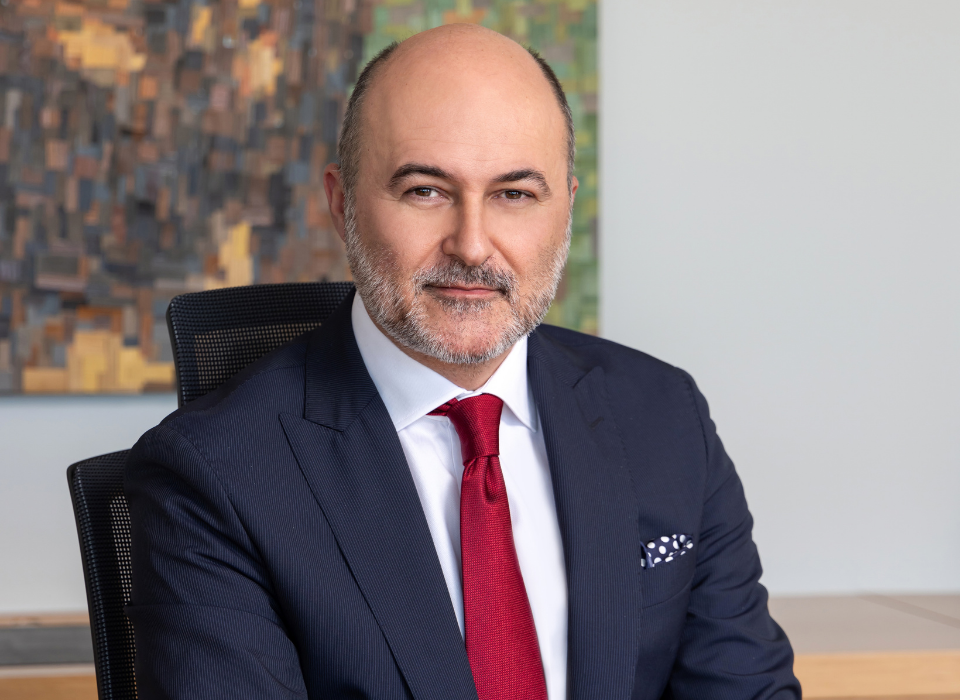
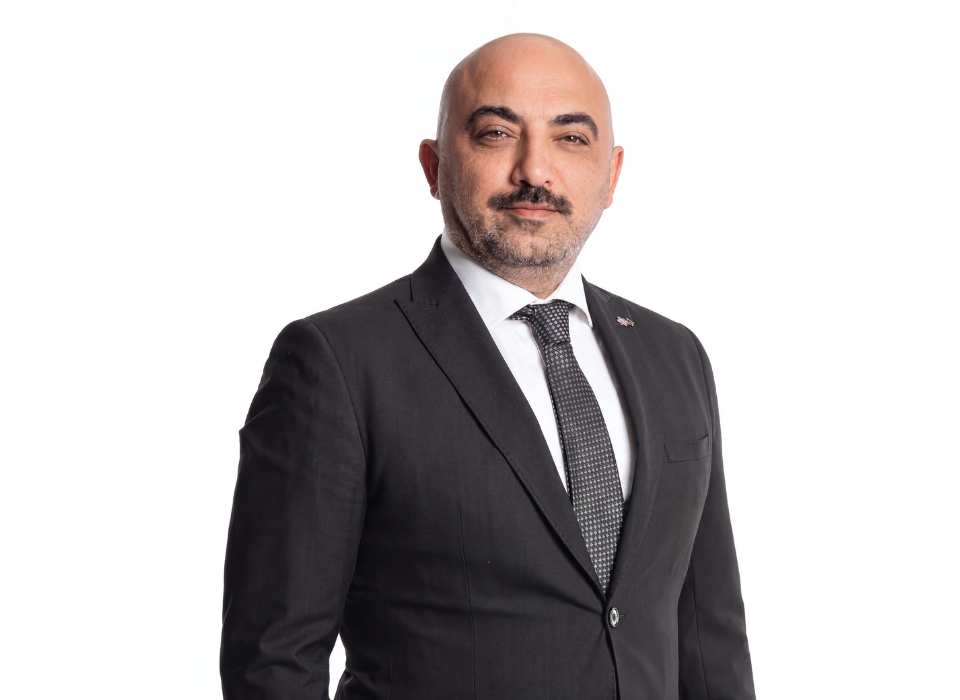
Interview with Can Aydemir, General Manager of CanPlast
In our interview with Can Aydemir, General Manager of CanPlast, we discussed the company's founding process and the product groups it serves. Aydemir shared valuable information with us regarding export activities.
Could you tell our readers about yourself and your professional background?
My name is Can, and I was born in Istanbul in 1980. After graduating from Üsküdar Anadolu High School, I studied Forest Engineering at Istanbul University Faculty of Forestry. Later, I completed an MBA at Bilgi University. I started working at our family company in 2003. I continue to work with my father, Kayhan, to this day. I have been very fortunate since the day I started my first job—he has trusted me completely and stood behind my decisions whether they were right or wrong.Could you share CanPlast's founding process and the success story from its establishment to today?
Our company was founded by my father, Kayhan, in Istanbul in 1990. After my father graduated from the Chemical Engineering Department at Yıldız Technical University, he worked at Derby Plastik, a company in which the Germany-based Freudenberg company was a partner, between 1975 and 1985. During this period, he worked in the company's research and development departments on polyurethane systems, synthetic leather, and polyurethane foam production. Between 1985 and 1990, he worked as production manager at Akyol Plastik, which produced PVC calendering systems. He then founded CanPlast to produce color pastes using PVC systems. From the day it was founded until today, we have specialized particularly in the synthetic leather and polyurethane sectors, successfully producing pigment pastes suitable for PVC and polyurethane systems.What are your product groups and which sectors do you serve?
CanPlast is generally a pigment paste manufacturing company. Our specialty is that we produce colorants for all polyurethane systems. To summarize, we produce colorants for water and solvent-based polyurethane textile coatings, polyurethane foam producers, TPU systems, elastomer and integral PU systems, polyurethane filter systems, polyurea, epoxy systems, polyurethane slippers and sole systems, and outside of these, emission PVC systems, polyester and gelcoat systems, and solvent-based acrylic systems. After 30 years in our country, we now work as solution partners for companies producing in the systems mentioned above. We recommend to our client companies that if they currently use colorants in powder form in their systems, they should switch to using their paste versions. Seeing the advantages of using paste makes both us and our customers happy.Could you provide information about the pigment pastes you offer to the polyurethane sector?
Our job is to help manufacturers using polyurethane raw materials color the products they make. When described this way, it seems simple or easy, but as evidenced by the fact that there are not many companies specializing in this in either our country or the world, it is not such an easy production process. The colorants you add in parts per thousand to the raw material you use must first be compatible with polyurethane or the raw material you use. This way, the colorants do not damage the chemical or physical structure of the polyurethane. My greatest fortune is working with my father, Kayhan. I think many people in the sector know him by name or personally and respect his knowledge and experience in both polyurethane and PVC. That is why, since we deeply understand the raw materials our customers use, all we need to do is serve them quickly. We have 6 varieties of pigment paste series. These are: "PVC-Series" for PVC systems, "IP-Series" for elastomer PU, "S-Series" for PU foam systems, "PU-Series" for solvent-based PU coatings; epoxy, polyurea, polyester and other solvent-based systems, "W-Series" for water-based PU coatings, and "Anilin NW-Series" for solvent or water-based textile coatings. Our specialty is that we produce all our systems except the Anilin Series in a "solvent-free" manner. Our color pastes are thus both more environmentally friendly and have a shelf life of 2 years under normal conditions. Additionally, none of our products contain phthalates, heavy metals, DMF, or solvent-based compounds harmful to the environment. At the same time, we continuously produce our pigment pastes, especially for our synthetic leather customers who produce PVC and PU textile coatings, in compliance with "Inditex Criteria."Could you tell us about your export activities? Which regions do you primarily sell to?
At the end of 2018, we decided that we should be active abroad, and we started with the PSE Europe Fair held in Munich in 2019. Subsequently, we also participated in the Composite Europe fair in Düsseldorf in 2019. In 2020, we had the opportunity to introduce ourselves at the Lineapelle fair in Italy. However, as the pandemic continued to intensify after the fair, we did not progress as we would have liked. In 2021, we participated in the Polyurethanex fair in Russia and the PU Fest fair in Ukraine. In our country, we participated in the Putech Eurasia and PlastEurasia fairs. In 2022, we will participate in paintistanbul & Turkcoat, PU Fest Ukraine, Polyurethanex Moscow, JEC World Paris, K Fair Germany, and finally Plasteruasia Istanbul fairs respectively. In Ukraine, OSV Technology is our official representative. They are successfully introducing our products to the Ukrainian market and gradually increasing our market share. We are also their representative in Turkey. We sell their PU casting machines in Turkey. In Russia, we made a distribution agreement in 2021 with MegaPlast, a company with warehouses in 16 different regions and high experience in composite materials sales. As is known, entering the Russian market and making sales there are truly difficult processes, but we accomplished these quickly thanks to our Export Manager, Aida. Beyond these, since 2020, CanPlast has been an approved supplier for Microtex Composite in Italy. They regularly use our colors. Besides that, we are in close contact with companies especially in Italy, Portugal, Germany, and Poland that produce PVC and PU textile coatings, as well as companies engaged in elastomer and integral PU casting. Specifically to supply our colorants to the PU elastomer market, we are looking for representatives in those countries as well. We have also developed customers in the Iran, North Africa, and Middle East markets through the fairs we attended. Our samples were approved and our initial shipments were made.What do you prioritize when serving your customers? In your opinion, what characteristics are necessary to provide quality service?
I believe there is no one right way to do this. As a person, I have strong interpersonal skills and am inclined to build long-term relationships. Patience is important in the path I have followed. I choose to maintain constant contact with my customers and build brother-like relationships with them beyond just business relations. My responsibility is to provide my customers with correct information and products, stand behind the colorants I provide, and help ensure their operations run smoothly. For this purpose, we constantly maintain stock. Over the years, we have correctly predicted how much each customer will use monthly and produce accordingly without asking them. This way, our customers can generally obtain their products from us on the same day. While producing quickly, we control and record every product we produce to ensure our customers consistently receive standard colors. This speeds up the process a bit more. Since CanPlast's growth in the polyurethane sector has been largely due to users recommending our company to other users alongside the fairs we attend, I believe there are unwritten good agreements between us and our customers.The pandemic greatly affected last year. How was your company affected during the pandemic period and what precautions did you take during this time?
The pandemic that started in 2020 caused us to slow down our growth abroad in particular. However, I believe that like many polyurethane-related manufacturers, CanPlast closed 2020 with growth. This growth was due to our ability to serve many different sectors, the continuation of main industry production, and of course increased awareness of us. We even decided to grow in 2021 and took a new space of 2,500 square meters. In 2021, we increased our number of machines by 30%, which had a positive impact of more than 50% on our production capacity and speed. Currently, both our production and supply processes are progressing as planned. Even though we entered 2022 with a slowdown due to exchange rates, this time our export side picked up. As a result, CanPlast learned to live with the pandemic, made quick decisions accordingly, and learned to manage the situation.Could you provide information about your plans for future years?
The future excites us. First, this year, we will be able to increase our sales in line with the investments we made last year. This will allow us to serve more customers. On the other hand, while participating in the K fair in Germany in October, I want to have a new production line for polyurethane ready and present our new product to fair visitors. We also attach importance to sustainability work as a company. We want to calculate our carbon footprint and take steps in that direction. This step will increase our competitive strength, especially against our competitors in Europe. Actually, for companies of our scale, this might be considered an early stage, but our initial goal is to capture significant market shares in the European market. We are preparing bio-based PU colorants especially for our domestic and international synthetic leather customers who serve high-standard customers. We will soon distribute to all our customers. Additionally, the solvent-based PU textile coating sector is gradually showing and has already started to show a trend toward solvent-free, water-based, or two-component systems. Here, we have completed all our preparations and have begun waiting for future demand. Finally, I believe that both 2022 and the coming years will be very positive for both CanPlast and our country. I believe that companies serving the polyurethane and other composite sectors will achieve their goals.Advertisement
Ad Space728 × 90