Interview with Cem Öztürk on Sanofi Turkey
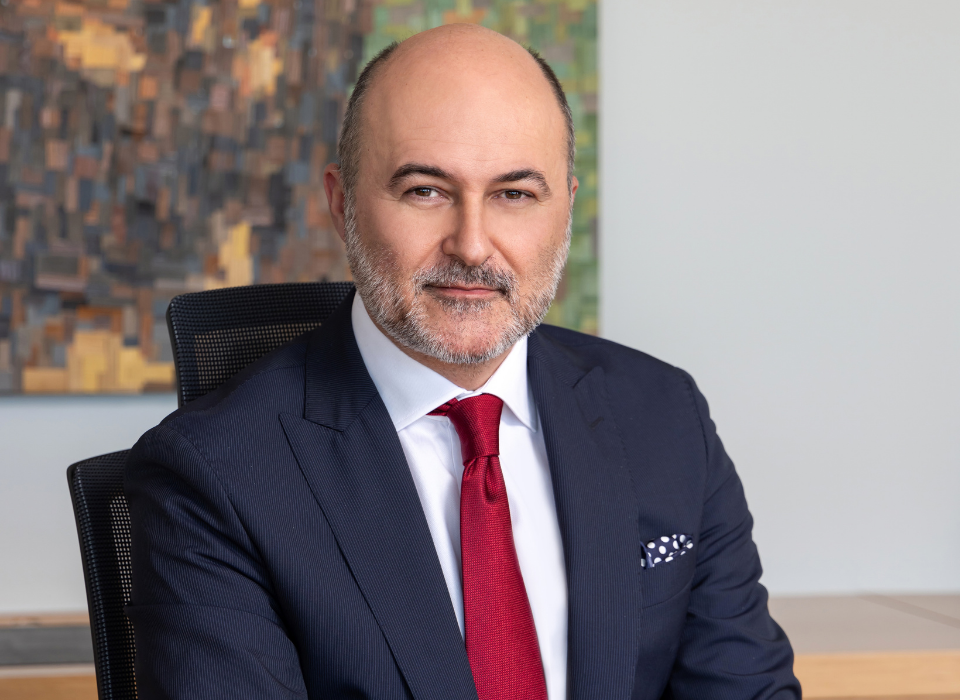
We conducted an interview with Cem Öztürk, Country President of Sanofi Turkey and Head of Sanofi Turkey, Africa and Middle East Essential Healthcare. Cem Öztürk told us how the pandemic affected the pharmaceutical industry and about the company's work. Enjoy the read.
Could you tell our readers about yourself and your background?
After graduating from Galatasaray University's Business Administration Department in 1998, I completed an MBA at Sorbonne University. I began my career in the banking sector in 2000. From the day I joined Sanofi in 2002, I assumed various leadership positions in the company's domestic and international organizations. In 2007, I was appointed Finance Director for Romania and Moldova and served in that role for four years. In 2011, I returned to Turkey as Director of Business Operations Excellence. I subsequently held management positions in the Pharmacy Group Sales Team, Supply Chain, and Hospital Group Key Units. In 2014, I was appointed to lead Specialty and Primary Care Sales and Marketing and the Generic Medicines business, taking on responsibility for a team of 300 people. In 2015, with an overseas assignment, I became General Manager of Specialty Care based in Bangkok and Country President of Thailand and Myanmar. In 2018, I began serving as Country President of Sanofi Turkey and General Manager of Specialty Care, and in 2019, the Levant region and Iran were added to my area of responsibility. I currently serve as Country President of Sanofi Turkey and Head of Sanofi Turkey, Africa and Middle East Essential Healthcare.Can you briefly describe Sanofi's activities in the sector and its structure in Turkey?
We are a company that contributes to Turkey's healthy future, invests and manufactures in our country, creates employment, and has a strong local presence globally. With our investment exceeding 1 billion dollars, we are the pharmaceutical company with the highest investment among global drug companies in Turkey. We are the first company to invest in domestic vaccine production in Turkey. We are also the first Sanofi country to carry out this type of technology transfer. Thanks to this technology transfer in the vaccine field, 68 million doses of combined childhood vaccines were manufactured in Turkey, and 99 percent of children in Turkey were protected against vaccine-preventable diseases. This vaccine also has the distinction of being Turkey's first biotechnology production in its category. Our plant in Lüleburgaz is today the third largest production facility by production capacity among the 70 manufacturing centers Sanofi has worldwide. In 2021, our facility alone met 15 percent of Turkey's total pharmaceutical sector production. We export 11 percent of our total production to 49 countries, including Germany, the United Kingdom, France, Australia, and Japan. It is a source of great pride and satisfaction for us that 86 percent of Sanofi Turkey's product portfolio is manufactured in this country, contributing to our nation's economy.Sanofi recently shared its renewed brand identity and mission with the public. Could you tell us about this transformation in your corporate identity?
As Sanofi, we are undergoing an exciting transformation. Our new corporate brand, which began development in December 2019 and supports our company's modernization and transformation, was introduced worldwide simultaneously in February this year. This transformation reflects our commitment to advancing medical practice. We are demonstrating with greater force than ever before our pursuit of the wonders of science to improve human life. Over the past 50 years, we have pioneered numerous discoveries that improve human life, from diabetes to cardiovascular diseases, rare diseases to infectious diseases. Sanofi's commitment to public health has enabled hundreds of millions of people each year to protect themselves against influenza and brought polio closer to eradication, while the company's scientific vision enables it to offer innovative health solutions in the treatment of inflammatory diseases. This transformation conveys a powerful message that explains who we are and what we aim to achieve: We pursue the wonders of science to improve human life. We know that new treatments for diseases are possible and we never settle for what exists. We continue our activities with the conviction that better treatments can always be discovered, with curiosity and the desire to always advance science further.With the renewal, you announced that you would bring together different divisions and companies within Sanofi under one roof, didn't you?
Yes, throughout our history, we have housed a variety of cultures, identities, and brands under our structure. Sanofi's new brand draws its foundation from this rich legacy and brings together its diverse history under a single unified identity for the first time. To this end, Sanofi Pasteur, the company's vaccine-focused business unit, and Sanofi Genzyme, the specialty care-focused business unit, along with all previously established brands, have now merged under a single Sanofi name and brand. These brands had become symbols of innovation's impact on human life over many years. Thinking and acting as a single company within a new shared purpose and identity framework will enable Sanofi to direct its resources more strategically toward creating important innovations, positioning the company for greater impact for patients.With COVID-19 pandemic, the importance of the pharmaceutical and vaccine sector once again became evident. Can you provide information about Sanofi's efforts in this regard?
First, I must say with pride that we have been one of the companies at the forefront and on every front in this struggle from the very beginning. Today, two-thirds of our medicines and vaccines are defined by the World Health Organization as medicines of vital importance. During the pandemic, we maintained uninterrupted operations at our production and distribution centers, particularly our Lüleburgaz plant and Tuzla distribution center. Our global vaccine efforts began actively from the very beginning of the pandemic. One of these efforts was uniting our strength with GSK for a common goal: developing an adjuvanted vaccine against COVID-19 and producing it in quantities sufficient for millions of people. We are currently planning to submit our scientific research data to pharmaceutical licensing authorities, including the U.S. Food and Drug Administration (FDA) and the European Medicines Agency (EMA), for approval. In parallel with these efforts, we continue to contribute to global public health needs by manufacturing up to half a billion doses for three pharmaceutical companies that have COVID-19 vaccines on the market.Could you discuss the place of Research and Development in your overall activities? What does R&D mean for Sanofi? How large is it? Is there any specific R&D work you expect to have major impact in the coming period?
Sanofi prioritizes the most critical health needs and allocates 15 percent of its global sales to R&D each year. This figure is one of the largest shares allocated to R&D even when all sectors are evaluated. As of February 2022, our R&D product pipeline includes 91 projects, 34 of which are in Phase 3. The stages of our work are shared transparently on Sanofi's website.How is Sanofi's social responsibility approach shaped? Can you tell us about your social responsibility projects in Turkey?
Sanofi is implementing its global Corporate Social Responsibility (CSR) commitments in our country as well, and we are continuing our pioneering role in CSR with great effort, saying #moreisnow. At Sanofi Turkey, sustainability is integrated into all our business priorities. Our new roadmap and commitments, shaped under the headings of Access to Health, R&D for Unmet Needs, Healthy Planet, and Inclusive Workplace, directly contribute to 13 of the 17 Sustainable Development Goals announced by the United Nations. We are aware of the responsibilities that come with being a good corporate citizen. As Sanofi Turkey, through corporate social responsibility programs we have sustained for many years, we aim to contribute to solving social problems and contribute to the "continuity of health." Our Diabetes at School Program, now in its 11th year, works to increase diabetes awareness among students, parents, and teachers, and to improve the quality of life of diabetic children in schools. Additionally, we have undertaken initiatives related to equal opportunity and education that will contribute to social development. Our "Future Women Leaders" project, which we have successfully implemented in cooperation with KAGİDER for 11 years, is one of these. Through the program, we have reached 1,250 young women with our training and awarded them the "Future Women Leaders" certificate. 92 percent of the graduate young women have entered the workforce, are climbing the career ladder, and continue to make us proud.What are your targets regarding sustainability? What are your efforts toward the carbon-neutral goal?
Supporting the ecological needs of our world is of great importance under our "Healthy Planet" heading, one of our company's sustainability priorities. In this direction, we took an important step in Turkey and, as a result of our investments, switched to 100 percent renewable electricity use at our Lüleburgaz facility starting from the beginning of 2020. Subsequently, we also began using 100 percent renewable electricity at Sanofi's Tuzla Depot and Sanofi Head Office. Additionally, to globally minimize the environmental impacts of our operations and manufacturing, we have set specific targets we will achieve: producing 100 percent blister-free vaccines by 2027, using 100 percent ecological designs in all new product packaging by 2025, transitioning to 100 percent renewable energy sources at all our production facilities by 2030, and making our vehicle fleet 100 percent carbon neutral worldwide by 2030.Advertisement
Ad Space728 × 90