
Today, the production and use of nanomaterials are increasing. As the use of nanomaterials continues to grow in many fields, various studies are ongoing regarding their application in paints and coatings. The use of zinc in anti-corrosive paints and coatings has paved the way for the production and use of nano zinc oxide.
Summary
Production and use of nanomaterials are increasing today. Various studies continue on the use of nanomaterials, whose applications are expanding in many fields, within paints and coatings. The use of zinc in corrosion-preventive paints and coatings has opened the way for the production and use of nano zinc oxide.
Introduction
Various studies are being conducted worldwide to prevent corrosion, a problem that has existed from the past to the present. Organic corrosion inhibitors provide high protective properties with low usage rates. Nevertheless, the increase in nanomaterials has opened the door to the search for and research into corrosion-preventive materials. Technological advancement enables the production of new-generation materials. Materials with at least one dimension in the range of 1 to 100 nanometers are called nanomaterials.
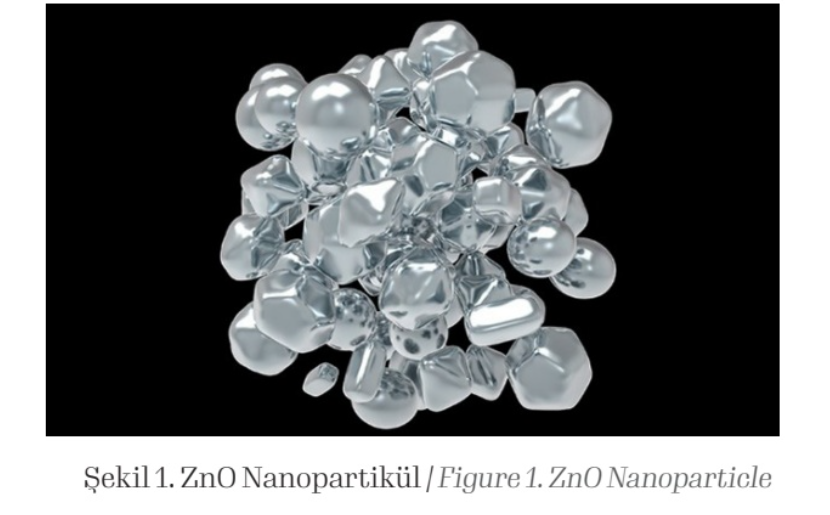 ZnO nanoparticles have dimensions of 1-100 nm with high surface-to-volume ratio, high UV absorption, and photocatalytic properties. Generally used in cosmetics in sunscreen formulations. They have antibacterial, antifungal, and anticancer properties. They have very low toxic properties for human cells. Outside these applications, they are used in ceramics and electronics. When used in paints and coatings, they do not create toxic properties for manufacturers and end users. UV absorbent properties in paints and coatings have created sun-resistant formulations. This property provided by orbital arrangements simultaneously provides corrosion resistance.
Various synthesis methods exist:
1) Direct Precipitation Method: In this method, zinc nitrate and potassium hydroxide solutions are prepared. Under rapid mixing, potassium hydroxide solution is slowly added to the zinc nitrate solution. The resulting white suspension is separated by centrifugation, washed with distilled water and ethanol, and calcined in an oven at 500°C for 3 hours.
2) Hydrothermal Method: In this method requiring the use of a Teflon-coated autoclave; zinc acetate, zinc nitrate, etc., used as zinc source is dissolved in a solvent. As in the previous method, a basic agent such as potassium hydroxide, sodium hydroxide, or ammonium hydroxide is slowly added during vigorous stirring to obtain a white suspension. The resulting suspension is placed in a Teflon-coated autoclave and heated between 100-200°C for 12-24 hours. The obtained product is centrifuged, washed with water and ethanol, and dried.
3) Sol-Gel Method: Zinc acetate dihydrate is dissolved homogeneously in ethanol or methanol. Sodium hydroxide or ammonium hydroxide used as base is slowly added to the zinc solution. This process continues until pH reaches 9-12. The resulting mixture is stirred for 2-6 hours to allow complete hydrolysis and gelation. The resulting gel is washed with water and ethanol to remove impurities and then dried between 60-100°C. The dried gel is heated between 300-600°C to obtain ZnO crystals.
4) Green Synthesis: Extracts obtained from plants are used as a base source and added to the zinc nitrate solution. The reason for using this method is that ZnO nanoparticles obtained from sources derived from natural products can be easily used in pharmaceutical, cosmetic, and food applications. Plant-based sources such as tomato, chamomile, and olive leaves are used for this biocompatible method.
5) Synthesis with Microorganisms: ZnO nanoparticles of different shapes and sizes can be synthesized using fungi, bacteria, yeast, and phages. Although variation depending on the selected microorganism shows this method to be ideal, preparation of cell cultures used during application, intracellular synthesis, and multiple cleaning operations make this method difficult and costly.
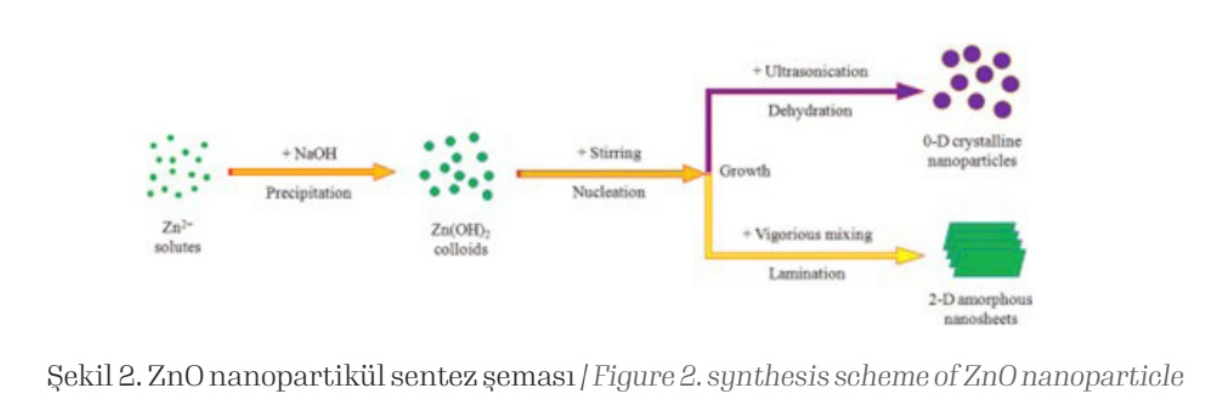
By using an ultrasonic homogenizer instead of a mixer during the synthesis method, more stable and smaller-sized ZnO nanoparticles can be obtained. With this method, called sonochemical method, nature-compatible syntheses, which we call green synthesis, can be performed.
Conclusion
ZnO nanoparticles obtained can be integrated as a filler into paint and coating formulations to obtain paints and coatings with high corrosion resistance. At the same time, having UV protection properties will increase resistance to sunlight.
With technological advancement, the use of nanomaterials in industry is increasing. The production methods not being overly difficult enables many nanomaterials to be synthesized by companies.
References
[1] Zhou, X.-Q.; Hayat, Z.; Zhang, D.-D.; Li, M.-Y.; Hu, S.; Wu, Q.; Cao, Y.-F.; Yuan, Y. Zinc Oxide Nanoparticles: Synthesis, Characterization, Modification, and Applications in Food and Agriculture. Processes 2023, 11, 1193. https:// doi.org/10.3390/pr11041193
[2] https://doi.org/10.1016/j.ipha.2024.08.004
Gallery