The Pioneer of Thermodynamics: How Nernst's Heat Theorem Fundamentally Changed Chemistry
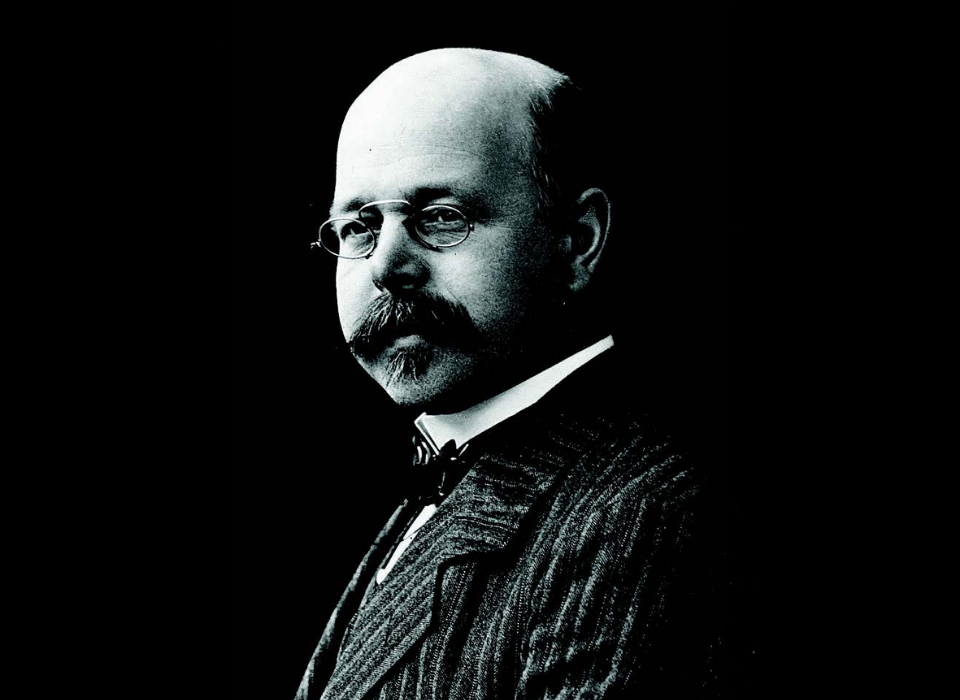
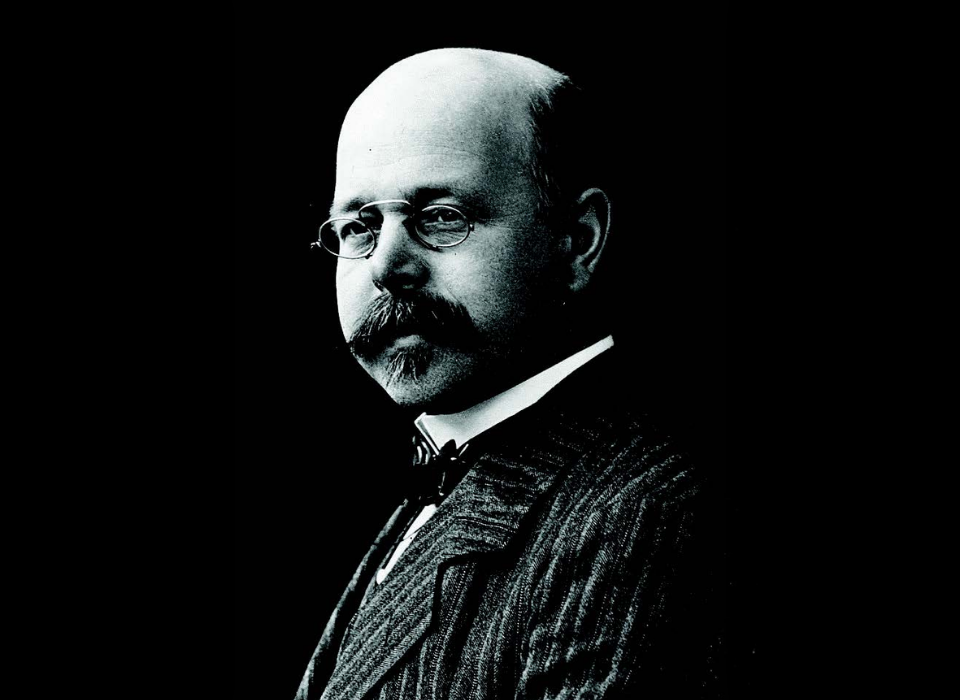
Walther Hermann Nernst (1864-1941) was a German physical chemist who won the 1920 Nobel Prize in Chemistry for his groundbreaking work in thermodynamics. His contributions have fundamentally shaped our understanding of chemical reactions and energy conversions.
Walther Hermann Nernst and the Nobel Prize
Walther Hermann Nernst (1864-1941) was a German physical chemist who won the 1920 Nobel Prize in Chemistry for his groundbreaking work in thermodynamics. His contributions fundamentally shaped our understanding of chemical reactions and energy transformations.
The Third Law of Thermodynamics
Nernst's most renowned achievement was the formulation in 1906 of the principle known as the Third Law of Thermodynamics, initially called the Nernst Heat Theorem. This principle states that as a system approaches absolute zero temperature, the entropy change associated with any chemical or physical process approaches zero. In simpler terms, it is impossible to reach absolute zero through any finite number of operations.
This theorem had profound implications for chemistry, enabling scientists to calculate chemical equilibria and predict whether reactions would spontaneously occur under specific conditions.
The Nobel Prize
The Swedish Royal Academy of Sciences awarded Nernst the 1920 Nobel Prize in Chemistry "in recognition of his work in thermochemistry." The heat theorem provided chemists with a powerful tool for calculating chemical affinities and understanding reaction behavior at various temperatures, particularly at very low temperatures.
Other Contributions
Beyond the Third Law, Nernst made significant contributions to:
• Electrochemistry: He developed the Nernst equation, which relates the reduction potential of an electrochemical reaction to the standard electrode potential and the concentrations of chemical species
• Photochemistry: He proposed chain reaction theory
• Astrophysics: He developed theories about the structure of the universe
Scientific Legacy
Nernst's work established a fundamental foundation for modern physical chemistry and chemical thermodynamics. The heat theorem continues to be a fundamental principle taught in chemistry courses worldwide, and the Nernst equation is foundational to understanding batteries, fuel cells, and biological processes. The Nobel Prize recognized not merely a single discovery, but a lifetime of work that transformed chemistry from largely an experimental science into one grounded in rigorous thermodynamic principles.
Sources
https://www.nobelprize.org/prizes/chemistry/1920/nernst/facts/
https://www.britannica.com/biography/Walther-Nernst
Gallery