New Recycling Technology
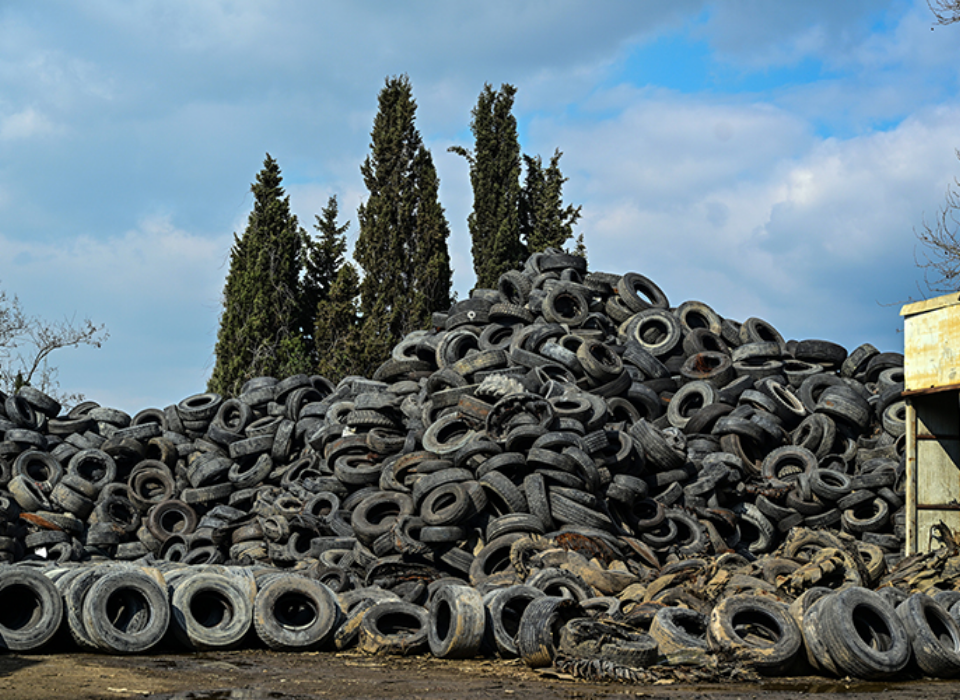
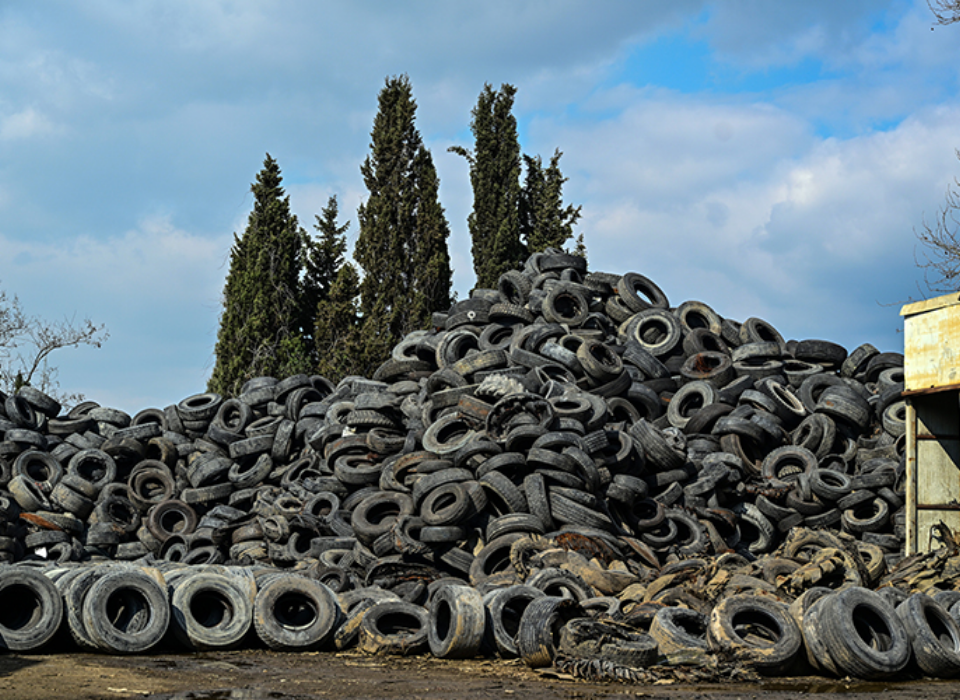
Billions of tires are discarded worldwide every year, and this is cited as one of the main causes of serious environmental pollution. A research team in the Department of Chemistry at KAIST has succeeded in selectively converting waste tires into high-purity cyclic alkenes.
Billions of tires are discarded worldwide each year, and this is recognized as one of the major causes of serious environmental pollution. A research team at KAIST Department of Chemistry has succeeded in selectively converting waste tires into high-purity cyclic alkenes.
Cyclic alkenes are high-value chemical raw materials used as feedstocks for rubber or nylon fibers. This development is regarded as a turning point in the field of waste tire recycling. A research team led by Professor Soonhyuk Hong from KAIST Department of Chemistry has effectively addressed the waste tire problem by developing a dual-catalyst-based continuous reaction system. The research has been published in the journal Chem.
Waste tires are a composite of synthetic and natural rubber, and their physical strength and durability are enhanced to the highest level by adding additives such as silica, carbon black and antioxidants. In particular, the vulcanization process creates cross-links between rubber chains, giving them a structure resistant to heat and pressure. This is one of the main reasons why chemical recycling of waste tires is difficult. To date, waste tire recycling has primarily relied on pyrolysis or physical mechanical recycling methods. The pyrolysis method is a technology that breaks down polymer chains at high temperatures of 350-800°C and converts them into fuel oil, but it has clear limitations including high energy consumption, low selectivity, and production of low-quality hydrocarbon mixtures.
To address these issues, the research team developed a method to convert waste rubber into useful chemicals using two catalysts. The first catalyst helps break down rubber molecules by altering their bond structure, while the second catalyst creates cyclic compounds through ring-closing reactions. This process demonstrates selectivity as high as 92% and efficiency of 82%. The produced cyclopentene can be converted back into rubber, and cyclohexene can be used as a raw material for nylon fibers, making them industrially highly valuable.
The research team successfully applied the developed system to real waste tires, providing selective conversion to high-purity cyclic alkenes. Unlike the current pyrolysis method, this method is regarded as a turning point in the field of waste tire recycling because it can produce high-value chemical raw materials through precise catalytic reactions at low temperatures. In addition, this technology can be widely applied to various synthetic rubber and waste rubber types and is drawing attention as an important novel technology that can contribute to the realization of a circular economy. Professor Soonhyuk Hong stated, "This research presents an innovative solution for chemical recycling of waste tires, and we plan to develop next-generation high-efficiency catalysts to increase economic viability and establish a foundation for commercialization," and continued: "Our goal is to contribute to solving the waste plastic problem through fundamental chemistry."
Gallery