ASAŞ Yeşil Enerji Takes Strong Step Toward Sustainable Agriculture

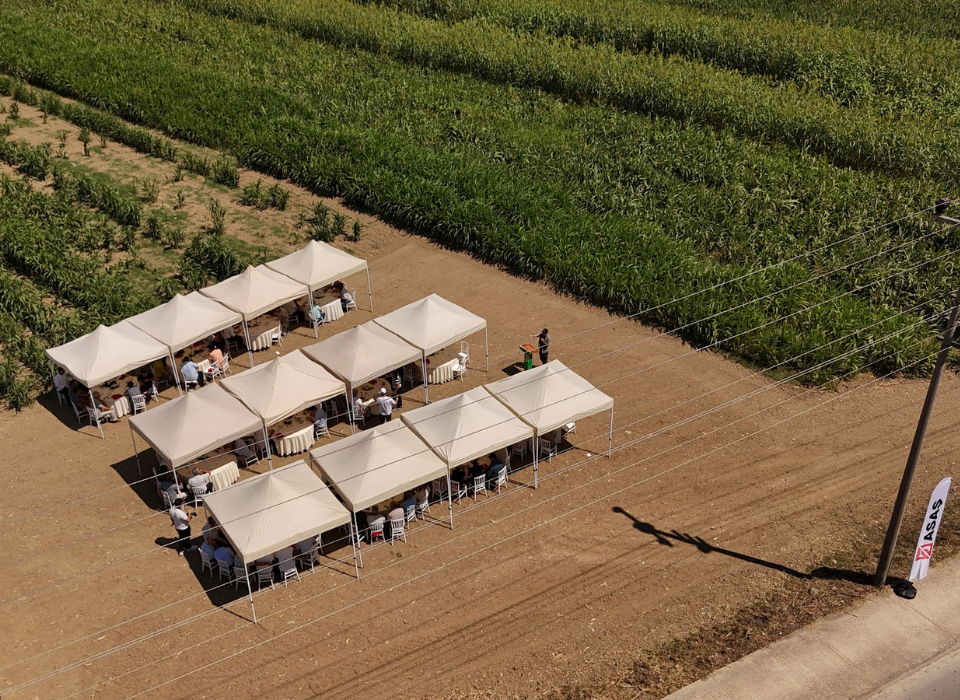
The sorghum plant project carried out by ASAŞ Yeşil Enerji as part of its R&D efforts in the Batakköy area of Akyazı district, Sakarya, was introduced to the local public and farmers at a "Field Introduction Day" event held on Monday, 11 August 2025.
ASAŞ Yeşil Enerji's sorghum plant project, conducted as part of research and development activities in the Batakköy locality of Akyazı district in Sakarya, was introduced to the regional public and farmers through a "Field Introduction Day" event held on Monday, 11 August 2025.
The event, which took place with the participation of approximately 200 people, brought together the Sakarya Provincial Director of Agriculture, Akyazı Deputy Mayor Mehmet Öztürk, former Mayor of Karapürçek Orhan Yıldırım, the Heads of the Chambers of Agriculture in Akyazı, Söğütlü and Adapazarı, officials from the Akyazı District Agricultural Office, mukhtar of surrounding villages, and leading farmers.
Within the scope of this project carried out by ASAŞ Yeşil Enerji, sorghum plant, developed as an alternative to silage corn widely used in animal husbandry, was presented in field conditions. During the event, details on sorghum cultivation conditions, yield rates, and its adaptation process to the region were shared.
From Nature to Laboratory: The Discovery Story of Sorghum
ASAŞ Yeşil Enerji's research and development process began with comprehensive analyses aimed at identifying plant species most suitable for bioenergy production based on their biomass and biofuel values among plants cultivated in nature. As a result of these studies, it was determined that sorghum and corn possess the highest potential among the rich plant diversity globally.
ASAŞ Yeşil Enerji stands out as one of the few global companies conducting intensive research and development on sorghum plant and continuously deepening its investigations in this field. With the completion of the project, it is aimed to make significant contributions not only to agricultural production but also to bioenergy literature.
More Yield with Fewer Resources
Sorghum plant stands out as an important alternative because, despite its biological value being nearly equivalent to silage corn, it requires less water and fertilizer, has low soil selectivity, and possesses high yield potential. With these characteristics, sorghum presents a more resilient product profile in the face of climate change while also providing cost advantages to producers.
Goal: Regional Expansion and Sustainable Agricultural Culture
ASAŞ Yeşil Enerji officials emphasized that one of the project's fundamental objectives is the integration of sorghum plant into the region's agricultural culture. The officials noted that the project's purpose is not merely to introduce an alternative product; it is also to optimize the use of natural resources in agriculture and contribute to water conservation.
"By integrating sorghum plant into the region's agricultural culture, we are both protecting our farmers' income and shaping the agriculture of the future with a climate-friendly perspective. This is an important beginning for a sustainable agricultural culture," they stated.
Participating farmers expressed satisfaction with this event, where they had the opportunity to make direct field observations and receive one-on-one information from experts, noting that sorghum could have a place in their future agricultural planning.
ASAŞ Yeşil Enerji aims to contribute to the expansion of sorghum cultivation by organizing similar introduction activities in different regions in the coming period.
Gallery