L'Oréal Unveils Turkey's Beauty Barometer
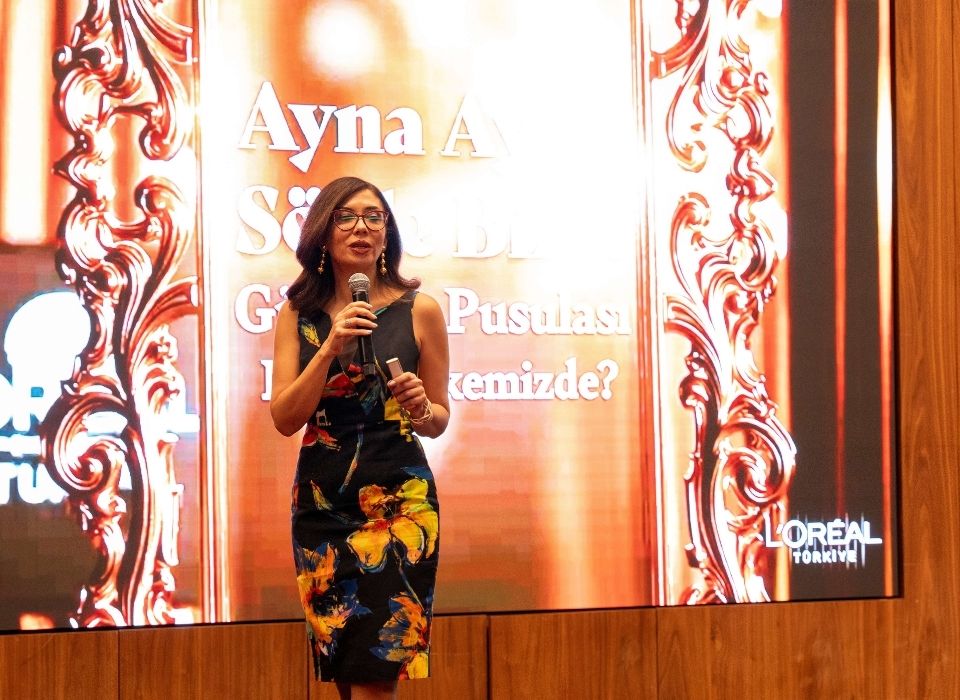
L'Oréal Türkiye has compiled its research on the sector and, in an industry first, revealed the country's understanding of beauty and current trends with "Mirror Mirror Tell Us: What Is the Beauty Compass in Our Country?"
L'Oréal Turkey compiled industry research and set a precedent with "Mirror Mirror Tell Us: What Is Beauty's Compass in Our Country?" which shed light on beauty understanding and trends in the country.
The study contains striking data. According to this, when it comes to beauty in Turkey, women are divided into 7 segments. 54% of women account for 83% of beauty spending. According to the study, 60% of women believe that being beautiful starts with being well-groomed, and that a healthy complexion lies at the foundation of grooming.
While anti-aging product usage increased more than twofold in 3 years, in a country where approximately one-third of the year is sunny, only 1 in 10 people uses sunscreen. Hair loss emerges as a common problem among women. In Turkey, women allocate one-third of their beauty budgets to makeup products, while preferring a natural look on the skin, shine on the lips, and radiance on the cheeks.
Leading tech-beauty company L'Oréal Turkey, in collaboration with Ipsos, compiled multiple studies on the beauty market with "Mirror Mirror Tell Us: What Is Beauty's Compass in Our Country?" The study identifies consumer behaviour in areas such as skincare, makeup and hair care, presenting important data that sheds light on the sector's future. The report, prepared based on a study conducted with women aged 16-60, supported by detailed consumer segment and category analyses, addresses the dynamics of consumer behaviour along with the growth potential of the sector.
Skincare is the largest category in Turkey's beauty market with a 24% share. It is followed by hair care, makeup and hygiene, perfume and hair dye respectively. In channel breakdowns, the fast-moving consumer goods category has a 60% share, while luxury consumption accounts for 15%, dermocosmeticals 10%, and professional products 5%. L'Oréal Turkey holds the leading market position with a 25% market share in the categories it operates.
While per capita beauty spending in Turkey stands at low levels of EUR 40, among beauty product users, per capita annual beauty spending rises to EUR 196. In Europe, this figure reaches EUR 339.
In the "Mirror Mirror Tell Us: What Is Beauty's Compass in Our Country?" study, women are classified based on social attitudes and behaviour towards beauty products. As a result of this analysis, segments emerge that show distinct differences both in social approach and in the use of beauty products.
When examining Turkish women's perspectives on cosmetic products, the report identifies 7 different segments. Four main segments represent 54% of women and 83% of beauty spending: Creative Divas, Conscious Natural Beauties, Controlled Beauties, and Beauty Dreamers lead as the main segments.
Women spend up to 70 minutes a day in front of the mirror
According to the study, women using beauty products spend up to 70 minutes a day in front of the mirror. Women allocating 35 minutes for their morning routines repeat their routines in 5 minutes at noon. Women spending 30 minutes in front of the mirror for evening care dedicate an average of 17 days a year to beauty routines.
Beauty Compass points to "being well-groomed"
L'Oréal Turkey, with the "Mirror Mirror Tell Us: What Is Beauty's Compass in Our Country?" study, also sheds light on the changing beauty understanding of Turkish women. 60% of Turkish women believe that being beautiful starts with being well-groomed, and that a healthy complexion lies at the foundation of grooming.
As women's interest in skincare increased during the pandemic period, women more closely monitored changes in their skin and became more knowledgeable about skin problems. While the rate of sensitive skin reached 37% in recent years, doubling, the rate of visits to dermatologists quadrupled.
With increased skin care awareness, the number of products used also increases. Anti-aging product usage has increased more than twofold in the last 3 years, while younger generations are also showing interest in anti-aging products recently. Sunscreen usage remains limited, while serum usage has been added to women's daily routines. Women in the 25-34 age range in particular prefer serum usage. The greatest brand variety is also seen in the skincare category.
The proportion of those who favour aesthetic procedures stands at 45%, and interest in aesthetic procedures has doubled in the last 4 years.
The top 10 most sought active ingredients in skincare are, in order: Vitamin C, collagen, hyaluronic acid, retinol, AHA BHA, Niacinamide, salicylic acid, glycolic acid, arbutin and caffeine.
As trends, effective anti-aging serums, multi-benefit products, sun protective fluid moisturisers, patches that target and conceal blemishes stand out.
In makeup, natural skin appearance, shine on lips, and radiance on cheeks are preferred
In Turkey, women allocate one-third of their beauty budgets to the makeup category. While women prefer a natural appearance in their makeup, "concealing imperfections" and "natural appearance" shape the fundamental dynamics of the makeup world.
In makeup, natural and combed eyebrows have become an integral part of the modern look, while length is preferred in mascara selection.
Both skincare and coverage-effective foundation products, glosses that care for lips or make them appear fuller, soft-textured melting blushes, mascaras that increase in effect with each coat applied stand out as emerging innovations.
Hair loss is Turkish women's greatest concern
As demonstrated by L'Oréal Turkey's "Mirror Mirror Tell Us: What Is Beauty's Compass in Our Country?" study, 8 out of every 10 women in Turkey struggle with various hair problems, while hair loss stands out as the greatest and most common issue. Women prefer haircuts as the most common hair care practice.
While the number of products entering the hair care routine increases, pre-shampoo efficacy-boosting products, leave-in masks and rinse-out serums with different uses, products with skincare ingredients, and hair with a glass-like appearance emerge as trends.
As the number of products women use on their hair increases over the years, hair length also changes with age. Younger women prefer longer hair, while as age advances, hair becomes shorter. Women start colouring their hair for the first time at an average age of 23, and 60% have their first colouring done at a salon. While greys become visible on average at age 33, the rate of hair colouring decreases as age advances.
Women prefer luxury products on special occasions
The future of the beauty world is shaped by those using dermocosmetical products and luxury products. These product users stand out with their curious nature, openness to exploration and personalised routines.
Luxury product usage increases on special occasions. On these days, luxury products are seen as the best way to mark special moments and achieve a flawless appearance. Nearly all luxury skincare users actively use anti-aging products, while 58% of these users maintain consistent use of sun care products. The serum usage penetration of these users is also 5 times higher compared to other users.
Demand for dermocosmetical products is on a steep rise due to both holistic beauty consciousness and increasing life expectancy, as well as the efficacy of these products. While complementary products to aesthetic procedures were previously preferred, products with more ambitious effects that could potentially replace aesthetic procedures are now preferred.
The power of sustainability in beauty spending
Sustainability stands out as an important topic in beauty preferences. While consumers want to take care of the planet as well, they expect brands to offer products with natural ingredients and environmentally friendly packaging. With reading product contents gaining importance every day, they demand transparency from brands.
Sustainability holds great importance for younger generations. Generation Z, viewing sustainability as a lifestyle, makes purchasing decisions accordingly. Generation Z, which demands brands openly share their sustainability policies, also prefers not to use products from companies engaging in greenwashing.
Generation Z became the precursor to routines, innovation and market growth
Young women, referred to as Generation Z, stand out as the group most open to innovation, while Turkey stands out with the largest Generation Z population in Europe at a 15% representation rate. Generation Z, unafraid to try different products, also adds the new products they try to their routines. In 3-year growth forecasts, this generation's impact on growth is determined at 45%. Of every 10 makeup products sold, 4 are purchased by Generation Z.
7 out of every 10 young women use skin cleansing products, while one in two young women has added masks and peeling products to their routines. While Generation Z's interest in sunscreens, serums, acne-fighting products and purifying face masks increases every day, this group still holds significant untapped potential.
Gallery