TİSD Turns 75: Shaping the Future of the Turkish Pharmaceutical Industry
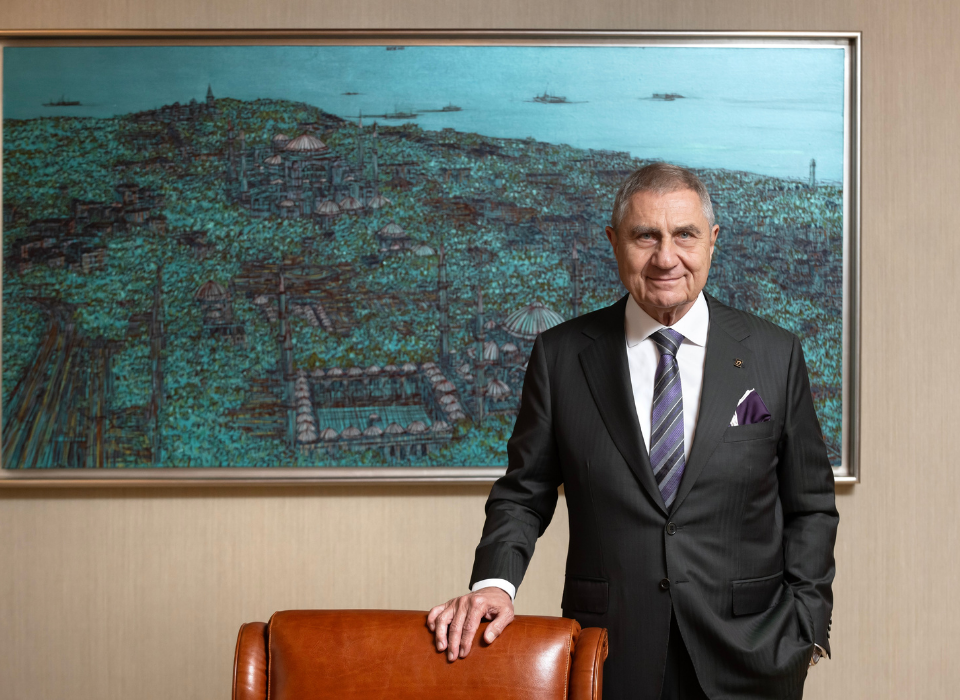
The Pharmaceutical Manufacturers Association of Türkiye (TİSD), the first umbrella organization of Türkiye's pharmaceutical sector, is celebrating the 75th anniversary of its founding. Established in 1951, TİSD has been contributing to the development of the domestic pharmaceutical industry for 75 years, while continuing its efforts to strengthen collective reasoning, establish sustainable health policies, and ensure continuity in access to medicine.
In his assessment on the occasion of the association's 75th anniversary, TİSD President Hasan Ulusoy noted that strengthening Türkiye's pharmaceutical industry's global competitiveness requires the strategic development of high-value-added production based on advanced technology, biotechnology competence, and scientific knowledge capacity.
A new era in the Turkish pharmaceutical sector
The lengthening of human lifespan, the spread of chronic diseases, and advances in biotechnology are increasing the strategic importance of the pharmaceutical sector not only for health policies but also for economic development. Global pandemics and disruptions in supply chains have highlighted the necessity of a strong production infrastructure, scientific capacity, advanced technology investments, and a sustainable ecosystem for uninterrupted access to medicine.
Drawing attention to the fact that Türkiye, currently ranked 19th in the global pharmaceutical market, which has now reached approximately 1.9 trillion dollars, needs to develop a shared vision in order to achieve a stronger position in global competition, Hasan Ulusoy stated that among TİSD's priorities are contributing to the formation of sustainable pharmaceutical policies and strengthening the biotechnology ecosystem.
Noting that the Turkish pharmaceutical market has reached an annual size of approximately 535 billion TRY and 2.7 billion units, Ulusoy underlined that high-technology-based production needs to be strengthened for the sector to have a say on a global scale.

"Production alone is not enough"
Noting that Türkiye has made significant progress over the last 25 years in terms of access to healthcare services, production infrastructure, and the development of the pharmaceutical industry, Hasan Ulusoy said that facilities producing to international quality standards, a trained workforce, and a deep-rooted industrial culture constitute a significant advantage for Türkiye.
Ulusoy noted that Türkiye has a domestic market size of over approximately 12 billion dollars, that pharmaceutical exports reached 2.51 billion dollars in 2025 with a 9.3 percent increase, and that they grew by 128.7 percent in the 2015-2025 period. He stated that the fact that pharmaceutical imports rose to approximately 7.3 billion dollars by the end of 2025, with an increase of approximately 17.4 percent in the same period, shows that high-value-added production capacity needs to be developed.
Ulusoy used the following words in his assessment:
"Türkiye has made a very significant advancement over the last 25 years in terms of access to healthcare services, production infrastructure, and the development of the pharmaceutical industry. Today, our facilities producing to international quality standards, our trained human resources, and our deep-rooted industrial culture offer a strong starting ground for us to get one step ahead in the competition of the future.
The global health ecosystem is going through a new process of transformation. Biotechnology, cellular therapies, artificial intelligence-assisted drug development processes, and digital health applications are reshaping the future of the sector. Türkiye possesses the knowledge base and production culture to correctly read this change. However, financial sustainability is also essential for us to be able to preserve our pioneering identity in this process.
Currently, the high-cost medicine group, which constitutes only approximately 1.8 percent on a unit basis, makes up approximately 20 percent of the total pharmaceutical budget, and approximately 98 percent of these products are imported. This picture clearly shows that in the coming period we need to grow our production capacity not only in terms of quantity but also in terms of high technology and high value added.
Our resources are limited, and we must use these resources in the most effective way. To do this, we must establish our strategic plans starting today and involve all stakeholders in the process. Financial sustainability is vital not only for getting ahead in the race to develop the treatment methods of the future, but also for growing our existing export capacity. Therefore, production alone is not enough; we must build a structure that can generate long-term value in global competition."
Emphasis on predictable policies in the pharmaceutical industry
Noting that Türkiye's production capability and geostrategic location offer significant advantages at a time when global supply chains are being restructured, Ulusoy said that the country has the potential to become an alternative supply center in the pharmaceutical sector.
Stating that Türkiye is in a position to serve a wide geography with its strong production infrastructure and industrial accumulation, Ulusoy noted that capitalizing on this potential would contribute to the sustainable growth of exports and strengthen Türkiye's strategic position in the global health ecosystem.
Ulusoy, stating that the pharmaceutical sector needs predictable, stable, and holistic policies due to high R&D investments and development processes spanning many years, continued as follows:
"There is a need for predictable, stable, and holistic policies so that the sector's production capacity can be developed sustainably, so that it can invest in advanced technologies, and so that it can increase its competitiveness in international markets.
By its nature, the pharmaceutical industry is a sector whose development processes span years, which requires high R&D and advanced technology infrastructure investments, and which needs long-term strategic planning. Precisely for this reason, as TİSD we see the development of collaborations and holistic policies that will support our sector's long-term competitiveness, strengthen the investment environment, and encourage innovative production as a strategic priority."
TİSD's 75-year mission of collective reasoning
Stating that Türkiye's competitiveness in the pharmaceutical field can be increased by the public sector, academia, the private sector, and the scientific world acting in line with a shared vision, Ulusoy noted that over TİSD's 75-year history, it has made significant contributions to the development of collective reasoning among sector stakeholders.
Emphasizing that collaborations that encourage the production of scientific knowledge, support high-value-added production, and bring sector stakeholders together around common goals are important for Türkiye's independence in the field of health and its global competitiveness, Ulusoy stated that TİSD will continue its work in this direction in the coming period as well.
Ulusoy said, "The pharmaceutical sector is not merely an industrial branch that meets today's health needs. It is also a strategic element of development that creates economic value and directly affects the quality of life of societies. As TİSD, drawing on the strength we have gained from our 75 years of experience, we will, as we have done until now, continue with determination to support every initiative that brings knowledge, production, and innovation together around a shared vision; to contribute to the sustainable development of the Turkish pharmaceutical industry; and to add value to our country's future in the field of health."
Gallery
Advertisement
Ad Space728 × 90