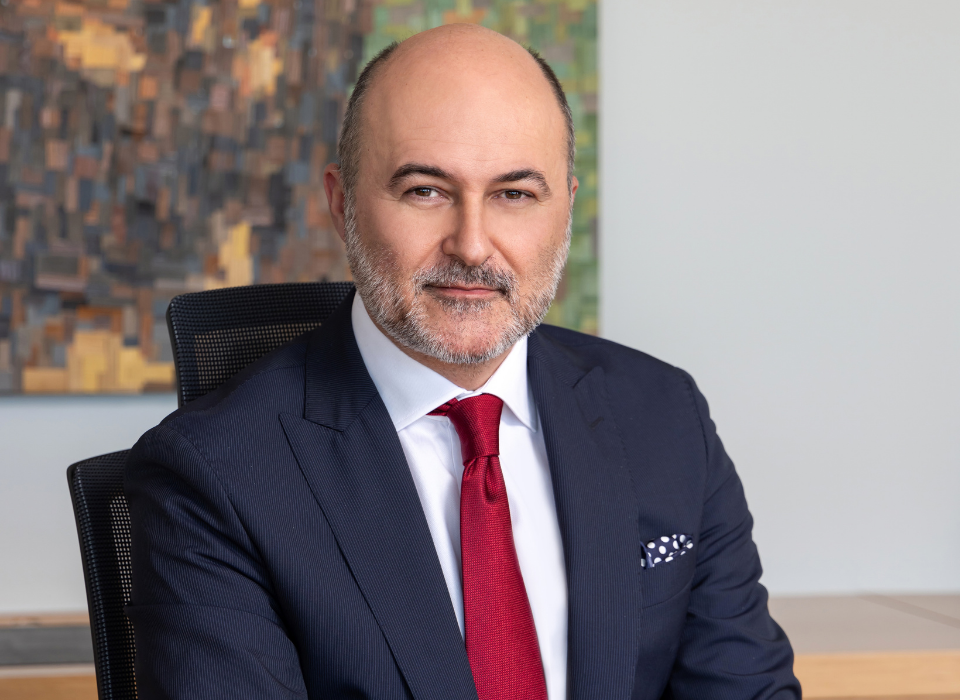
Interview with Christian Mirangels, Ravago PU Systems Business Unit Director
We conducted an enjoyable interview with Christian Mirangels, Director of the PU Systems Business Unit at Ravago Petrokimya A.Ş., discussing the company's development process and the products it offers to the sector, as well as the challenges and solutions in Turkey's polyurethane market.
Could you briefly tell our readers about yourself, your education and your professional background?
I was born in Barcelona and hold Spanish and German citizenship. Since completing my business management degree at Barcelona Universitat Autònoma, I have developed my professional career in finance, marketing and sales, and general management. I have worked in Spain, Germany, Turkey and South Africa. I am married and have 2 children. I joined the Ravago Petrokimya family at the beginning of 2017 as Director of the PU Systems Business Unit. We aim to bring Tekpol, Ravago's polyurethane division, to a higher level of excellence by combining procurement activities with a professional team, effective R&D capabilities and the most modern production facilities.Could you tell us about the company's development since Ravago was founded?
When Raf Van Gorp founded Ravago in 1961, he found an opportunity to purchase the facilities of a dynamite company in Arendonk, Belgium. This opportunity led him to develop a brilliant idea: recycling production waste from petrochemical companies manufacturing plastics. From there, the company grew as a distributor and seller of plastic resins, becoming a successful service provider to the petrochemical industry. Diversification into the production and distribution of building products guaranteed a second revenue stream in Europe. Today, Ravago Group is one of the world's best suppliers of plastics, rubber and chemicals to the market. Today, Ravago Group serves more than 40,000 active customers with 230 offices in more than 55 countries worldwide, representing annual polymer sales exceeding 4,000,000 metric tonnes. Ravago's production capacity consists of a total of 30 facilities: 19 recycling and compounding facilities with a combined annual capacity exceeding 500 metric tonnes in North America, Europe and Turkey, and 11 production facilities providing finished product solutions for the building and construction sector in Belgium, Greece, Turkey and Russia. This would not be possible without the support of 5,500 employees. Ravago Petrokimya has been investing in Turkey since 1998 and has become one of the most important players in the local plastics sector. Ravago Petrokimya comprises five companies: Enplast, Eastchem, Ravago Kimya, Mahalo and Tekpol. With a total production capacity of 250,000 metric tonnes in polymer raw materials, it is the second largest plastic producer in Turkey. Each company is a leader in its region and field.Could you provide information about your products serving the polyurethane sector?
Tekpol, which has played a key role in the polyurethane systems industry for 25 years, was acquired by Ravago in 2014. Ravago/Tekpol represents product quality, high customer loyalty, brand recognition and flexibility in terms of production and supply chain. At our modern systems house located in Çayırova today, we produce more than 300 polyurethane systems. We provide custom solutions to contribute to the success of our customers across different industries. Our products contribute to the manufacture of lighter vehicles, more comfortable furniture, more energy-efficient residential and industrial buildings, refrigerators and more durable shoe soles.Could you also talk about Ravago's laboratory and R&D activities? What can you tell us about your production capacity?
Ravago recently established a new R&D Center with a team of 30 specialists in various fields. With modern equipment in our polyurethane R&D technical laboratory, we can simulate our customers' processes. In this way, we can develop new formulations to meet technical requirements and improve our customers' application performance. In our production facilities, we produce polyester polyols used in our own formulations, and also sell to the market for shoe, rigid and CASE applications. We also produce the PREpolymers and polyol blends that we sell as polyurethane systems. Total production capacity is 70,000 MT per year.How was 2017 for your company? What are your goals for 2018? Could you provide information about your projects?
Despite some turbulence such as raw material shortages and exchange rate fluctuations, we managed to maintain our position as one of Turkey's leading polyurethane systems houses in 2017. In 2018, we plan to continue growing both domestically and internationally. We will launch new product developments on the market. Some will be presented at the Putech Eurasia 2017 trade fair. Additionally, we plan to increase our international growth through strong Ravago sales channels in many countries.What can you say about the past and future of the polyurethane sector?
Since Professor Dr. Otto Bayer invented polyurethane in the 1930s, there has been a steady increase in the number of application areas, ranging from flexible foams to rigid foams and non-foamed applications such as adhesives and elastomers. Today, we are surrounded by polyurethane applications in every area of our daily lives. Global polyurethane demand is growing at an annual rate of 5%, which is faster than global GDP. Its versatility in application and exceptional properties make it preferred in applications such as thermal insulation, adhesives, car seats and shoe soles. However, the polyurethane industry faces challenges such as the need for investment to ensure a balanced raw material supply, regulatory changes (e.g., HFC phase-out) or the trend towards renewable raw materials.Could we have your views on the polyurethane market in Turkey?
Turkey constitutes the third largest polyurethane market in Europe and has a total market size of 400+ kT in terms of demand, with main industries being building and construction, white goods, bedding, automotive and footwear. In parallel with other European countries, Turkey has also been integrating new technologies such as viscoelastic foams and PIR sandwich panels in recent years. On the supply side, the presence of more than 15 systems houses, including multinational and local companies, creates highly competitive conditions, with some offering a broad product portfolio while others focus on a limited number of industries.Is there a message you would like to convey to the sector?
First, the polyurethane industry in Turkey should continue to focus on product quality. This will increase the recognition of the "Made in Turkey" brand both locally and internationally. In addition, there should be greater focus on innovation. Through innovation, the polyurethane industry can succeed in differentiating itself against competing materials and offer customers higher value-added solutions. Last but equally importantly, the interests of the polyurethane industry in Turkey should be represented by a strong association that can have an impact on local and international regulatory initiatives affecting the polyurethane industry.Advertisement
Ad Space728 × 90