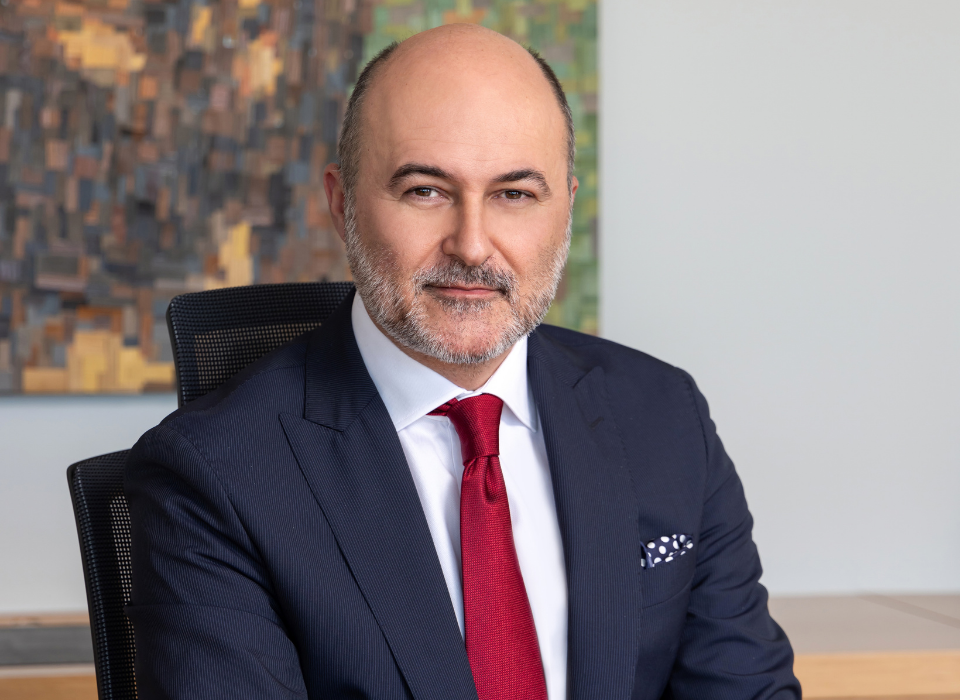
We Conducted an Interview with Kordsa CEO Ali Çalışkan
In the interview we conducted, Kordsa CEO Ali Çalışkan answered our questions. Kordsa's history and current structure were explained by Çalışkan, who also provided information on products developed by Kordsa and R&D activities.
Could you briefly tell our readers about yourself, your education, and your professional background in the sector?
I was born in Samsun in 1963. I graduated from the Mechanical Engineering Department at Middle East Technical University. I joined the Kordsa family in 1986 as a Technical Bureau Engineer and subsequently held positions as Director of İzmit Operations, Director of Turkey and Egypt Operations, and in 2010 became Operations Director at our company IndoKordsa in Indonesia. In mid-2013, I returned to Turkey to assume the position of Vice President responsible for Operations. In June 2015, I took on the role of Deputy General Manager responsible for the EMEA region. I have been serving as Kordsa CEO since April 2017.Could you describe Kordsa's development process from its establishment to today?
At Kordsa, we operate in three main sectors: tire reinforcement, construction reinforcement, and composite technologies. Starting out in 1973, we began competing with the world's leading players in the tire reinforcement market, which was new to Turkey at that time. In this field, we produce yarn, cord fabric, and single cord products in our high-technology facilities. Today, we are the world's leading producer of nylon and polyester yarn and cord fabric. Over time, we reached first place in nylon and third place in polyester on the global market by turnover. With the resin technology we possess and our weaving capabilities, we entered the composite technologies and construction reinforcement markets with the idea of transferring our expertise to different sectors.What are Kordsa's products and product groups? Which sectors do you serve?
In all three of our business lines, our products make many products we use in daily life safer, higher performance, more durable, and more sustainable. In the tire reinforcement sector, in our high-technology facilities, we process Nylon 6.6, HMLS and technical polyester, rayon and aramid yarns to produce cord fabric that provides flexibility and strength to vehicle tires, and we produce single cord using synthetic yarns such as nylon, polyester, aramid, and rayon as well as yarns made from natural fibers. We reinforce one out of every three automobile tires and two out of every three aircraft tires in the world. In the field of composite reinforcement materials, we develop innovative and original intermediate products and applications for various sectors, primarily aviation and automotive. We provide high-quality and durable products to the aviation sector, visually flawless and rapidly producible products to the automotive sector, flexible products to the sports equipment sector, and low-temperature produced long-lasting products to the maritime sector. With our solution partner approach, alongside our prepreg, fabric and resin development work, we also provide services in areas such as design, analysis, material libraries, and prototype production support according to our customers' needs. As a single solution partner, we also conduct custom cost-focused composite intermediate product development work. With our investments made in the USA in 2018, we added advanced composite materials to our advanced composite technologies portfolio for both the space and aviation industries as well as next-generation transportation vehicles, positioning ourselves as a company that can provide complete material solutions.International fiber reinforcement market
This also strengthened our new product development potential. In construction reinforcement technologies, we develop products that provide long-term durability in concrete structures. Our synthetic fiber reinforcements, the first Turkish product in the international fiber reinforcement market, are preferred in prestigious projects for their ease of use, long-term durability, low carbon emissions, and performance advantages. In a short time, our products were used in many projects including the Third Bridge toll booths, the Samsun Light Rail System project, the Trabzon DSI Pressurized Water Tunnel project, and the Tekirdağ Asyaport and Buca-Bornova Tunnel, Turkey's longest highway tunnel in İzmir.Could you tell us about your domestic and international sales activities as Kordsa? Which regions do you primarily serve?
As Kordsa, we operate in strategically important markets. When determining our investment strategies, we consider proximity to customers and changing market dynamics and evaluate opportunities aligned with our sustainable growth strategy. In early 2017, Invista, our raw material supplier in the United States, announced it would cease production in Chattanooga, Tennessee. We made an agreement with this company, which conducted production in the same facility as ours, and acquired the entire property and partially the machinery—including the shared infrastructure—with an investment of 4 million US dollars. Europe, Middle East and Africa account for a 30 percent share of Kordsa's total sales as of the first half of 2019. In the Europe, Middle East and Africa region, we continue to introduce our new technologies to the market and expand our product range with the strength of our Composite Technologies Center of Excellence, a pioneering model of industry-university cooperation. After Turkey, Asia Pacific, our second-largest center, accounts for 26 percent of our sales. In Indonesia, where we have invested over 175 million dollars since 2011, we have 7 polyester lines. In South America, we are the sole player in polyester and cord fabric production. As of the first half of 2019, this market accounts for 11 percent of Kordsa's total sales. We are also the leading nylon cord fabric producer in North America. This region's share in Kordsa's total sales is 33 percent.Advanced composite technology
We strengthened our composite presence in North America with the companies Fabric Development, Textile Products, and Advanced Honeycomb Technologies that we acquired. Subsequently, we added Axiom Materials to Kordsa, which supplies next-generation advanced composite materials for transportation vehicles as well as the aerospace and aviation industries and directs the composite market through its R&D activities. Through this acquisition, we completed our advanced composite intermediate product portfolio and became the leading player in the oxide-oxide ceramic composite market used in aircraft engines. After reinforcing the wings, fuselages, and cabin interiors of the aircraft we reinforce their tires, we now also reinforce their engines. Today, we are a global reinforcement player spanning a wide geography from America to Asia Pacific. We operate through 12 production facilities located across 5 countries—Turkey, America, Brazil, Thailand, and Indonesia—on 4 continents with approximately 4,500 employees.You have launched your new CoKoon technology designed with Continental. Could you tell us about this project?
To offer the industry an environmentally friendly and sustainable alternative solution, we at Kordsa had been pursuing our work for 9 years. Our R&D teams conducted 11,240 tests to develop this technology over 9 years and spent 15,800 work hours working around the clock. Thanks to Continental's shared vision in this direction, we combined our strengths. Our new technology CoKoon does not require additional production costs. It is possible to bond textile and rubber using existing equipment. Together with Continental, without requesting any licensing fees, we allow anyone who wishes to join the license pool to use CoKoon technology. Within 6 months, when we introduced the CoKoon technology to companies in the sector at the Tire Technology 2019 fair, 40 companies contacted us to use CoKoon technology. Sample processing began with 17 of these companies. We aim for this to become the new bonding standard in the industry. To support this, we offer innovation not only in the product but also in our business model. The free licensing model we established encourages everyone to easily access this technology and develop it further. Through this, we will advance our technology further, and in addition to standardization in our own sector, we will be able to expand its use in different sectors and different areas.Digital Transformation
Today, all sectors are keeping pace with Digital Transformation. To what extent do you think the composite sector is undergoing this transformation? As Kordsa, we are leading the sector in our production model through Industry 4.0 applications we have developed. With the smart manufacturing systems we have implemented, we aim for improved production quality, production with fewer errors, and accelerated innovation processes. For this reason, we closely monitor digital transformation and Industry 4.0 developments, which consist of the combination of many fields such as smart robotic applications, big data management, cloud applications, IoT systems, mobile and virtual reality applications, simulation systems, and cybersecurity, and we strengthen our production processes by continuing our innovation approach, particularly our open innovation approach. We track technologies that align with our company strategies and objectives and create change and transformation in our production processes, and we invest in applications that create value in efficiency, quality, cost, and occupational safety processes. With digital transformation, the application areas and technology of composite materials are developing day by day. Today, they have entered our daily use and will continue to. Especially smart composites and robotic applications are the materials of the future. In the coming period, we believe that activities called material-based engineering such as R&D, product development, and manufacturing design will become important to be created simultaneously in interaction with the customer. Therefore, materials science is a strategically important science discipline in the digital world.Kordsa Composite Technologies Center of Excellence
Regarding Kordsa's work in materials science, we have work carried out jointly or individually on this matter. In our Composite Technologies Center of Excellence, with the participation of 16 project partners from 11 countries, we continue the DiCoMi project through which we are working to develop systems, software, and materials for producing composite materials using 3D printer technology. Again, recently, thin films and flexible electronics, which are smart materials of the digital age, are among the new-generation materials we prioritize. Thin films currently have a wide range of applications from televisions to smartphones or laptops. In the near future, flexible electronics will also enter our lives more. For example, foldable screens will replace printed newspapers or tablets, robots will look and even feel like they are covered with real skin. We have also focused on this future material and created a "Thin Films and Flexible Electronics" R&D platform in partnership with Sabancı University. Here, in May 2019, we launched a new project called Nanosis-1004. In this project, we are working to develop next-generation flexible wearable health sensors. For project partnership, we are in talks with some internationally recognized universities, institutions, and companies from Turkey, the USA, and Europe. Additionally, we continue our efforts in making new laboratory and machinery investments suitable for flexible electronics technology.Could you tell us about your composite material production techniques in the context of new technological developments?
In our composite business line, the main working area of our Composite Technologies Center of Excellence, which brings industry and academia together, can be described as weaving high-strength composite reinforcement materials such as carbon, aramid, and s-glass, resin development, prepreg production, and application development for the use of these materials in different sectors. We currently have the capability to weave plain, twill, harness satin, and basket weaves in four different weaving types, single and bidirectional, carbon, glass, or aramid fabrics between 200 gr/m² – 1500gr/m². In addition to these, hybrid weaves using two different yarns are also part of our product portfolio. In the center, systems, software, and materials are being developed for producing composite materials using 3D printer technology. High-quality composite parts are produced both with traditional methods and with robotic applications. The laboratory houses an automated fiber placement robotic system called AFP, laboratory-scale and industrial hot presses, robotic machining of composites and metals, and equipment for processing with abrasive water jets as well as equipment necessary for additive manufacturing.Aerospace industry
The autoclaves we use allow our materials to become denser and void-free. Especially for the aerospace industry, it allows for a high strength-to-weight ratio in parts produced from pre-resin-impregnated high-strength fibers. In the center, there is also a laboratory that emphasizes the production of multi-functional complex parts using new or hybrid technologies. This laboratory focuses on metal, high-performance plastic, composite, and hybrid layered manufacturing. With our acquisitions in the USA, we have further developed our expertise in advanced material technologies with high growth potential. We can produce structurally complex materials for the aerospace sector, which we see as having great potential, as well as interior component materials. Finally, with the acquisition of Axiom Materials, the only manufacturer worldwide of oxide and oxide ceramic composite products for aircraft engines, we can now reinforce the engines of aircraft whose wings, fuselages, and interiors we reinforce. Today, I can say we have completed our current advanced composite intermediate product technology portfolio.In your opinion, what are the conditions for being a global brand that transcends boundaries?
The most important condition for being global is to be able to think globally, to follow developments and trends, to act proactively and to lead change rather than resist it. With our mission of "Strengthening Life," we aim to create sustainable value by providing innovative reinforcement solutions of high added value to our customers, employees, stakeholders, and the societies we operate in. With our open innovation approach, we are leading change and transformation. We are shaping the industry through our sustainability understanding and our R&D and innovation investments. This strengthens our global presence.Could you tell us about the R&D and Sustainability work you carry out at Kordsa?
Product development work in the sectors we currently operate in is progressing with sustainability at its center. Kordsa also develops its product portfolio at this center. In composite technologies, we enable vehicles to be lighter and more durable, reducing fuel consumption, and we are developing new and sustainable technologies for next-generation transportation vehicles. In tire reinforcement technology, through the innovations we have developed, we reduce friction resistance, and in construction reinforcement technology, we work to ensure concrete structures are long-lasting and strong. As a company that places innovation at the foundation of its activities, we increased our patent portfolio by 22 percent from 2017 to 2018.786 patent applications and 183 inventions
As a result of our work to produce lighter and more durable tires and composite materials with less energy and less material, to date we have made 786 patent applications and realized 183 inventions. We conduct these activities primarily in our 2 R&D centers. At our first R&D Center in İzmit, we develop new products, processes, and technologies for tire and construction reinforcement markets. In this respect, our greatest breakthrough recently has been the new environmentally friendly formula we developed together with Continental as an alternative to the 80-year-old resorcinol and formaldehyde-containing bonding formula. We named this revolutionary technology CoKoon. We are now working on its free licensing. Another project we are conducting with an open innovation approach is our project offering sustainable solutions for efficient plastic recycling. As another example of our open innovation approach, we have another project in this center offering sustainable solutions for efficient plastic recycling. In this EU-supported Horizon 2020 program project called PolynSPIRE, we are one of 21 project partners from 11 countries.Kordsa's second R&D center
Our second R&D center is the R&D Center at our Composite Technologies Center of Excellence, where R&D, innovation, and production in composite technologies are brought together under one roof. The Composite Technologies Center of Excellence, which we established in Technopark in 2016 and which brings university and industry together under one roof, is Turkey's first and one of the world's leading centers of its kind. In cooperation with Sabancı University, researchers, designers, engineers, production process managers and staff, doctoral students, postdoctoral researchers, faculty members, and incubator company entrepreneurs work together at the center. In the center, with an open innovation approach, by collaborating with different institutions and organizations, we serve all stages of the research-development cycle continuing from basic research through to idea, prototype production, and serial manufacturing, and we put our signature on new technologies that transform the sector. At our Center of Excellence, we continue to collaborate with universities and institutions from different countries for new projects such as the EU-financed project for developing systems, software, and materials for producing composite materials with 3D printer technology. Following our resin technology that reduced the press cure time to 3 minutes, we also developed the risk-free formulated CM 14 resin. Another piece of our work is the revolutionary e-glass prepreg we developed with Ford Otosan for vehicle weight reduction, which is currently the main topic of the automotive sector. The innovative leaf spring we developed for heavy commercial vehicles over 16 tons includes structural health monitoring systems used for process optimization, part qualification, and online health monitoring. We also have R&D work underway in construction reinforcement materials.An improved version of KraTos
Our macro and micro synthetic fiber reinforcement products we developed are preferred in many prestigious projects. Additionally, in the new polypropylene monofilament fiber reinforcement line we commissioned in June 2018, we began producing an improved version of KraTos, which is differentiated by its high strength. Regarding sustainability specifically, regarding product development and our internal company activities, we are in the fourth year of our 2020 Sustainability Roadmap, which includes our five-year targets and actions. Aware that the first step in sustainability is to ensure our own sustainability, we always prioritize the development, health, and safety of our employees. In 2018, through our safety projects such as the Occupational Safety Experience Center, we continued to work with a zero-accident goal across five continents, encouraged the development of ideas and projects through internal platforms that support the personal and professional development of our employees, and provided our employees with an average of 36 hours of training in 2018. As a global reinforcement brand, as a result of our respect for the society and environment we are part of, we continue to make improvements in all our operational processes. Through our R&D and TPM projects, we have progressively improved our performance year after year. In production, material, water, and energy efficiency improvements are among our priorities. In 2018, by reusing our materials, we achieved savings of 1.82 million dollars. In waste management, which includes the monitoring and reduction of carbon emissions, we reduce our waste every year through the measures we have taken in all our facilities. This year, we made environmental investments worth 790 thousand dollars in emissions and waste management. We continue to present our CDP Climate Change and CDP Water reports to investors every year.Advertisement
Ad Space728 × 90