We Conducted an Interview with Cavidan Karaca, CEO of Kimpur
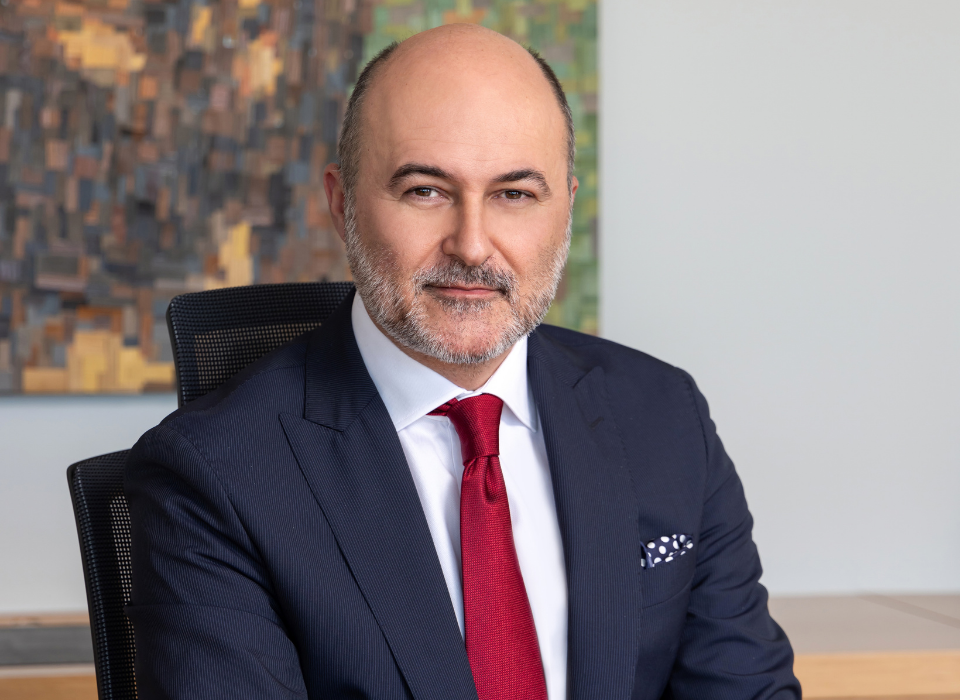
We conducted an interview with Cavidan Karaca, CEO of Kimpur, in which we discussed the company's operations and innovations. Karaca shared his views on the new world order.
Could you briefly tell our readers about yourself, your educational background and your professional experience in the sector?
I graduated from the Mechanical Engineering Department of Middle East Technical University in 1992. I am 50 years old, married with one daughter. Over the past 28 years, I have worked as a manager in purchasing and production functions across multiple sectors, as a management consultant, crisis manager and consultant in company transformation, and as general manager. Since 2014, I have been serving as CEO of Kimpur, Turkey's "First Locally Owned Polyurethane System House".Could you tell us about Kimpur's success story from its establishment to today?
Kimpur was founded in 1983 as the first professional polyurethane system house. It has Turkey's largest production capacity and sales volume. 45-50% of our sales come from exports to more than 40 countries. It has a comprehensive product portfolio in polyurethane systems. Kimpur has gained its strength and leadership position in the sector through the 'fast decision-making, rapid implementation' principle, innovative and unconventional solutions that create differentiation and efficiency for customers, and systematic work. As a result, it has achieved 125% growth in just the last 5 years and increased its export rate from the 25% range to 50%.What are Kimpur's products and product groups? Which sectors does it serve?
With its "Smart Business Model", Kimpur manufactures polyester polyol, prepolymer and modified MDI, polyol blends; shoe sole and slipper PU products, HR foams, viscoelastic and integral systems, multifunctional polyols, special prepolymers, and new-generation rigid systems that are environmentally and health-conscious. The main sectors it serves include shoe sole and slipper manufacturers, flexible production systems manufacturers—automotive sector, office furniture manufacturers—rigid manufacturers, refrigerator manufacturers, continuous and discontinuous panel manufacturers, wood-look manufacturers, case systems and many other different sectors.Could you tell us about your sales activities? Which regions are you primarily selling to?
We are present in every region where industry is concentrated within Turkey, across many different production sectors. The countries we export to are mostly all neighboring and distant countries that you can reach with a broad compass when you take Turkey as the center. However, with many of our innovative specially designed products, over the last 5 years we have been able to sell to many countries outside our geography.What innovative technologies and solutions do you use in polyurethane production? What are your products that make a difference in the sector?
First and foremost, with the "smart business model" I mentioned, leadership in all "main and support processes" from design inputs to product delivery, unconventional approaches, efficiency-generating solutions, "matrix work teams" that empower these solutions, and "transformation management" supported by IT infrastructure are the most important differences that bring us sector leadership. With Sigma methodology, both our production and R&D processes not only identify possible needs for our sector but also for our customers' sectors, and transformation management is reflected across all our solution partners. The R&D in which we have made serious investments for many years has been strengthened in terms of both infrastructure and human resources since 2017 as an "R&D Center". Beyond product groups that respond to the sector's daily needs, we have many new product studies for our customers to create differentiation, and we continue these. In this regard, developing and providing products that can respond to the changing lifestyles of end-product users, providing energy savings and efficiency, supporting the preservation of infrastructure lifespans, and being environmentally conscious is our R&D vision. Within this scope, over the last three years, we have continued on our path with a minimum target of nine new 'innovative products' each year, such as many shoe sole and slipper product groups that allow 15-20% less polyurethane use, new-generation refrigerator systems that reduce our customers' production times by up to 20% and enable them to gain serious production capacity in this respect, and panel systems with the highest flame resistance in the sector.Advancing technology and digitalization are providing innovative opportunities for many sectors. What are your efforts regarding digital transformation at Kimpur?
First and foremost, we have long-running efforts in transitioning to full automation in our production systems, standardizing our systems and products, and being able to produce at the desired quality level."Developing and providing products that can respond to the changing lifestyles of end-product users, providing energy savings and efficiency, supporting the preservation of infrastructure lifespans, and being environmentally conscious is our R&D vision."
At Kimpur, with SAP implemented for the past 2 years and methodological approaches to data collection and analysis in parallel, we identified all points that would provide efficiency and shifted to full automation. SAP has provided us serious momentum in terms of digital transformation. Additionally, monitoring all our company's MIS data, setting targets for our employees and monitoring their performance, R&D and all company project plans, their efficiency, project completion, product delivery speeds and similar all monitoring indicators; following this transformation became transparent, instantaneous and accessible from any desired point. We felt the importance of these efforts once more, most during the pandemic period.Could you tell us about your sustainability efforts?
Our sustainability efforts; creating sustainable, efficiency-focused systems that can respond to future demands economically, socially and environmentally, producing products, working with a principled human resources profile looking in the same direction, leaving a lasting company to the teams that come after us. In this regard, we continuously conduct risk analyses and measure the sustainability of our systems and the products and services we provide.How did this process affect the Turkish chemical and polyurethane sector? How did you as Kimpur manage this process? Were there new opportunities created by the crisis and how did you evaluate them?
Polyurethane system houses were quite severely affected in April and May. Export countries also experienced similar processes where exports came almost to a complete standstill. We supply products to a wide sectoral network. While some sectors like shoe sole and slipper systems and partially automotive manufacturers stopped completely or partially, some sectors like rigid panel manufacturers continued at their existing pace. Although we were affected by the process due to supplying many sectors, our production was able to continue partially. In the chemical sector, chemical companies producing products especially for the health and food sectors will grow through new business lines going forward, both due to being affected by this process and due to the changed consumption habits brought about by the process.As Kimpur, we followed the process with high sensitivity. We took every precaution in a timely manner. All hygiene, technical equipment and new working rules were implemented to ensure the health and safety of our employees and customers, and these were applied without compromise.
We immediately shifted to flexible working arrangements and "remote working models". We conducted all our training programs with 'remote training models'. We spent this slower period very productively with risk analyses, training and process improvement work. As of June, our "remote working model" continues at a rate of over 50%.Were there new decisions you made while managing the coronavirus process? Did you carry out any studies in this regard?
This period passed very productively, except for not being able to closely hear and feel the voice of our customers. It pleased us to see how prepared we were in terms of our IT infrastructure for this period. For both our management team and our employees, we were able to manage our processes very well without losing any time, as we could monitor business results in the same way, travel to and from work, meetings and similar gathering times. We conducted a study measuring our employees' feedback on this working model. We saw how they adopted this model without losing motivation. For the period ahead, we plan to transition some positions completely to remote working mode, and other employees to a 'flexible' model where they can work remotely one or several days a week. We were able to conduct many large-scale meetings with our customers this way. We plan to continue this. We are breaking free from our paradigms..."It is certain that we will experience a period where environmental sensitivity increases, social solidarity increases, consumption and spending habits change, travel decreases, and more protective approaches emerge."
How do you evaluate the new world order that will emerge after coronavirus? How will this new order affect you and the sector?
It is now a reality for all of us that pandemic processes like this and similar ones may continue. It is certain that we will experience a period where environmental sensitivity increases, social solidarity increases, consumption and spending habits change, travel decreases, and more protective approaches emerge. In this regard, at companies; technological investments will increase, creating systems less dependent on people will be the main goal. Global supply chain approaches will redirect their course towards local or nearby geographies. All countries will prioritize all infrastructure, human resources and R&D activities towards the health sector. Investments in agriculture, livestock, food, new technologies and efficiency studies will be in the forefront. This pandemic process was just one of the dangers awaiting us. In the period ahead, we or our children will face environmental problems, new pandemics and problems resulting from climate change. In this regard, in the polyurethane sector too, the importance of sourcing some raw materials from nearby geographies has increased. In some sectors, we expect contractions parallel to the changes we anticipate in consumer habits. Economically, it is a problematic period where contractions are beginning worldwide. For us and our customers to continue existing, it is now the era of efficiency, differentiation and controlled risk-taking, not growth. We are preparing for this new period in this sense. I wish healthy days for all of us.Advertisement
Ad Space728 × 90