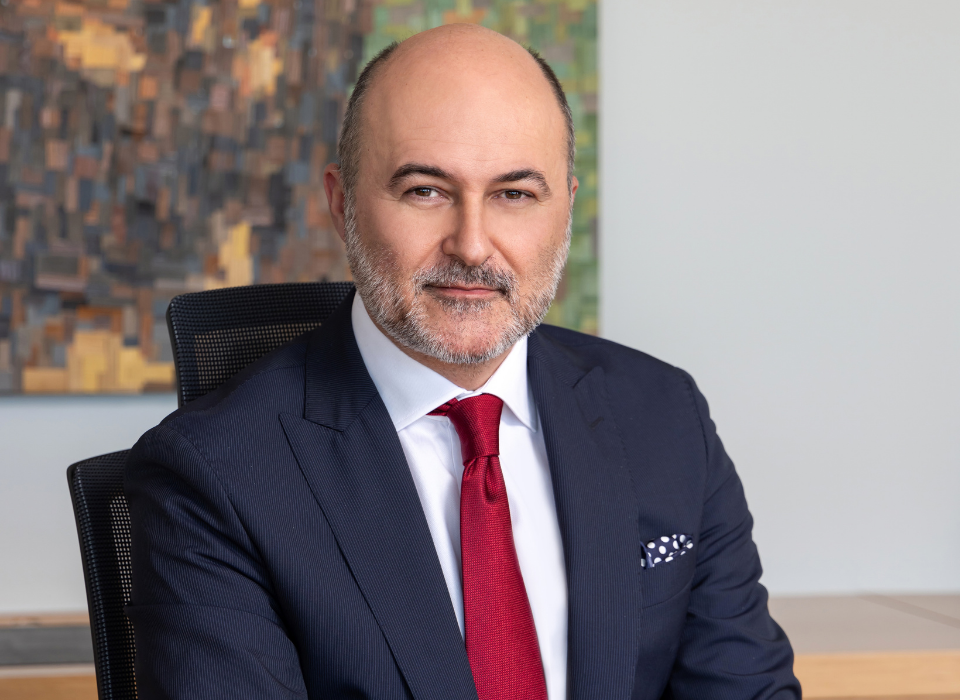
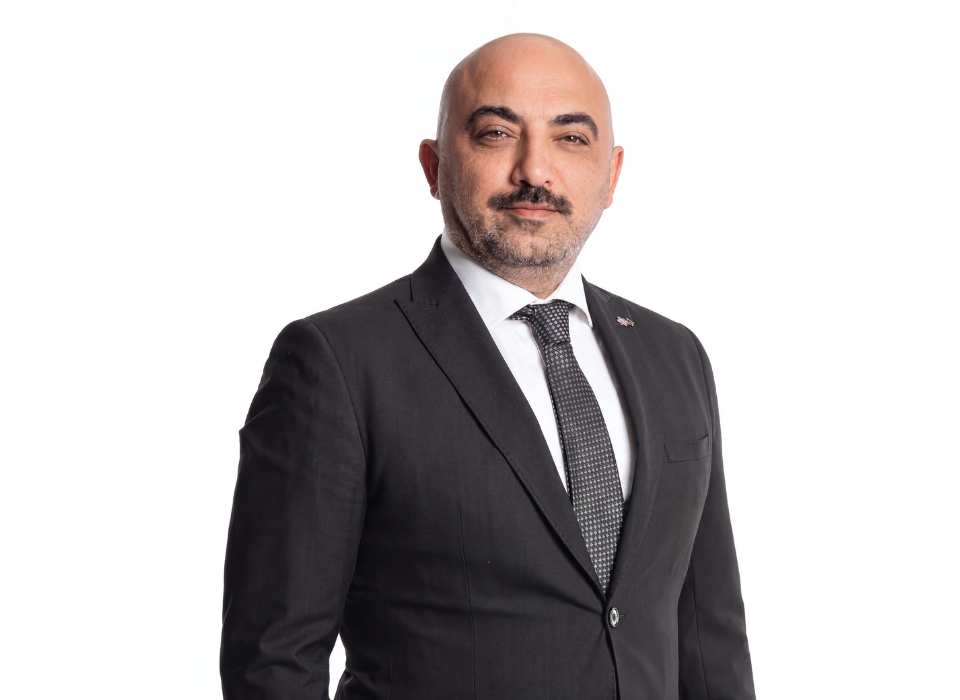
We Conducted an Enjoyable Interview with Gürcan Karakulak
Honeywell Turkey and Azerbaijan Regional Sales Director Gürcan Karakulak: An Engaging Interview.
We conducted a pleasant conversation with Honeywell Turkey and Azerbaijan Regional Sales Director Gürcan Karakulak. Mr. Karakulak shared valuable information about the sectors served by Honeywell, which is listed on the Fortune 100, and its operations. Enjoy the reading…
Could you tell our readers about yourself and your background?
Hello, I was born and raised in Istanbul and completed my undergraduate education in electrical engineering at Istanbul Technical University. I have been working on industrial automation at international companies for 20 years.
Initially, I worked as a project and service engineer on the operational side of the business, and from 2010 onwards, I focused my career on sales.
Currently, I hold the position of sales manager responsible for Turkey and Azerbaijan in the Process Solutions business unit at Honeywell, and I also serve on the board of Honeywell Teknoloji A.Ş., Honeywell's structure in Turkey. I am married with two children.
What would you like to say about your company? What are the criteria that form your success policy?
Honeywell is a multinational technology company founded in the United States and listed on the Fortune 100. With over 100,000 employees worldwide, it provides industry-specific solutions such as aerospace products and services; control technologies for buildings and industry; safety and productivity solutions; and specialty chemical materials. Honeywell's success criteria and objectives are to capture a sustainable growth trend by developing innovative technologies and delivering the best value and service to customers, while applying international ethical values and social responsibility at the highest level.Which sectors do you serve? What are your product varieties?
We provide products and services to all leading manufacturing and energy sectors, primarily oil and gas, refineries, chemicals and petrochemicals, as well as commercial buildings, aerospace and space industries. To give examples: • In the industrial field; automation (control and safety) systems, field measurement devices, industrial combustion systems, fire and gas detection detectors, industrial internet of things, data analytics and optimization software, personal protective equipment, • Production technologies and know-how licensing in the refinery and petrochemical sectors, • In buildings; building management systems, ventilation-heating-cooling control, security (camera and card access) solutions, fire detection and suppression systems, • Software solutions, handheld computers, barcode readers, industrial sensors tailored to retail and logistics, • Refrigerant gases, specialty chemicals, advanced fibers and composites, • Aerospace and in-flight software/navigation systems, aircraft/helicopter engines and power units.The past year was a year in which the effects of the pandemic were felt intensely, and these effects continue to this day. How was your company affected by this situation and what measures did you take?
2020 and 2021 were years when we faced the pandemic and tried to adapt to it. Along with the entire world economy, Honeywell was also affected and continued its work in a way that would protect the health of its employees and support critical infrastructure that would make modern life possible. The pandemic accelerated change among industries and encouraged innovation. Honeywell focused on bringing people back to work, events and travel safely. For our industrial customers, we implemented software and automation technologies to enable factories to continue production remotely or with minimal personnel. We opened new facilities around the world to increase the production of high-protective masks for healthcare and production sector workers, developed image processing-based fever and mask detection systems, and implemented ultraviolet systems to neutralize viruses in aircraft and public transportation.What is the importance of R&D for your company? Could you tell us about the R&D projects you have conducted recently?
As Honeywell, we continue to develop technology to make our world smarter, safer and more sustainable. In our 148 engineering and research centers located in every region of the world, a total of 16,000 engineers work, and half of this number consists of software engineers. With over 30,000 patents, it is possible to see Honeywell's signature in many points that touch our lives. For example, cockpit and approach systems in aircraft, building control systems, production technologies of fuels we put in our vehicles, production technologies of plastic products used in all our goods, gases used in supermarket refrigerators and vehicle air conditioning systems are among the many areas where you can see Honeywell's patented technology and know-how. The biggest focus in recent times is sustainability and net zero carbon targets. Honeywell continues to make significant R&D investments in this area. Battery energy storage systems, Sustainable Aviation Fuel, hydrogen production and utilization technologies, carbon capture and storage technologies, refrigeration gases with low global warming potential, chemical recycling technologies for plastics are among the leading topics Honeywell works on.If your company has initiated or led any corporate social responsibility projects, could you give us information about them?
An important part of Honeywell's Corporate Social Responsibility is projects and investments for the public good. We have programs including science, technology, engineering and mathematics (STEM) education, inclusion and diversity, humanitarian aid, and child and family safety on a global scale. As an example, we can mention the space camp program held at the U.S. Space and Rocket Center (USSRC), the Honeywell Leadership Academy. The program, which aims for high school students aged 16-18 from around the world to develop themselves in science, technology, engineering and mathematics, attracts around 300 students from 45 countries. Two high school students from Turkey participated in the most recent program.What measures have you taken while manufacturing for a more sustainable world? In this context, could you define your company's perspective on sustainability?
Honeywell committed to being "net zero" by 2035; we don't have much time left ahead. We took major steps to reduce greenhouse gas emissions, achieving a 90% reduction compared to the situation in 2004. We implemented 5,700 sustainability projects over the last 15 years. Another important point is the intention and target that 50% of our forward-looking R&D work is aimed at improving environmental or social outcomes. We shared examples of our sustainability work areas a moment ago.Could you tell us about your goals for the coming years? What innovations await your company in the coming years?
We see two major trends emerging around the world: digitalization and sustainability. Honeywell also aims to be one of the main players developing innovative technologies and directing these trends during this period when the world is changing and transforming. We are taking the necessary steps and implementing the restructuring to transform our company into a purely industrial software and digital technology company. In doing so, we aim to apply our core principles of ethics, inclusion and respect for diversity at the highest level.Advertisement
Ad Space728 × 90