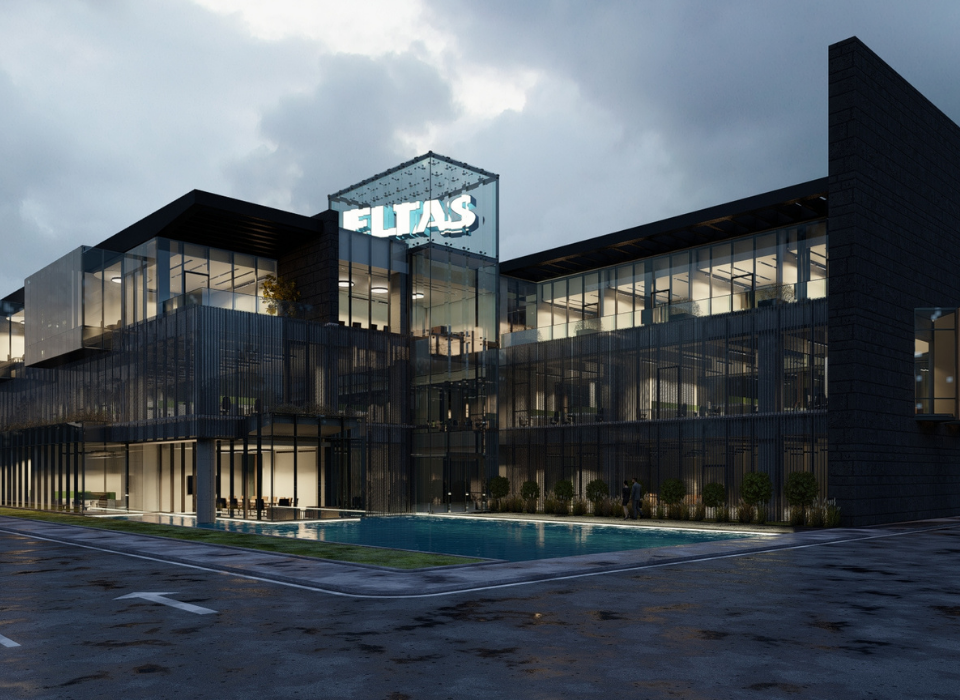
Green Buildings
Green buildings, which share the common objective of reducing the overall impact of the built environment on human health and the natural environment, are critical for a sustainable future.
A green building (also known as a green structure or sustainable building) refers to the environmentally responsible and resource-efficient processes throughout a building's life cycle, from settlement to design, construction, operation, maintenance, renovation, demolition structure and use.
In other words, green building design encompasses the balance between home construction and a sustainable environment. This requires close collaboration among the design team, architects, engineers and the client throughout all project phases.
Green building practice complements and extends classical building design by considering concepts such as economic concerns, ease of use, durability and comfort. Leadership in Energy and Environmental Design (LEED), developed by the U.S. Green Building Council, is a series of rating systems for the design, construction, operation and maintenance of green buildings. Another certification system that confirms the sustainability of buildings is the Building Research Establishment Environmental Assessment Method (BREEAM) for buildings and large-scale developments.
Currently, the World Green Building Council is conducting research on the effects of green buildings on the health and productivity of their users.
In developing countries and geographies, it promotes green buildings through the Excellence in Design for Greater Efficiencies Market Transformation Program (EDGE) in partnership with the World Bank and its certification.
While new technologies that complement existing practices in the creation of green structures are continuously being developed, the common objective of green buildings is to reduce the overall impact of the built environment on human health and the natural environment:
• Using energy, water and other resources efficiently,
• Protecting occupant health and improving worker productivity,
• Reducing waste, pollution and environmental degradation.
A similar concept is natural building, which tends to focus on the use of natural materials that are smaller in scale and locally available. Another related approach is sustainable design.
Sustainability can be defined as meeting the needs of present generations without compromising the ability to meet the needs of future generations.
While some green building programs do not address the renovation of existing homes, others do so through public regulations for energy-efficient renovation. Green building principles can be easily applied to renovation work as well as new construction.
Reducing Environmental Impact
Buildings worldwide are responsible for a significant portion of energy, electricity, water and material consumption. The construction industry has substantial potential to reduce emissions with little or no cost. Buildings produce 18% of current global emissions, or in other words, 9 billion tonnes of CO2 per year. According to the United Nations Environment Programme, if new construction technologies are not adopted during periods of rapid growth, emissions could double by 2050. Green building practices aim to reduce a building's environmental impact. The first rule in minimizing environmental impact is that the building constructed should be based on the green building concept. The second most important rule is that, in terms of reducing environmental impact, every building should be as small as possible. The third important rule is driving the logic of sprawl prevention. Buildings cover large amounts of land; according to the U.S. National Resources Inventory, approximately 107 million acres (430,000 km2) of land have been developed in the United States. The International Energy Agency published a report estimating that existing buildings are responsible for 40% of the world's total primary energy consumption and 24% of global carbon dioxide emissions.Green Building Objectives
The concept of sustainable development is related to the energy (particularly fossil fuels) crisis and environmental pollution concerns of the 1960s and 1970s. Rachel Carson's "Silent Spring," published in 1962, is considered one of the first efforts to define sustainable development in relation to green building. The green building movement in the United States stemmed from a desire and wish for more energy-efficient and environmentally friendly construction practices. There are various reasons for the creation of green, including environmental, economic and social benefits. However, modern sustainability initiatives require an integrated and synergistic design for both new structures and the strengthening of existing structures. This approach, also known as sustainable design, integrates the building life cycle with each green practice used as the design objective to create synergy among the practices employed. Green building comprises a broad range of applications, techniques and skill sets to reduce and eventually eliminate the impact of buildings on the environment and human health. It typically emphasizes the use of renewable resources through approaches such as benefiting from sunlight using passive solar, active solar and photovoltaic devices, and creating green roofs through the use of plants and trees. Many other techniques are also used, such as the use of low-impact building materials or the use of packed gravel or permeable concrete instead of traditional concrete or asphalt to increase groundwater recharge. While the practices or technologies used in green buildings are continuously evolving and may vary from region to region, the fundamental principles from which the method is derived continue. These can be summarized as settlement and building design efficiency, energy efficiency, water efficiency, material efficiency, indoor environment quality improvement, operations and maintenance optimization and waste and toxin reduction. The essence of green building is the optimization of one or more of these principles. Additionally, with appropriate synergistic design, individual green building technologies can work together to create a greater cumulative effect. On the aesthetic side of green architecture or sustainable design, there is a philosophy of designing a building in harmony with the natural features and resources surrounding the site. Designing sustainable buildings involves some fundamental steps such as identifying 'green' building materials from local sources, optimizing systems and producing renewable energy on site.Life Cycle Assessment
A life cycle assessment (LCA) can help understand a narrow perspective on environmental, social and economic concerns by evaluating a set of impacts associated with all stages of a process: from the extraction of raw materials to materials processing, manufacturing, distribution, use, repair and maintenance and disposal or recycling. The calculated impacts include embodied energy, global warming potential, resource use, air pollution, water pollution and waste. While LCA is widely accepted as the best way to assess the environmental impacts of buildings (ISO 14040 provides a recognized LCA methodology), it is often perceived as overly complex and time-consuming for regular use by design professionals. However, research organizations such as BRE in England and the Athena Sustainable Materials Institute in North America are working to make it more accessible. In England, the BRE Green Guide provides ratings for 1,500 building materials based on LCA. In North America, ATHENA® EcoCalculator for assemblies provides LCA results for hundreds of common building assemblies based on data generated by the complex ATHENA® Impact Estimator for Buildings software. Athena software tools are particularly useful early in the design process since material choices have broad-reaching impacts on overall environmental impacts. They allow designers to experiment with different material mixes to obtain the most effective combination. The foundation of any construction project is based on concept and design phases. In fact, the concept phase is one of the most important steps in a project life cycle because it has the greatest impact on cost and performance. The objective in designing environmentally optimal buildings is to minimize the total environmental impact associated with all stages of the building project's life cycle. However, building as a process is not as specific as an industrial process and varies from building to building; it is never repeated in the same way. In addition, buildings are more complex products made up of numerous materials and components that constitute various design variables to be determined during the design phase. A variation of each design variable can affect the environment throughout the related life cycle stages of the building.Energy Efficiency
Green buildings typically include measures to reduce energy consumption; this includes both the embodied energy required for the extraction, processing, transportation and installation of building materials and equipment as well as energy used to provide services such as heating and power. Since high-performance buildings use less operational energy, embodied energy has become much more important and can constitute 30% of total life-span energy consumption. In order to reduce operational energy use, designers use different details through the building envelope (the barrier between conditioned and unconditioned space) to reduce air leakage. High-performance windows and extra insulation are also specified in walls, ceilings and floors. Another strategy, passive solar building design, is commonly applied in low-energy homes. Designers orient windows and walls to maximize solar gains in winter while shading windows and roofs in summer by placing sunshades, overhangs and trees. Additionally, effective window placement (daylighting) can provide more natural light and reduce the need for electric lighting throughout the day. Solar water heating further reduces energy costs. Often the most expensive feature for a building is energy production. On-site renewable energy generation through solar energy, wind energy, hydro energy or biomass can significantly reduce the building's environmental impact.References • Yan Ji and Stellios Plainiotis (2006): Design for Sustainability. Beijing: China Architecture and Building. • U.S. Environmental Protection Agency. (October 28, 2009). Green Building Basic Information. • Hopkins, R. 2002. A Natural Way of Building. Transition Culture.
Advertisement
Ad Space728 × 90