Boğaziçi University Academic Launches Groundbreaking Project
Boğaziçi University Department of Electrical and Electronic Engineering faculty member Dr. Sema Dumanlı Oktar's "Antennas Manipulated with Living Cells" (AntennAlive) project will enable real-time monitoring of developments in the human body using implant antennas reconfigured with genetically modified bacteria. The project, which secured TRY 1 million in support this year from TÜBİTAK's National Leading Researchers Program "2247-A," aims to pioneer the bioengineering field.
Dr. Sema Dumanlı Oktar, one of three young scientists selected from Boğaziçi University for TÜBİTAK's National Leading Researchers Program "2247-A," is working on the "AntennAlive" project—a technology that will enable real-time monitoring of events occurring within the body and unite synthetic biology with electronic engineering. The project, developed at the Boğaziçi University Antenna and Propagation Research Laboratory BOUNTENNA, established by Dr. Dumanlı in 2019, will introduce an entirely new field with the "semi-living" antenna concept, according to the scientist. Oktar describes the "AntennAlive" project as follows:
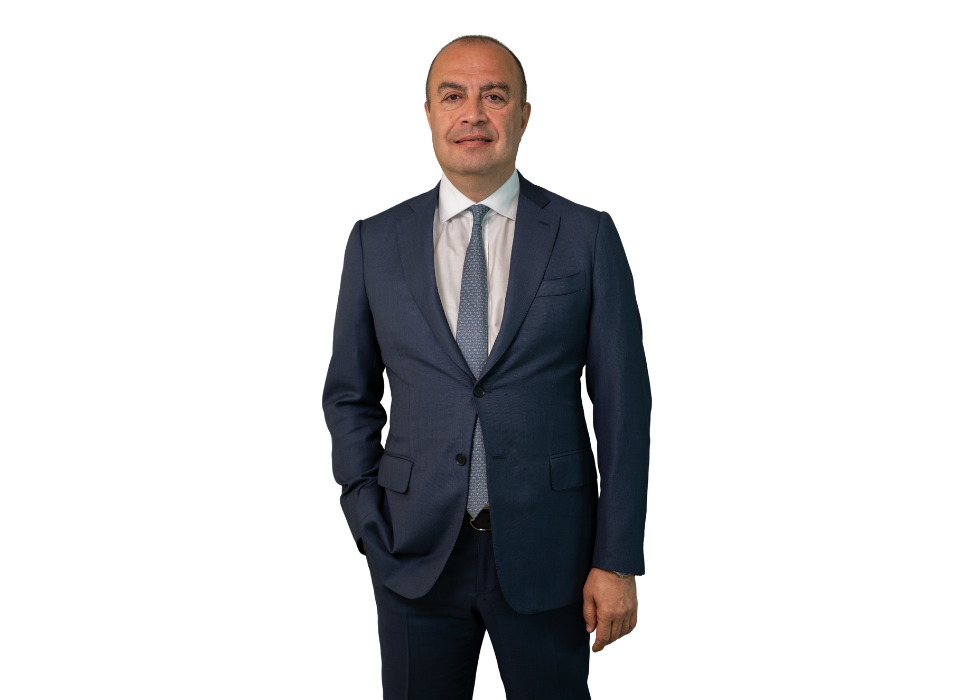
[caption id="attachment_124239" align="aligncenter"] Dr. Sema Dumanlı Oktar[/caption]
"THE INSIDE OF THE BODY LIVE ON AIR"
Reconfigurable antennas have been extensively studied, but until now, reconfiguration using living cells has never been researched. Our project will feature a biodegradable implant antenna controlled by genetically modified bacteria and a wearable antenna system that follows it. This system will serve as a gateway between nano-scale communicating structures and electronic devices operating at human scale. This gateway, which will bridge between "Molecular Nano Communication Networks" (MNCN) used to carry messages in the human body and "Body Area Networks" (BAN), will ultimately enable real-time monitoring of events occurring within the body as if watching live broadcast. In this way, many developments occurring in the body such as cancer cells, hormones, and blood values can be tracked."A GROUNDBREAKING PROJECT"
AntennAlive is a groundbreaking project that will launch an entirely new research field where antenna design meets genetically modified cells. MNCNs are used to carry messages within the human body using molecules. However, for a message to reach the BAN, a conversion between molecular and electromagnetic links is required. It is a popular prediction among these groups that this conversion will be achieved with "active" microwave sensors implanted in the body. However, we are pursuing a different approach. Contrary to this prediction, "AntennAlive" aims to bring MNCNs a step closer to body monitoring by using semi-living, battery-free, passive implants. While we use genetically modified bacteria, our concept is not limited to bacteria. Our project can be extended to cells such as genetically modified muscle tissue where contractions and relaxations reconfigure the antenna."NO SURGICAL PROCEDURE REQUIRED"
Our project, uniting synthetic biology with electronic engineering, creates an entirely new field with the living antenna concept. Another innovative aspect of our project is that the implant placed in the body is biodegradable and completely dissolves after completing its function. In this way, there will be no need for additional surgical procedures to remove implant communication devices from the body. I will conduct this project at the Boğaziçi University Antenna and Propagation Research Laboratory, which I established in 2019. In addition to the research funding we received from TÜBİTAK, a total of five doctoral and postdoctoral researchers will also be funded to work with our team. I invite candidates who wish to pursue doctorates in this field to apply through bountenna.boun.edu.tr. In this project, we are collaborating with Associate Professor Urartu Özgür Şafak Şeker, faculty member at Bilkent University National Nanotechnology Research Center (UNAM), and Professor Arda Deniz Yalçınkaya, faculty member in Boğaziçi University's Department of Electrical and Electronic Engineering. Additionally, the outputs of our project will be part of research conducted at the BOUN Nanonetworking Research Group (NRG), where we collaborate with Professor Tuna Tuğcu, Associate Professor Ali Emre Pusane, Dr. Birkan Yılmaz, and Dr. Cansu Canbek.Advertisement
Ad Space728 × 90