Beekeeping Reaches Its Most Productive Period, Driven by Women
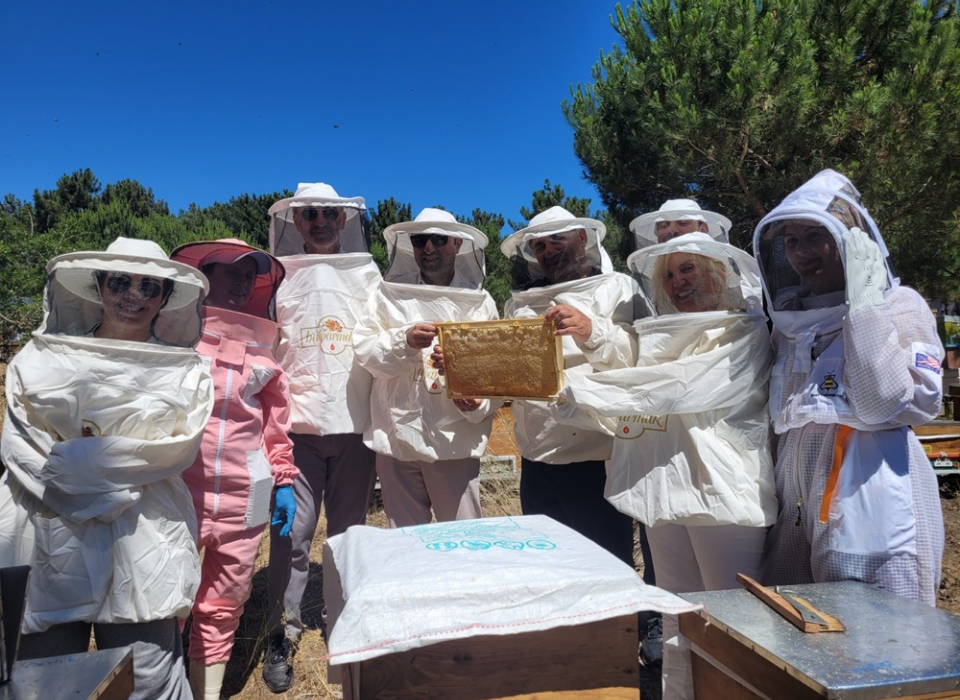
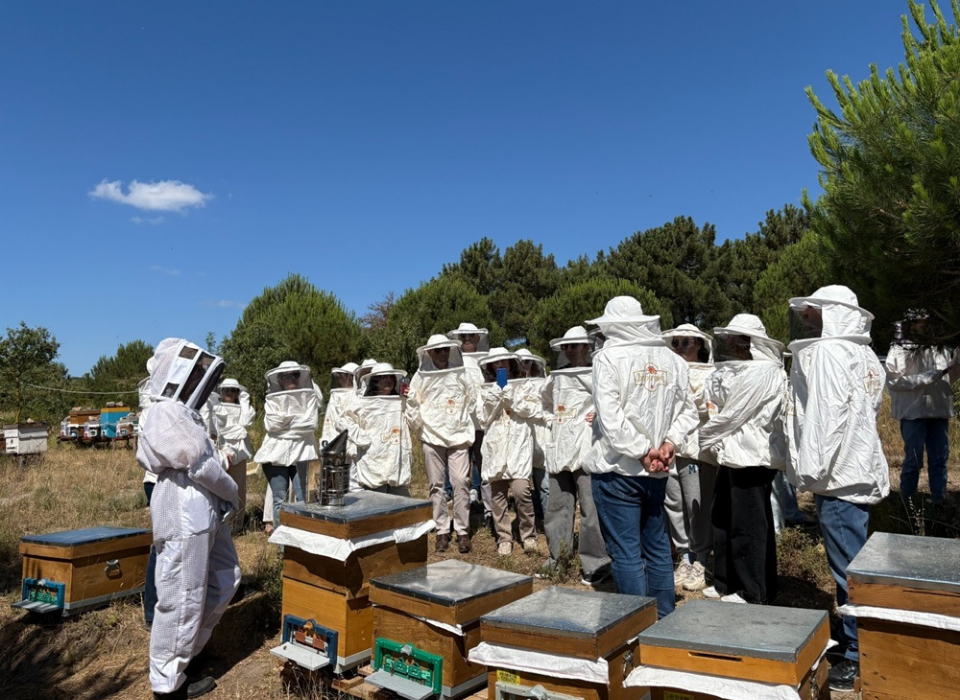
Balparmak Beekeeping Academy, which has reached more than 7,000 beekeepers since its establishment, examined beekeeping activities in Istanbul's Aydos Forest with its 20-member R&D expert team on site. During the visit, held at the invitation of the Istanbul Provincial Beekeepers Association, the successful practices of women beekeepers in royal jelly production were observed.
Since its establishment, the Balparmak Beekeeping Academy has reached over 7,000 beekeepers, and its 20-member R&D expert team examined beekeeping activities on-site in Istanbul Aydos Forest. During a visit organized at the invitation of the Istanbul Province Beekeepers Association, successful practices of women beekeepers in royal jelly production were observed.
Established in 2018 by Balparmak, Turkey's leading natural honey brand*, the Balparmak Beekeeping Academy has reached over 7,000 beekeepers to date, providing comprehensive training on hygienic and efficient production of high-value bee products including royal jelly, honey, pollen and propolis. The Academy works to ensure the development and sustainability of the profession through its continuous learning-based structure, particularly aiming to bring women and youth into the sector.
In line with this vision, the visit to Istanbul Aydos Forest, made at the special invitation of Istanbul Beekeepers Association President Onur Çilenk, constituted a strong example of the mutually learning-based structure that Balparmak has established with the field within its Beekeeping Academy framework. The meeting, which included Balparmak R&D experts, contributed to blending production experience from the field with technical knowledge. Among the data shared during these observations, the 10-kilogram royal jelly production achieved by women beekeepers in approximately two months with remarkable success drew particular attention. This high yield, requiring patience, meticulousness and expertise, clearly demonstrated the importance of women's contribution.
"Production nourished by correct knowledge brings sectoral success"
Istanbul Beekeepers Association President Onur Çilenk, in his assessment during the field visit, stated: "Every profession has an academic dimension; beekeeping is a profession requiring serious knowledge and experience. Particularly in spring months, conscious and planned feeding of colonies is one of the most critical steps determining the season's productivity. Success in high-value-added products like royal jelly is only possible through production processes equipped with knowledge and planned correctly from a technical standpoint."
"The Beekeeping Academy makes high-value production possible with women's labor"
Balparmak R&D and Quality Director Dr. Emel Damarlı expressed the importance of royal jelly with these words: "Royal jelly is a high-value product with export potential in many areas from health to cosmetics. However, producing this product requires expertise, patience and hygiene. As the Balparmak Beekeeping Academy, we set out to empower women in terms of professional knowledge and skills. Women's labor carries great importance in royal jelly production, which requires delicate craftsmanship. Particularly in this process requiring patience, our women's abilities create a visible difference in the sector. In this way, women can make significant contributions both to household economies and to the country's exports."
Balparmak General Manager Ulaş Altıparmak added the following regarding the Academy's contribution to the sector: "Through our training, we support women and youth in performing this production using correct techniques, and we aim to advance Turkey in royal jelly production in the world market. There is significant labor shortage and development potential in this field in our country; we make an open call to our women who wish to make use of this potential. We also extend special thanks to Istanbul Beekeepers Association President Onur Çilenk for walking this path together with us and for his valuable contributions."
"Labor worked like lace turns into yield in royal jelly"
The most striking story of the field visit came from Ayşe Akkaya. Akkaya, who holds dual master's degrees from Yıldız Technical University in Atomic and Molecular Physics and in Occupational Health and Safety, told her story of starting the beekeeping profession as follows: "I was abroad for a period following the birth of my second child. When I returned to Turkey, I decided I wanted to spend more time with my children and for this reason took a break from corporate work life. During this period, I learned that my mother and aunt had begun to engage in beekeeping. At first, I was simply supporting them. However, over time, the nature-integrated and production-based structure of beekeeping deeply affected me and I decided to start this work. Particularly my aunt became a very strong role model for me. Her experience, discipline and patience guided me. Today I actively engage in beekeeping at our apiary in Istanbul Aydos Forest with my family, particularly focusing on royal jelly production."
Akkaya, emphasizing important differences between honey production and royal jelly production, describes the process as follows:
"Honey is a more stable and controlled process. But royal jelly requires much more intensive attention, patience and manual dexterity. You must strictly adhere to hygiene rules. Royal jelly production requires discipline working with bees constantly moment by moment. Particularly larva transfer, a procedure done piece by piece almost like lace work... At first I was afraid of bees, now I say I cannot give up this profession."
Ayşe Akkaya's production journey not only brought about a transformation in her own life; it became an inspiring example for many women wanting to enter beekeeping. A woman with academic and corporate background gaining a new professional identity through beekeeping became a powerful indicator to many women keeping their distance from this profession that it is a production field that can be started, learned and sustained.
Gallery