Production Started at Milliken's Clarifier Plant
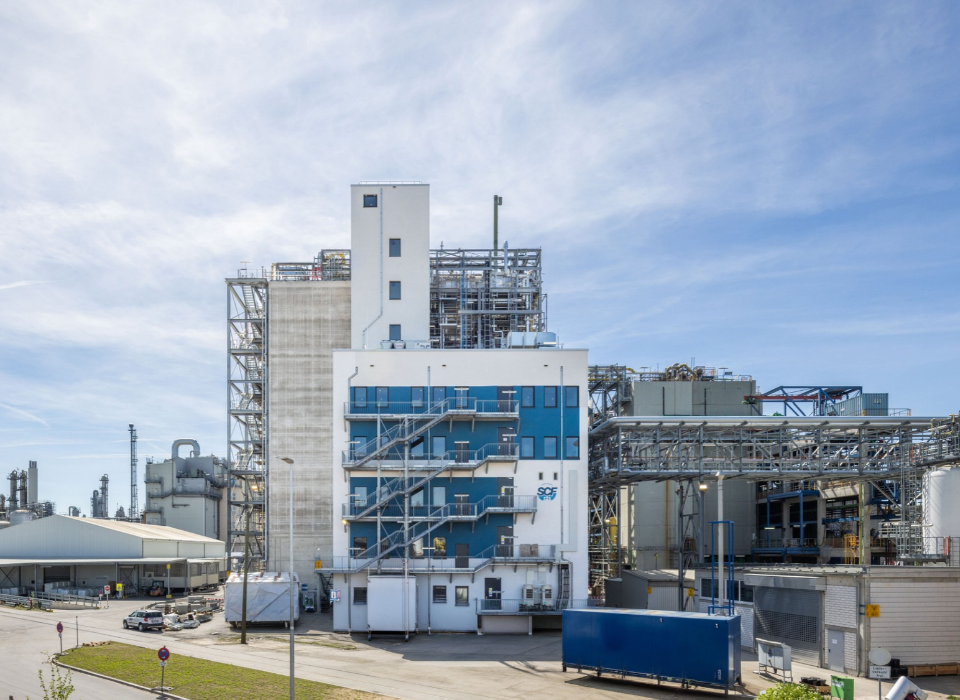
Milliken & Company has started production at its new clarifier plant in Blacksburg, South Carolina, expanding global supply of the Millad® NX® 8000 additive. The facility will enable Milliken, a leading global manufacturer of plastic additives and colorants, to meet rising demand for these products.
"We're pleased to report that the plant has begun manufacturing product, and we plan to reach full operating capacity by the end of 2022, allowing us to increase Millad production by 50 percent," said Cindy Boiter, President of Milliken's Chemical Business.
Announced earlier this year, this represents the largest clarifier plant investment in Milliken's history.
[caption id="attachment_144520" align="aligncenter"] (Photo © 2022 Milliken&Company, all rights reserved, MKPR279)[/caption]
Millad NX 8000 reduces carbon emissions[1] by allowing converters to use less energy during processing while increasing production efficiency.
This has never been more important than during this period of unprecedented energy price increases.
Furthermore, these certified energy savings enable brand owners who use PP clarified with Millad NX 8000 ECO to display the highly sought-after UL Environmental Claim Validation label on their injection-molded parts.
Boiter acknowledged the significant efforts involved in bringing the plant online. "We greatly appreciate all the efforts of our associates who were involved in making this plant exceptional."
Milliken has long been recognized for innovation, collaboration, and commitment to advancing sustainability. The Ethisphere Institute has named the company one of the "World's Most Ethical Companies" for the past 16 years.
The company draws on its 157-year history and extensive chemical expertise to develop tailored products that benefit society and create a healthier future for generations to come. Millad NX 8000 exemplifies how sustainability advances through chemical innovation.
Polypropylene (PP) is a durable, lightweight, highly recyclable material with glass-like clarity, made possible by Millad. This advancement enables PP to be used in applications such as thin-wall packaging.
Compared to other clear polymers, it is among the least energy-intensive polymers to produce and recycle. Additionally, in late July, the How2Recycle® labeling program upgraded rigid PP tubs, bottles, jugs, and jars in the United States to "Widely Recyclable" status.
[1] CO2 reductions based on reduced cycle time and energy usage are highly dependent on energy source.
Note: Content may be edited for style and length.
Source
Advertisement
Ad Space728 × 90