Hyundai Reports Global Growth in 2025
Hyundai Motor Europe achieved a 4.2% market share in the European market (EU, EFTA, United Kingdom, Eastern Europe and Turkey) in 2025, with sales of 603,542 passenger cars. Delivering a strong performance, Hyundai continued to strengthen its position in the electric vehicle segment, recording 24% growth in sales volume.
Hyundai Motor Europe achieved sales of 603,542 passenger cars in the European market (EU, EFTA, United Kingdom, Eastern Europe and Turkey) in 2025, capturing a 4.2 percent market share. Demonstrating strong performance, Hyundai continued to strengthen its position in the electric vehicle segment, recording 24 percent growth in sales volume.
Fully electric vehicles (BEV) were the main driver of growth with a 48 percent increase, while hybrid (HEV) and plug-in hybrid (PHEV) models showed an 11 percent increase. Hyundai recorded solid progress with an 18 percent share of fully electric sales in an increasingly dynamic European market environment. Additionally, Hyundai expanded its customer base through two main sales channels: retail sales increased 2 percent and fleet sales rose 4 percent compared to the previous year.
Strong Performance in European Markets
In 2025, Hyundai achieved significant successes in key European markets. In the United Kingdom, sales volume continued to grow, reaching 93,124 units—the second-highest result in the country's history—and rising from ninth to sixth place in the passenger car market. Hyundai became the best-selling Asian brand in the passenger car segment in Germany with 92,890 units sold and a 3.3 percent market share. Electric vehicle registrations increased 49 percent while the EV share reached 27 percent. In Spain, Hyundai achieved its highest sales volume with 64,467 units and a 5.8 percent market share, maintaining its fourth-place position.
Market share in Italy remained stable at 3.0 percent while sales volume reached 47,046 units. The EV share rose 9 percentage points above market average thanks to increased EV sales. In France, Hyundai ranked among the top 10 brands with a 2.8 percent market share and 45,623 units sold. Additionally, in France, hybrid electric vehicle sales accounted for 35 percent of sales, exceeding the market average of 22 percent.
Turkey: Europe's Rising Star
In Turkey, where it manufactures vehicles, Hyundai increased sales by 10 percent in 2025, reaching a total volume of 67,368 units and ranking sixth in the passenger car market. As one of the most favored and popular brands among Turkish consumers, Hyundai has continued uninterrupted production in Turkey since 1997, while also contributing to the country's economy and employment.
These figures stand out as strong indicators of Hyundai's successful electrification strategy; many of the brand's models lead in the EV segment. The INSTER, with total sales of 33,917 units, ranked second among A-segment electric vehicles in the region. The INSTER was selected as the 2025 World Electric Car, while the IONIQ 9 won the 2026 Car of the Year Premium award in Germany. The TUCSON, available in HEV and PHEV versions as well as with an internal combustion engine option, leads the compact SUV segment in Europe in the retail sales channel with a 5.3 percent market share.
Hyundai CEO Jose Muñoz stated: "Europe holds a central position in Hyundai's global growth. Our investments in manufacturing, R&D and human resources across the region reflect our long-term commitment to Europe and our localization strategy. Our teams in Czechia, Turkey and Germany are advancing Hyundai's 'Progress for Humanity' vision further in Europe. With 5 new models that we will launch within the next 18 months and a product lineup that will become fully electric by 2027, we are moving quickly and resolutely to provide our European customers with the options they deserve."
Xavier Martinet, President and CEO of Hyundai Motor Europe, said: "As Hyundai Motor Europe, we achieved a strong result in 2025 thanks to a 24 percent increase in electric vehicle sales and our hybrid and electric models' performance exceeding our overall market share. Over the next 18 months, we will continue our product investments with a strong offensive of 5 completely new models. Working closely with our dealer partners, we will meet European customer expectations and prepare confidently for the future."
Fully Electric Product Range by 2027
In line with deepening its electrification strategy, Hyundai is continuing to expand its electric vehicle portfolio. Planning the launch of 5 new models over the next 18 months, Hyundai will position three of them in the B segment to align with customer needs in Europe. Among these models is the IONIQ 3, which will celebrate its world premiere during Milan Design Week in April 2026. Following this, Hyundai's product range will become one of the market's most comprehensive EV lineups, spanning 7 BEVs from the smallest model, INSTER, to the STARIA Electric.
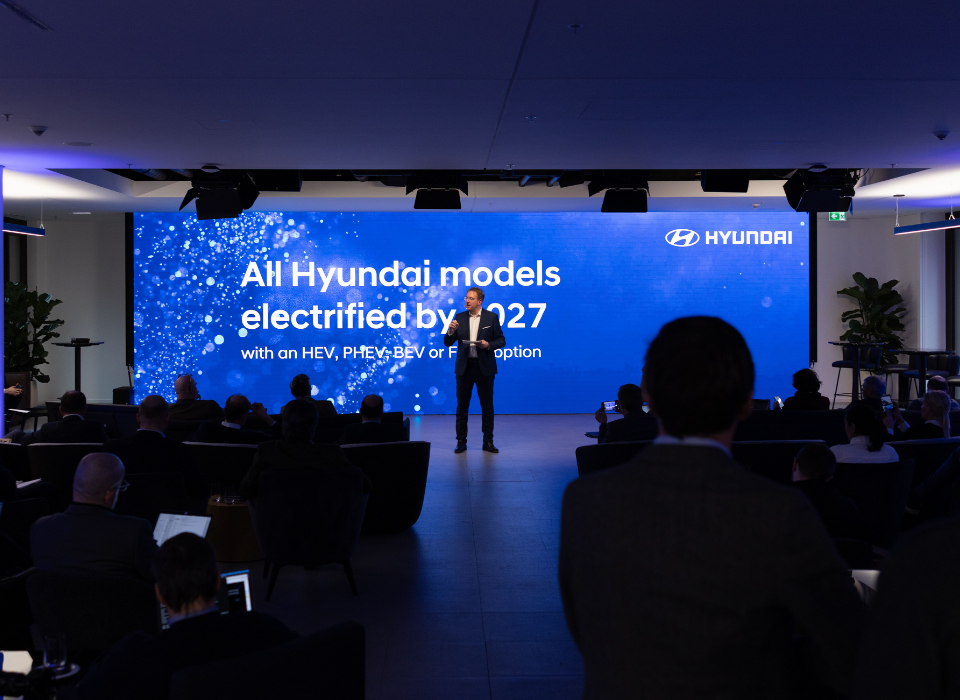
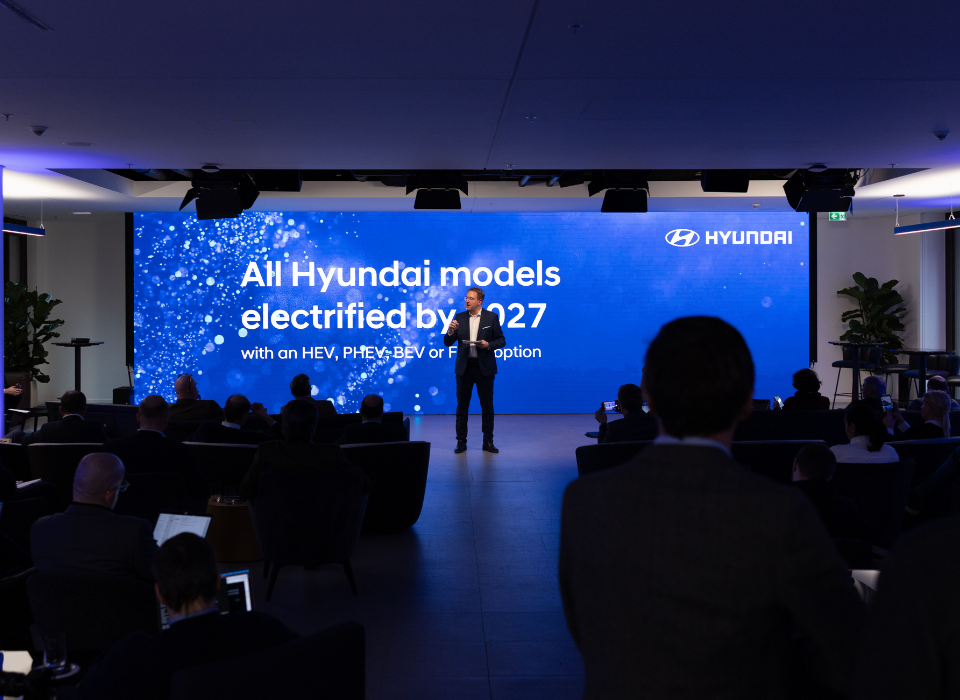
While approximately 80 percent of models currently have an electric version, Hyundai aims to make all models electric by 2027. Hyundai is working on a comprehensive technology roadmap to continuously improve electric and hybrid performance.
Strengthening Hyundai's Commitment to Europe
Hyundai's commitment to Europe is evident in many concrete ways: the Hyundai Motor Manufacturing Czech (HMMC) facility in Nošovice, Czechia, recently produced its five millionth vehicle, marking an important milestone. This success reflects long-term stability, technological maturity and Europe-for-Europe manufacturing.
The brand's plant in Izmit, Hyundai Motor Turkey (HMTR), is preparing to produce its first electric vehicle, the IONIQ 3, later this year.
Along with both manufacturing facilities, the Hyundai Motor Europe Technical Center (HMETC) R&D center in Germany has received significant investment aimed at strengthening Hyundai's electric vehicle presence in Europe. With a EUR 150 million investment for the new Square Campus, Hyundai expanded the HMETC facilities by 25,000 m² last year, transforming it into one of Europe's most advanced automotive R&D centers.
At its manufacturing facility in Izmit, Hyundai invested EUR 250 million in the redesigned EV platform structure, high-voltage battery integration and power electronics, with additional investments planned for upcoming years. The manufacturing plant in Nošovice, Czechia, was also expanded in 2025 to support BEV battery production and assembly; total investment at the facility since its opening in 2008 has exceeded EUR 2 billion.
Gallery