


A perspective by Piramal Nutrition Solutions
The pharmaceutical standard
Pharmaceutical science built the standard that proves what delivered dose actually reaches the body, not just what was added.
-Pharmaceutical bioequivalence exists to prove what actually reaches systemic circulation.
Nutrition delivery has no equivalent standard.
-Fat-soluble vitamin and mineral absorption is predictable from solubility and permeability alone, the same two parameters the Biopharmaceutics Classification System uses for drugs.
-In pharmaceutical manufacturing, shelf-life is a measured, evidence-based parameter, and not a forward projection from the date of manufacture, as likely to be the case with nutrition.
-The gap between what a label declares and what the bloodstream receives is the question pharmaceutical science has answered, but nutrition delivery hasn’t.

Nutrition delivery has the mechanism. The standard for proving it works is what remains to be adopted.
The materials precision
Whether your encapsulation is actually protecting the nutrient can be known before any consumer testing.
-Zeta potential¹ and particle size predict encapsulation stability and release behavior in the body, before the product reaches the consumer.
-Nutrient release timing isn't a manufacturing outcome but a designable parameter, controlled through PLGA's² molecular weight and L:G ratio.³
-NLC⁴ systems consistently outperform SLNs⁵ in nutrient loading and stability, with lab release data that reliably predicts what happens in vivo testing.
-A predictive relationship between dissolution data, bioavailability, and IVIVC⁶, means formulation decisions can be made before in vivo testing begins.
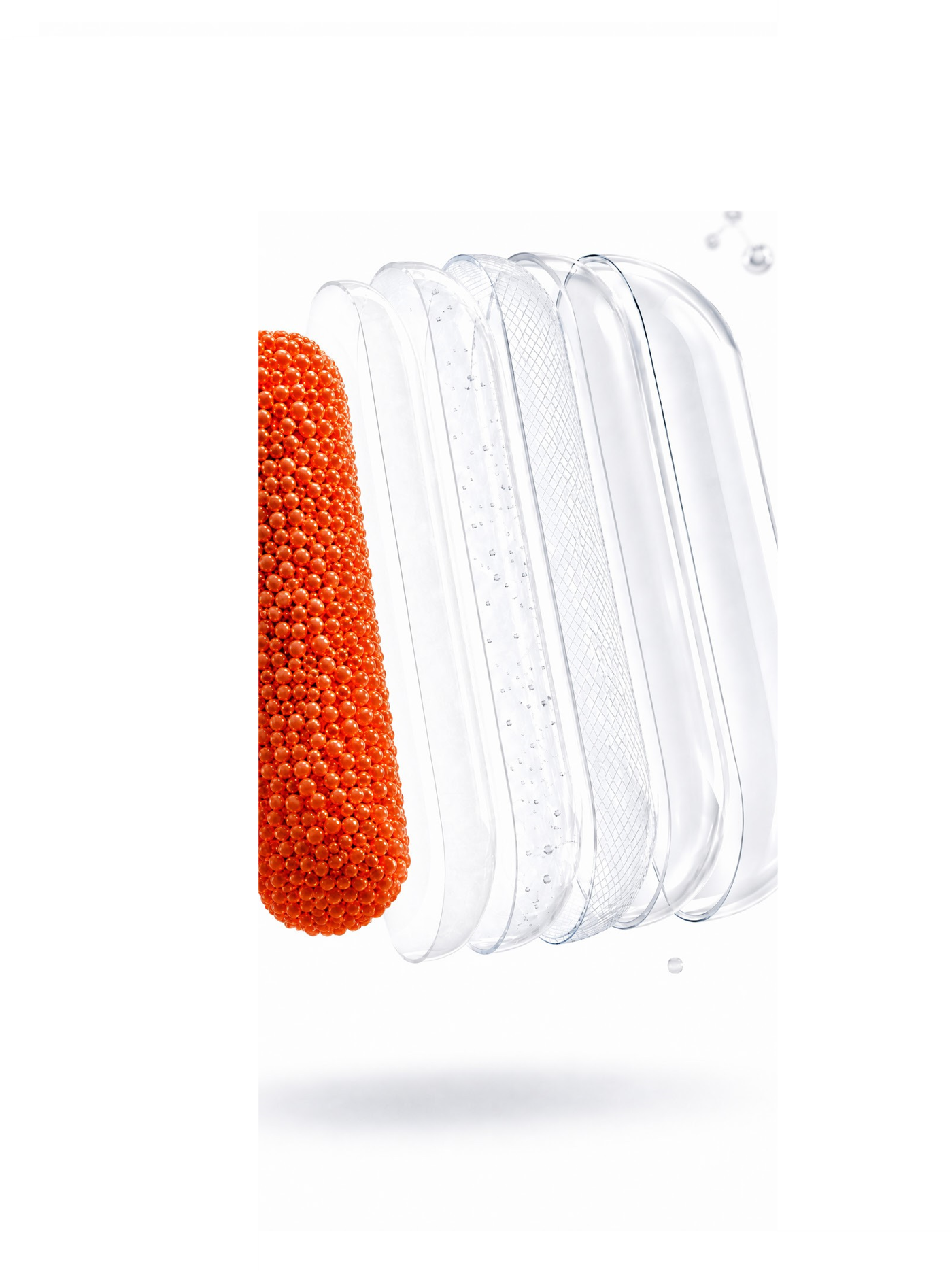
Materials science made delivery performance predictable from physical measurements, a capability available to every nutrition delivery formulation decision.
1-Zeta Potential: A measure of the electrical charge on the surface of particles, indicating how stable a suspension or emulsion is against clumping.
2-PLGA (Poly(lactic-co-glycolic acid)): A biodegradable polymer widely used to encapsulate and slowly release drugs or nutrients in the body.
3-L:G ratio: The proportion of lactide to glycolide units in PLGA, which determines how quickly the polymer degrades and releases its encapsulated active ingredient (higher lactide = slower degradation; higher glycolide = faster degradation).
4-NLC (Nanostructured Lipid Carrier): A lipid-based nanoparticle system made from a mix of solid and liquid lipids that improves the loading, stability, and delivery of active ingredients.
5-SLN (Solid Lipid Nanoparticle): A nanoparticle made entirely from solid lipids, used to protect and deliver drugs, nutrients, or bioactive compounds.
6-IVIVC (In Vitro-In Vivo Correlation): A predictive relationship that links laboratory test results with how a product actually behaves inside the body.
The manufacturing discipline
A premix that passes final testing may not be the premix that was designed.
-Quality deviations in moisture, particle size, and blend uniformity are detectable during production. Pharmaceutical manufacturing catches them through PAT⁷.
-In spray drying, outlet temperature, feed rate, and atomization pressure determine encapsulation efficiency. Understanding the relationship means controlling the outcome.
-QbD⁸ makes product quality a function of formulation and process variables, designed from the start, not inspected at the finish.
-End-product testing confirms what was made. It rarely corrects what went wrong during manufacturing.
Quality that is designed into a process is more reliable than the quality that is tested for at the end of the process.
7-PAT (Process Analytical Technology): A system of real-time monitoring and control that helps manufacturers ensure product quality while production is happening, rather than only testing at the end.
8-QbD (Quality by Design): A development approach where product quality is built into the design of the product and manufacturing process from the beginning, instead of relying mainly on final inspections.
The agricultural intelligence
The fortification level that satisfies the regulator may bear little resemblance to what the consumer's gut absorbs.
-Phytic acid in cereal matrices can reduce non-haem iron absorption by up to 80%, regardless of what the fortification label declares.
-Matrix-specific, population-level delivery evidence exists for biofortified crops. Manufactured premixes are rarely required to meet the same standard.
-A phytate:iron molar ratio⁹ above 1 inhibits absorption significantly, a variable invisible to the compliance brief but present in every bowl of fortified porridge.
-Agricultural matrix intelligence shifts fortification design from compliance specification to bioavailability-based formulation.
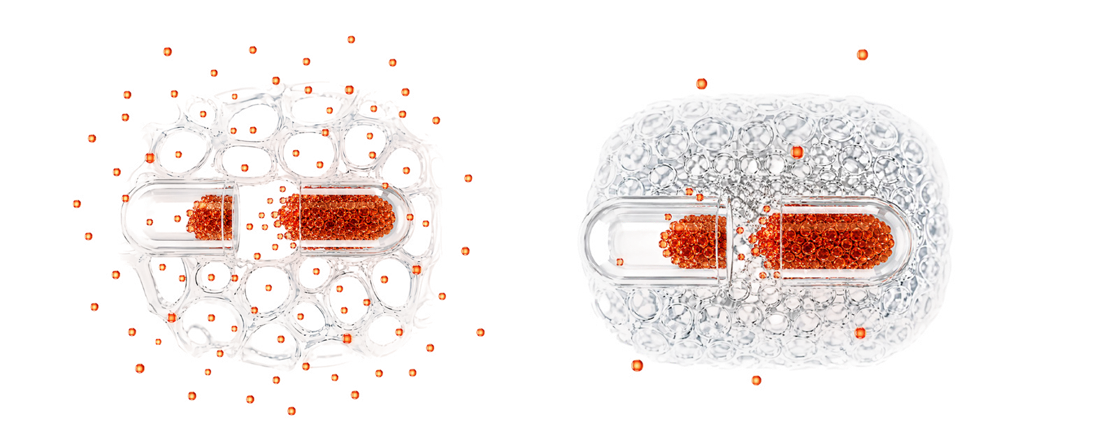
Designing for compliance answers the regulator's question. Designing for the matrix answers both the regulator’s and the consumer's.
9-Phytate:Iron molar ratio: A measure of how much phytate (a natural compound in plants that blocks mineral absorption) is present relative to iron, helping predict how much dietary iron the body can actually absorb.
The aerospace contribution
Your shelf-life data was generated in a chamber, but your product will travel through something very different.
-Vitamin degradation under real environmental stressors is structurally different from what controlled-chamber testing captures.
-Encapsulation designed for extreme thermal cycling and oxygen exposure shares its core logic with protecting fat-soluble vitamins across a supply chain.
-Vitamin A degradation across real temperature conditions is mathematically predictable. Shelf-life doesn't have to be assumed; it can be calculated.
-Vitamin degradation rates are mathematically predictable from temperature alone¹⁰ making shelf-life across real-world conditions calculable, not assumed.
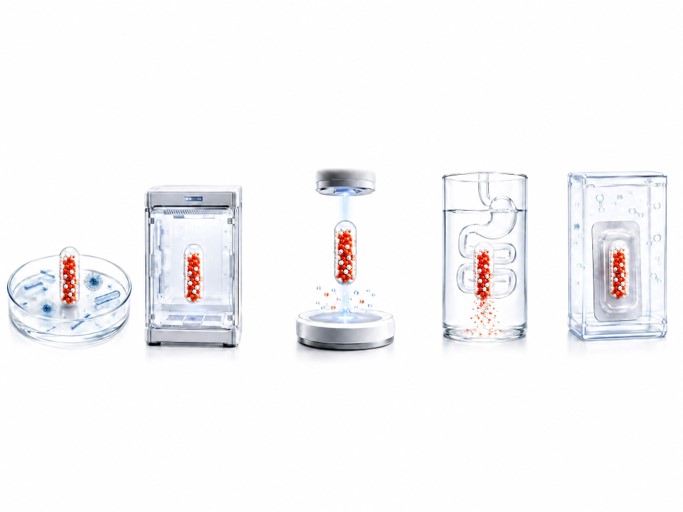
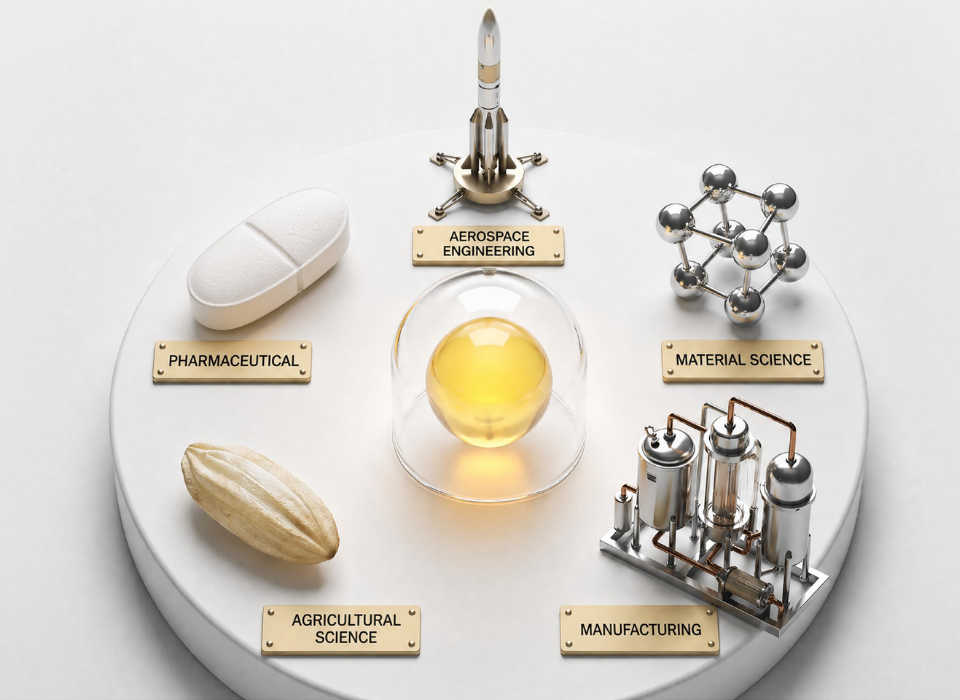
The science that kept nutrients stable in space has more to offer nutrition delivery than nutrition delivery has yet borrowed from it.
10-Arrhenius Kinetics: A mathematical model that predicts how quickly a substance degrades at different temperatures, allowing shelf-life to be calculated across variable real-world conditions rather than estimated from a single controlled test.
The gap
One observation remains consistent across all of them.
-Pharmaceutical science validated delivery claims with matrix-specific, population-level evidence.
-Nutrition delivery adopted the mechanism without the validation standard.
-Materials science characterizes delivery systems by physical parameters that predict in vivo performance.
-Nutrition delivery applies these measurements selectively.
-Engineering science built quality into the manufacturing process through real-time monitoring.
-End-product testing remains a common quality assurance model in nutrition manufacturing.
-Agricultural science established that matrix composition governs nutrient bioavailability.
-Fortification briefs still largely start from compliance, not absorption.
-Extreme-condition performance science modelled degradation across variable real-world conditions.
-Nutrition shelf-life is still predominantly predicted from controlled chambers.
Five disciplines contributed the frameworks to nutrition delivery, but not always the proof that made those frameworks credible in the first place.
The next nutrition science paradigm
Four domains already developing the science of nutrition delivery will draw from next.
Nutrigenomics
Polymorphisms in VDR, MTHFR, and BCMO1 genes produce measurably different metabolic outcomes, pointing toward individual-level nutrition delivery design.¹¹, ¹²
Microbiome Science
Gut microbiota synthesize biotin and folate, modulate non-haem iron absorption, and produce short-chain fatty acids, making microbiome composition an active delivery variable. ¹³, ¹⁴, ¹⁵
In Silico Formulation
Molecular dynamics simulations model polymer-nutrient interaction energies and release profiles computationally, predicting formulation performance before physical testing.¹⁶
Precision Fermentation
Precision fermentation produces riboflavin and cobalamin, with a defined molecular architecture that redefines ingredient specification.¹⁷, ¹⁸
Each of these disciplines is already developed. What remains is the borrowing.
11-VDR polymorphisms: Uitterlinden A.G. et al., Gene, 2004 or Bikle D.D., Chemistry & Biology, 2014
12-MTHFR C677T: Frosst P. et al., Nature Genetics, 1995 — the foundational MTHFR polymorphism paper
13-Hill M.J., European Journal of Cancer Prevention, 1997 or Rossi M. et al., Nutrients, 2011
14-Zimmermann M.B. & Chassard C., Nutrition Reviews, 2012 ✓
15-Cummings J.H. et al., Journal of Experimental Medicine, 2004 or Tan J. et al., Immunity, 2014
16-Ouyang, D. & Smith, S.C., Computational Pharmaceutics, Wiley, 2015
17-Stahmann, K.P. et al., Applied Microbiology and Biotechnology, 2000
18-Tripathi M. et al., "Fermentative production of vitamin B12 by Propionibacterium shermanii and Pseudomonas denitrificans," Food Science & Nutrition, 2024
The position
The cross-domain argument, made from operational practice.
The argument this document makes is made from a position where at least one of these disciplines is a daily operational practice.
Piramal Nutrition Solutions operates within Piramal Pharma Solutions' global pharmaceutical manufacturing infrastructure, a CDMO with USFDA, MHRA, WHO-GMP, and multiple international regulatory credentials.
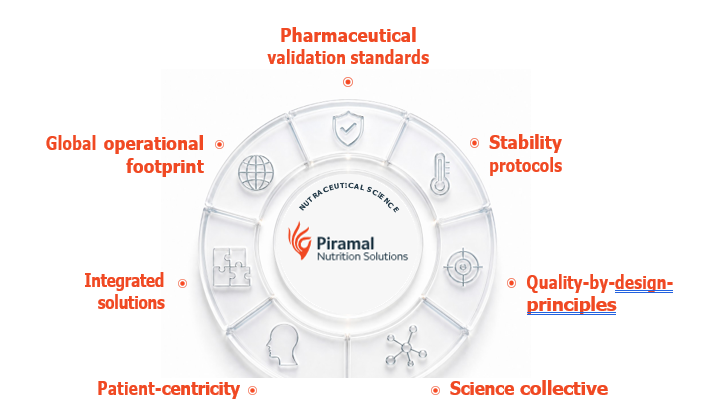
This operational proximity makes cross-domain intelligence emerge from operating simultaneously across pharmaceutical manufacturing and nutrition delivery.
Disclaimer: The perspectives presented in this document are based on published scientific literature and operational observations intended to stimulate discussion on nutrition delivery science. They should not be interpreted as regulatory guidance or product performance claims.