Additives Used in Plastic Packaging
Packaging is a valuable material that protects the product placed within it, ensuring it reaches the consumer in the cleanest and most reliable conditions with desired technical properties, while facilitating transportation and storage.
Packaging protects products from physical effects such as moisture, impact, deformation, and damage. It enables easy preservation, storage, and economical distribution of products.
Information that can be indicated on packaging—such as weight, price, product contents, manufacturer information, expiration date, and usage instructions—provides information flow, choice, and ease of use for both producers and consumers. In other words, packaging can communicate all characteristics of a product to the consumer and may be thought of as a mirror of the product itself.
In developed countries, preference and consumption of packaged products is much higher. Particularly due to changes in family structures, the increasing number of people living alone, and the shift toward practical solutions to keep pace with fast-paced living, consumed products are increasingly chosen on a portion basis. In summary, packaging:
• Protects the product,
• Prevents product deformation,
• Prevents product spoilage,
• Provides information,
• Ensures hygiene,
• Reduces costs and provides economy.
Protection/preservation, transportation, containment, information provision, and sales are among the primary functions of packaging. Packaging can be classified according to its areas of use.
Primary Packaging (Sales Packaging): Packaging that surrounds the product when sold to the end consumer (for example: caps, labels).
Secondary Packaging: Packaging used to compile and group products for sale (for example: shrink film, corrugated cardboard boxes).
Tertiary Packaging: Used to facilitate easy transportation of primary or secondary packaging to prevent physical damage that may occur during shipping. (for example: corrugated cardboard).
Packaging can vary depending on product groups and usage structures. Packaging types are listed below:
1. Paper-Cardboard
2. Plastic Group
• PET (Polyethylene terephthalate)
• PE (Polyethylene)
• PVC (Polyvinyl chloride)
• PP (Polypropylene)
• PS (Polystyrene)
• BOPP (Biaxially oriented polypropylene)
3. Metal
• Steel
• Aluminum
4. Composite
Composite (Beverage Carton)
Composite (Paper-Based)
Composite (Metal-Based)
Composite (Plastic-Based)
5. Glass
6. Wood
In every field of modern life, we benefit from plastics. In our daily lives, we see plastic used in packaging we use, automobile interior and exterior parts, textiles and sporting goods, medical equipment, furniture, toys, phone components, paints, cables, and insulation materials, and in many other products we can think of.
These plastics are prepared by mixing with complex materials known as additives to create differences in product properties.
Plastics do not work without additives, but when combined with additives, they become safer, cleaner, harder, and more colorful. Additives certainly have additional cost, but by reducing production costs and enabling us to use products for longer periods, they help us save and protect the world's valuable raw material reserves.
When considered, today's world, without additives that transform basic polymers into useful plastics, would be much less safe, much more expensive, and far less diverse.
PET (Polyethylene Terephthalate) Packaging
It is a thermoplastic material and belongs to the polyester group. During heat processing, it forms a semi-crystalline (opaque and white) and amorphous (transparent) structure. It is a lightweight material. It is particularly used as an excellent gas and moisture barrier. It is impact resistant. Depending on its thickness, it can be semi-rigid and rigid. PET bottles are frequently used especially in beverages because their barrier properties are excellent. Vegetable oil, water, fruit juice, carbonated beverage bottles, and salad or food containers are produced using PET. In addition, it is produced as thin film and laminated with aluminum, polyethylene, etc. films for use in food and pet food packaging. Its recyclability is one of its important usage advantages.PVC (Polyvinyl Chloride) Packaging
PVC is applied in two forms: flexible and rigid. Bleach, liquid detergent, liquid motor oil, shampoo, hair cream, vegetable oil, ketchup, mayonnaise, ready-made sauce bottles, as well as soft toys, electrical insulation, and construction roofing materials are produced from PVC. Because PVC is quite difficult to process in solid form, it is particularly plasticized to the desired flexibility using additives and then used. Its widespread use is due to its ability to become flexible and be easily processed.PP (Polypropylene) Packaging
It is a material resistant to chemicals, heat, and extreme fatigue. It is a plastic with medium hardness and gloss. Margarine tubes, ketchup bottles, sticks, caps, pouches for chips and biscuits, microwave food trays, medicine bottles, yogurt containers, chairs, luggage, carpet production, rope, and some containers and caps are made from polypropylene plastics. It is the lowest density plastic used in packaging production.PS (Polystyrene) Packaging
It is used in rigid (hard) and foam forms. Industrially suitable for versatile applications. Due to its polystyrene structure, it is a quite hard, glossy, and brittle plastic. Its applications include egg cartons, fast-food packaging boxes, coffee cups (glasses), yogurt containers, dog food containers, water cups, video and audio cassettes. PE (Polyethylene) Packaging Generally, the most commonly used type of plastic. In our current lives, shampoo, detergent, and garbage bags that enter our homes are polyethylene in structure. HDPE (High-Density Polyethylene): Due to its polymer structure, it is a durable material. It is not a transparent material and basically has a milky white opacity. For this reason, it is more preferred in products where transparency is not important. It is an economical material that is easily shaped. Furthermore, it is a preferred material because of its resistance to breakage. Buckets, bleach bottles, shampoos, waste bags, milk bottles, etc. are produced using HDPE. LDPE (Low-Density Polyethylene): It has a flexible structure. Its use in film form is common industrially. It is also used in single-layer or multi-layer laminated form. Its applications include flexible packaging (detergent, food, hygiene).PC (Polycarbonate) Packaging
It is an easily processed material. It is particularly a very durable material and is even used in the manufacture of bulletproof glass. It has high light transmittance and is a transparent material. It is known in colloquial terms as polycarbonate and is quite widely used in our homes as water cooler bottles. In addition, because of its high impact resistance, it is used in transparent panels of bus shelters and as protective panels. The properties of different additives, particularly in food, pharmaceutical, and medical plastic applications, can be seen in Table 1.Additives Used in Packaging
1. Plasticizers (Plasticizers), 2. Reinforcing and Durability Enhancers, 3. Colorants, 4. Lubricants (Lubricants), 5. Antistatics, 6. Stabilizers, 6.1. UV Stabilizers 6.2. Heat Stabilizers 7. Antioxidants, 8. Blowing Agents, 9. Flame Retardants, 10. Fluorescent and Brighteners, 11. Biostabilizers, 12. Crystallinity Regulators, 13. Anti Fogging Agents.1. Plasticizers (Plasticizers)
Chemical substances added to plastic processing mixtures that alter the physical and mechanical properties of the final plastic product are known as plasticizers. Plasticizers are additives that gel polymers, improve processability by reducing the melt viscosity, glass transition temperature, and elastic modulus of plastics, and provide flexibility and elasticity. They do not cause any changes in the chemical structure of polymers. Plasticizers are filler materials that facilitate plastic flow and processability in heat and pressure shaping, reduce brittleness, and increase flexibility. They must be compatible with the plastic, mix very well, and remain within the structure. Advanced plasticizers can be used at less than 5%. Eighty percent of plasticizers are used in PVC.Commonly Used Plasticizers
Dioctyl phthalate (DOP), dibutyl phthalate (DBP), and diisooctyl phthalate (DIOP) are among the best and are known as primary plasticizers. Tricresyl phosphate is both a good plasticizer and increases flame resistance. Dioctyl adipate (DOA) and dioctyl sebacate, such as adipates, oleates, and sebacates, are known as secondary plasticizers and more often increase flexibility at low temperatures in vinyl plastics. Epoxy plasticizers are obtained by heating unsaturated vegetable oils and fatty acids with hydrogen peroxide. Natural source fatty acid esters, hydrocarbons, and their derivatives are used as secondary plasticizers.2. Reinforcing and Durability Enhancers
These additives affect the mechanical, electrical, and thermal properties of plastics, provide dimensional stability, and in some cases help reduce costs. • Asbestos Fiber, Glass Fiber, Ceramic Fiber, and Mica Particles: increase mechanical durability, provide dimensional stability, and are particularly used in obtaining precise measurements and in the production of plastic products that will operate for long periods. They also reduce thermal conductivity. • Calcium and Barium Carbonates, Talc, Kaolin, etc.: Cost-reducing additives that, when not used in excessive amounts, increase mechanical durability, especially abrasion resistance, and reduce heat conductivity. • Metal and Graphite Powders: When added to plastic for special purposes, they impart conductivity to a certain extent, for example, in floor materials where static electricity is undesirable.3. Colorants
Colorants are among the most important polymer fillers. They are used to prevent the color of plastic from fading under conditions such as temperature, heat, humidity, and chemical environment. Aesthetic impact on the appearance of plastic material is provided through coloring. Different colorants are used depending on the structure of the plastic resin and the intended use. Plastic colorants should have the following properties: • They should distribute very well within the product, give a homogeneous appearance, and be able to color the product effectively, • They should be compatible with the plastic material and not impair the properties of the plastic, • They should not deteriorate during the molding process, • They should resist daylight (UV light), • They should be washable, meaning color should not come off with washing, and should be non-toxic. Colorants are basically examined in two groups: dyes and pigments. Dyes are weak in terms of thermal stability and tend to fade. Dyes can provide more transparency than pigments. Dyes are organic azo and aniline class chemical substances. The refractive index of dyes should be close to that of the plastic. Pigments, on the other hand, are particles not fully dissolved to a particle size sufficient to scatter light due to their structure. Pigments can be organic or inorganic. Organic pigments, despite being expensive, allow much more saturated colors to be obtained and also show better dispersion in plastics compared to inorganic pigments. Inorganic pigments are large particles and require heavier use. Colorant usage rates depend on the colorant properties and plastic type, but generally liquid colorants are added to the plastic mixture at 0.5-1.0% and powder colorants at 0.1-0.25%. • For white color: titanium dioxide, barium sulfate, zinc oxide, • For silver color: fine aluminum powder, • For yellow color: titanium yellow, chromium yellow, cadmium yellow, • For blue color: chromium green, • For red color: cadmium red, iron 2 oxide, • For black color: carbon black, • For glossy appearance: mica and lead carbonate are used.4. Lubricants (Lubricants)
Lubricants or slip agents facilitate the flow of the mixture in the machine during processing and ensure easy removal of the final product from the mold. In other words, they are additives that facilitate the flow of polymeric materials in both solid and molten states and prevent the molten polymer from sticking to various parts of the machinery, thus facilitating plastic processing. Lubricants are generally added to plastic at 0.1-3.0%, and if added in greater amounts, the mixture can be degraded by heat effects and mechanical properties of the final product may decrease. They are divided into 2 categories: internal and external lubricants: Internal lubricants: For example, metallic soaps, polyglycols, and synthetic waxes, etc. Internal lubricants reduce the viscosity of the plastic mixture. External lubricants: For example, external slip agents such as barium and calcium reduce friction between the plastic mixture and the screw.5. Antistatics
By adding many additives with conductive properties, the electrical properties of plastics change. Due to their dielectric properties, static electricity accumulates during processing or use of plastics. This accumulated electricity causes electrical shock, combustion or explosion, and the accumulation of dust and dirt on materials. Antistatic additives allow the release of accumulated electrical charge and are hygroscopic compounds, preferably ionizing, that prevent electrostatic charging. There are two types of applications. The first is direct addition into granules or surface spraying. The best-known antistatics added within granules are glycerin esters and ethoxylated tertiary amines. Surface applications are performed with quaternary ammonium salts of fatty acids added to water or alcohol and ethoxylated glycerin esters. The antistatic additive added to the mixture must be compatible with the plastic, resistant to molding operations, and heat resistant. Antistatic substances are applied either by direct addition into granules or by surface spraying. Generally, they are added at 0.1-2% depending on the type of plastic and properties of the antistatic substance.6. Stabilizers
These are additives added to protect the structure of plastic materials and provide desired mechanical properties. When plastic materials are shaped through heat processing, it can cause changes in the molecular structure of the plastic. Molecular changes can cause changes in the bond structure of the plastic as well as lead to deterioration of the plastic, and this can result in changes in the mechanical properties of the material. Stabilizers should be used to protect plastics against heat and UV. Stabilizers are divided into two categories: • UV Stabilizers • Heat Stabilizers6.1. UV Stabilizers
UV stabilizers (metal deactivators) or ultraviolet light balancers are added to prevent or reduce fading of plastic over time due to UV (sunlight) effects, deterioration of appearance, and weakening of structural durability. They affect material structure and cause a reduction in tensile strength. Polymer bonds begin to degrade at wavelengths of 0.01-0.4 microns. For this reason, UV stabilizers are added to plastics, particularly to protect against the effects of the sun, which is the most important UV source. UV stabilizers absorb energy that could cause chemical changes in the product and convert it to heat, allowing dissipation of this energy, and the final part becomes resistant to short-wavelength UV rays. Care should be taken to ensure that UV stabilizers are colorless and non-toxic. They are used at 0.5-2.0% depending on the type of plastic to which they are added. Known UV stabilizers include aryl esters, benzophenone, benzotriazole, tetramethylpiperidine, and benzoic acid esters.6.2. Heat Stabilizers
These are additives used to prevent or slow down the deterioration and property changes of plastic materials due to heat. They are added to the mixture both during manufacturing and storage to prevent plastic degradation and extend service life. These are additives added to plastics to preserve the molecular structure of polymeric materials subjected to heat treatment and shaped by heat, and to maintain the physical and mechanical properties of the resulting product. Because polymeric materials, especially during processing, may undergo structural changes due to temperature effects, the service life of the resulting plastic may be shortened due to this. The addition of heat stabilizers to plastics provides permanent stability and prevents degradation. Stability in plastics is an important factor in terms of production, processing, and use of the plastic. Materials used as heat stabilizers include inorganic metal salts, organic acid salts (metallic soaps), metal complexes, organic tin compounds, phenols, epoxy compounds, and various organic compounds.7. Antioxidants
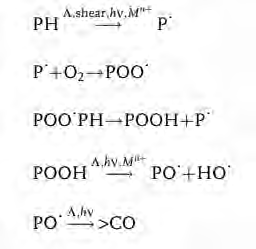
Plastic materials can degrade from the time of production through storage, during use, and finally during shaping due to atmospheric conditions, light, processing temperature, mechanical stress, and chemical reactions that may occur during processing. Due to degradation, the physical, chemical, and mechanical properties of the plastic change. Degradation can result in hazardous and toxic gases as well as changes in plastic properties. Antioxidants (oxidation inhibitors) are applied in small amounts to plastic material to prevent or delay damage to the plastic material structure from atmospheric oxygen and radiation effects. Antioxidants either directly bind oxygen or prevent oxidation by producing a compound with the plastic resin. The application method is during plastic granule production or added between granules during part molding from granules. The antioxidant additive used must not decompose at processing temperature and must not have a retarding or accelerating effect during polymerization. It is preferred that the additive used is a low melting point material that can be easily dispersed in the mixture (or can be used as an easily emulsified liquid in aqueous systems). Additionally, it should not accumulate on the surface and cause blooming, should not be a colorant, bleach, or color remover, and should not have toxic effects. The antioxidant additive added should be compatible with the plastic, should also provide antiozonant effects, and should work effectively with other additives. Usage rates range from 0.1-2.5%, and major antioxidants are basically divided into two categories: amine and phenol compounds. Amine-derived antioxidants, despite having low solubility in polymers, are preferred especially to provide heat and bending properties. Phenolic compounds can be easily used in light-colored plastic materials. Both amine and phenol-based antioxidants are known as chain terminators. These materials stop the chain reaction by transferring reactive hydrogen in the antioxidant to peroxide radicals that initiate oxidation. Additionally, there are antioxidants containing phosphorus and sulfur that prevent oxidation by breaking hydroperoxides that initiate the free radical mechanism. The combined use of two types of antioxidants creates a synergistic effect due to their different mechanisms of action, and greater effectiveness can be achieved than each would show alone.Known Antioxidants:
• Alkylated Phenols and Bisphenols, • Phenol Condensation Products, • Polyphenols, • Amines, • Esters, • Organic Phosphites and Phosphates, • Carbon Black.8. Blowing Agents
These additives, which can be organic or inorganic in nature, decompose at an appropriate, specific, and narrow temperature range to form products with at least one gas component, and by foaming the plastic material, create a porous structure. Blowing agents are chemical substances in solid, liquid, and gas forms that, when added during plastic processing, create a cellular structure with voids through melting if solid, expansion if gas, or evaporation and separation from the system if liquid, or degradation. They are most suitable for polyethylene, polystyrene, vinyl, and polyurethane plastics. Usage rates can be 0.1-1.0% in injection and extrusion, and 5.0-15.0% in pressure molding. Foam-producing substances can produce both rigid and flexible foams. Foam material density can generally be 15-60 kg/m³. Major blowing agents include pentane, toluene, trichloroethylene, and azo carbonamide, etc. Foams with properties such as thermal and electrical insulation, lightness, corrosion resistance, and low cost are used in insulation, packaging, fishing materials, and in the production of finished pieces such as furniture.9. Flame Retardants
Like other organic substances, plastics burn when heated and the temperature reaches the ignition point. Some plastics burn rapidly at low temperatures, while others burn at a low rate for long periods. Flame retardant additives prevent plastics from igniting at low temperatures and, even if flames form, prevent their progression. Plastics are used in significant quantities in critical construction, electrical, and transportation applications where they must meet fire safety standards and mandatory regulations. To meet these requirements, flame retardants are added to plastics. While these substances prevent combustion, they also reduce some properties of the plastic such as processability, tensile strength, and softness. Therefore, when selecting flame retardant substances, the properties of the plastic material and the intended use must be carefully determined.Flame retardant substances generally contain the following elements:
• Antimony, bromine, chlorine, nitrogen, phosphate. Additionally, chlorinated paraffins and triphenyl phosphate can be given as examples of flame-retarding substances.10. Fluorescent and Brighteners
A significant portion of thermoplastics absorbs visible light in the blue region of the spectrum and therefore appear yellowish. To eliminate this unfavorable situation and make plastic materials appear white, fluorescent and brightening agents are used. The process involves restoring the blue region of the absorbed light spectrum and increasing light reflection from the plastic material. These processes can be added to the polymer immediately before the molding operation. Two common methods are used for this purpose. A dry mixture is prepared with the plastic material and additives, whether in powder or granule form. In this application, to enable the additive to adhere to the plastic particles, additives such as butyl stearate may be required, as in the case of polycarbonate (PC). Another widely applied approach involves adding the additives to the plastic material in "masterbatch" form containing approximately 20% additive.The main objectives of brightener and fluorescent additive use are:
• To improve the generally yellowish color of additive-free plastic and whiten it, • To provide a bright white color for the final use area, • To increase the brightness of colored or black final products. Only some of the chemical substances with brightening and fluorescent properties can meet the desired characteristics. Fluorescent additives are grouped into three main categories: • Bis-benzoxazoles, • Benzatriazol-phenylcoumarins, • Bis-(styryl) biphenyls. Such additives are generally used at around 100-500 ppm.11. Biostabilizers (Biostabilizers)
Biostabilizers are defined as additives that protect plastic materials and plastic products from microbial attacks and help prevent degradation. Such attacks can cause staining, color change, odor, loss of hygiene and aesthetics, as well as loss of mechanical properties and insulation properties in the material. The desired properties in good biostabilizers include a broad antibacterial effect spectrum, not adversely affecting the product properties of the plastic used with it, and not having negative interactions with other additives in the mixture: • They should have a broad antibacterial effect spectrum. • They should be effective at low concentrations. • They should not adversely affect the final product properties. • They should have sufficient thermal stability under plastic processing conditions and should not be volatile. • Human and environmental toxicity should be low. The most commonly used biostabilizers are 10,10'-oxybis-phenoxyethanol and diphenyl-stannane-2-ethylhexanoate. In formulations, besides the active substance, plasticizers, auxiliary plasticizers such as epoxidized soybean oil, or solvents as carriers are present. If the biostabilizer to be used is pure, 100% pure, usage amounts are around 0.3%, while in formulations this can increase to 5%.12. Crystallinity Regulators
When molten polymer is cooled rapidly, many but small crystals (spherulites) form. When cooled slowly, fewer but larger crystals form. This irregular cooling creates an amorphous structure in the material. Crystallinity regulating additives are used to prevent this formation. Polymers, when their molecular structure is suitable, can crystallize at temperatures below their melting points and not very close to their glass transition temperature. When molten polymer is cooled rapidly, many nuclei form, resulting in cooled, solid polymer with many very small crystals and spherulites; when cooled slowly, fewer but larger crystals and spherulites form. The overall crystallization rate can be determined from the nucleus density and the growth rate of the spherulites. Known crystallinity-regulating additives include inorganic additives such as talc, silica, and kaolin; salts of mono- and dicarboxylic acids; organic compounds such as some pigments; and some polymers such as ethylene acrylic acid copolymers. These additives are generally used up to 0.5%.13. Anti Fogging Agents
Particularly in food packaging with high water content (fruits, vegetables, cheese, fresh meat) or in greenhouse films, anti fog agents are added to plastics because water droplets that form after cooling due to a drop in the dew point prevent visibility of products inside the film. Prof. Dr. Ersin Serhatlı / Istanbul Technical University / Faculty of Arts and Sciences Department of Chemistry Dr. Betül Türel Erbay / Business Development Manager / Elif Plastik Ambalaj Sanayi ve Tic. A.Ş.References 1. Piringer, O.G., Baner, A. L., Plastics Packaging Interactions with Food and Pharmaceuticals, Wiley- VCH Verlag GmbH&Co., Germany,2008. 2. Başbudak, M., Plastik Yardımcı Maddeleri, Maya Basın Yayın Matbaacılık, İstanbul, 2008. 3. http://www.ambalaj.org.tr 4. Brody, A. L., Strupinsky, E. R., Kline, L. R., Active Packaging for Food Applications, CRC Press, USA, 2002. 5. http://www.tukcev.org.tr/ambalaj-cesitleri 6. Alpakın, L. F., Fleksibl Ambalajlar, FASD ve ASD, İstanbul,2005. 7. Saçak, M., Polimer Teknolojisi, Gazi Kitabevi, İstanbul,2005. 8. Saçak, M., Polimer Kimyası, Gazi Kitabevi, Ankara,2008. 9. Üçüncü, M., Gida Ambalajlama Teknolojisi, ASD,İstanbul, 2011. 10. Ram, A., Fundamentals of Polymer Engineering, Plenum Press, New York, 1997.
Advertisement
Ad Space728 × 90