Baicapil™: A Botanical Science Revolution in Hair Care
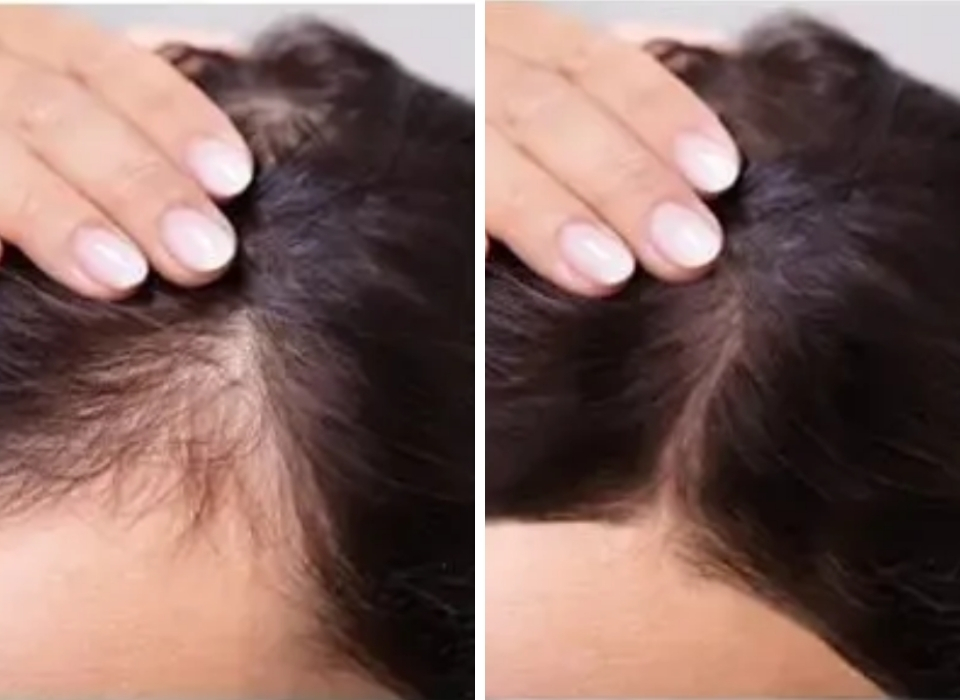
Hair loss is a common problem affecting millions of people worldwide and often has significant impacts on self-confidence and personal image. Developed as a solution to this problem, Baicapil™ is presented by Provital S.A.U. as a scientifically-based solution aimed at reducing hair loss and increasing hair density.
Thanks to its formulation containing three botanical active ingredients – soy, wheat sprouts and baicalin – Baicapil™ delivers promising results in reducing hair loss and promoting hair growth. Moreover, with its 99.8% naturally-derived content, COSMOS certification, ISO 16128 compliance and vegan formulation, it demonstrates commitment to environmental and ethical values. In this article, we examine in vitro and in vivo tests demonstrating Baicapil™'s efficacy to explore its potential in hair care.
Composition and Mechanism of Action
Baicapil™ combines three botanical active ingredients—soy and wheat sprouts—with baicalin, a flavonoid derived from the Scutellaria baicalensis plant. These components work synergistically to support hair health at the cellular level, contributing to Baicapil™'s unique properties. Baicalin in particular plays a key role by promoting cell proliferation, providing protection against oxidative stress, and activating the stem cells necessary for hair renewal.

At the cellular level, Baicapil™ slows cellular aging, known as biological aging, a property particularly important for hair follicles. By activating telomerase, Baicapil™ extends cell lifespan and supports the hair growth cycle, delaying the onset of hair thinning and loss. This dual mechanism—promoting growth and preventing cellular aging—makes Baicapil™ a powerful botanical solution for protecting hair health.
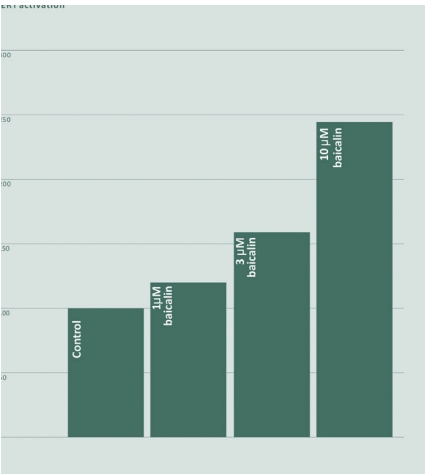
In Vitro Efficacy: Cellular Rejuvenation To test Baicapil™'s efficacy at the cellular level, in vitro studies focused on human skin fibroblasts and mitochondrial cultures. These studies confirmed that the active ingredients in Baicapil™ increase cell activity and slow aging. In particular, baicalin activated telomerase, an enzyme that protects chromosome integrity during cell division, thereby slowing the aging process. Cell cultures treated with Baicapil™ showed increases in cell proliferation and metabolic activity. Additionally, baicalin demonstrated a rejuvenating effect on cellular mechanisms by contributing to a significant increase in the number of cell divisions.
In Vivo Efficacy: Hair Growth and Density Increase In vivo studies of Baicapil™ were conducted on 61 volunteers over six months and demonstrated the ingredient's effects on hair growth and density. Participants using a 3% Baicapil™ solution had their hair condition and growth metrics evaluated at baseline (D0), midpoint (D90) and endpoint (D180). The results delivered significant improvements in the following key indicators:
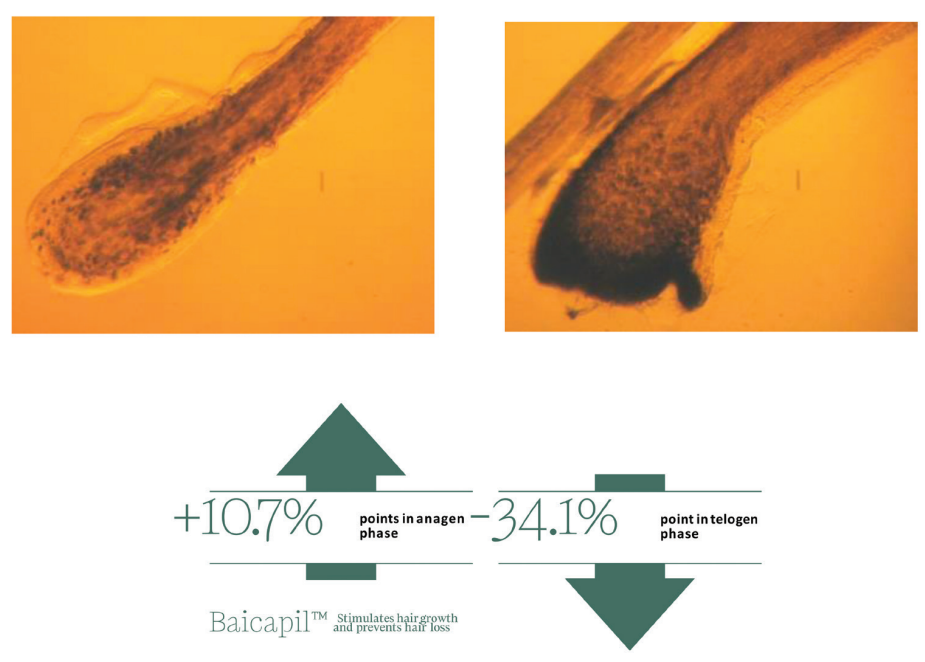
1. Anagen-Telogen Ratio: Baicapil™ increased the proportion of hair in the anagen (growth) phase by 10.7% while reducing the proportion in the telogen (resting) phase by 34.1%. This shift demonstrates that Baicapil™ extends the active growth period and contributes to making hair thicker and more resilient.
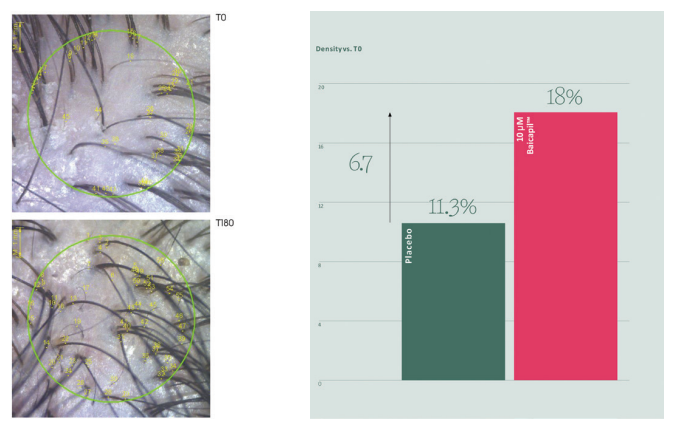
2. Hair Density: One of the most striking results was an observed 22% increase in hair density, with an average increase from approximately 183 hairs per square centimeter to 223 hairs per square centimeter. This increase demonstrates that Baicapil™ not only reduces hair loss but also promotes new hair growth, thereby delivering a visibly fuller appearance.
3. Reduction in Hair Loss: Over the six-month study period, Baicapil™ delivered a significant reduction in hair loss, with participants' hair loss rate falling to as much as 60.6%. This result indicates Baicapil™'s potential to strengthen hair follicles and improve hair retention on the scalp, supporting a gradual reduction in hair loss over time.
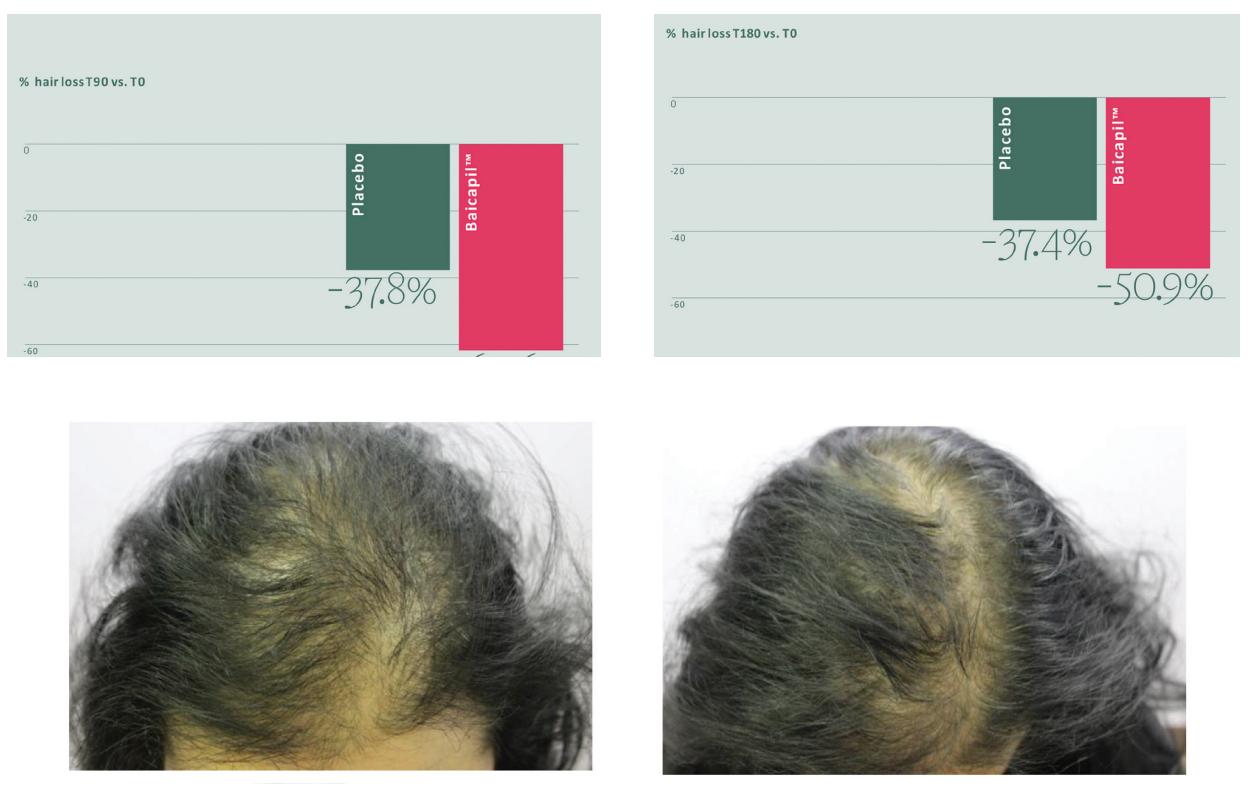
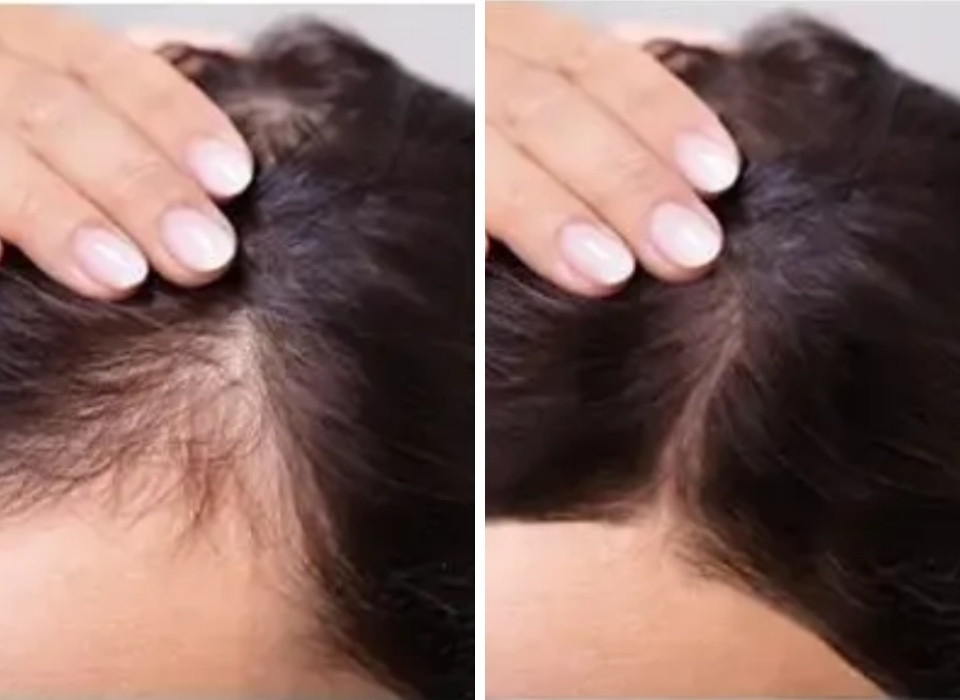
Visual Evidence and Consumer Perception: Visual assessments in the study provided qualitative evidence of Baicapil™'s benefits. Before-and-after photographic comparisons revealed visibly denser hair structure, consistent with the measured increases in anagen-telogen ratio and hair density.
This visible improvement underscores Baicapil™'s efficacy as an ingredient in cosmetic formulations that restores hair health. Additionally, consumers reported experiencing noticeable improvements in their overall hair condition, which aligns with the objective measurements obtained in the study.
Cosmetic Applications and Potential Baica[1]pil™ presents a promising ingredient for many hair care products offering botanical and scientifically-based solutions for consumers concerned with hair loss and thinning. With its unique formulation and clinically proven results, it also aligns with natural and sustainable cosmetics trends. Ideal applications for Baicapil™ include serums, tonics, shampoos, hair creams and leave-in treatments, reaching a broad consumer base prioritizing hair health and density.
Conclusion: In conclusion, Baicapil™ emerges as a groundbreaking active ingredient offering a multifaceted approach to preventing hair loss by leveraging the synergistic effects of soy, wheat sprouts and baicalin. With its 99.8% naturally-derived content and COSMOS certification, Baicapil™ is environmentally friendly and ISO 16128 compliant, while its vegan formula also aligns with environmental and ethical values.
Its efficacy is supported by both in vitro and in vivo studies, delivering significant improvements in hair density, extension of the growth phase and overall hair condition. With its botanical basis and sound scientific support, Baicapil™ stands out as an attractive option for hair care brands seeking to provide effective, nature-based solutions for combating hair loss and enhancing hair vitality.
Authors:
Gülden Değirmenci
Technical Sales Manager - Personal Care / Orbiter Solutions
--
Gülbeniz Altınoluk
Application Manager - Personal Care / Orbiter Solutions
Gallery