The Pigments and Painting Techniques Behind the Paintings on the Berlin Wall
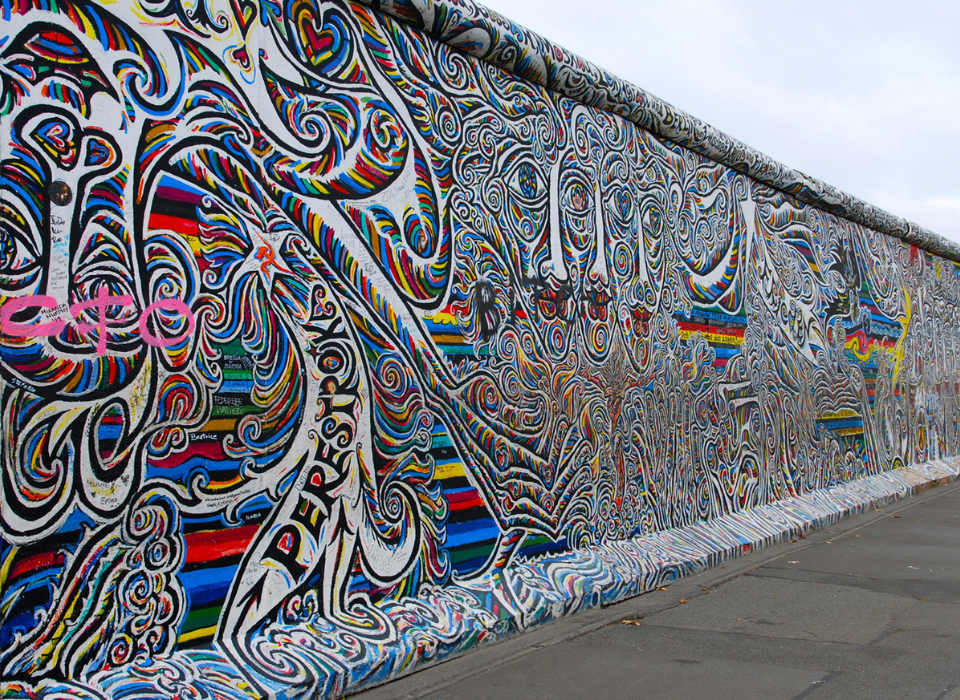
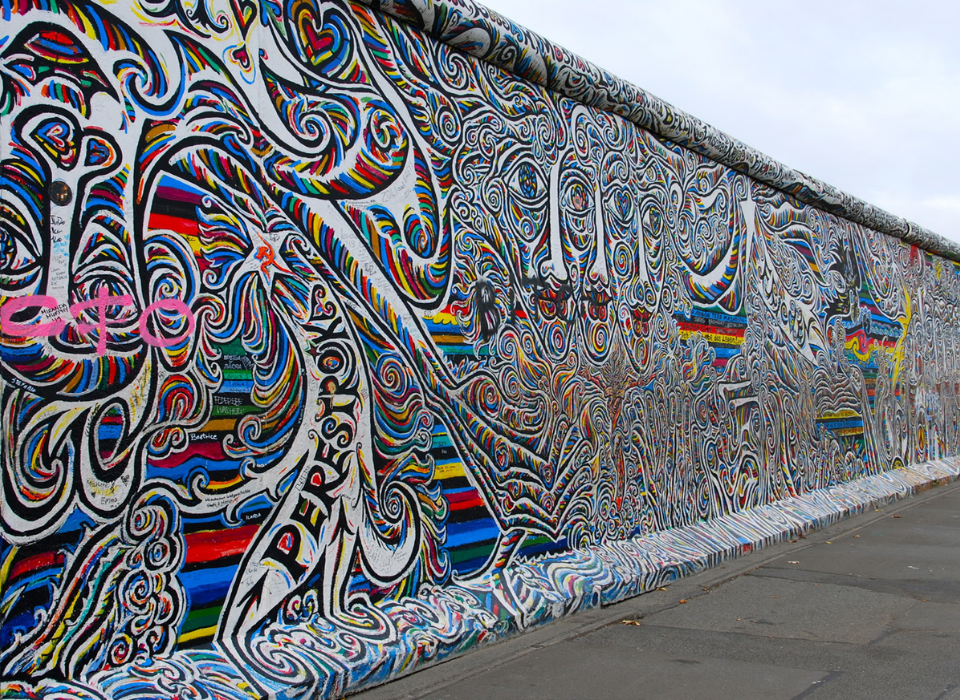
Street art appears in many different forms, and the vivid murals from both before and after the fall of the Berlin Wall represent expressions of people's views. However, since the processes behind how these paintings were made are often kept secret, preserving them becomes difficult. In a study reported in the Journal of the American Chemical Society, researchers combined a handheld detector with artificial intelligence (AI)-based data analysis methods to uncover new information about this historic structure through paint fragments.
Street art appears in many different forms, and the vibrant murals on the Berlin Wall both before and after its demolition represent expressions of people's views. However, because the processes of how these murals were created are often kept secret, their preservation becomes difficult. In a study reported in the Journal of the American Chemical Society, researchers combined a portable handheld detector and artificial intelligence (AI)-based data analysis methods to uncover new information about this historic structure through paint particles.
Francesco Armetta, a co-author of the study, states: "This research demonstrates the powerful impact of synergy between chemistry and deep learning in quantitatively understanding matter; this is clearly evident in the example of the pigments that make street art so striking."
Gathering information about the materials and application techniques used to restore or preserve a work of art is of great importance. However, the artists who painted the Berlin Wall did not document this process.
In previous studies on other historical objects, scientists identified pigments using a technique called Raman spectroscopy without damaging samples, either by taking particles or even entire objects to the laboratory. Although portable handheld Raman devices for field use exist, they are not as precise as fully equipped laboratory equipment. For this reason, Armetta, Rosina Celeste Ponterio, and their colleagues aimed to develop an AI algorithm that could analyze data from portable Raman devices more accurately. In the first test of the new approach, 15 paint particles from the Berlin Wall were analyzed.
The researchers first examined the paint particles under magnification and observed that all of them contained two or three layers of paint with visible brush marks. The third layer in contact with the wall substrate was found to be white; this is thought to have originated from a primer layer used to prepare the wall for painting. The researchers then analyzed the particles with a portable Raman spectrometer and compared the results with data obtained from a commercial pigment spectrum library. The main pigments in the samples were identified as follows: azo pigments (yellow and red particles), phthalocyanines (blue and green particles), lead chromate (green particles), and titanium white (white particles). These results were also confirmed with other non-destructive techniques such as X-ray fluorescence and optical fiber reflectance spectroscopy.
The researchers then attempted to match the colors and typical tone ranges used by painters by mixing pigments from a commercial acrylic paint brand used in Germany since the 1800s with titanium white in different proportions.
According to the researchers, knowing these proportions can help art restoration specialists prepare the correct materials. Using portable Raman spectral data of the mixtures, a machine learning algorithm was trained to determine pigment percentage. This approach showed that the paint particles from the Berlin Wall contained titanium white and pigment up to 75 percent, depending on the sample analyzed and color tone.
The researchers note that these results demonstrate that the AI model they developed can provide high-quality information for art preservation, forensic investigations, and materials science fields in situations where it is difficult to transport laboratory equipment to the field.
Gallery