Tuğba Sadıç: "Demand for low-VOC products is steadily increasing"
Sustainability has become a leading agenda item for the world, especially alongside the climate crisis, and ranks high in the paints industry as it does across all sectors. Eigenmann & Veronelli, one of the important players in the sector where the concept of "green paints" has been frequently heard recently, is one of the major actors working in this direction.
Eigenmann & Veronelli is a family-owned company based in Milan, Italy, with roots dating back to 1910. The company's main activities are the production, import, sales and distribution of specialty and performance chemicals, and it possesses all the necessary technical infrastructure and human resources to provide these services at the highest level. With an annual turnover of approximately EUR 350 million, 20% of total sales come from chemicals produced in-house. A market leader in Italy, E&V entered the Spanish and Portuguese markets by establishing its E&V Iberica office in 2002, and most recently expanded internationally by commencing operations in Turkey in 2013. Additionally, last year E&V broadened its presence in the Middle East market by bringing a Dubai-based distributor firm into its fold. The company's operations in Turkey, which date back 10 years, span the following sectors and business units: rubber, plastics, polyurethane, paints, construction, adhesives, general chemicals, cosmetics, pharmaceuticals and detergents. We spoke with Tuğba Sadıç, Manager of the Paints and Construction Chemicals Business Unit, about the company's sustainability approaches and the concept of "green paints".
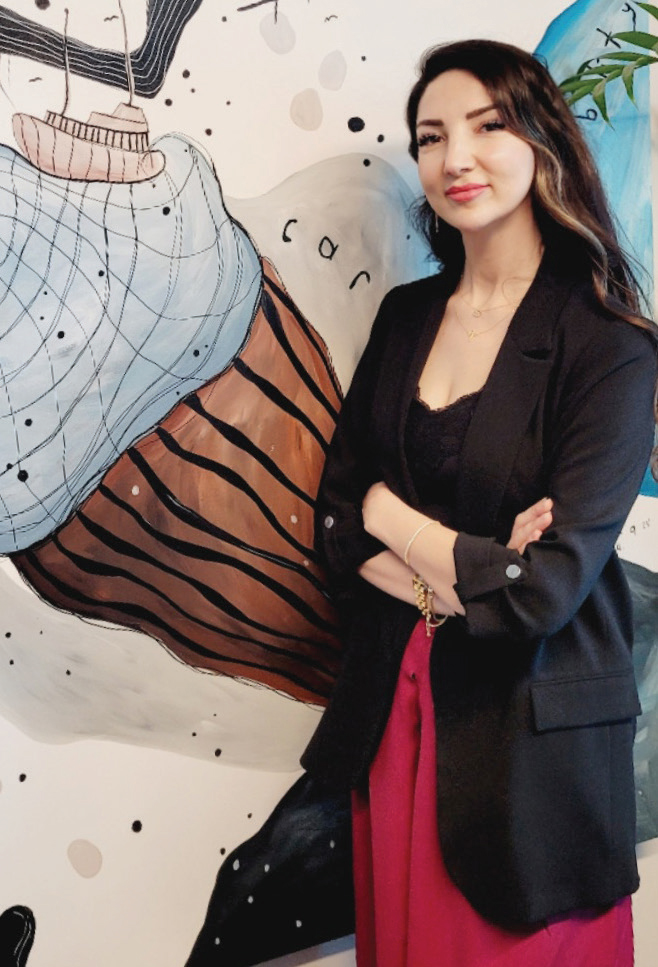
Tuğba Sadıç
What are the special, innovative and sustainable solutions you offer in the paints and coatings field?
First and foremost, as Eigenmann & Veronelli, we aim to be alongside our end-product manufacturer stakeholders at every stage—from raw material procurement to production and sales. By providing technical support during and after the sales process, we target customer satisfaction. Understanding the market well, managing the process through good relationships and achieving long-term presence in this sector on a win-win basis are our primary objectives. For this reason, in the highly competitive paints/coatings/construction sectors, we work with our customers as partners to increase our market share further, providing support with new projects or when they face challenges. In line with a B2B business model, we also sell in Turkey some products manufactured at our Italian facility for certain items. Rather than commodity-type work with low costs and high tonnage, we are expanding our product portfolio with specialty chemicals that add value to formulations and have sustainable impacts. Among our suppliers is Prefere Melamines, a global leader in melamine resin production, which offers environmentally friendly solutions with formaldehyde-minimized products in its portfolio. On the titanium dioxide side, which is a main raw material for paints, Cinkarna is among our suppliers and offers a more environmentally friendly alternative in formulations with products free of TMP (trimethylol propane). On the other hand, water-based PUD (polyurethane dispersion) resins from our Spanish supplier Cromogenia, which are particularly strong in floor and roof systems, are included in our portfolio as an alternative to solvent-based products with low VOC (volatile organic compound) content. Many paint and coatings manufacturers prefer these products, particularly for compliance with environmental regulations and human health and environmental considerations.
The concept of "sustainability" has become prevalent in all areas and sectors recently. Under this heading, we are now frequently hearing the term "green paints" specific to the paints industry. What are your approaches and initiatives on this matter?
"Sustainability" has become highly topical in recent times and, in its broadest definition, encompasses issues such as conservation of natural resources, energy efficiency, waste management and biodiversity protection. The world's increasingly growing environmental concerns keep sustainability on the agenda. When environmental adverse effects and human health are taken into account, the paints sector is undergoing changes related to sustainability. VOCs used in traditional paints easily come into contact with air and evaporate readily, and inhalation of these chemicals has negative impacts on human health. Consequently, a need has emerged globally for production operations that are more environmentally friendly and do not threaten human health compared to traditional paints. The trend toward transitioning to green paints—those produced with water-based resins—is accelerating recently; simultaneously, recyclable paints also fall into this category. While serving as a project manager in the R&D department, I prepared a TUBITAK project titled "Ultraviolet Light-Cured Wood and Furniture Coatings" and completed this special project, which lasted approximately two years, having received approval. UV-cured projects, in addition to their economic gains, low labor costs, time savings and high mechanical resistance advantages, when regulatory adjustments such as environmental compliance are also taken into account, a transition to 100% solids and UV systems in the paints sector will become a necessity in the coming years. Particularly in European countries, significant restrictions are being imposed on the use of paints and varnishes containing high levels of Volatile Organic Compounds (VOC). Considering the legal regulations that our country must implement in the European Union harmonization process and worker and customer health, demand for low-VOC products is steadily increasing. This is why, both in our country and globally, a rapid and responsible transformation is taking place toward UV technology drying paint technology. For this reason, paint and furniture manufacturers who have begun investing in these products are also developing their production facilities accordingly. However, since these types of products are newly being worked on and produced in our country, they are mostly imported from abroad and used, which results in dependence on external sources. In recent years, I assumed a role on BOSAD's "Sustainability Board." Although the process was extended due to the pandemic, a sustainability report was completed as of this year and presented to the sector's attention.
What are the differences between sustainable and green paints and traditional paints?
Low-VOC paints used in indoor spaces improve air quality and provide a healthier living environment. Green paints, which are also suitable for recycling and produced with fewer harmful chemicals, have a lower carbon footprint and less negative environmental impact. Along with the climate crisis we are experiencing today, government administrations have also begun implementing regulations in this direction. Consequently, significant restrictions are being placed on organic volatile compounds and hazardous chemicals in paints, and relevant regulations are being enforced. On the other hand, traditional paints also have certain relative advantages. For example, when it comes to drying time and mechanical resistance, stackability and scratch resistance are very important in furniture coatings. In areas where such properties are required, production of solvent-containing products continues.
What precautions do you take with respect to production and supply chain management?
The globalization of enterprises and the widespread use of information technologies have significantly increased competition between businesses. For this reason, enterprises are forced to make good use of every area that can provide them with competitive advantage. Supply chain management is one of the main areas where companies can gain competitive advantage. Many strategies exist in supply chain management. Each enterprise identifies and uses strategies suited to its own field of operation. As Eigenmann & Veronelli Turkey, in our globalizing world, we prioritize the issue of sustainability and create appropriate and timely solutions for our customers' demands, closely follow developments, anticipate risks that may arise at any link in the supply chain and take necessary precautions. With our expert team, we primarily develop ourselves in demand management and distribution management, striving to minimize the risks brought about by international trade. Through our specialized purchasing and inventory management team, we provide effective solutions to our manufacturing customers and work diligently toward our goal of meeting their demands on time.
What has advancing technology and ecological awareness changed in our sector, and what further changes do you foresee?
When the negative effects and harms of traditional paints, particularly on human health, are taken into account, avoiding these sources of harm or minimizing them has already become a necessity. The concept of "green paints" is spreading in the sector in this manner. This is because suppliers, R&D workers, production workers and end users are all directly affected in the process from the emergence of these relevant products. For this reason, I believe that we end users have become increasingly conscious and begun making choices for ourselves, our families and our children that are least harmful from a health perspective. For example, end users are now gravitating toward the most environmentally friendly coatings for baby room furniture and walls, regardless of cost. As this awareness spreads in society, manufacturers have turned toward environmentally friendly and green products. Of course, regulations in our country are not as strict as in Europe at present, but work is ongoing in that direction. When we compare traditional paints and green paints, unfortunately green paints may have certain weaknesses such as drying time and mechanical resistance. R&D studies are being conducted worldwide to minimize these disadvantages. Green paints are preferred as environmentally friendly and health-safe alternatives in many different application areas. Some of these include interior decorative paints, paints used in furniture, dining area restaurant and kitchen wall paints, hospitals and clinics, and paints used in schools. As mentioned, the fact that green and environmentally friendly paints are preferred in these living spaces has recently shown us how much our sector's marketing network has expanded.
Finally, what are your goals and what would you like to add?
Managing a business unit in a company engaged in chemical raw material production, import and sales means wearing many hats simultaneously. These include purchasing, business development, digital and technical marketing and, of course, sales. On the business development side, participating in new projects and following innovations in the market, as someone with an old R&D background, is always more enjoyable for me personally. Consequently, working with our stakeholders, whom we partner with, on special and new projects and transforming this process into good business while growing our existing market share is among my objectives. With the technical and commercial experience I have in the paints and construction sector, together with a competent team that knows the market and products well, we continue our efforts to achieve the company's goals.
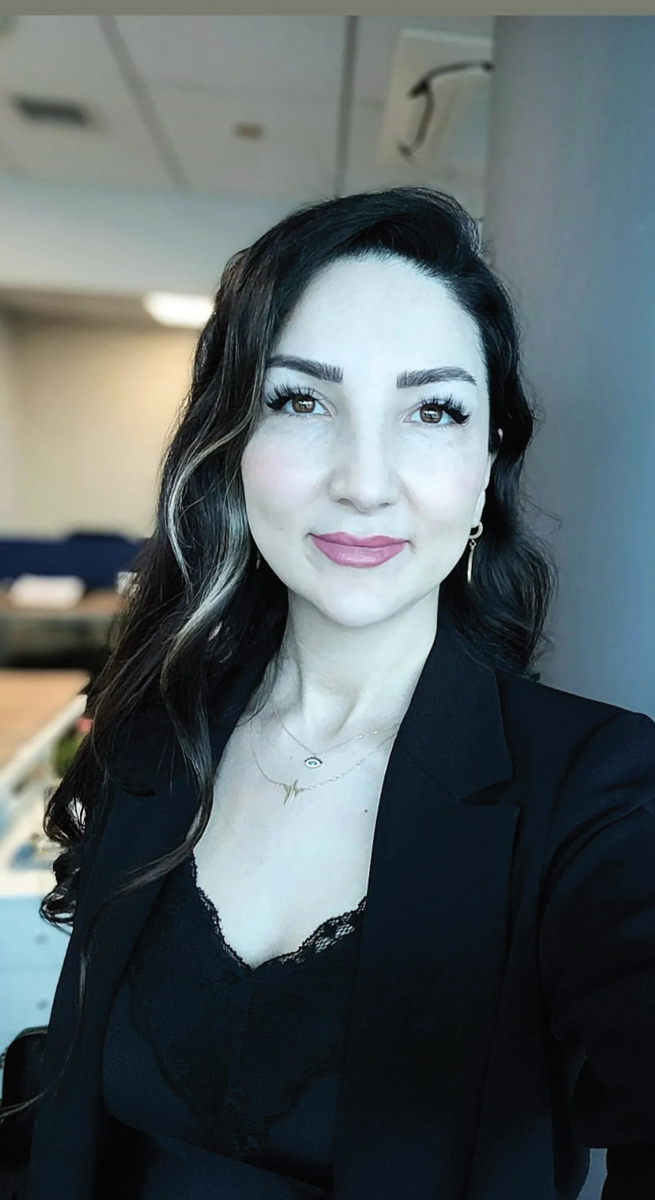
Who is Tuğba Sadıç?
Tuğba Sadıç graduated from Gazi University's Department of English Chemical Engineering in 2006. Immediately after graduation, she began working in the construction chemicals and industrial adhesives/floor coverings sector in Ankara. During that period, she gained experience and became acquainted with coatings while working in R&D, Quality Control and production departments, so to speak, in the heart of the operation. Subsequently, she moved to Istanbul and began working in the R&D department at Polisan Kansai paint company. "After getting to know every type of paint and color there, I can say that I gained very valuable experience at Polisan, which we can call a school in the paints sector. Later, to put my approximately 10 years of accumulated technical knowledge to practical use in the market, I gained significant experience at Boysan Boya in technical projects, business development, supplier management and sales. During the pandemic period, both to rest somewhat and to bring a different vision to my professional career, I worked at our family business that continues to operate. However, with the knowledge and experience I have acquired in the paints and coatings field, I decided to continue in my own sector," says Tuğba Sadıç, who has been serving as head of the paints and construction chemicals department at Eigenmann Veronelli Kimyasal Tic. ve San. A.Ş. for approximately two years.
Report: Bikem Ögünç