Interview with Kenan Bayraktar, Founder of Suba Kimya
We conducted an engaging interview with Suba Kimya Founder Kenan Bayraktar. Bayraktar shared details about his company's groundbreaking work in Turkey and the products they have developed.
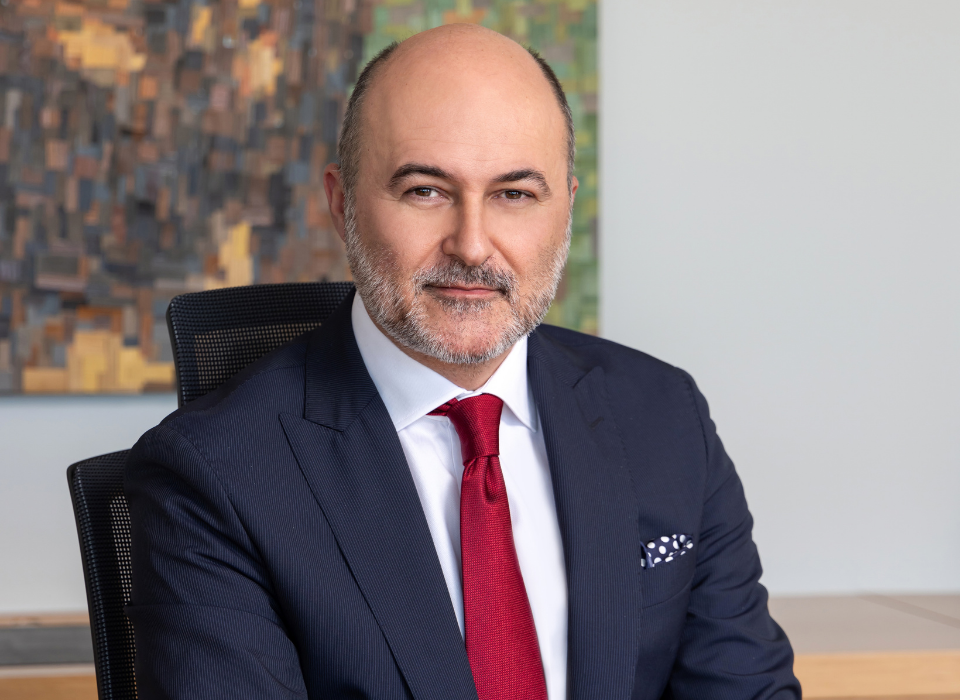
[caption id="attachment_129391" align="aligncenter"] Kenan Bayraktar[/caption]
Could you briefly tell our readers about yourself, your educational background and your professional experience in the industry?
I graduated from the Industrial Engineering Department at Istanbul Technical University. After university, I went to New York, USA and completed a master's degree in economics. I started my career in the United States. I worked as an engineer at KISKA Construction USA for 3 years. I made a permanent return to Turkey at the end of 1993 for military service and settled in Istanbul. I took over the computer software and hardware company that I founded with friends. I served as Chairman and General Manager of the Board of Directors of InterActive Bilgisayar A.Ş., of which I was a partner. Later I worked for 3 years as General Manager at ALSA Tesisat Ltd. Şti. I entered the chemical sector in 2003 as Deputy General Manager at MOBEL Kimya Ltd. Şti. In 2009, I founded SUBA Kimya Ltd. Şti. and continued working in my own company.Could you tell us about the development process of SUBA Kimya from its founding to today?
In 2009, we started production with one reactor and mixer in Istanbul's Leather Industry for water-based alkyd resin production. We continued our operations with water-based alkyd, acrylic-modified hybrid alkyd and polyester resin production. By producing project-based specialty paints and varnishes, we achieved sales of low-VOC products needed by the industry. From the day we were founded, we focused on innovative products that were not being manufactured in Turkey. We tried to produce domestic alternatives to predominantly imported resins and paints. We led the industry in water-based, alkyd-based metal primers and topcoat paints. In 2017, we formed a partnership with Atilla Asal from ASAL Kimya to combine our strengths. With increased capacity, we developed alkyd and polymer synthesis products. During this period, our products were featured in important major projects. What are the product groups you offer to the paint industry? Could you provide information about your work and services? We have been working with many companies in the sector for over 10 years in water-based alkyds. The most important criteria in water-based alkyd production are ensuring fast drying time and long shelf life. We can say that we have been successful compared to our foreign competitors in this respect. The application performance of alkyds on metal has been a known characteristic for many years. We brought to the industry the performance of existing solvent-based alkyds in water-based alkyd form that is non-flammable, environmentally friendly and low-VOC. "From the day we were founded, we focused on innovative products that were not being manufactured in Turkey." Our production, which started with water-based alkyd, was developed according to industry demands. We were the first in Turkey to produce and sell water-based acrylic-alkyd hybrid resin and water-based polyester resin. Acrylic-Alkyd hybrid resin contains both acrylic and alkyd properties, adheres excellently to many surfaces, and can be used in wood, metal and wall applications. With polyester resin, paints and varnishes cured in oven systems at 120-180°C are produced. For the resins we produce, we provide custom formulation support to our customers and share all kinds of information to ensure they can produce without problems. We develop solutions for different application areas for low-VOC paint and varnish production. Our products are suitable for metal primers and paints, wood furniture group products and decorative paints, and are suitable for producing environmentally friendly solutions in these areas. Since our founding, we have focused on water-based environmentally friendly products. We are working to ensure that our people and our environment are exposed to harmful solvents as little as possible. We have developed alternatives to solvent-based products. We have tried to capture the performance and price advantages of solvent-based products. We try to carry out our work through raw materials that are accessible. We work with a continuous improvement focus. It is important for us that the resins we develop have high durability, are easy to apply, and have transport and application safety. We strive to work extremely carefully on our product quality and standard production.Could you tell us about your export activities?
Our exports are mainly to neighboring countries, Turkic republics and North African countries. In recent years, activity has begun in the Bulgarian, Romanian and Ukrainian markets. As demand for water-based industrial products increases in these countries, our export opportunities increase as well. We are aware of how important exports are for our country.What are your projects and innovative work within the scope of new technological trends?
We continuously follow new technologies. There are nice developments in the industry, especially regarding hybrid binders. I can easily say that water-based products' performance has caught up with solvent-based ones. Although the price difference has not completely closed, their use is increasing day by day in terms of the environmental advantages they provide. "We were the first in Turkey to produce and sell water-based acrylic-alkyd hybrid resin and water-based polyester resin." We are in continuous innovative work. This work is not easy. The raw material shortages that have emerged recently have also affected our new product development processes. I cannot speak before our work is completed, but I can say that we are continuing our work on very special products.How do you evaluate the developing "Green production" concept in recent years?
Since our founding, we have always taken a green approach both in our production process and in the products we develop. Our slogan has been "Products that are friendly to nature." Of course, in terms of the sector, we are not considered very environmentally friendly. The harmful effects of existing solvent-based products on human health and the environment are known. Our goal has always been to minimize the damage. At the same time, we are also working to develop high-performance "Zero VOC" products and minimize carbon emissions. Within the framework of European Union harmonization laws, while there have been developments in other areas, the VOC regulations have not yet opened the paint chapter. With the opening of this chapter, the use of water-based products will increase. In the painting of LEED-certified building metal pipes and profiles, our resins are used in paints and primers with VOC content below European Union standards.Could you tell us about your sustainability efforts?
Sustainability is essential for us. While ensuring the continuation of our product diversity, we must also think about future generations. We have undertaken work on alkyd production from recycled PET bottles. We want to accelerate this work in the coming days. We are sensitive to the use of bio-based products and the selection of raw materials that can cause the least harm to the environment. We are closely following developments in these areas. Our aim is to meet today's needs while thinking about future generations and doing our best in waste and recycling.What are your recommendations for young people working in the R&D field? And what else would you like to add...
Our country is far behind in the chemical field. The most important reason for this is the lack of university-industry cooperation. I sincerely hope that the authorities will take serious steps on this matter. Especially in paint technologies, our industry tries to do something using the recipes suggested by foreign companies with its own resources. Our university professors, on the other hand, are writing their theses with theoretical studies far beyond industry products. There is no reason why many of the imported chemical products are not produced locally. Furthermore, if our domestic manufacturers want to test a newly developed product, please show interest in this matter and support the product development process. The way to develop domestic production goes through helping each other. I find the attitude of chemical engineers working in the sector towards research and development to be very insufficient. They are not open to innovation. They read little and do not research enough. They are afraid to experiment. They are not curious. Yet there is much work to be done. We must work hard. By being curious, questioning, researching and conducting experiments without giving up, they can become useful individuals for our country.Advertisement
Ad Space728 × 90