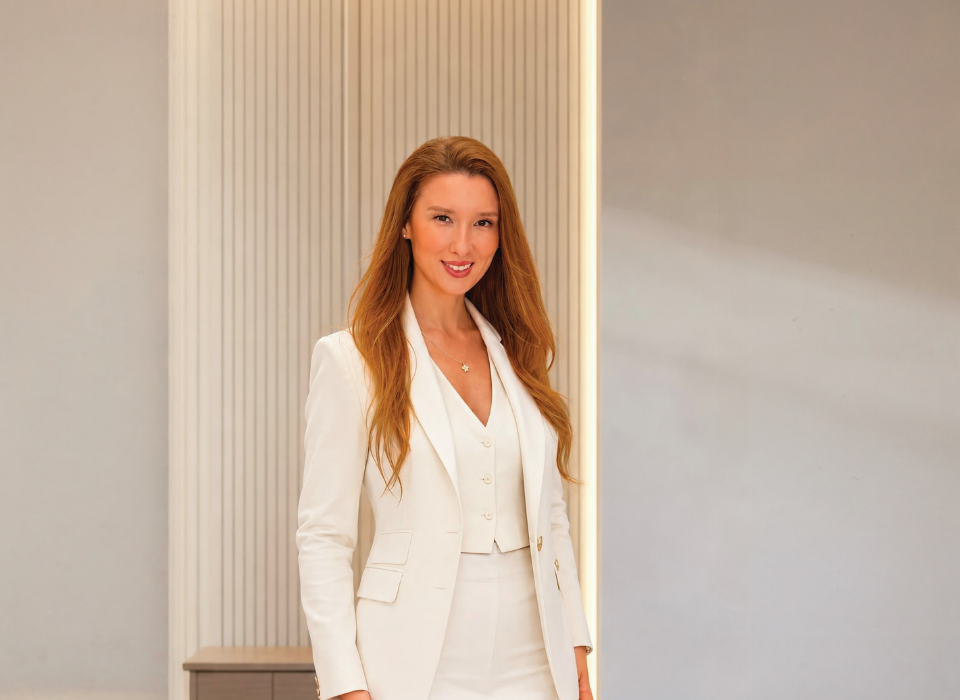
Interview with Eda Tahmaz, Founder of EDDA Mimarlık
We conducted an interview with Eda Tahmaz, Founder of EDDA Architecture. Tahmaz discussed the key criteria to be considered in designing corporate environments.
Could you briefly tell our readers about yourself, your education and your professional background?
I graduated in 1991 from the Yıldız Technical University Faculty of Architecture, Department of Restoration. After 5 years of experience in architectural surveying and restoration projects and implementation, I enrolled in the Interior Architecture Department at Mimar Sinan University Faculty of Fine Arts.
Following graduation, after a 2-year period of study and work at the University of Illinois at Chicago Industrial Products department, and subsequently at the Museum of Science and Industry at Chicago, I founded EDDA Architecture. As EDDA Architecture, we produce architectural and interior design projects.
For over 20 years in the sector, we have been creating inspiring and creative work and combining these with qualified implementations to serve individual and corporate clients. Long-term collaborations based on customer satisfaction are our most important motto.
We particularly bring to life office, bank, management buildings, residential, hotel projects, and concept design and implementations. We approach and solve the spaces we design not only from an interior design perspective, but also as a whole through furniture design and lighting design.
Could you provide information about EDDA Architecture's foundation process and current structure? How does the design process take place at EDDA Architecture? How is the concept determined?
EDDA Architecture is an Istanbul-based design studio. We also opened a branch in Montenegro as of last year. Our core team consists of 7-8 people. The design process, while showing variations depending on each project's location and purpose, has one unchanging point for us: keeping function in the forefront while highlighting the story within each space and communicating it in the best possible way. When creating the composition of a space, the main factors we consider are understanding the desired function, purpose and emotion during the creation of design phases and layers, and preserving and highlighting them within a coherent whole.What are the key criteria that stand out in office environments you design for corporate firms? To what extent do the sectors in which companies operate influence office environment design? For example, what types of design differences exist between the office of an engineering firm and that of a financial institution?
Office designs have evolved to a different point as changing needs have changed from the past to today. With generational differences playing an active role, the possibilities offered by office spaces have completely changed. Spaces that make employees feel comfortable and at ease, where they can communicate freely, and that blend the warmth of natural materials and textures have been proven to contribute positively to employee psychology. Natural material use, multi-purpose work areas, lounge spaces, and the colors used along with selected products and accessories are quite effective in increasing employee motivation. By using different colors and natural textures together, it becomes easier for employees to produce different alternatives and creative ideas. Architectural solutions implemented by maximizing the use of natural light are quite effective in creating a more spacious work environment and consequently increasing productivity. Thus, regardless of how the office functions, the goal is to increase more creative and actively engaged office users and to revitalize office life. The most important factor determining the design process is the organization charts and internal operations of companies rather than their line of business.Especially in large cities, housing prices are very high. For this reason, many people have to prefer smaller residential units. What do you suggest for functional use of spaces?
The abnormal overcrowding of cities brings many difficulties for people. In order to sustain their lives, people must work long hours. These conditions make it difficult for people to communicate with each other and cause people to become increasingly isolated. As a result, the number of isolated individuals increases, and with the effect of high living costs, people's living spaces shrink. These small living spaces appear before us as multi-functional living spaces that contain many functions together—what we call "one design, several functions." Today, in many major metropolises around the world, living spaces are planned as compact and modular living spaces that meet every need. In compact apartments, the interior design should use highly colorful, foldable, movable furniture, and at the same time create spaces with fluid forms where natural and raw surfaces dominate.We are gradually leaving 2019 behind. Could you share your thoughts and comments on 2020 color and decoration trends?
With fading nature, decorations drawing inspiration from farmhouses and country style are also on the rise. Decoration created in beige and brown tones would be ideal for this appearance. It is possible to create a warm and intimate autumn atmosphere with wooden furniture accompanying the beige color used on walls and textile products in earth tones. In patterns, animal motifs come to the forefront, particularly animal designs like leopard, zebra and cow. Blue-grey, turquoise, green and red colors, when combined with earth tones, add appeal to the decoration by moving away from a monotonous look made up only of brown tones. Dark shades of green are among the season's favorites. By using this color in wallpapers, armchair upholstery and textile products, a more bold appearance can be given to the decoration. Particularly in vintage furniture, dark greens stand out even more when paired with velvet fabric, drawing even more attention from decoration enthusiasts this season. Mustard yellow and orange tones, which are among the dynamic colors that will accompany this color, make it possible to say that the effects of the return to the 1970s experienced in decoration will continue for many more years. This effect can be further reinforced with curved furniture, large geometric forms adopted in accessories and checkered patterns.Advertisement
Ad Space728 × 90