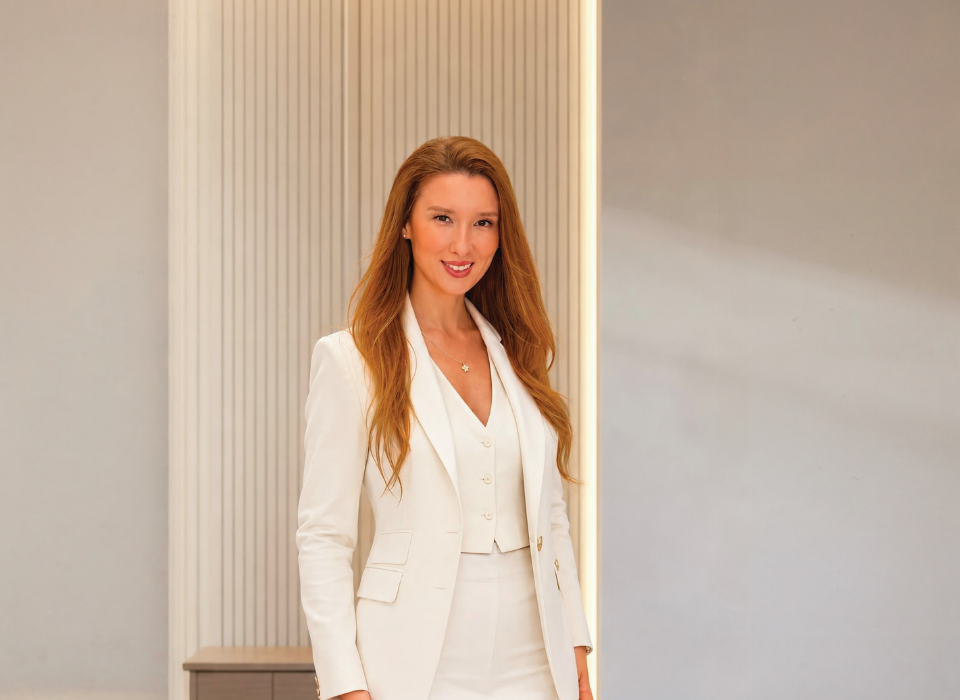
Interview with Aslı Yazıcıoğlu, President of the Aromatherapy Association
We had the pleasure of speaking with Aslı Yazıcıoğlu, President of the Aromatherapy Association, discussing the association's founding objectives and activities, while also embarking on an enjoyable journey through the rich history of aromatherapy.
Aslı Yazıcıoğlu, could you tell our readers about yourself and your professional background?
After completing my degree at Istanbul University Faculty of Pharmacy, I completed an MBA programme at Brighton University in England and subsequently at Koç University. I began my career in the pharmaceutical industry as a Senior Product Manager in the oncology field, during which time I organized international events to contribute to the development of the field and worked on bringing new-generation oncology products to Turkey. In the early 2000s, during my time practising pharmacy and afterwards, I deepened my research in aromatherapy and essential oils. In addition to certification I received from ITHMA (The Institute of Traditional Herbal Medicine and Aromatherapy) in London, I received training from leading figures in the field such as Gabriel Mojay and Robert Tisserand and participated in numerous courses in the United States and Europe.At Essential Oil Resource in southern France, founded by Rhiannon Lewis, a major authority on medical aromatherapy, I completed a four-level series of "Advanced Clinical Aromatherapy" training courses.
Following international congresses and conferences and continuously monitoring developments and innovations worldwide, I shifted my work from daily and aesthetic uses of aromatherapy towards the "Medical and Clinical Aromatherapy" end of the spectrum. In 2016, I initiated the first "Clinical Aromatherapy" applications conducted under a hospital roof in Turkey, working as a "Clinical Aromatherapy Specialist" at Liv Hospital Ulus. During the same period, I worked in the Healthy Lifestyle Management Council at the Stop Aging Clinic at the same hospital, a multidisciplinary and holistic approach facility, in the area of "Development of Personalized Phytotherapy, Aromatherapy and Active Cosmetic Products". Additionally, with the aim of contributing to the scientific development and conscious application of aromatherapy in Turkey, I prepared and organized the first training programme for healthcare professionals at Bezmialem Vakıf University, and this innovative education programme continues to serve as an important model in the field with its comprehensive curriculum and multidisciplinary teaching staff. While serving as Turkey's representative for Botanica, the most important international organization in the Clinical Aromatherapy field, in addition to my educational work, I continue to give presentations representing Turkey at global and sector-leading conferences and provide content consultation to international organizations where I hold active roles in their scientific boards. I also develop projects with a consultancy board composed of international experts.Could you provide information about the Aromatherapy Association? What are your association's founding objectives and areas of activity?
Our association supports raising public awareness about essential oils, their correct and safe use, the cultivation of aromatic and medicinal plants, and the establishment of quality standards in products in this field. Our association, through its board of directors and members, operates primarily in the public interest and on a voluntary basis.Let us discuss the history of aromatherapy. Could you share with us the period spanning thousands of years ago to the birth of modern aromatherapy?
Throughout history, people have been drawn to and have valued pleasant scents. The first fragrant oils in history are believed to have been obtained during the Neolithic period, between 7000-4000 BC, from the mixing of olive and sesame oils with fragrant plants. In ancient Egypt, incenses were very important and were used frequently due to their purifying effects. It has been established that priests used incenses and fragrant oils in religious ceremonies and in the mummification of the dead. Anointing oneself with fragrant oils, in addition to the sensation of "being like gods, being close to them," also served a protective function in Egypt's dry and hot climate. To keep away lice and other parasites, which are the main concern of hot climates, everyone would rub their skin with fragrant oils. Many products such as beautiful scented flowers, resins and roots were utilized in the preparation of perfumes. Particularly, cultivated scented flowers were kept in appropriate oils to create perfumes. Egyptian queens Nefertiti and Cleopatra were as renowned for the beautiful scents they used as they were for their beauty. Nefertiti would bathe in jasmine flower water, and her body would be rubbed with oils composed of sandalwood, amber and rare flower essences. Cleopatra spent much of her time preparing recipes she used for her beauty. Her expertise in perfume-making and use, milk baths, the fragrant oils and waters she prepared became very famous.During a similar period in the lands watered by the Tigris and Euphrates rivers, great civilizations in Mesopotamia began to gain prominence through the production and trade of pleasant scents.
The methods and products used by the Sumerians, Babylonians and Assyrians were distributed to other countries through trade, and the power of fragrances transcended borders. Greek and Roman civilizations also used the fine scents brought from these lands. The Crusades and trunk trade brought this colourful world of the East to the West. Those returning from the Crusades brought exotic scents to their wives and rose water for themselves. Geographic discoveries, with the discovery of India, illuminated another scent route for the West. Books from the Islamic period and detailed writings on distillation processes were translated from Arabic to Latin and transmitted to the West for application in pharmacies. During the Ottoman period, these fine scents were also used for both therapeutic and food purposes. Essential oils were used as natural disinfectants until World War II for sterilizing both wounds and surgical instruments. During World War II, French doctors used essential oils in the treatment of infected wounds and gas gangrene. During this period, American nurses at Pearl Harbor used handkerchiefs soaked in essential oil-infused water against the nauseating odours emanating from burned bodies.Similarly, they recommended patients use scented handkerchiefs. These examples can be considered as aromatherapy applications practised in the modern era.
Modern aromatherapy began with the work of three people in France: Gatefossé, a chemist and the godfather of the name aromatherapy, Valnet, a military doctor, and Maury, a nurse. As the story goes, when a fire broke out in their laboratory and burned Gatefossé's hand, once his hand became infected, he seized the opportunity to test the therapeutic effects of essential oils which he had always been curious about. He immersed his hand in a container of medicinal lavender (Lavandula angustifolia) from the production site. Having first noticed the reduction in his pain, Gatefossé continued this procedure several times a day, and observed that the infection and inflammation in the tissue healed rapidly. In fact, after some time, he witnessed his wound healing completely without scarring. Much affected by his experience, Gatefossé devoted his life to the research of essential oils. Interest in natural treatments such as aromatherapy is increasing every day, and traditional knowledge is being combined with modern science's measurement and evaluation techniques. Moreover, the number of evidence-based initiatives and publications on the subject in recent years has increased significantly.Aromatherapy is known for its therapeutic properties in addition to personal care. What is the role of aromatherapy in human life? How do you evaluate aromatherapy in terms of application methods?
Contrary to popular belief, aromatherapy is not merely about smelling things. Clinical aromatherapy applications consist of four different and mutually complementary branches: patient care, holistic, aromapsychology and medical. Patient care aromatherapies are systematic and controlled complementary treatment methods conducted in clinical settings such as hospitals and care homes and can be combined with holistic aromatherapy. In applications through the respiratory system and skin, touch techniques and other complementary techniques can also be utilized. Medical aromatherapy can be thought of as a special area of phytotherapy and includes applications such as capsules, drops and suppositories that can have systemic effects. Aromapsychology, on the other hand, is concerned with the effect of scent on the brain and the mechanisms of endorphin and noradrenaline secretion through this route. It uses only respiratory or skin applications. Whether we are aware of it or not, the effect of scents in our lives is very important. On the other hand, although there has been an explosion in the number of products containing the word "Aromatherapy" on their labels, not all of these products fall within the aromatherapy field. Many contain synthetic essential oil components.What should a good aromatherapist be like? What kind of training do aromatherapists undergo in this process?
First and foremost, a good aromatherapist should receive comprehensive training from a competent educational institution whose curriculum is in line with those of leading international institutions in this field. They should continuously monitor developments and current practices in the field. They should act in accordance with professional ethics and safety principles in aromatherapy applications. Furthermore, in Turkey, in order to apply aromatherapy for therapeutic purposes, one must belong to professional groups considered as healthcare professionals, such as physicians, pharmacists, nurses, physiotherapists, clinical psychologists and the like. In order to work as a responsible manager in the production of cosmetic products related to aromatherapy, one must belong to one of the professional groups of pharmacists, chemists, biologists or chemical engineers. Whether it is therapeutic applications or developing and marketing one's own aromatherapy cosmetic products, all aromatherapists must comply with the limits set in laws and regulations for their respective professions.Essential oils are an integral part of aromatherapy. Could you provide information to our readers on this subject?
Volatile compounds in essential oils are secreted and stored in special cells and organs of aromatic plants such as leaves, flowers, roots, bark, resins, wood or rhizomes (tubers). In plants they are usually found in the ratio of 0.5-4%. Because they are small molecules, they evaporate rapidly and are therefore named accordingly. They are also called essential oils. Essential oils are used in aromatherapy for prevention, treatment of certain physical and psychological ailments and for maintaining general health and well-being. For example, tea tree or citrus lemon, which have strong antimicrobial properties and are suitable for diffusion application to the environment, may be recommended. For muscle pain and upper respiratory tract congestion, rosemary "Rosmarinus officinalis" and for acute headaches, peppermint "Mentha x piperita L." with high menthol content may be preferred. Examples of essential oils known for their cell renewal-assisting and wound-healing properties include medicinal chamomile "Matricaria chamomilla", immortelle "Helichrysum italicum" and geranium "Pelargonium graveolens". However, let us reiterate that therapeutic use of essential oils requires expertise. Apart from the therapeutic field, essential oils are also used in personal care, "feel-good" blends, cosmetics, fragrance, food, pharmaceuticals and veterinary sectors.Could you tell us about the activities your association has recently carried out? How do you define the importance of these activities in learning and practising aromatherapy in the most correct and current manner?
In 2019, we contributed to important organizations such as the 9th Congress of Cosmetic Chemistry, Production and Standardization (22-24 February 2019), the GETAT Congress of Traditional and Complementary Medicine (24-27 April 2019), the Isparta Rose Festival (11-15 June 2019), the BAÇEM Farm to Harvest Aromatherapy Festival (27-28 June 2019), and the 3rd Phytovision Congress (22-24 November 2019). We conducted work related to the production and quality standardization of volatile and fixed oils in workshops organized by Düzce University. Through these activities, we aimed to both raise public awareness correctly on this subject and provide support to aromatic plant producers wishing to invest in this field. We occasionally announce our activities in this field through our website and social media accounts.Advertisement
Ad Space728 × 90