REACH Regulation and Microplastics
REACH Regulations and Microplastics Within Industrial Sustainability
Abstract
Paint particles show compositional similarities with microplastics because they are composed of a resin (polymer) combined with one or more additives. Paint particles contain more additives than plastics and consequently are more fragile, angular, opaque, dense, heterogeneous and layered compared to microplastics of equivalent dimensions. Paint particle sources of terrestrial origin, including distressing or deteriorated coatings on roads and buildings, are transported along with other microplastics via urban runoff, water treatment facilities and the atmosphere to surface and groundwater (Turner, 2021) and particularly threaten human life through fish products. The United Nations estimates that there are more microplastics in the seas than stars in our galaxy, and they have been detected in many different animal species, in the air, in bottled water, in beer and in humans. To prevent microplastic (MP) pollution that poses a threat to humans while protecting biological diversity, under the "Sustainable Development" approach, the European Union (EU), through the Green Deal and Circular Economy Model (Industrial Sustainability), aims to prevent MP pollution within the scope of REACH regulations. In this direction, the EU is preparing to demand MP characterization analyses such as Py-GC/MS, FTIR, Raman, SEM-EDX, XRF for products from companies exporting to its continent. In the coming days, especially EU exporters in the cosmetics, textiles and paints sectors will have to place greater emphasis on R&D activities to ensure their products do not create MP pollution.1-Industrial Sustainability and the Green Deal
Due to problems arising from climate change, the "Sustainable Development" approach has been adopted in the European Union. This approach emphasizes that while deriving economic benefit from production processes, the protection of environmental and social elements is mandatory. With the Green Deal released by the European Union in December 2019 to ensure sustainable development, the importance of the Circular Economy Model (Industrial Sustainability) is increasing day by day. The Green Deal is the European Union's new economic growth strategy and the Circular Economy Model is one of its most important components (Balbay, 2022). Within the targets set under the Green Deal, two important policies of the growth strategy are eliminating pollution and protecting biodiversity (Balbay et al., 2021). In this direction, on 14 October 2020, the European Commission adopted the "Chemicals Strategy" for Sustainable Development. This strategy is part of the zero pollution target, an important commitment of the European Green Deal. The aim of the "Chemicals Strategy" is to protect citizens and the environment from hazardous chemicals while promoting innovation by encouraging the use of safer and more sustainable chemicals (ECHA, 2023).2-REACH Regulations and Scope
In December 2006, the European Commission (EC) issued comprehensive REACH (Registration, Evaluation, Authorisation and Restriction of Chemicals) regulations on the use and effects of chemical substances on human health and the environment. This regulation, named Registration, Evaluation, Authorisation and Restriction of Chemicals, is an EU Regulation that combines many regulations previously in use in the European Union regarding chemical substances under a single regulation. In our country, in accordance with the REACH regulations issued by the EU, the "Regulation on Registration, Evaluation, Authorisation and Restriction of Chemicals" published by the Ministry of Environment, Urbanization and Climate Change is applied. REACH regulations are designed to ensure a high level of protection of the environment from risks that chemical substances may pose and to encourage the use of alternative methods. The purpose of the regulation is to take measures such as better and earlier identification of the intrinsic properties of chemical substances and the phased withdrawal or restriction of substances of high concern. It also aims to increase the innovativeness and competitiveness of the EU chemistry industry. This regulation covers enterprises producing and exporting to the EU more than one tonne of chemical substance per year. Among the many products covered by the regulation are pigments, adhesives and paints (EC, 2006; EC, 2023). REACH places responsibility on industry for managing risks from chemicals and providing safety information on substances. For this purpose, manufacturers and importers are required to gather information about the properties of their chemical substances and to register this information in a central database at the European Chemicals Agency (ECHA). In this process, companies must identify the risks associated with the substances they handle and specify how they manage them. This obligation applies to both substances and mixtures (EC, 2023).3-Microplastics in REACH Regulations
On 30 August 2022, the European Commission submitted a proposal for amendments to the REACH Regulation to address the proliferation of synthetic polymer microparticles (also known as microplastics). On 26 April 2023, after a lengthy legislative process and heated discussions among member states and consultations with various stakeholders, the REACH Committee voted in favour of the European Commission's proposal (Premium Beauty News, 2023). It is predicted that acceptance of EU legislation to restrict microplastics is quite likely after the summer of 2023 (Tox Partner, 2023). The aim is to progressively eliminate microplastics from daily products such as cosmetics, fragrances and household cleaners, as well as from areas such as fertilizers, paints and artificial sports turf. Microplastics are microparticles with a solid polymer surface coating or solid polymers contained within microparticles (Figure 1). Used alone or in a mixture at a concentration equal to or greater than 0.01% by weight. According to the European Commission, the proposed restriction is expected to prevent the release of approximately 500,000 tonnes of microplastics into the environment and the estimated total cost is forecast to reach EUR 19 billion (Premium Beauty News, 2023; EC, 2022).4-Microplastic Sources and Paints
Paints are a pigmented and typically opaque surface coating with decorative, protective or other specific technical properties and consist of polymers and additives. Synthetic polymers frequently used in consumer and industrial plastics include acrylonitrile butadiene styrene (ABS), polyethylene (PE), polypropylene (PP), polyethylene terephthalate (PET), polystyrene (PS) and polyvinyl chloride (PVC). Most paints are produced using acrylic, alkyd, polyurethane, epoxy or chlorinated rubber binders. While some additives such as inorganic fillers and colorants are common in both plastics and paints, others are specific to or more commonly used in plastics or paints due to differences in the production, processing and function of the materials (Figure 2) (Turner, 2021). Dried paint particles derived from deterioration or removal of surface applications (paint particles) and having a size of < 5 mm should be classified as microplastics (Turner, 2021). Paint particles are part of the increasingly important MP pollution in our oceans. Polyurethanes, polyesters, polyacrylates, polystyrenes, alkyds and epoxies. Despite their prevalence, paint fragments are typically left out of MP monitoring. Paint MPs arise from shipping and boating activities, from road markings and from building exteriors. Many paint particles come from anti-fouling paints used in commercial ships and cruise vessels; these not only contain heavy metals and biocides, but can also be considered leaching special pollutants. Some of the effects of toxic paint particles on aquatic biota are derived from these toxins (Gaylarde et al., 2021). Microplastic pollution has two sources. The first is small particles directly released from the washing of synthetic clothing, worn-out tires from driving cars, and microplastics in personal care products such as facial cleaning products. These account for 15–31% of the microplastics found in the ocean. The other type, which accounts for 69–81% of the microplastics in the ocean, is released when larger plastic fragments such as bags, bottles or fishing nets degrade (Taylor, 2023). There are 51 trillion microplastic particles (<5 mm) floating on the ocean surface and more than 100 million macroplastic particles in the seas. Primary and secondary microplastics at sub-mm scales are derived from a range of land-based and open ocean sources and have various shapes (e.g., fibres, fragments, flakes, films, aggregates), materials (or polymers), structures (e.g., rigid, flexible, foamed) and properties (e.g., density, crystallinity, hardness) (Turner et al., 2022). Road marking paints are an urban source of paint particles leaking into terrestrial waterways and subsequently into the oceans. They may contain polyethylene, polyurethane and other polyesters as well as polyamides. It is estimated that 504 tonnes of microparticles are released annually from road markings in Sweden. High levels of poly(diallyl phthalate), polyvinyl chloride, polymethyl methacrylate and polyester found in road dust from some Japanese cities have led to the idea that road marking paints are a significant MP source in that country (Gaylarde et al., 2021). Building and construction paint coatings used in building and construction are also a source of paint MP. In this case, MP release occurs mainly as a result of degradation caused by UV radiation. Small particles formed by rainwater mixing into nearby water sources as a result of paint over the exposure period (Gaylarde et al., 2021). The main variables affecting paint layer degradation are: painted surface texture, quality of the material used, distance from the sea (atmospheric salt levels), wind and rain balance and building orientation. Accumulation of MPs resulting from removal of old paint (usually by water jet) in surrounding terrestrial areas ultimately leads to ocean pollution (Figure 3) (Gaylarde et al., 2021). Marine coatings such as epoxy and fibre-reinforced plastics used on boats are commonly found in the surface layers of the ocean. Marine paints contain polyurethanes, polyesters, polyacrylates, alkyds and epoxies and are therefore plastic in every respect. During application and maintenance, they easily fragment into water bodies. Paint particles are increasingly recognized as important sources of microplastic pollution, with compositions reaching 81% (Figure 4) (Turner et al., 2022).5-Microplastic Analyses
In recent studies, paint flakes have been identified among microplastics recovered from the marine environment and from the digestive systems of marine animals, and some studies suggest that paint could be a dominant form of microdebris on or near the ocean surface. Paint particles are generally assumed or implied to be derived from shipping activities, but establishing this is difficult without, for example, chemical characterization of the material using pyrolysis-gas chromatography-mass spectrometry (Py-GC/MS) (Turner et al., 2022). An alternative non-destructive way to characterize microscopic paint flakes is to determine the elemental content (e.g. pigments) of samples using energy-dispersive X-ray techniques. Microplastics can also exhibit different surface morphologies depending on the polymer, structure and weathering, chemical and biological contamination. Scanning electron microscopy (SEM-EDX) can also be used as an already available technique to indicate the possible plastic nature of particles and the presence of adsorbed or compositional metals. X-ray spectroscopy combined with scanning electron microscopy (SEM-EDX) can be used to semi-quantitatively characterize elements at relatively low secondary X-ray energy levels of 0.1%. However, higher excitation energies and wider irradiation areas make X-ray fluorescence (XRF) spectroscopy more suitable for analyzing heavier metals at lower concentrations in less homogeneous samples (Turner et al., 2022). Environmental microplastics may be subject to various abiotic and biotic impacts that can cause degradation and oxidation, possibly altering their FT-IR spectra. The use of both FT-IR and Raman spectroscopy has been recommended for more accurate identification of coloured MPs such as paints. Microplastic analyses are being conducted at BARUM, the Central Research Laboratory of Bilecik Şeyh Edebali Üniversitesi (https://www.bilecik.edu.tr/barum). Instrumental equipment is available for Py-GC/MS, FT-IR, SEM-EDX and XRF characterization. At the same time, BARUM also offers "interpreted technical report" services for interested stakeholders.Conclusion
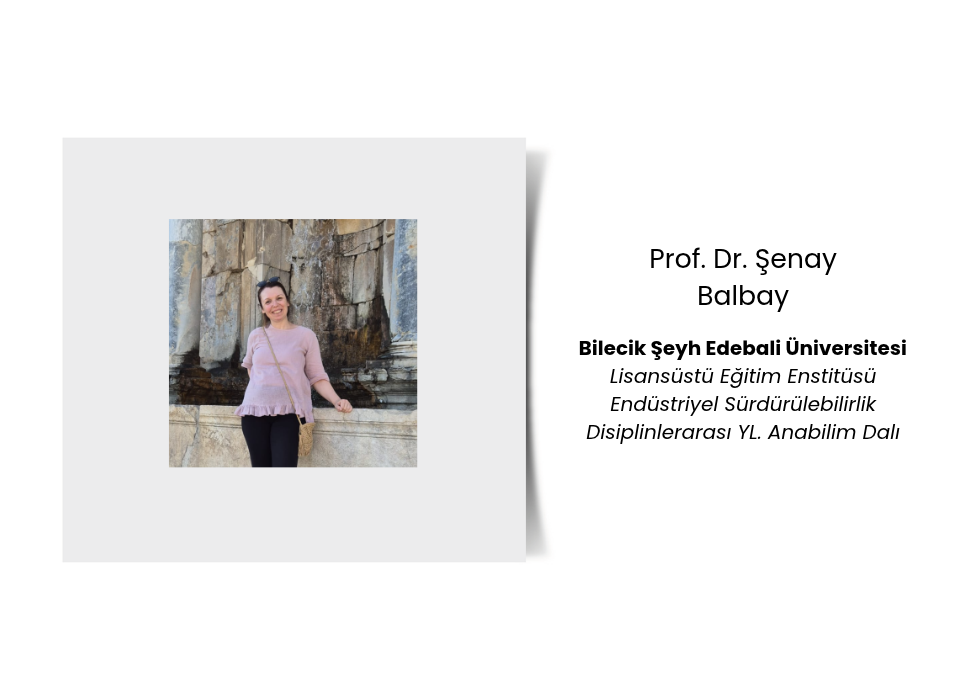
The European Union, through its Green Deal initiative, aims to protect both human health and biodiversity. In line with this objective, the REACH Committee accepted the inclusion of microplastic control within the REACH scope upon the proposal of the European Union Committee and approved its registration in the European Chemicals Agency (ECHA) database. In the coming days, it is anticipated that microplastic pollution will also be addressed within sustainability topics in our country. Under the Industrial Sustainability Interdisciplinary Master's Programme at Bilecik Şeyh Edebali Üniversitesi, which brings together academics from many different disciplines, online Sustainability Seminars are being conducted by sustainability experts from different sectors (https://www.bilecik.edu.tr/endustriyelsurdurulebilirlik). Depending on the sector, some seminars briefly address this topic. Interested colleagues can apply to the department head to speak as speakers at seminars, and seminars are open to everyone's participation. Additionally, the "1st National Industrial Sustainability Workshop," which will include representatives of leading companies in the sector, will be held under the umbrella of the master's programme in the autumn term. Addressing biodiversity and microplastics at the workshop is also planned. References EC, 2006. European Commission, Regulation No. 1907/2006 of the European Parliament and of the Council of 18 December 2006 Concerning the Registration, Evaluation, Authorisation and Restriction of Chemicals (REACH). Official Journal of the European Union, L 396/1-849. Balbay, S, 2022. "Where are Zero Waste Project and Circular Economy Model in EU Green Deal?", Zero Waste, T.C. Ministry of Environment, Urbanization and Climate Change, 1st Edition. ISBN : 978-625-7076-36-4 Balbay, S., Sarıhan, A., Avsar, E., 2021. "Circular Economy / Industrial Sustainability" Approach in the World and Turkey, European Journal of Science and Technology, (27), 557-569. ECHA, 2023. Chemicals Strategy for Sustainability, https://echa.europa.eu/ hot-topics/chemicals-strategy-for-sustainability EC, 2023. REACH Regulation, https://environment.ec.europa.eu/topics/chemicals/reach-regulation_en Premium Beauty News, 2023. EU REACH Committee votes to ban microplastics from most daily life products, https://www.premiumbeautynews.com/en/eu-reach-committee-votes-to-ban,21987,en EC, 2022. COMMISSION REGULATION (EU) …/… of XXX amending Annex XVII to Regulation (EC) No 1907/2006 of the European Parliament and of the Council concerning the Registration, Evaluation, Authorisation and Restriction of Chemicals (REACH) as regards synthetic polymer microparticles Tox Partner, 2023. REACH committee votes to restrict intentional microplastics, https://www.toxpartner.com/articles/reach-committee-votes-torestrict-intentional-microplastics/ Taylor, K., 2023. Six countries call for ambitious measures to stop microplastics pollution, https://www.euractiv.com/section/energy-environment/news/six-countries-call-for-ambitious-measures-to-stop-microplasticspollution/ Gaylarde, C.C., Neto, J.A.B., da Fonseca, E.M., 2021. Paint fragments as polluting microplastics: A brief review, Marine Pollution Bulletin, https://doi.org/10.1016/j.marpolbul.2020.111847 Turner, A., Ostle, C., Wootton, M., 2022. Occurrence and chemical characteristics of microplastic paint flakes in the North Atlantic Ocean, Science of The Total Environment, https://doi.org/10.1016/j.scitotenv.2021.150375 Turner, A. 2021. Paint particles in the marine environment: An overlooked component of microplastics, Water Research X, https://doi.org/10.1016/j.wroa.2021.100110, https://www.bilecik.edu.tr/barum, https://www.bilecik.edu.tr/endustriyelsurdurulebilirlik Associate Professor Şenay Balbay Bilecik Şeyh Edebali Üniversitesi Graduate Education Institute Industrial Sustainability Interdisciplinary Master's DepartmentAdvertisement
Ad Space728 × 90