Acar Baltaş: "Command-and-control approach is over!"
"Psychological safety, like physical safety, requires people to work in an environment where they believe they will not be harmed and can use their potential. This is easy to say but equally difficult to implement in practice. Because it requires a very fundamental change of mindset in management," says Prof. Dr. Acar Baltaş, who believes that in today's business world "command-and-control thinking has ended."
For many years, Prof. Dr. Acar Baltaş has been delivering seminars, implementing applications and writing books by combining his knowledge in communication and medical psychology with the needs of business life. He identifies "psychological safety" as one of the most important topics in today's business world. Speaking with Acar Baltaş about the concept of leadership and employee behavior, we discussed the recent work carried out by Baltaş Group. Let us start by describing the recent activities of Baltaş Group... We experienced both the pandemic period and the post-pandemic period as quite busy in business terms. We tried to live up to the attention directed toward us and do justice to it. During the pandemic, I conducted over 250 online meetings. Because we were prepared on the subject and what we said would answer people's questions. Since 2023, following the pandemic, in addition to all the work we have done, and in parallel with developments in the world, we are trying to establish the concept of "psychological safety" in the work environment and embed this approach. Psychological safety, like physical safety, requires people to work in an environment where they believe they will not be harmed and can use their potential. This is easy to say but equally difficult to implement in practice. Because it requires a very fundamental change of mindset in management. This mindset change means that managers transform from being distant, feared, dreaded figures that must be kept at a distance—as was once the case—into approachable individuals.
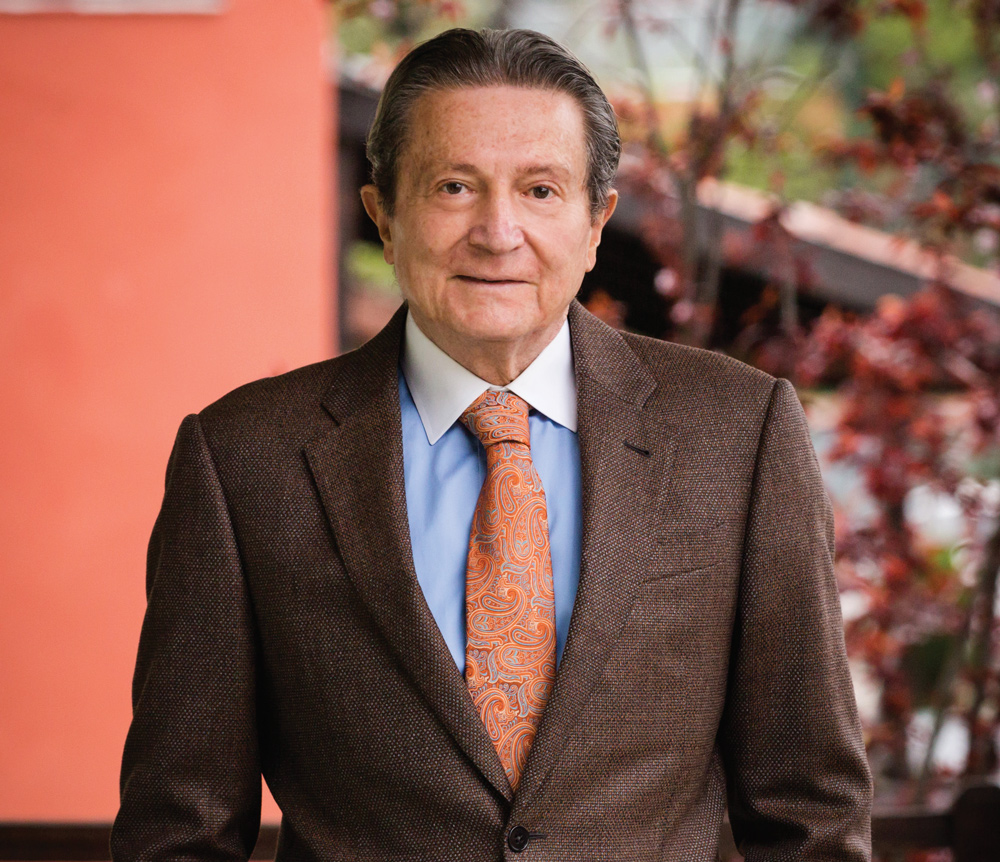
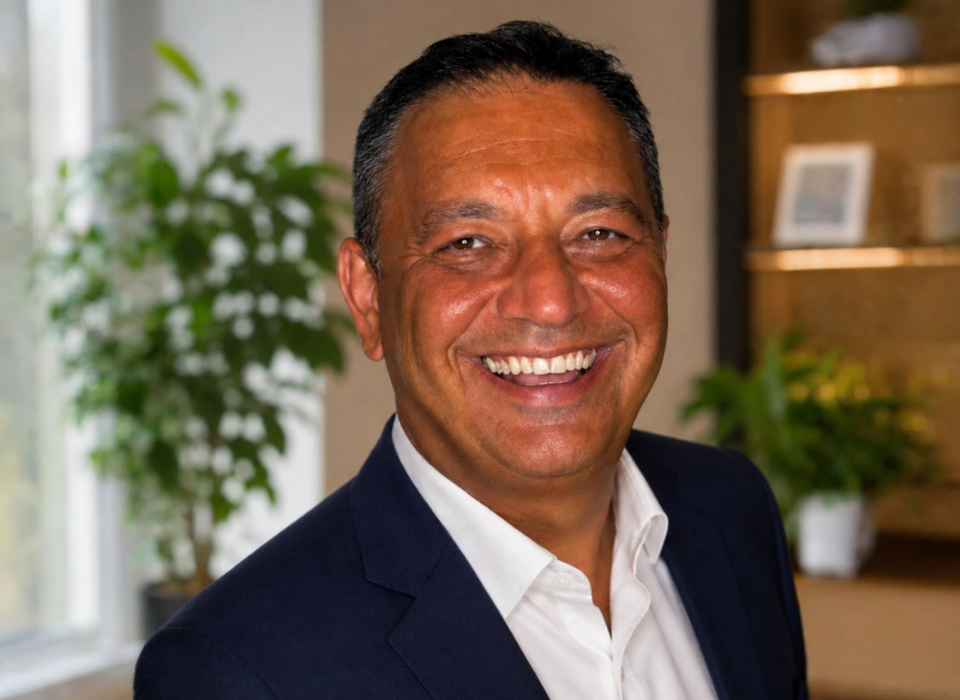
Prof. Dr. Acar Baltaş
Approachability and the ability to build easy relationships allow people to work without fear of making mistakes; it enables them to voice their errors. However, these are not mistakes arising from carelessness or lack of expertise; rather, they are mistakes stemming from taking responsibility or trying something new. In environments where these mistakes can be discussed and openly stated, "psychological safety" prevails. This also enables creativity, innovation and responsibility-taking. When asked, the most frequent complaint from managers in owner-run companies or those managed by autocratic executives is that employees do not take responsibility. This is because taking responsibility also carries the risk of making mistakes.
The world is changing, and ways of working have become different with digitalization. What should be considered in terms of management in such an environment?
Everyone knows that there is a major change in the world. If we take it as a heading, for example, climate change... Climate change also brings food security, water security; it brings migration, and migration brings ethnic conflicts. In other words, the rhythm of life changed, accelerated, mobility increased. But alongside these known factors, there is one very concrete change throughout the world: employee behavior. Employee behavior has changed all over the world. For example, today qualified young employees do not want to go to work every day of the week. They prefer to work remotely. Today, during a job interview, the first question a qualified employee asks is: "What is your flexible working arrangement?" Young people do not want to work in places without flexible working arrangements. I do not consider this as "Generation Z"; I think of it as "young people always." What is important here is being able to manage performance. Both employees and managers have points to learn in terms of management philosophy.
Could you elaborate a bit on the topic of performance management? How is performance managed?
We think that keeping people under our hand, in front of our eyes, means "training" them. But in fact we know that people sitting at their desks in the workplace—depending on the employee—are also doing their own personal tasks, engaging with social media, planning their vacations, making bank payments. When the manager arrives, the screen changes. Because they need to do these things as well. Therefore, if you cannot measure the performance of the employee you have seated, then they also use part of their time as they wish. But here is the thing: in front of the manager's eyes, under his hand... That is why "learning to manage performance" is important. For employees, "learning to manage their own workload" matters. Now, in recruitment processes, personality traits, alongside other competencies, will be a factor in adapting to hybrid/flexible working arrangements. If a manager can manage performance, they will hold people accountable for unfinished work. One of the biggest mistakes made in the name of performance management is tracking employees' computer screens using certain programs. This is essentially command-and-control thinking, stemming from military approaches of past centuries. After all, modern management in its true sense began in the military. Its fundamental principles are command and control. With the Industrial Revolution, the same approach began to be applied in factories, and then in offices... But now "command-and-control thinking has ended." One of the most current topics is working hours... While some countries are making adjustments to working hours, others have started transitioning to a four-day work week.
Which one do you think could be more efficient and sustainable when viewed from the perspective of our age?
All of this depends on what type of people you expect as output. For example, in a city like Istanbul, you cannot expect people to complete work that could be done remotely while spending three hours on the road every day. Of course, there are jobs that require on-site presence; that is a different matter. Production in industry requires being there. Many jobs require face-to-face interaction, but as you can see, a significant portion of work that would need to be done face-to-face can now be done without face-to-face meetings.

Your book "A New Manager's Handbook" was published in 2007. It has been nearly 20 years. What are the differences between the handbook for a new manager back then and the handbook for a new manager today?
There are significant differences; first of all, there is now remote management. Actually, the principles that a new manager will apply do not change that much. Looking at today's management philosophy, we still see that focusing on results and disregarding relationships is the prevailing general understanding. A purely greeting-based relationship between employee and manager—which stems from the "we do the job, that's the end of it" mindset. However, today's managers are expected to carry both results and relationships forward. To do this, one must provide "emotional labor." That is, what will provide the "psychological safety" we mentioned at the beginning is the bond the manager builds with employees. Building a bond between manager and employee means knowing their life journey, the difficulties they have overcome, the things they value. A manager establishes a bond when they make the person in front of them feel that what is important to them is also important to the manager and that they are ready to help. The quality of a relationship is related to the depth of the bond; whether between spouses, between parents and children... Emotional labor is what makes this possible. All of this presence creates psychological safety.
There is another topic you frequently emphasize: enabling people to reflect their potential...
What matters to a manager is not seeing and evaluating performance. What matters to a manager is seeing potential. Seeing potential is made possible through building bonds. If I explain with an example; when you search "liderlik" (leadership in Turkish) on Google, you get 11 million results, but when you search "leadership" you get 5 billion... The figures I mentioned are current figures, but despite this, the most common form of leadership in the world is "bad leadership." According to a Gallup research conducted in 55 countries including Turkey, everyone has at some point worked with a manager who was intolerable. Seventy percent say the most stressful aspect of their jobs is their relationship with their managers. Twenty percent of employees say they have at least once seriously considered killing their managers. As you can see, bad management is a significant problem everywhere in the world. Job alienation's primary cause is bad management. Moreover, some of those who answered the questions in this research are themselves managers. Unfortunately, when you sit behind the desk, the quality of the relationship that is built changes. We become technicians of work whose philosophy we do not understand.
Finally, your new book "Life Breaks the Best Most" was released on shelves last month. Why does life break the best most, and what would you like to say about your new book?
Why does life break the best most? Because if you open your shell, if you lower your walls, it is natural and easy for someone to exploit this, to betray your trust. After experiencing a disappointment, a person starts to build a shell; they blame themselves, the other person, or the circumstances. As we repeat this, the shell/cocoon thickens. Depending on the stage of their life, they can become a victim of their parents, a teacher, a partner/spouse, or a boss. And they become trapped inside that cocoon. Then they break the cocoon and bitterness strengthens them; they continue on their way. Therefore, directing our energy to what will happen rather than what has happened allows us to see opportunities. Because wherever we direct our energy, life develops there.
Life Breaks the Best Most
A person becomes trapped inside that cocoon. Nowadays, there is a general belief that the world is going wrong and everything is deteriorating. Almost everyone complains about the negativities in the world and what they find lacking in their lives. We all, on one hand, struggle with daily routines and the battle of survival, while on the other hand, we want to fulfill ourselves and live a meaningful life. It is precisely in such periods that we do not know where to start or what path to take, and we need "a sage" who will remind us of meaning, awareness, self-discipline and firm willpower. With a half-century professional career and over seventy years of life experience, Acar Baltaş, who presents psychology without distancing it from its scientific foundations to wide audiences, opens the door for us at exactly this point so that we direct our energy to the right place to get back on our feet, so that we are aware of our capabilities and competencies.
• How can we direct our energy to the right place? • Is change possible at any age? • How can we create a peaceful environment in the workplace? • What are the differences between a successful business leader and a disliked manager? • What do we need to know about love, marriage and sexuality? • As parents, what issues do we struggle with in a changing world? • How can Turkey become a country of happy people? • Why does life break the best most? • So, how do we strengthen ourselves where we were broken? Mert İnan asked, Acar Baltaş answered; Life Breaks the Best Most is a reference source for those who want to think about life and try different paths... (From the promotional bulletin)
Who is Acar Baltaş?
Prof. Dr. Acar Baltaş is one of the pioneers who demonstrated to wide audiences in Turkey that psychology is a solution for human needs and business life problems. Together with Prof. Dr. Zuhal Baltaş, he introduced the concepts of stress and body language to Turkey. Having completed his secondary education at Istanbul Boys' High School and higher education at Istanbul University, Faculty of Letters, Department of Psychology, Acar Baltaş conducted his doctoral studies at Cerrahpaşa Medical Faculty, Department of Neurology, on the topic of "higher brain functions." In 1981, he received his Doctor of Medical Sciences (M. Sc. Dr.) in clinical neurophysiology, in 1986 his Associate Professorship in Applied Psychology, and in 1996 his Professor title. Between 1977 and 1997, he worked at Cerrahpaşa Medical Faculty, Department of Neurology. Since 1983, he has been delivering seminars, implementing applications and writing books by combining his knowledge in communication and medical psychology with the needs of business life.
Report: Bikem Ögünç