"We Must Prevent Water Waste in Industry and Housing"
Türkiye İMSAD'dan '22 March World Water Day' statement emphasized the need to develop water consumption strategies in industry and residential buildings to prevent water waste.
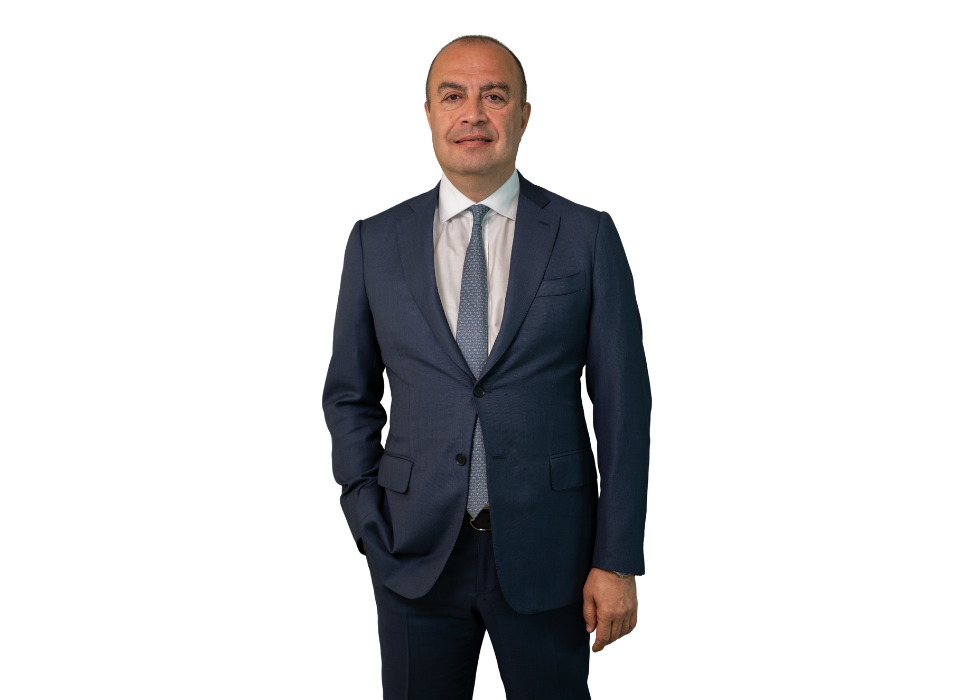
Türkiye İMSAD (Türkiye İnşaat Malzemesi Sanayicileri Derneği) Management Board Vice Chairman and Spokesperson Ferdi Erdoğan, in his statement on the occasion of '22 March World Water Day', underlined that water efficiency will become vital in the future and stressed that responsibility towards the future must guide water use.
Ferdi Erdoğan, emphasizing that water is not only a vital resource but also an economically important value, spoke as follows: "For sustainable development, it is essential to use our water resources correctly and consciously. Although our country is thought to be rich in water resources, unfortunately the situation is not as assumed. Countries with between 8,000 and 10,000 cubic meters of usable water per capita per year are considered water-rich, while countries with less than 2,000 cubic meters are considered water-stressed, and those with less than 1,000 cubic meters are considered water-poor.
In our country, the average annual water amount per capita is around 1,400 cubic meters. Therefore, our country is among water-stressed nations. According to TÜİK data, it is estimated that when we reach the 2030s, our population will be 100 million. In this case, the water amount per capita in 2030 will decline to an annual average of 1,000 cubic meters. In order to ensure efficient and effective use of our water resources, first of all, the level of conscious use must be increased, and for this, training and development programs aimed at capacity utilization must be organized. Infrastructure works and innovative product development will also contribute to taking healthier actions tailored to needs."
We must prevent excessive water consumption in industry and residential buildings
Noting that water is one of the most important production inputs in industry, Ferdi Erdoğan stated, "Our country has 112 billion cubic meters of usable water resources annually. Per capita water consumption averages 1,400 cubic meters per year; 73% of water consumption is used in agriculture, 16% in residential buildings, while as industrialists we use approximately 11% of water. Industrial and residential consumption can be controlled through smart factory, smart building, and smart city applications. Considering that 1 million people migrate to cities worldwide every week, we must appreciate water resources not because we need to protect them, but so we do not have to fight wars over them in the future. In parallel, we must rapidly establish drip irrigation models instead of 75% surface irrigation methods, in other words uncontrolled irrigation, used in agriculture. At this point, we have extremely important responsibilities. To ensure water efficiency in the construction sector and construction material production processes, necessary measures must be taken not only in buildings, but also in the pre-construction production phase and during the construction stage."Ferdi Erdoğan, emphasizing the need to develop water consumption strategies in residential buildings, listed his recommendations for efficient water use as follows:
"European Union countries aim to reduce residential buildings to 'Passive House' standards in their vision. The issue is not limited to reducing energy consumption and enabling energy production in homes, but requires conscious and efficient resource management in many areas including water consumption, wastewater management, grey water use, and rainwater use. Therefore, with proper planning in water management, we must conduct necessary R&D work on wastewater recovery. Grey water, which results from the contamination of mains water we use in our homes together with chemicals, comprises 75% of domestic wastewater. Widespread reuse of grey water is of great importance. We know that grey water from bathrooms has been used for garden irrigation for many years. However, grey water still needs to be treated before use. While contributing to efficiency, we must not damage plants and soil, thus disrupting the natural balance. Another application area for grey water is the direct use of grey water from bathroom sinks and washing machines in reservoirs without connecting to the wastewater line. Grey water use constitutes an important item in protecting water resources and achieving savings. Rainwater should also not be discharged to the sewer system but collected through cisterns and evaluated after a simple treatment process, which is extremely important for efficient resource use. At the same time, water pipe losses, leaking valves and taps, and wasted water also cause significant water waste. If this waste is not prevented, by 2030, 700 million people may be forced to leave their homes due to water scarcity, and the lakes we regard as a resource may dry up drop by drop…"Advertisement
Ad Space728 × 90