AI and Ethics in Healthcare Discussed at MEDTRUST Forum
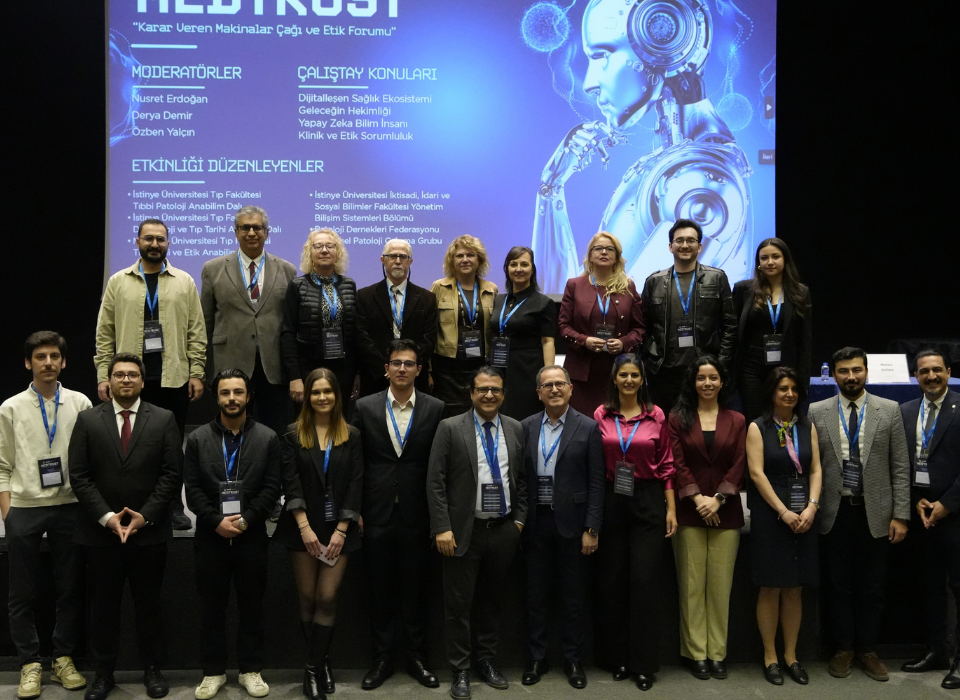
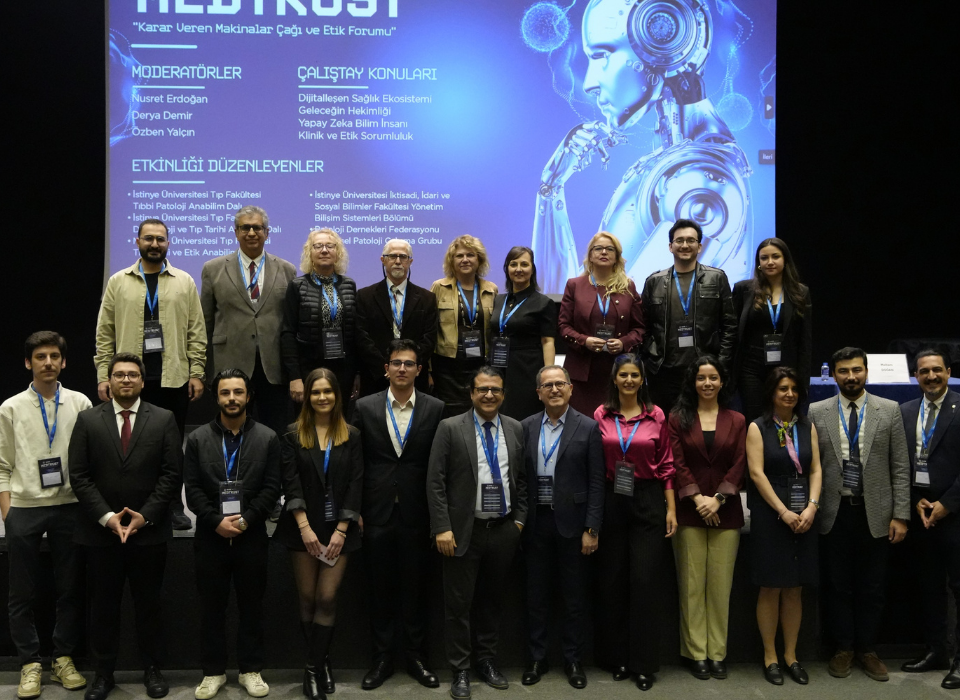
Hosted by İstinye University, the 'MEDTRUST: Age of Decision-Making Machines and Ethics Forum' was held in collaboration with the Pathology Associations Federation Computational Pathology Working Group and MLP Care. At the MEDTRUST Forum, artificial intelligence in healthcare was examined alongside its ethical and legal dimensions. The event addressed topics including artificial intelligence in healthcare, digitalization, ethics and law, with strong participation from academics, industry representatives and researchers, who evaluated the effects of artificial intelligence on the healthcare ecosystem from the perspectives of different disciplines.
Hosted by İstinye University; the "MEDTRUST: The Age of Decision-Making Machines and Ethics Forum" was held in collaboration with the Federation of Pathology Societies Computational Pathology Working Group and MLP Care. At the MEDTRUST Forum, artificial intelligence in healthcare, ethics and legal dimensions were discussed. As artificial intelligence, digitalization, ethics and legal issues were addressed, academics, sector representatives and researchers showed strong participation, and the impacts of artificial intelligence on the healthcare ecosystem were evaluated from different disciplinary perspectives.
As in every area of life, the rise of artificial intelligence in healthcare has opened a new arena of discussion not only technological but also ethical and legal dimensions. The "MEDTRUST: The Age of Decision-Making Machines and Ethics Forum," organized under the hosting of İstinye University, in collaboration with the Federation of Pathology Societies Computational Pathology Working Group and MLP Care, addressed this transformation multidimensionally. At the forum where academics, sector representatives and researchers came together, the impacts of artificial intelligence on the healthcare ecosystem were evaluated with an interdisciplinary approach.
Following an extended preparation period, a workshop covering artificial intelligence and ethical issues in healthcare was prepared at İstinye University upon the recommendation of the Federation of Pathology Societies Computational Pathology Working Group. With the contributions of faculty from İstinye University Department of Medical Pathology, Management Information Systems and the Department of Medical Deontology and History of Medicine at the Faculty of Medicine, as well as the Department of History of Medicine and Ethics at Marmara University, the proposal was submitted to the İstinye University Rectorate. Following the Rectorate's support, the event was held at the İstinye University Topkapı Campus Congress Center, bringing together professionals working in healthcare and law. Throughout the day-long program, artificial intelligence's present and future were comprehensively addressed through panels, presentations and sessions.
The role of artificial intelligence is growing
In his opening remarks, Prof. Dr. Nusret Erdoğan, Head of the Department of Medical Pathology at İstinye University, shared the forum's story with participants while drawing attention to the increasingly growing role of artificial intelligence in healthcare. Prof. Dr. Erdoğan stated: "İstinye University was established as a continuation of the knowledge and experience of the MLP Care Group, which operates Liv Hospital and Medical Park hospitals, the most widespread hospital network in our country. The mission of Medicine and Artificial Intelligence championed by our Board Chair Dr. Muharrem Usta has been supported by our engineering and other faculties since the university's establishment."
Being used for public benefit
Prof. Dr. Nusret Erdoğan emphasized the importance of addressing the artificial intelligence transformation with its scientific, ethical and social dimensions, stating: "During and after the pandemic period, digitalization and artificial intelligence applications gained momentum in our country and the world. In the 2020-2021 academic year, medical students were introduced to our engineering faculty through the 'Artificial Intelligence Engineering Minor' program. Artificial intelligence systems should be used to improve people's lives and provide social benefit. AI-Based Clinical Decision Support Systems are recommended to be implemented in the use of new technologies in healthcare services with patient welfare and the principle of responsibility at the center. The European Union Artificial Intelligence Act was published on 12 July 2024. Ethical and legal regulations for our country are being discussed in various forums."
As part of the opening remarks, Prof. Dr. Işınsu Kuzu, President of the Federation of Pathology Societies, addressed the applications of artificial intelligence in pathology and health sciences; while Prof. Dr. Erkan İbiş, Rector of İstinye University, highlighted the role of technological transformation in healthcare and the importance of ethical principles.
Prof. Dr. Erkan İbiş stated: "Times are changing, each era brings a different focus. But the only thing that does not change is technology, humanity, justice, conscience and ethics. These elements, though their names may change, have been the main objects of every era. In recent years, many concepts have entered our lives with technology. Concepts like the internet of things, virtual reality, and artificial intelligence are directing us toward change. Along with this change, we continue to fulfill our professions. In the field of medicine, we are a team that adapts the innovations brought by a changing world to the services we provide, improving and transforming patient care. When we look at artificial intelligence and digitalization on a global scale, it provides us with infrastructure that enables advanced research, rapid access to data in these research efforts, questioning and making connections. What is important is to ensure the use of this advantage within an ethical framework."
"Machines' ability to learn ethical rules is increasing"
The program continued with a keynote address by Doc. Dr. Şebnem Özdemir, Head of the Department of Management Information Systems at İstinye University and AI Coordinator at MLP Care. Özdemir stated the following in her speech:
"We have entered a new era where artificial intelligence has become our 'lingua franca' since November 2022. The use of artificial intelligence in medicine has gone beyond accelerating drug discovery processes to completely personalizing medicine through 'hypothesis machines' and autonomous clinical trial management. Particularly with the 'biocontinuum' approach, a future is being designed where diseases are prevented before they occur thanks to data tracking starting from childhood. However, it must not be forgotten that this technological speed also brings serious security risks threatening data privacy, such as system attacks and 'jailbreaks'. Even in this age where machines can reach 98 percent empathic capacity, gender bias in algorithms and 'hallucination' problems stand as the greatest ethical obstacles. For this reason, maximum benefit should be gained from artificial intelligence, but the steering wheel must remain with humans for success. However, it must not be forgotten that machines' ability to learn ethical rules is increasing every day. The way to break the resistance that the field will show in artificial intelligence integration lies not only in technology but in focusing on human and process management. As a result, in this era where the limits of our language determine the limits of our world, developing ourselves in this new language is not a choice but a necessity for our institutional existence."
Healthcare artificial intelligence transformation was addressed
In the first panel of the forum, the topic "Healthcare's Artificial Intelligence Transformation: Opportunities and Threats" was discussed. In the panel moderated by Derya Demir and Özben Yalçın, speakers included Figen Yıldırım, Kadri Özgüneş and Aytaç Durmaz. The panel provided detailed evaluation of the innovative opportunities artificial intelligence offers in healthcare services, data security, clinical processes and potential risks.
Following the panel, Barbaros Eroğlu shared comprehensive information on the current state of digitalization in healthcare organizations, implementation examples and challenges encountered in his presentation titled "Digital Transformation Processes in Healthcare Institutions."
The program continued with a second panel titled "Next-Generation Artificial Intelligence Applications in Healthcare: LLMs and Beyond." In the panel moderated by Prof. Dr. İlknur Türkmen and Prof. Dr. Merva Soluk Tekkeşin, speakers included Onur Aytaç, Ahmet Mustafa Zeren and Furkan Kızılışık. The panel addressed the applications of next-generation artificial intelligence technologies, particularly large language models (LLMs), in healthcare, clinical decision support systems and future potential.
As part of the program, Sercan Çayır shared examples regarding the integration of technological developments into the healthcare sector in his presentation titled "Next-Generation Artificial Intelligence Applications."
Sustainability and digital transformation were among critical topics
In the third panel of the forum, the topic "The Artificial Intelligence Bubble: Digitalization Failures and Sustainability Neglect" was addressed. In the panel moderated by Doc. Dr. Fatma Tokat and Doc. Dr. İbrahim Kulaç, Kadir Ceran, Mehmet Nadir Erhan, Engin Kurtcan and Funda Seyrek shared their views. The panel evaluated the relationship of artificial intelligence with sustainability, disruptions in digitalization processes and strategic approaches in this field.
Subsequently, Utku Ceylan provided evaluations on the role of artificial intelligence in research processes, data analysis and its contributions to scientific productivity in his presentation titled "Artificial Intelligence Applications in Health Research."
Ethics, law and social trust dimensions were addressed
In the session titled "Artificial Intelligence in Healthcare, Clinical and Ethical Responsibility" held in the subsequent part of the program, moderation was undertaken by Prof. Dr. Müzeyyen Astarcı and Prof. Dr. Kayhan Başak. In the session, Dr. Orhan Önder addressed the ethical dimensions of artificial intelligence use in healthcare, while Prof. Dr. Aydın Sav examined the relationship between artificial intelligence, ethics and hospital information management systems.
In the final session titled "Artificial Intelligence in Healthcare: Law, Patient Rights and Social Trust," moderation was conducted by Prof. Dr. Süheyla Bozkurt and Dr. Meltem Doğan. Doc. Dr. Bedii Kaya evaluated the relationship between the digitalized healthcare ecosystem and law, while Prof. Dr. Gürkan Sert shared his views on the impacts of artificial intelligence on patient rights and social trust.
The forum's closing remarks were made by Prof. Dr. Nusret Erdoğan, stating: "We organized our event as 'MEDTRUST: The Age of Decision-Making Machines and Ethics Forum.' We brought together expert scientists in the fields of informatics, artificial intelligence and medical deontology as speakers. We believe that the productive outcomes we have achieved will serve as a roadmap illuminating work to be carried out in future periods."
Gallery