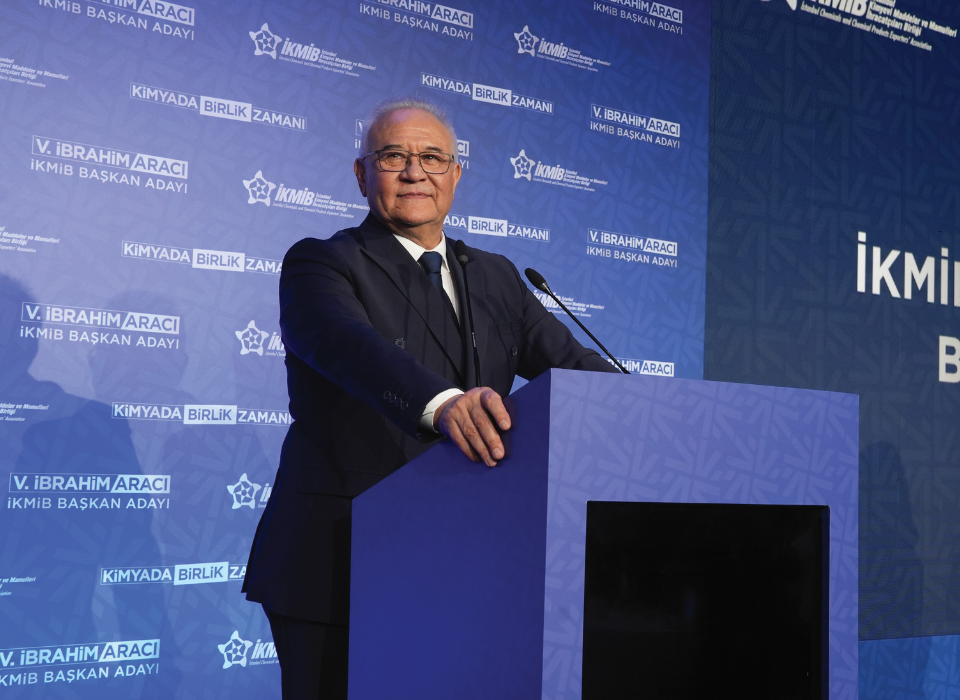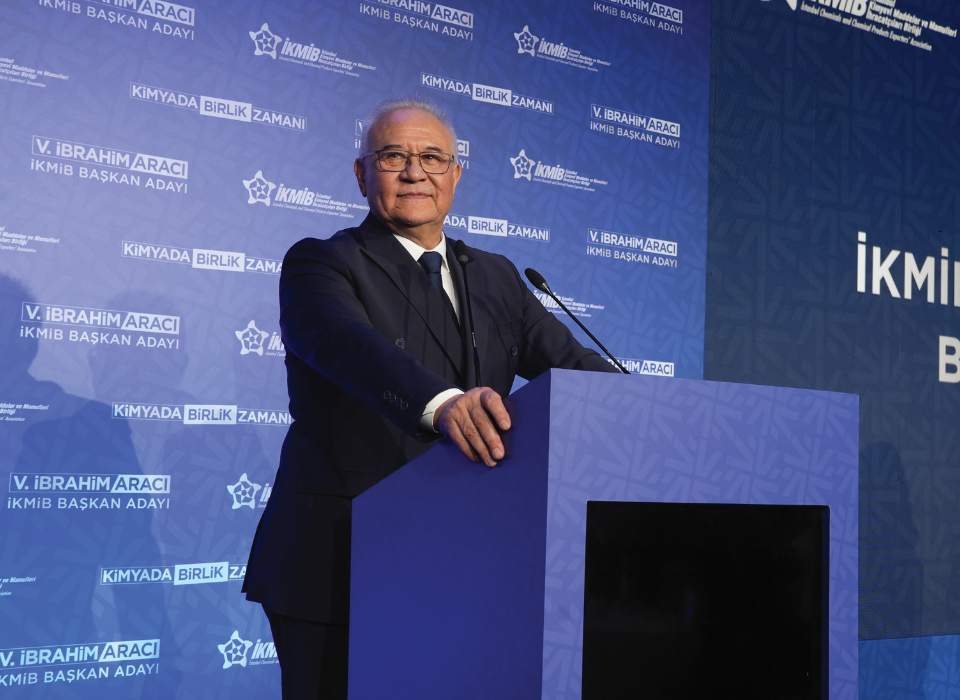
Ahead of the İKMİB presidential elections, presidential candidate V. İbrahim Aracı gave his most comprehensive interview to our magazine Turkchem. In the interview, İKMİB presidential candidate Vefa İbrahim Aracı outlined his vision for strengthening Türkiye's chemical industry through unity, data-driven governance, high value-added exports and stronger domestic raw material production.
Prior to the İKMİB presidential elections, presidential candidate V. İbrahim Aracı gave his most comprehensive interview to our Turkchem magazine. In the interview we conducted, İKMİB presidential candidate Vefa İbrahim Aracı explained his vision for strengthening Turkey's chemical industry through unity, data-driven governance, high-value-added exports and stronger domestic raw material production.
Mr. Aracı, you come from a family tradition that holds an important place in Turkey's industrialization history. How has being inside production facilities since your childhood shaped your vision on the path to your candidacy for İKMİB presidency today? How will this rooted industrialist discipline that you have carried from the past to the present be reflected in İKMİB's future vision?
Industrialism for me began as a natural part of life much earlier than as a profession. My childhood years were spent inside production facilities, in shipping areas and within the daily tempo of factories. I took my first steps in business life in the shipping warehouses where I worked together with my late father.
In those years, I had the opportunity to learn at a very early age the field reality of production, the value of labor, and how decisive the concepts of trust and responsibility are in business life. Thanks to shipping activities, we traveled to many industrial facilities across Turkey.
I closely observed the production discipline within factories and how exports require labor and organization. My interest in production gradually increased during this period, and over time I turned to an industrialist career. The steps we took in the chemical sector in the 1990s and the subsequent investments enabled Koruma Companies Group to become one of the important structures of Turkish industry with production facilities in different regions. This past gave me a very important perspective.
The sustainability of industry is not merely about making investments, but about long-term thinking, anticipating risks and building a strong ecosystem. I learned by directly experiencing every stage of production, from energy costs to logistics planning, from human resources to export markets. Therefore, I evaluate both the challenges and opportunities that the sector faces from a field-based perspective.
I approach the İKMİB presidential candidacy process with exactly this understanding. The chemical sector represents a very broad structure with 16 subsectors, and this structure requires strong coordination. My priority is to strengthen a management approach that preserves the sector's accumulated knowledge, increases our companies' competitive power and places collective wisdom at the center. The fundamental approach I want to reflect in İKMİB's future vision is exactly this.
Strong communication encompassing all stakeholders in the sector, data-driven strategic decision-making processes and a culture of joint action. I believe in the potential of Turkey's chemical sector. What will take this potential further is the will to think together and produce together. For this reason, we view this process as a responsibility and trust rather than a task.
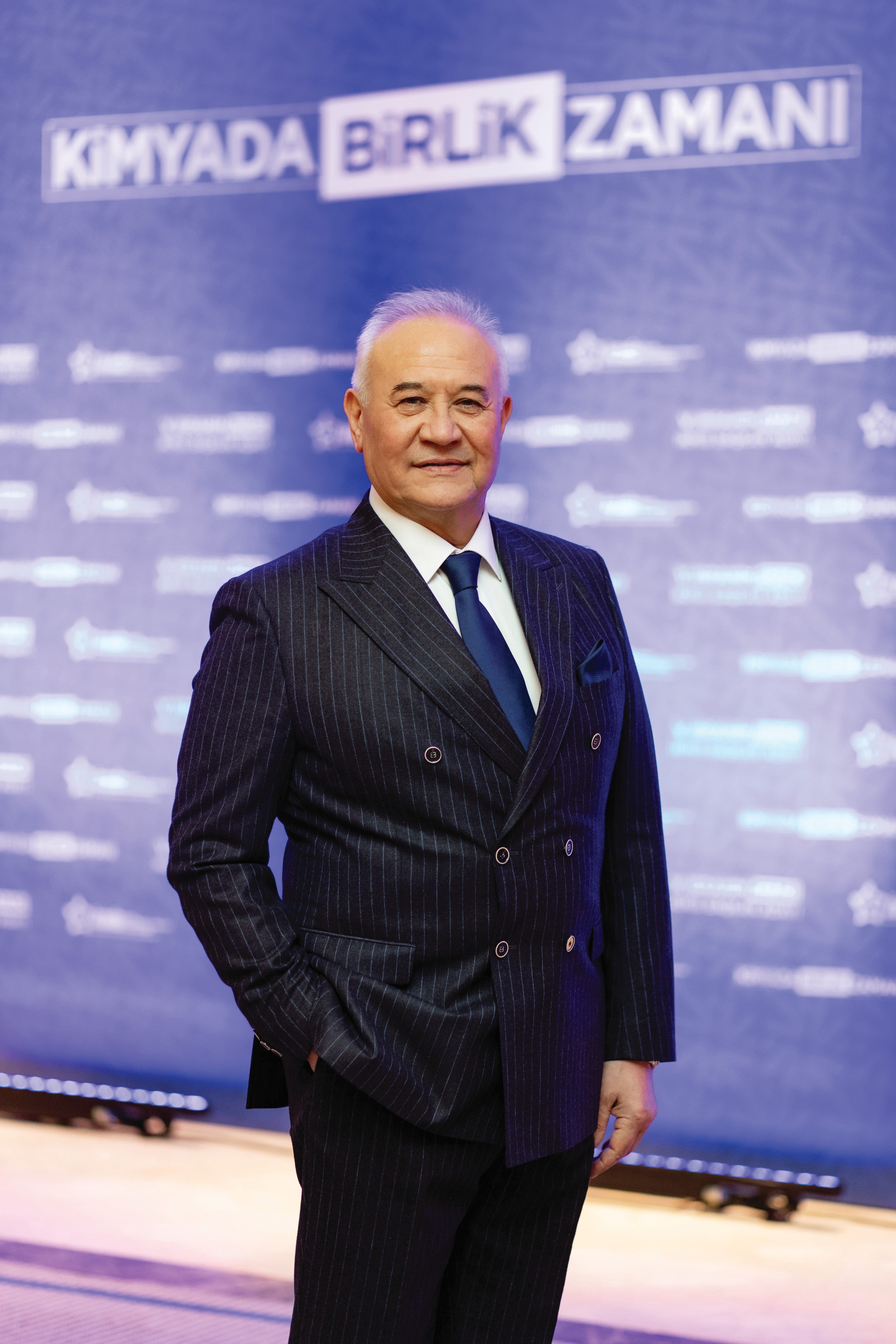
Koruma Companies Group, where you serve as Chairman of the Board, is one of Turkey's leading organizations in strategic areas such as chlor-alkali and agricultural chemicals. How do you plan to use the "sustainable growth" and "operational excellence" models that you have successfully implemented in your own companies to further strengthen the service quality and member-focused structure of İKMİB?
One of the most important experiences we have gained over the years at Koruma Companies Group is this: Sustainable growth emerges from the combination of proper planning, disciplined management and a long-term perspective. In a sector like chemicals that requires high investment and high responsibility, efficiently managing production processes, anticipating risks and keeping a continuous improvement culture alive is of great importance. This approach forms the foundation of the operational excellence understanding we have adopted in our companies.
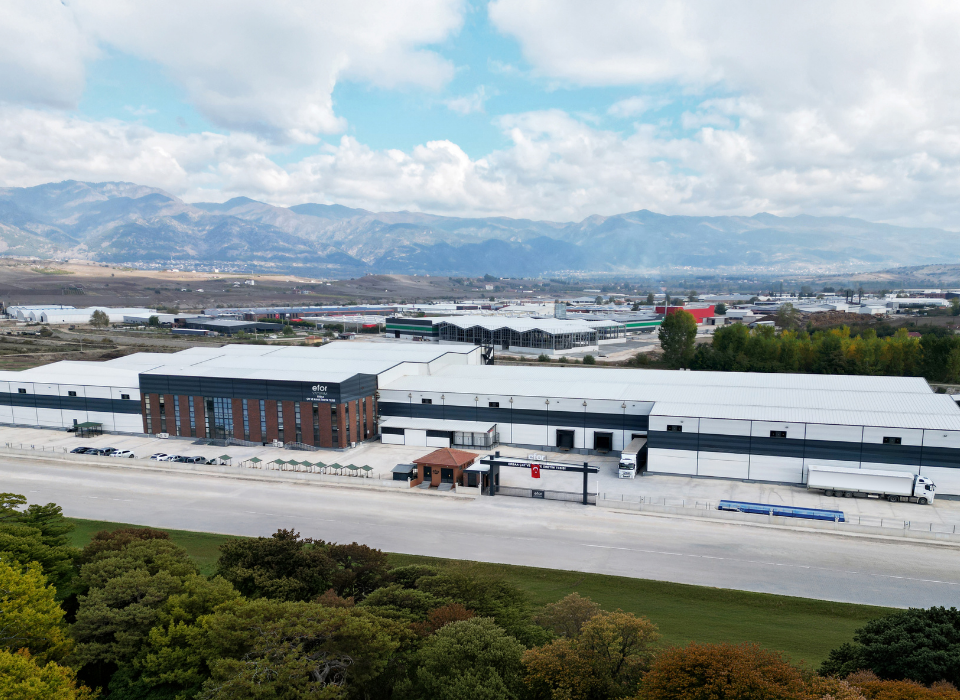
Today, Koruma Companies Group; operating primarily in chemicals and also in agriculture, cleaning and logistics, with production facilities in Kocaeli (Derince and GEBKİM), Denizli and Hatay, has become one of the important structures of Turkish industry. Behind this growth is a systematic management approach in every field, from production to R&D, from human resources to environmental responsibility.
Looking at İKMİB, I think a similar perspective would be valuable. Exporters' associations are not just a representation point for their members. They are also strategic platforms that shape the sector's development. For this reason, I attach importance to a management approach that continuously improves service quality, maintains strong communication with members and places data-driven decision-making processes at the center.
First, we need to create a working model that more systematically monitors the needs of our members and regularly analyzes sectoral data. The chemical sector has a very multilayered structure. Each subsector has different dynamics. For this reason, policies and support mechanisms should be addressed in a more targeted and measurable framework.
Second, internal coordination and stakeholder communication should be structured strongly. When we establish a structure in continuous interaction with our domestic and international associations, our organized industrial zones, the academic world and public institutions, it becomes possible to produce faster and more effective solutions to the sector's problems.
The third point is productivity and competitiveness. We are going through a period when margins are narrowing in the chemical sector on a global scale. In this environment, every step that will increase our exporters' competitive power is of great value.
Green transition, digitalization, efficiency-focused production and orientation towards high-value-added products should be strongly included in İKMİB's work areas for this reason. I approach this task with the experience that an industrialist brings from the field. I know firsthand what responsibility lies behind a manufacturing company's daily decisions. I want the same sensitivity, the same discipline and the same solution-oriented approach to prevail in İKMİB's work.
I believe that such an understanding will further strengthen our exporters' confidence in the organization and will contribute to our sector advancing more rapidly towards our common goals.
You are known not only as an industrialist but also for corporate social responsibility projects you have implemented in many fields from education to health (Semahat Aracı Oncology and Palliative Care Center, schools, etc.). During your İKMİB presidency, what types of corporate social responsibility projects will you prioritize that will strengthen the chemical sector's public perception and bring the sector's "human-centered" face to the forefront?
In our family tradition, contribution to society is seen as a natural extension of business life. We strive to continue the charitable understanding we inherited from our family elders with the principle of "Gratitude to the Past, Hope for the Future." Projects ranging from education to health provide lasting legacies to society, which is the concrete expression of this understanding.
The chemical sector is a strategic field that touches every aspect of life. From health to food, from energy to clean water, from agriculture to advanced materials, it plays an indispensable but invisible role in many areas. However, the word chemistry can sometimes be associated with risk and concern in society. Moving this perception to a healthier ground is possible through safe production culture, transparent communication and work that makes societal benefits visible.
During my İKMİB presidency, we aim to create a corporate social responsibility framework that will more strongly present the chemical sector's human-centered aspect and permanently strengthen public perception of the sector. Three points stand out in this framework:
First; communication projects that explain chemistry correctly. We will make efforts to develop projects that share with society how chemistry makes daily life possible; from the perspective of proper production, proper supervision and proper use. We particularly want to create an approach that connects the concept of chemistry to life quality, health and sustainable production through work that reaches youth and families, explaining science in understandable language.
Second; sectoral projects focused on education and human resources. The sustainability of the chemical sector is possible with strong human resources. We attach importance to more systematically addressing, under the İKMİB umbrella, programs that support vocational and technical education, strengthen university-industry cooperation and provide opportunities for youth to get to know the sector closely. This approach will support both the sector's future and young people's career journeys.
Third; joint impact projects in environment and sustainability. We need to make the chemical sector's transformation on environmental responsibility more visible. Projects that disseminate good practices in green transition, efficiency, emission management and sustainable production both increase the sector's competitive power and strengthen the trust relationship we build with society.
In summary; we want to address social responsibility under the İKMİB umbrella with a continuous approach that covers the entire sector and produces measurable impact. We will make special efforts to develop projects aimed at moving the perception of chemistry in society to a stronger foundation. Because when chemistry is strong, industry is strengthened; when chemistry is explained correctly, public trust grows to the same degree.
GEBKİM, Turkey's first and only chemical specialty organized industrial zone, became a model for all of Turkey with the clustering success and ecosystem management you demonstrated there. What steps will you take to spread this "joint production and joint export" model at GEBKİM to all our exporters under the İKMİB umbrella and to encourage new chemical clusters throughout Turkey?
The chemical industry is a sector built on a strong value chain. Production processes consist of complementary links, and coordination between companies within this structure directly affects competitive power. For this reason, the path to sustainable growth in the chemical sector goes beyond companies merely developing their own capacities, through being able to build strong cooperation and integrated production structures.
The approach we demonstrated at GEBKİM is based on this thinking. As Turkey's first chemical specialty organized industrial zone, we did not merely create industrial plots at GEBKİM. We focused on building a comprehensive production ecosystem with common infrastructure, environmental management systems, education-industry cooperation and technology development capacity. The proximity of companies operating in the same field created a strong synergy that accelerates knowledge sharing, optimizes costs and makes investment decisions more predictable.
The fact that this model attracted sector interest in a short time actually showed how much the chemical industry needed such a structure. I believe this experience can be transferred to a broader ground under the İKMİB umbrella. The chemical sector is a large structure encompassing 16 subsectors, and each subsector has its own unique dynamics. For this reason, it is important to develop a cooperation climate where our companies can build mutually complementary production and supply relationships and strengthen information and experience sharing. Export strategies should also be addressed within this framework using a more coordinated approach, which will increase the sector's global competitive power.
At the same time, chemical investments that could develop in different regions of Turkey advancing with a planned clustering approach could provide major advantages. Aspects like common infrastructure, logistics conveniences, energy efficiency and environmental management systems can be managed much more effectively in such structures. I think the accumulated experience at GEBKİM can serve as an important reference for new chemical clusters that will be created.
The thinking at the foundation of our approach is this: Competition takes place on a global scale, strength emerges from solidarity built internally. When a structure is created where our companies support each other, develop joint projects and act together, Turkey's chemical sector's export performance and production power will rest on a much firmer ground. What we mean by saying "Time for Unity in Chemistry" is exactly this understanding.
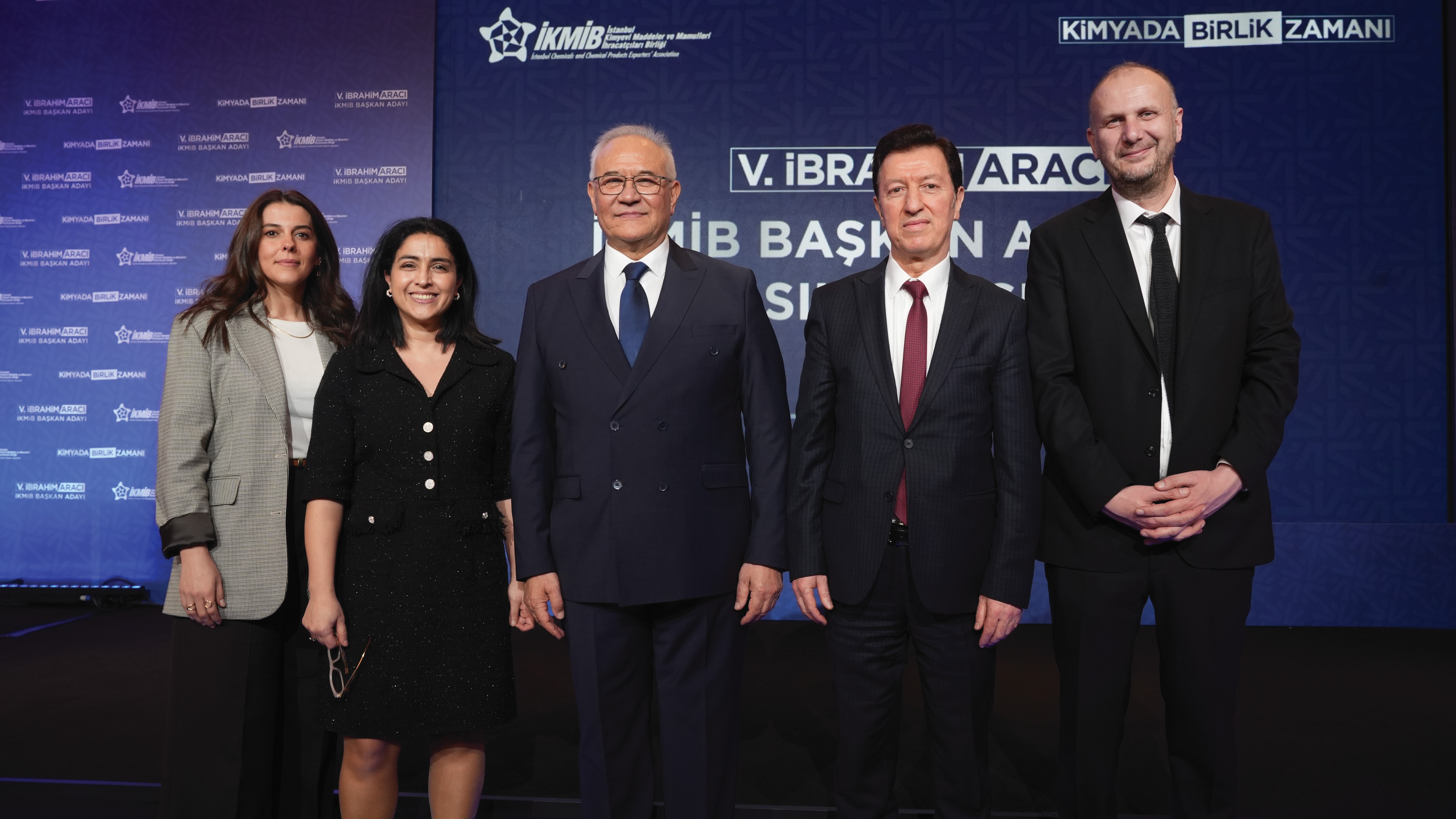
High-value-added product exports hold a critical place in İKMİB's mission. During your presidency, will you have concrete projects that will increase export value per kilogram rather than just by volume and that will encourage domestic raw material production to reduce import dependency (for example, spreading technology and test centers like those in GEBKİM)?
The chemical sector has reached a strong volume in exports. Recent export performance of over USD 30 billion and an approximately 13% share in total exports clearly demonstrate the sector's strategic position in Turkey's economy. However, at the point where global competition has arrived, volume increases alone are not enough. The real issue is strengthening a production structure that increases the value per kilogram of exports and moves toward high-tech content products. We are in a period when margins are narrowing on a global scale. While energy costs and demand contraction in Europe strain competitiveness,
Excess capacity in China is pushing the price threshold down on many products. This picture carries an important message for Turkey. Creating a value-added focused production structure instead of price competition is now a strategic necessity. During my İKMİB presidency, we attach importance to focusing particularly on several points that will support this transformation. First of all, the R&D, testing and certification infrastructure needs to be strengthened.
Product development processes in the chemical sector require high technical capacity. It is important to support more effective use and dissemination of technology and test centers so our companies can develop new products, comply with international standards and increase their innovation capabilities. At exactly this point; increasing the visibility of the Chemical Technology Center, which I believe today cannot fully utilize its potential, and better connecting what it can do with the sector will be important.
Another important point is domestic raw material production. Although Turkey's chemical sector has strong export performance, import dependency continues, particularly in base chemicals. This situation directly affects both cost structure and the current account balance. Our task as İKMİB will be to contribute to keeping investments to be made in these areas and support mechanisms strongly on the agenda with our relevant Ministries and to present the sector's needs with correct data.
In addition, analyzing export strategy in more detail at the level of subsectors and product groups is also of great importance. More refined work at the GTIP level will allow us to see more clearly which products have high value-added potential. In this way, we can help our companies shape their investment and production decisions on a healthier basis.
Our aim is; rather than positioning Turkey's chemical sector only as a large-volume producer, to move it to a structure that develops technology, produces high-value-added products and occupies higher positions in the global value chain. To realize this transformation, we will act in cooperation with all stakeholders in the sector and base our approach on placing collective wisdom at the center.
Turkchem Magazine March - April issue :
https://chemmedia.s3.dualstack.us-east-1.amazonaws.com/turkchem/111/index.html
Gallery