Continental Takes Smart Step to Ensure Production Continuity
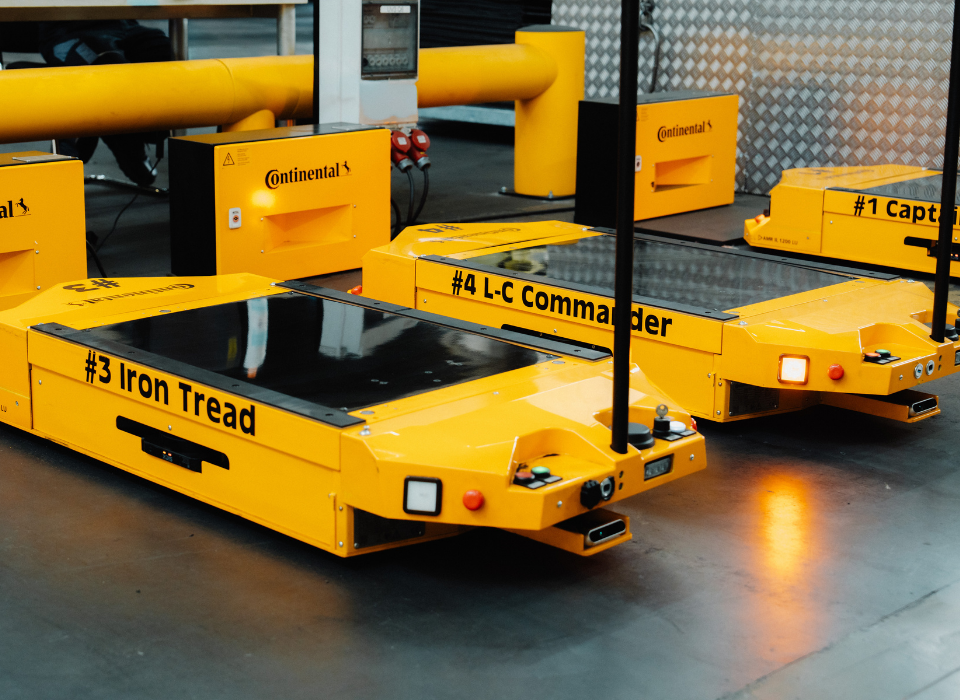
Continental has improved efficiency, ergonomics and production safety by optimizing in-plant logistics processes with autonomous mobile robots put into operation as of March 2025 at its ContiLifeCycle facility in Hannover-Stöcken. The application is regarded as an important step in the company's global Industry 4.0 transformation.
Continental has enhanced efficiency, ergonomics and production safety at its ContiLifeCycle facility in Hannover-Stöcken by deploying autonomous mobile robots since March 2025, optimizing in-house logistics processes. The implementation is viewed as a significant step in the company's global Industry 4.0 transformation.
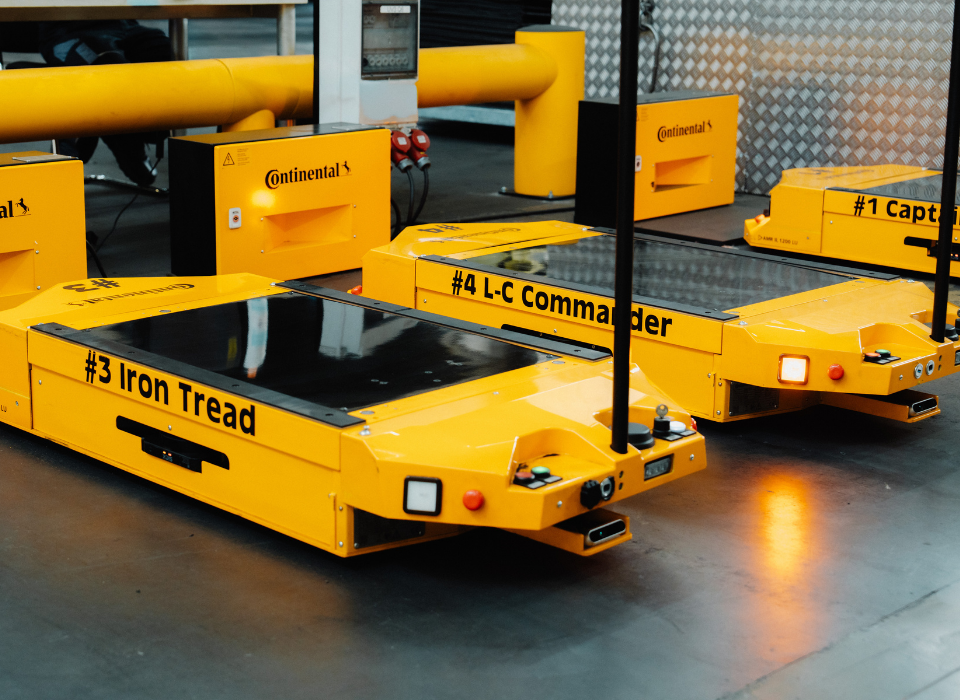
Seven autonomous mobile robots operating at the ContiLifeCycle facility in Hannover-Stöcken, where Continental produces coatings for truck and bus tires, have taken on the task of transporting tires within the production area since March 2025. This allows employees to focus on higher-skill tasks such as machine adjustments and quality control.
With automation in place, manual production has become more ergonomic, and continuity and efficiency in the production flow have increased.
ContiLifeCycle Plant Manager Felix Hantelmann commented on the implementation as follows:
"For six months, driverless robots have supported our production flow. These robots handle simple, repetitive tasks such as transporting a tire from one point to another. Since they are directly connected to our digital order system, they know exactly where to go and how to coordinate with each other. They create significant added value for our daily operations while contributing to a safe, efficient and ergonomic production environment."
LEANER PRODUCTION WITH AUTONOMOUS ROBOTS
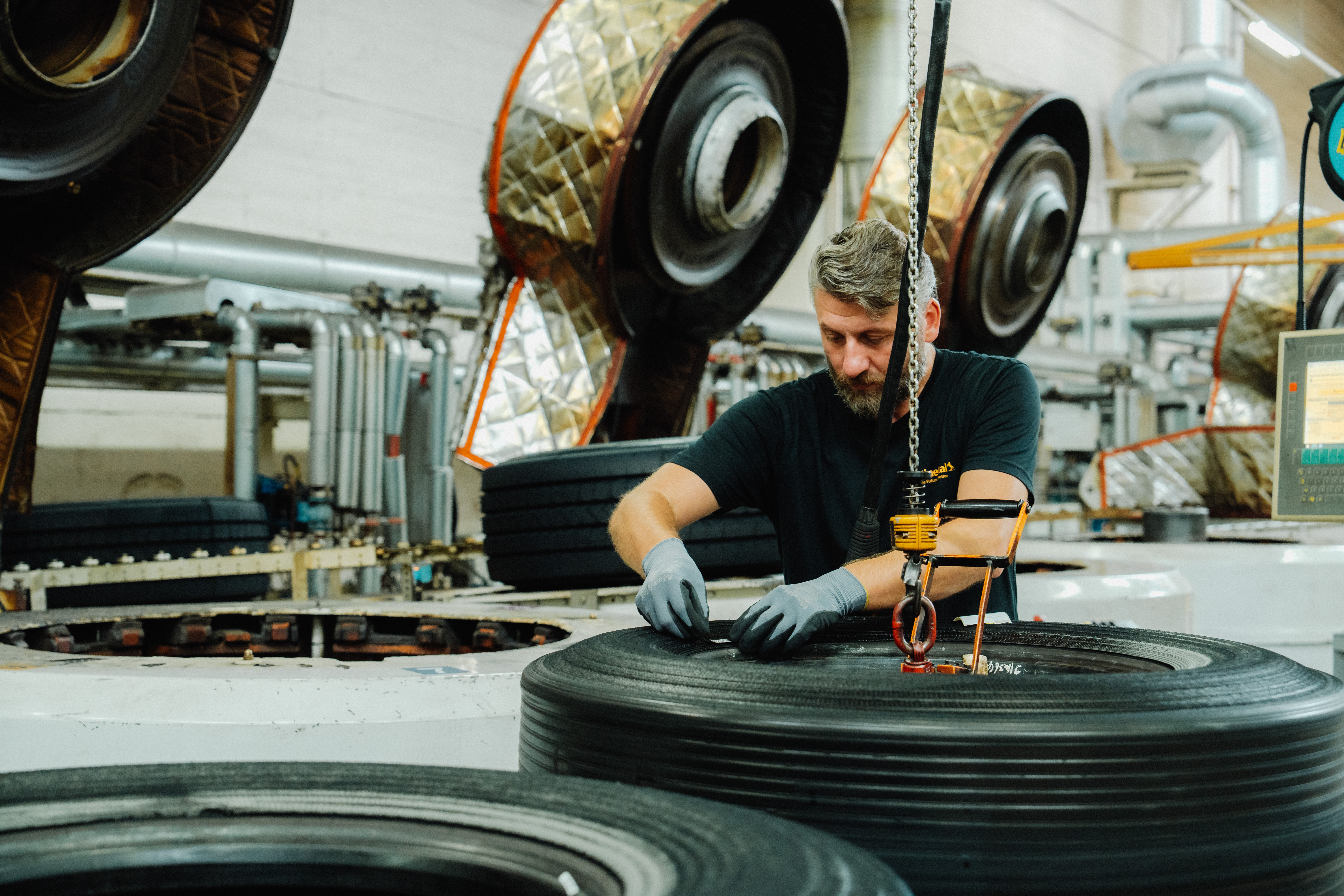
Equipped with advanced sensors, 360-degree camera systems and artificial intelligence-based control software, the robots move independently within the production area, transporting tires between preparation, curing and quality stages.
The optimized flow of the coating process facilitated by the robots works as follows:
Preparation: The transport robot conveys the sanded tire carcass to the preparation machine. Here, depending on tire size, up to 18 kg of new rubber backing heated to 100°C is applied.
Dispatch: The tire is transported by an autonomous robot connected to the digital order system to the curing press or intermediate storage area.
Vulcanization: The tire, weighing 75 kg, is pressed at 160°C to gain its new tread pattern and is conveyed via conveyor belt to the quality control line.
Hantelmann emphasizes that the system also delivers significant gains in production ergonomics, stating:
"The benefits are clear: our employees no longer have to transport tires throughout the production area. This reduces physical strain and allows them to focus on more complex, higher-value tasks."
TECHNOLOGY AND TEAM SPIRIT TOGETHER
Continental organized comprehensive training programs to ensure employee adaptation to the system as the robots were deployed. Employees also participated in the robot naming process, determining names such as "Cargo Knight," "Rubber Ranger" and "LifeCycle Commander." Within six months, the robots naturally integrated into the team system.
Robot technology reflects Continental's global digitalization and production sustainability strategy. Following the successful implementation in Hannover, similar systems have been rolled out at various Continental facilities in North America, Europe and Asia.
CIRCULAR ECONOMY EXAMPLE: MORE THAN 1 MILLION TIRES RETURNED TO SERVICE
The ContiLifeCycle (CLC) facility, which has been operating since 2013, extends the life of worn truck and bus tires through recoating. The process includes:
-Tires undergo detailed inspection
-Old tread is removed
-New rubber is applied and shaped
-Quality and safety tests are completed
Through this process, up to 70 percent of the tire can be reused. The resulting product is equivalent to new tires in terms of safety and performance while providing significant resource savings.
Since the Hannover facility opened, more than 1 million tires have been recoated. Combined with Continental's other facilities worldwide, the total figure has reached 8 million.
Gallery