Researchers Reveal How Manufacturing and Surface Treatment Affect Corrosion in Bioabsorbable Metal Alloys
Researchers from IMDEA Materials, together with the Helmholtz-Zentrum Hereon Institute of Surface Science and Meotec GmbH, carried out the first comparison of corrosion resistance in Mg and Zn bioalloys produced by extrusion and additive manufacturing.
Researchers from IMDEA Malzemeler, together with Helmholtz-Zentrum Hereon Surface Science Institute and Meotec GmbH, have conducted the first comparison of corrosion resistance in Mg and Zn bioalloys produced by extrusion and additive manufacturing.
The study, which paves the way for safer, longer-lasting biodegradable implants, showed that plasma electrolytic oxidation (PEO) surface treatment increased corrosion resistance in all tested specimens.
In a first for the biodegradable metals field, researchers conducted a preliminary comparison of corrosion resistance in WE43 magnesium and Zn1Mg zinc alloys produced by extrusion and Laser Powder Bed Fusion (LPBF).
Published in Surface and Coatings Technology, the study is the first to use electrochemical testing in buffered saline solution to compare how these two manufacturing routes affect the degradation of these clinically relevant biodegradable metals.
“As far as we know, this is the first time these two manufacturing techniques have been compared in terms of corrosion resistance for these materials,” said lead author Guillermo Domínguez.
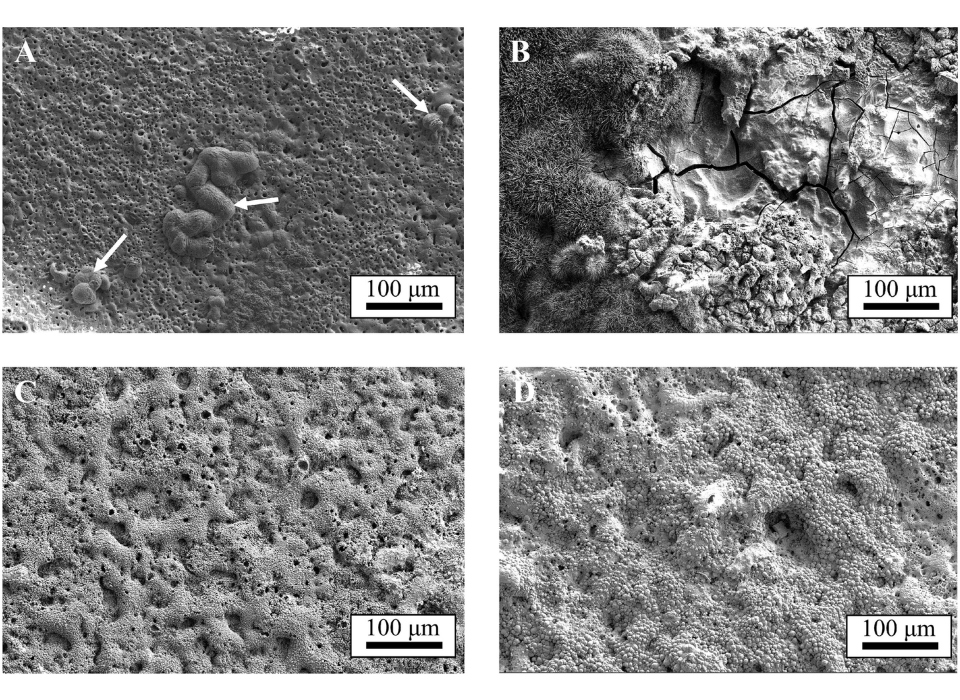
The results show that specimens produced by LPBF corroded significantly faster than their extruded counterparts. In WE43, this was linked to yttrium oxide particles found in LPBF specimens that weakened the protective effect of the corrosion layer.
In Zn1Mg, the higher corrosion rate of LPBF specimens was attributed to increased eutectic phase fraction, which accelerated microgalvanic degradation.
Eutectic phase is a microstructural feature that forms when two elements solidify together at a specific ratio and temperature. Increased eutectic phase fraction creates numerous microgalvanic cells that form more interfaces with the Zn matrix, accelerating localized corrosion. This speeds up overall material degradation. To prevent this, the team applied plasma electrolytic oxidation (PEO) surface treatment.
“Specimens were treated with PEO to increase corrosion resistance,” explained Domínguez. “This treatment formed the expected oxide layer that increased protection in all tested materials compared to untreated counterparts.”
Interestingly, for Zn1Mg, LPBF specimens actually outperformed extruded ones after PEO treatment. “However, WE43 LPBF specimens treated with PEO showed high corrosion rates, which was linked to heterogeneities in oxide layer thickness. Conversely, PEO treatment had the opposite effect on Zn1Mg specimens, where LPBF specimens showed greater corrosion resistance than extruded ones,” he added.
This difference was linked to phosphorus-rich protective layers formed during surface modification and led to higher phosphorus content in the LPBF PEO layer, promoting the formation of inert phosphate phases that stabilize the protective oxide layer.
The experimental component of the research was carried out by Domínguez during a research assignment at the Helmholtz-Zentrum Hereon Surface Science Institute, coordinated by IMDEA Malzemeler under the Horizon Europe BIOMET4D project.
While specimens were produced by project partner Meotec GmbH, collaboration with the Functional Surfaces Department under Dr. Carsten Blawert at Hereon provided access to state-of-the-art electrochemical testing equipment.
By controlling how these materials are produced and processed, researchers can optimize their behavior inside the body, reduce risks and improve patient outcomes.
Gallery