

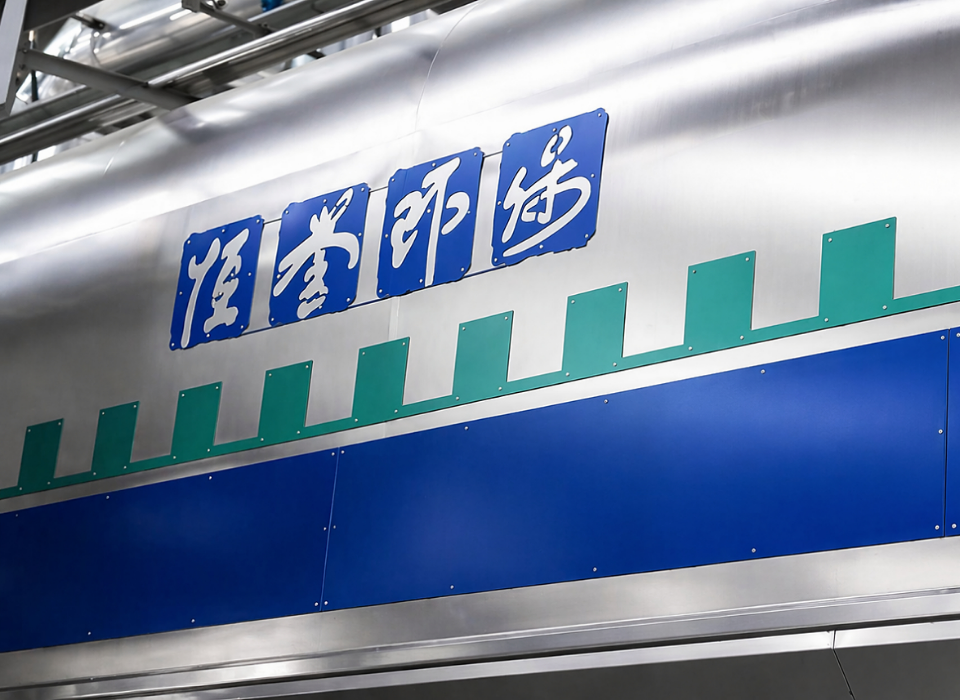
Niutech, a global leader in industrial continuous pyrolysis technology, announced that its independently developed new-generation titanium-iron tailings reduction and enrichment technology and equipment for low-grade complex associated titanium-iron tailings has been evaluated by a national-level professional institution as reaching an internationally advanced level.
The company's 300,000-ton-per-year demonstration project for producing high-grade titanium-rich materials from tailings using this technology is under construction in Linyi, Shandong Province, China. Once completed, Niutech says it will become Asia's leading demonstration project for the green recovery of strategic mineral resources.
As a strategic move in comprehensive mineral resource utilization, the new equipment is designed around safety, environmental protection, low carbon and high efficiency. It incorporates the company's latest low-temperature pyrolysis and in-situ reduction technology, delivering advances in reduction temperature control, waste heat self-circulation and intelligent system management.
Niutech said traditional electric furnace smelting requires high-temperature reactions and high energy consumption, while some hydrometallurgical routes are complex and create environmental pressure. A company technical lead said the new system significantly lowers reaction temperatures through cross-domain innovation, enabling waste-to-resource treatment and green carbon reduction while combining economic and environmental benefits.
The solution uses waste plastics and other organic waste as reducing agents, generating reducing gas through low-temperature pyrolysis to complete in-situ reduction of titanium-iron tailings within a single integrated system. According to Niutech, the line offers three main advantages: low-temperature continuous reduction below 700°C with industrial temperatures controlled between 550°C and 600°C; energy efficiency with waste heat utilization above 93%, more than 36% lower overall energy consumption than traditional processes and about 40% lower CO2 emissions per unit of product; and intelligent, safe operation supported by coordinated temperature control, dynamic sealing and an intelligent control platform.