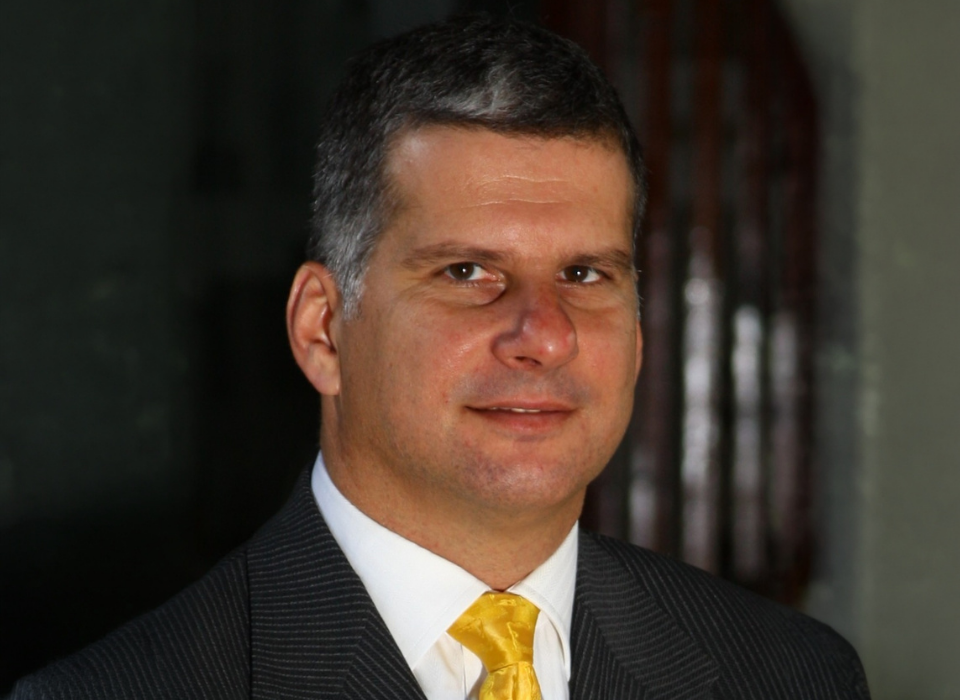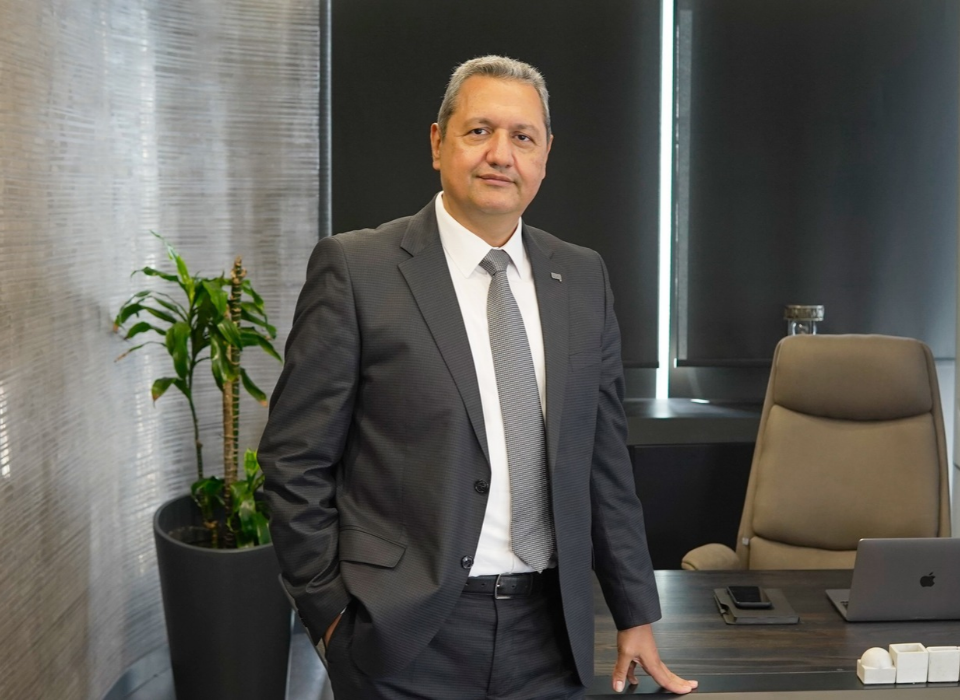


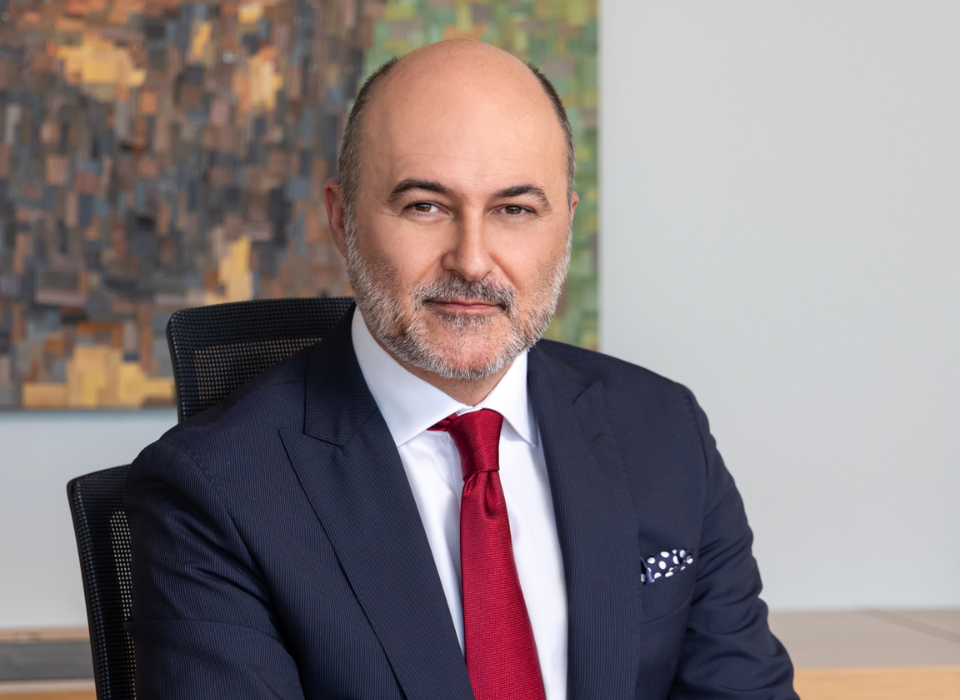
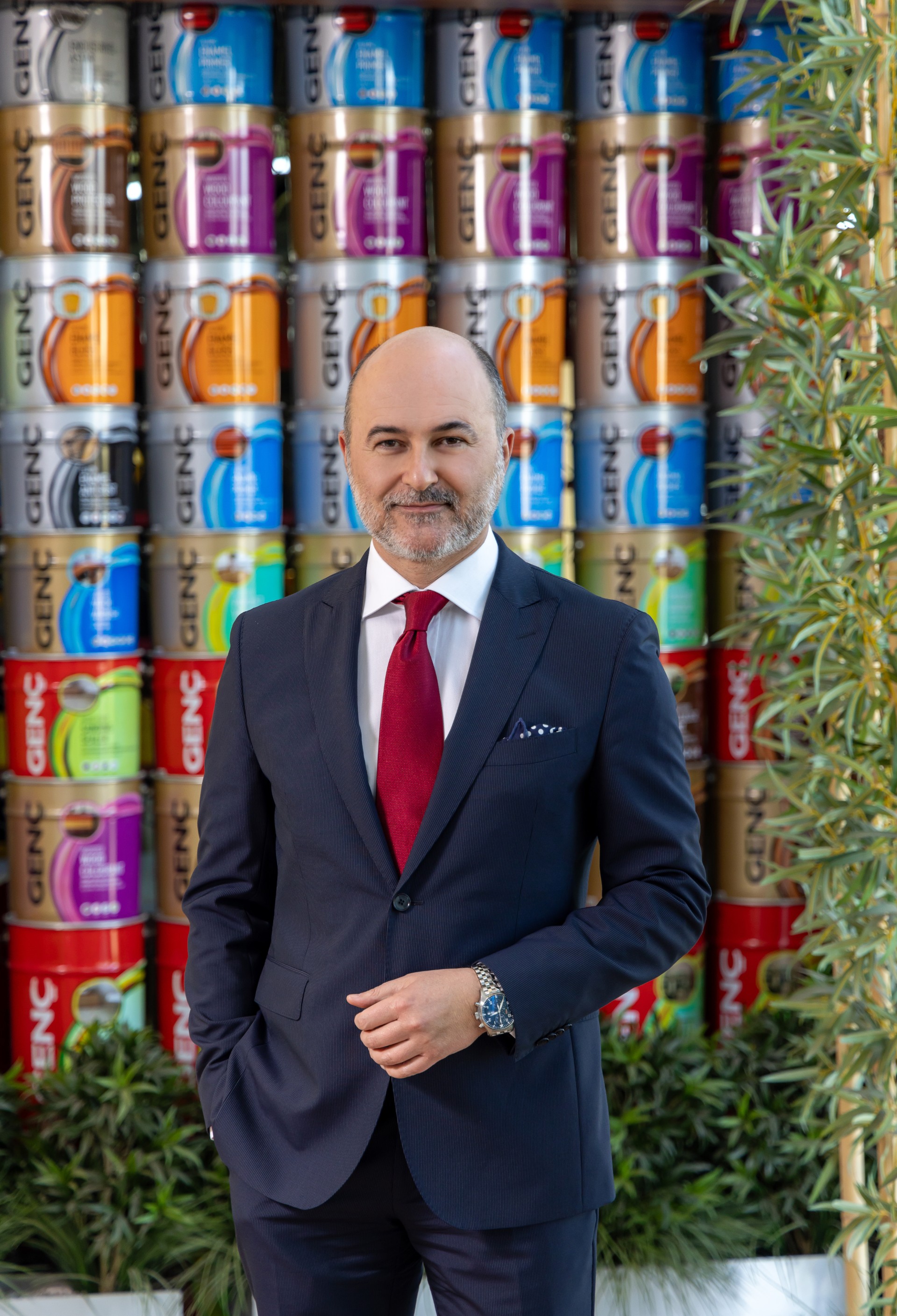
Celebrating its 50th anniversary in 2026, Kayalar Kimya offers its customers world-class paint and coating products, backed by its 142,000-ton production capacity and R&D center. In our interview, Tolga Kayalar, Member of the Board of Directors at Kayalar Kimya, shares his insights with our readers on the company’s founding journey, its activities in international markets, and the transformation of the paint industry.
Could you briefly tell us about yourself and your professional background?
After graduating from Kadıköy Anatolian High School, I studied Chemistry at the University of California San Diego. Following university, I began my professional career at Kayalar Kimya. Today, as a Member of the Board of Directors, I take on responsibilities across various areas that shape the future of our company, ranging from exports and R&D to marketing and product management, as well as e-commerce and technology.
Two areas have been particularly defining in my career: international growth and technology. I played an active role in the development of Kayalar Kimya’s export network, which today reaches approximately 55 countries. At the same time, I led the strategic partnership process we established with Noroo, one of South Korea’s leading paint manufacturers, and I currently serve as Chairman of the Board of Kayalar-Noroo. Working with different business cultures has shown me that, in global competition, producing high-quality products alone is not enough; technology, speed, innovation, and the right partnerships are just as important as production capabilities.
My interest in technology and new business models is not limited to Kayalar Kimya. I follow and invest in ventures across different sectors, both in Türkiye and abroad. As part of the Board of Directors of BOSAD, I also have the opportunity to evaluate the transformation of our industry and the business world from different perspectives. I believe all of these experiences continuously enrich the way I view our business and the future.
Today, the key question for me is how we can carry a strong 50-year industrial legacy into the next 50 years. By combining Kayalar Kimya’s manufacturing expertise with R&D, digitalization, and next-generation technologies, we aim to become not simply a Turkish industrial company that sells products from Türkiye to the world, but one that develops knowledge and technology in Türkiye, competes on a global scale, and sets standards in its field.
I see my professional journey largely as a part of this vision.
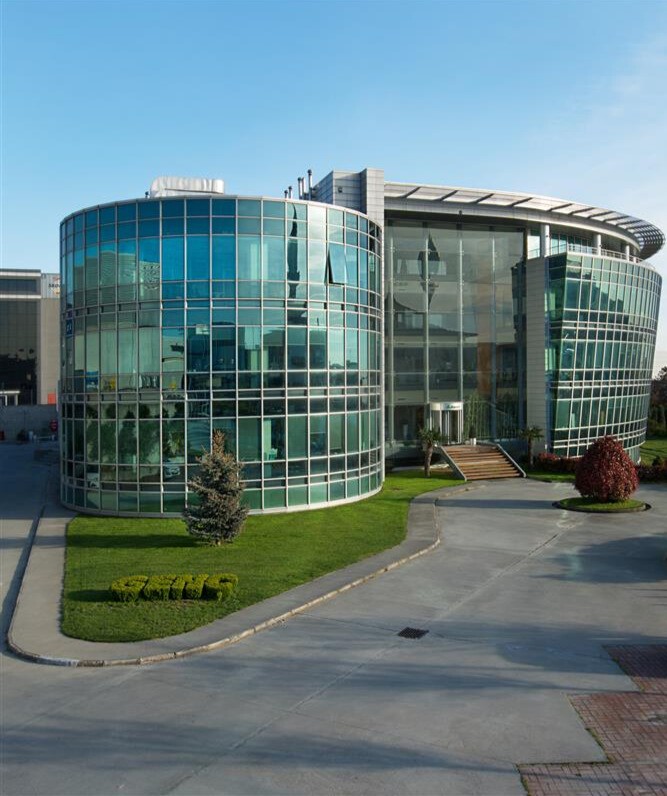
Kayalar Kimya is celebrating its 50th anniversary in 2026. Looking back at Kayalar Kimya’s development journey from 1976 to today, what have been the most important milestones that have brought the company to where it is today?
It is a great source of pride for us to see the foundations laid by our founder, Yılmaz Kayalar, in 1976 evolve into a 50-year-old industrial company today. However, when I look back on this journey, what impresses me most is not the size of the company, but its courage to redefine itself at every stage of its development.
I believe there have been several important turning points in Kayalar Kimya’s history. The first was scaling up our production infrastructure. Starting production at our Tuzla plant in 2005 was one of the key investments that enabled us to pursue greater ambitions. This was followed by international partnerships, which ushered in a new era in the company’s development. Our collaboration with Meffert, which began with the Düfa brand, and later our strategic partnership with South Korea-based Noroo played an important role in transforming Kayalar Kimya from a company focused primarily on its own market into one that closely follows technologies, business practices, and different markets around the world.
I believe one of our most important turning points was our decision to evolve from a manufacturing company into a technology-driven company. One of the clearest examples of this was our designation in 2011 as Türkiye’s first R&D Center in the furniture coatings sector. We subsequently established the first Technical Support, Application and Simulation Center in our industry. We recognized at a very early stage that, in the coatings industry, long-term competitive advantage comes not only from the size of your factory, but also from your formulation expertise, application know-how, and ability to develop solutions for your customers quickly.
Another major turning point was our decision to expand into global markets. In 2016, our young brand became the first brand in its field to be admitted to the Turquality program. For us, this was not simply about joining a support program; it was an important indication of Kayalar Kimya’s ambition to become a global brand. Today, we export to 55 countries, generate more than half of our total sales from international markets, and rank among Europe’s top five manufacturers of furniture paints and varnishes. I believe one of the key factors behind reaching this point was our decision to view exports not simply as selling products, but as part of a long-term globalization strategy.
In recent years, we have been taking our growth into new areas. With our investment in Gebze, we began producing industrial adhesives and binders, while accelerating our investments in sustainability, energy transition, digitalization, and automation. In other words, a journey that began with paint production 50 years ago has now evolved into a much broader industrial ecosystem encompassing different technologies and markets.
Yet there is one constant element behind all these investments and milestones: people. I believe it would be incomplete to explain Kayalar Kimya’s 50-year success solely through its factories, production capacity, or export figures. What has truly driven the growth of this company is the entrepreneurial culture passed down through generations, the knowledge and expertise of our employees, the trust we have built with our customers, and our constant desire to do better.
As I look at our 50th anniversary today, I see our past not as an end result, but as a strong starting point for the future. During our first 50 years, we built a strong industrial company that sells products from Türkiye to the world. Our goal for the next 50 years is to transform into a global technology and materials company that competes worldwide through technologies developed in Türkiye and contributes to shaping industry standards rather than simply following them.
For us, this is the true meaning of our 50th anniversary: using the strength we have gained from our past to build the future.
As a paint manufacturer expanding from Türkiye into global markets, how do you assess the international competitiveness of the Turkish paint and coatings industry?
I believe the Turkish paint industry has reached a significant position on the international stage today. Being Europe’s fifth-largest paint producer is no coincidence; it is backed by a strong manufacturing culture, a skilled workforce, extensive technical know-how, and a robust industrial infrastructure built up over many years. Therefore, I believe we should now view Türkiye not merely as a regional production hub in this industry, but as a country capable of becoming a global player through its technological and product development capabilities.
However, the global competitive landscape is changing very rapidly. In the past, production capacity, scale, and cost advantages could give companies an edge. Today, these are necessary to compete, but they are no longer sufficient on their own. R&D capabilities, sustainability, digitalization, supply security, speed, and the ability to develop technologies tailored to customer needs have now become the new parameters of competition.
China is one of the most striking examples of this. For many years, we viewed China primarily in terms of its low-cost manufacturing capabilities. Today, however, China is making very significant investments in technology, R&D, advanced materials, and economies of scale. Therefore, I do not believe that trying to compete with manufacturing giants such as China solely on the basis of cost is the right or sustainable strategy for Turkish industry.
We need to play a different game.
Türkiye has some very significant advantages. We are located at the intersection of Europe, the Middle East, North Africa, and Central Asia. Our proximity to Europe provides more than just a logistical advantage; it enables us to respond to customers more quickly, manufacture more flexibly, and provide technical support much closer to them. When we combine these advantages with our strong engineering and R&D capabilities, a highly valuable competitive model emerges for Türkiye.
Kayalar Kimya’s experience in international markets also demonstrates this. In different geographies, we are no longer talking only about products and prices. Customers expect us to provide solutions tailored to their production processes, technical support, sustainable products, higher performance, and faster innovation. In global markets, the real value is measured less by how much you sell a can of paint for and more by how much value you add to your customer’s production process.
For this reason, I believe the real opportunity ahead for Türkiye is to move from “Made in Türkiye” to “Developed in Türkiye.”
Of course, we will continue to manufacture in Türkiye; however, our goal from now on should be to increase the number of products whose technologies are developed in Türkiye, whose formulations are created here, whose intellectual property originates here, and which are preferred in different countries around the world. Because this transformation is what will permanently increase the export value per kilogram and the added value generated by our industry.
Looking ahead, I see significant opportunities particularly in sustainable raw materials, water-based systems, functional surfaces, high-performance coatings, and next-generation material technologies. Digitalization and artificial intelligence will also redefine the competitiveness of our industry, from product development to manufacturing. Indeed, we can see that the industry is already addressing innovation, sustainability, functionality, digitalization, and artificial intelligence as the key areas shaping its future.
I believe the key question facing the Turkish paint industry should not be, “Can we compete with the world?” but rather, “In which areas can we lead the world?”
This is also the approach we take at Kayalar Kimya. By combining our 50 years of manufacturing experience with our R&D capabilities, technology, and knowledge of international markets, we aim to become not merely one of the companies participating in global competition, but one of the companies setting the standards of competition in specific fields.
I believe Türkiye’s real breakthrough in the paint and chemical industries will not come from producing more, but from producing more technology, intellectual value, and added value.
How do the automation and digital transformation initiatives implemented at Kayalar Kimya’s production facilities improve the efficiency and quality control of production processes? What advantages does this transformation provide in terms of enabling the company to respond more quickly and flexibly to customer needs?
Digital transformation is not a new agenda item for us. At Kayalar Kimya, we began investing in automation and digital technologies long before Industry 4.0 and artificial intelligence became such widely discussed topics. We believe that sustainable competitiveness in manufacturing cannot be achieved simply by increasing capacity, but through efficiency, standardization, data, and technology.
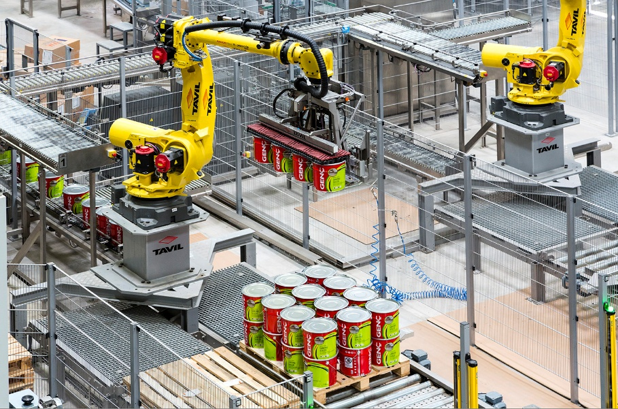
Today, our production facilities operate with advanced automation systems, robotic production lines, and digital monitoring infrastructures. However, for us, the real value lies not so much in how advanced the machines are, but in how measurable, traceable, and manageable the production process has become.
Quality in the paint and coatings industry requires the simultaneous and accurate management of many variables. The entire process, from raw materials and formulations to production parameters and application conditions, needs to be kept under control. Automation provides us with a significant advantage in this respect: it reduces human-induced variability, strengthens process standardization, and enables us to consistently reproduce the same level of quality.
The second important dimension of digitalization is data. We no longer view data merely as a tool for reporting the past, but as a strategic resource that determines what we will do in the future. By connecting our processes, from our ERP infrastructure to our production and quality systems, we are creating a much more transparent structure covering everything from raw material intake and production to inventory and shipment. This enables us to move toward a production model that does not simply intervene after a problem occurs, but can anticipate potential problems wherever possible.
I believe the aspect of this transformation that is reflected in the customer experience is even more important: speed and flexibility.
Today, industrial customers are not simply purchasing a paint or varnish. They want a solution tailored to the speed, equipment, application method, and surface performance requirements of their own production lines. The Technical Support, Application and Simulation Center that we established in 2007 as a first in Türkiye in the field of furniture paints and varnishes was actually an early example of this approach. We can simulate our customers’ processes on a pilot scale and test different product and application parameters, enabling us to identify the right system more quickly.
Therefore, for us, technology is not simply an investment that begins and ends inside the factory; it is a competitive advantage that extends all the way to the customer’s production line.
We are now moving into the next stage of this transformation: artificial intelligence. As part of the AI Transformation Program we have launched at Kayalar Kimya, we are involving different functions in the process, from production and R&D to sales and information technology. Our aim is not to limit artificial intelligence to individual applications, but to make it an integral part of our data-driven decision-making culture and the way we do business.
Looking ahead, I believe artificial intelligence will create significant opportunities particularly in areas such as formulation development, production optimization, quality management, predictive maintenance, demand forecasting, and supply chain management. From our perspective, the real question is not whether we have adopted artificial intelligence, but how we can leverage technology to create greater value from our 50 years of manufacturing and formulation expertise.
Because I believe that the competitive advantage of the future in manufacturing will not come solely from the size of the factory. The real competitive advantage will come from turning the manufacturing knowledge you possess into data, learning from that data, and transforming what you learn into value for your customers more quickly.
That is precisely our goal at Kayalar Kimya: to go beyond producing more and instead produce in a smarter, more predictable, and more customer-focused way.
Consolidation, new investments, and technological transformation are accelerating across the global paint and coatings industry. How do you think the competitive landscape of the industry will change over the next five years?
I believe the next five years will be not only a period of growth for the paint and coatings industry, but also a period of transformation in which the criteria for competition will be redefined.
On a global scale, we see companies continuing to invest in strengthening their scale, technology portfolios, and geographical reach. At the same time, changes in supply chains, sustainability requirements, digitalization, and new materials technologies are reshaping the industry’s investment priorities. Therefore, rather than a single competitive model, I believe we will see a much more complex landscape in which multiple capabilities will need to be managed simultaneously.
I believe three areas, in particular, will be decisive.
First is technology and R&D. The paint and coatings industry is increasingly evolving into a materials technology industry. Competition in the future will be shaped not only by how efficiently you can manufacture existing products, but also by how quickly you can develop new solutions that deliver higher performance, greater sustainability, and added value to your customers’ processes. I believe water-based systems, functional surfaces, high-performance coatings, and sustainable raw material technologies will become increasingly important in this transformation.
Second is speed and agility. The transformation global supply chains have undergone over the past few years has taught us an important lesson: competitive advantage can no longer be explained solely by cost or scale. Being close to customers, responding quickly to changing demand, diversifying sources of supply, and developing customized solutions when necessary are now equally important. I see a significant opportunity for Türkiye in this regard. If we can combine our geographical position between Europe, the Middle East, North Africa, and Central Asia with our strong manufacturing and R&D capabilities, we can create greater value from the changing global supply chain landscape.
Third is digitalization and data. I believe artificial intelligence will also become much more prominent in our industry over the next five years. From formulation development and quality management to production optimization and demand forecasting, companies’ ability to make effective use of the data they possess will become an important competitive advantage. The critical point here is not simply having adopted artificial intelligence, but being able to transform the technical knowledge and experience accumulated over the years into value more quickly through technology.
Sustainability, in my view, is no longer a separate area alongside these three priorities, but rather a new standard for doing business that encompasses all of them. It affects the entire value chain, from energy efficiency and raw material selection to product design and manufacturing processes. At Kayalar Kimya, we also view sustainability not as a reporting exercise, but as one of the fundamental management approaches shaping our investment decisions and growth strategy. Accordingly, we see our investments in energy, water consumption, solvent recovery, and renewable energy as integral parts of this holistic approach.
For this reason, I do not believe that the winners in the industry will be determined by a single criterion in the coming period. Scale will remain important; however, companies that can combine scale with technology, R&D with speed of commercialization, manufacturing strength with agility, and growth with sustainability will be better positioned to differentiate themselves.
At Kayalar Kimya, we are also approaching the coming period from this perspective. We are bringing together our 50 years of manufacturing and formulation expertise with our strong R&D infrastructure, international market experience, and investments in digitalization and sustainability.
Our goal for our second 50 years is to become not simply a larger company, but one that generates greater added value. We aim to continue growing as a strong international player in our areas of expertise, bringing technologies developed in Türkiye to global markets.