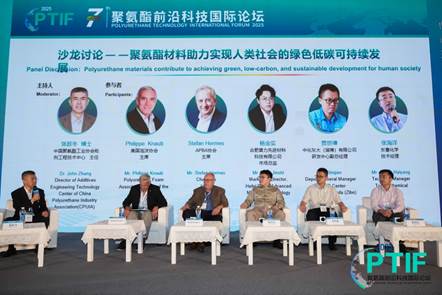



By connecting raw material suppliers, system houses, converters, and end-users, the Asian Polyurethane Business Association (APBA) plays a crucial role in fostering regional collaboration. In an exclusive interview, APBA Chairman Stefan Hermes discusses the industry's future and shares his perspective on key market trends.
Could you briefly introduce yourself and share your professional background?
My entry into the polyurethane industry goes back to 1990, when I worked on my first project with Recticel Technical Foams. At that stage, it was not yet a continuous career path, but it gave me early exposure to the material, the applications, and the way the industry operates.
After that, I spent roughly ten years in the transport and logistics sector. In hindsight, that period has been very valuable. It gave me a strong operational foundation, particularly in supply chain management, process discipline, and execution under pressure. Those elements are highly relevant in polyurethane manufacturing, even if they are not always explicitly recognized as such.
From around 2010 onwards, I became increasingly active again in polyurethane through a series of projects, typically ranging from six to eighteen months, across different companies and regions. In 2013, I made a conscious decision to fully focus on the polyurethane industry again, and since then all my work has been centered around it.
My career has been strongly international. I have lived and worked in the United States, China, India, Thailand, Switzerland, and the Netherlands, and have been involved in projects across Europe and Russia. Being able to communicate in multiple languages has helped me build closer relationships within the industry. It allows for more direct interaction, a better understanding of local dynamics, and ultimately more effective collaboration.
Today, my work is structured around two main pillars.
Through HTC Global, I support companies with advisory, education, and both market and industrial intelligence. The focus is not only on understanding markets, but on understanding how operations perform in reality and how decisions translate into results.
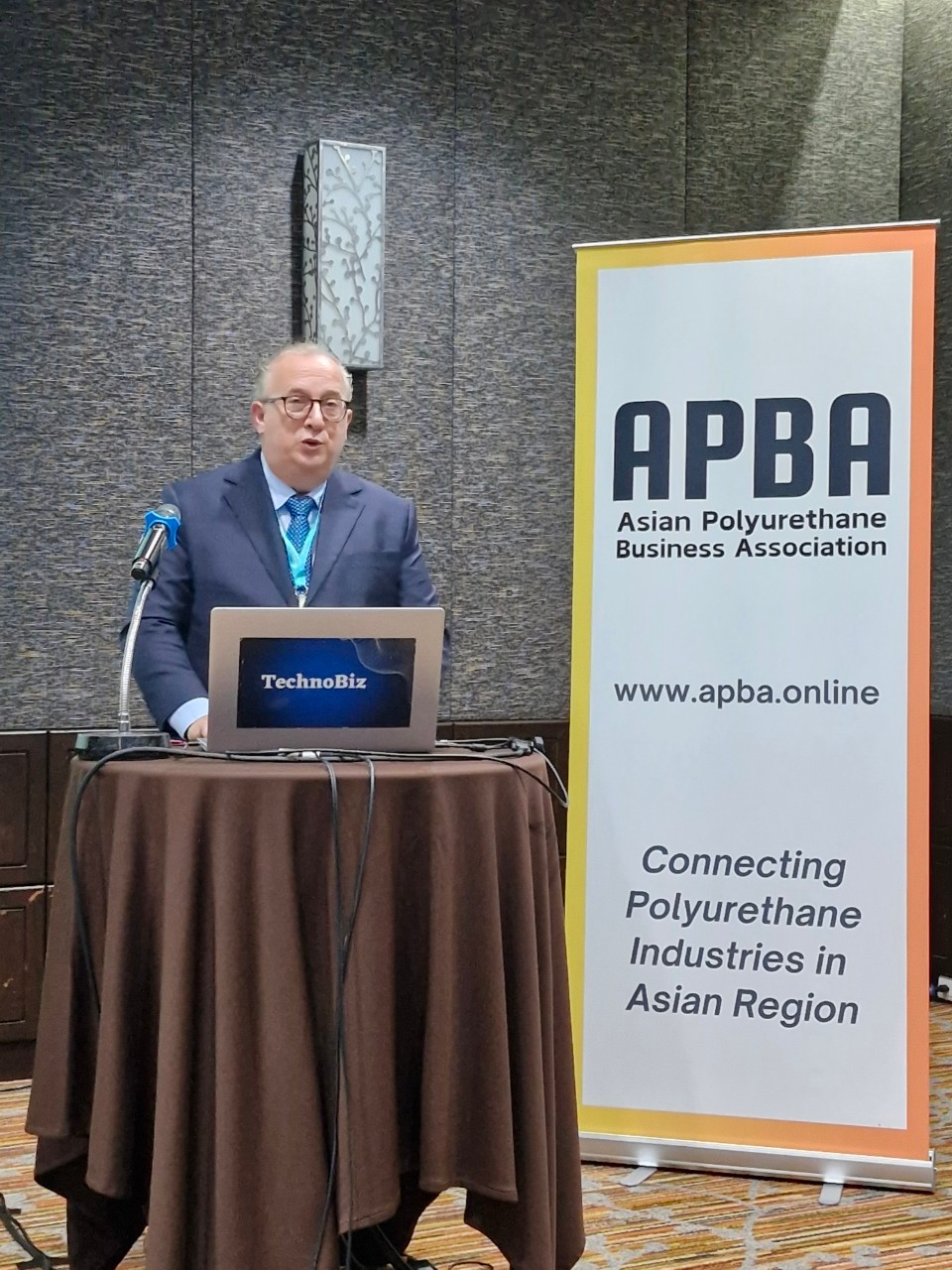
In parallel, I co-founded the Asian Polyurethane Business Association, APBA. The idea behind APBA is to create a platform that connects stakeholders across the value chain and enables more structured collaboration within the industry.
Alongside this, I have been working on a number of initiatives that reflect the same underlying philosophy. Whether it is expert alignment, sourcing structures, or integrated cooperation models, the objective is always to create more value by connecting capabilities across the value chain rather than optimizing in isolation.
Could you tell us the story behind the establishment of APBA and explain the main objectives and mission that guide the organization today?
APBA was founded in June 2024, based on observations that have developed over many years of working across the polyurethane industry.
Asia has strong growth, a broad manufacturing base, and increasing technical capabilities. At the same time, knowledge and experience are often fragmented. Companies face similar challenges in areas such as processing, supply chain stability, quality, and regulatory requirements, yet there is limited structured exchange across the value chain and across countries.
The idea behind APBA was therefore to create a platform that connects these different parts of the industry in a more structured way with one focus and that is to promote polyurethane materials.
APBA is not intended as a formal institution in the traditional sense. It is designed as a working platform where professionals from across the polyurethane value chain can interact, exchange knowledge, and build cooperation.
The objectives are clearly defined. They include promoting the use of polyurethane where it adds value, encouraging cooperation across the full supply chain, sharing non-competitive knowledge, and supporting environmental responsibility, health, and safety. In addition, APBA aims to act as a dialogue partner on regulatory developments and to provide a knowledge base on technologies, standards, and market developments.
A key element is that APBA connects both vertically and geographically. It brings together raw material suppliers, system houses, converters, and end users, while at the same time bridging different countries across Asia.
The intention is not only to connect people, but to improve how the industry functions by making knowledge more accessible and collaboration more effective.
How does APBA contribute to strengthening cooperation among polyurethane industry stakeholders across Asia?
We contribute by creating continuity in interaction and knowledge exchange.
In many industries, collaboration is often limited to events or bilateral relationships. What is missing is a structure that allows for ongoing exchange of insights, experiences, and developments. This is where APBA focuses its efforts.
The association has established a number of initiatives that together create a continuous flow of information and interaction.
These include the APBA Weekly Newsletter, the PU Review magazine with its Global Polyurethane Directory, and a structured webinar program where industry professionals share insights on specific topics. In addition, Polyurethane X is being developed as an online forum to enable more direct interaction between members. With the support to the Polyurethane Academy, a structured educational program is put in place which can be provided online or in a classroom setting. Alongside these initiatives, a steady stream of articles is published to share perspectives on industry developments.
The objective of these activities is not content for its own sake. It is to create a rhythm of knowledge exchange that helps professionals stay informed and learn from each other.
Beyond these formats, APBA encourages a practical approach to collaboration. Discussions are based on real operational challenges, not abstract theory. The aim is to shorten learning cycles and to improve alignment between different parts of the value chain.
In that sense, APBA acts as a connector. It brings people together, but more importantly, it creates a structure that allows cooperation to develop over time rather than remaining incidental.
In which application areas do you expect to see the fastest growth for polyurethane materials in the coming years?
When discussing growth in polyurethane, the immediate reaction is to point at application areas such as construction, insulation, automotive, or furniture. Those segments will indeed continue to grow, each driven by their own dynamics. Construction remains linked to energy efficiency and urbanization, furniture to rising living standards, and automotive to performance requirements such as weight and comfort.
However, this way of looking at growth is only part of the picture.
What I see in practice is that the real growth potential in polyurethane is not only determined by where demand exists, but by how effectively companies are able to convert that demand into output, margin, and consistency.
In many polyurethane operations, there is still significant untapped potential in areas such as yield improvement, waste reduction, and process stability. These are not marginal gains. In some cases, improving yield by a few percentage points can have the same impact as adding new capacity, without the need for major investment.
This changes the perspective on growth.
Instead of only asking where the market will grow, companies need to ask how much of that growth they are actually able to capture with their current operations. In that sense, operational performance becomes a direct driver of growth.
At the same time, supply chain resilience plays an increasingly important role. The past years have shown how vulnerable polyurethane production can be to disruptions in raw materials, logistics, and pricing. Companies that rely on a single sourcing structure or have limited visibility in their supply chain are exposed.
Growth therefore becomes closely linked to resilience.
Companies that have built more robust sourcing strategies, better supplier alignment, and more transparency across their supply chains are in a stronger position to maintain production and respond to market opportunities. Those that have not will struggle, even if demand is present.
Another important development is the increasing need for alignment across the value chain. Optimizing one part of the chain in isolation is no longer sufficient. When raw material suppliers, system houses, converters, and end users are better aligned, it becomes possible to improve overall performance, reduce inefficiencies, and accelerate implementation of improvements.
This is where more structured collaboration models come into play. By connecting capabilities across the value chain, companies can unlock value that is not accessible when operating in silos.
So, while application areas such as construction, furniture, and automotive will continue to grow, the real differentiator will be how companies manage execution, resilience, and collaboration. That is where growth will be realized in practice.
What major trends are currently shaping the polyurethane industry in Asia?
One of the key trends is that Asia is moving from being primarily a production base to becoming a capability-driven region.
Technical knowledge is increasing, local expertise is developing, and companies are becoming more sophisticated in how they approach both operations and markets. This changes the dynamics within the global polyurethane industry.
At the same time, the operating environment has become more volatile. Raw material prices fluctuate, supply chains are less predictable, and external factors can have a rapid impact on operations. This creates a need for more structured decision-making and stronger internal processes.
Resilience is therefore becoming a central theme.
In the past, efficiency was often the primary focus. Today, companies also need to ensure that they can continue to operate under changing conditions. This includes having alternative sourcing options, better visibility across the supply chain, and the ability to adapt quickly when disruptions occur.
Another important aspect is the diversity within Asia itself. Markets differ significantly in terms of maturity, regulation, and customer expectations. A strategy that works in one country does not automatically translate to another. Companies that recognize and adapt to these differences tend to perform better.
In parallel, there is a gradual shift towards more collaboration across the value chain. As complexity increases, it becomes more difficult to optimize in isolation. Companies are starting to see more value in working with partners, sharing knowledge where possible, and aligning capabilities to improve overall performance.
This does not happen automatically. It requires structure, trust, and a platform that enables interaction. That is one of the areas where initiatives like APBA can play a role.
Sustainability has become a major focus across the chemical industry. How is this transformation affecting the polyurethane sector?
Sustainability is clearly influencing the polyurethane industry, but the way it is developing is not uniform. What we see today is a strong regional divergence in how sustainability is approached and implemented.
In Europe, sustainability is heavily driven by regulation. There is a continuous stream of new initiatives, frameworks, and reporting requirements, including areas such as carbon footprint tracking, circularity, and extended producer responsibility. While these initiatives aim to accelerate the transition, they also introduce a significant level of complexity and administrative burden. For many companies, a substantial amount of time and resources is directed toward compliance, documentation, and interpretation of regulations.
In the United States, the situation is different. The federal focus on sustainability is less dominant, and policy direction is more variable. Elements such as the withdrawal from the Paris Agreement and the scaling back of certain environmental regulations reflect a shift toward prioritizing cost, competitiveness, and energy independence. As a result, sustainability is driven more by market dynamics, corporate strategies, and state-level initiatives rather than a single, consistent federal framework.
In Asia, sustainability is gaining attention, but the primary driver remains cost and growth. As long as sustainable alternatives come with higher costs or operational complexity, adoption tends to be more gradual unless supported by clear economic or regulatory incentives.
This creates an imbalance at a global level. Companies operating across regions are faced with different expectations, different cost structures, and different regulatory pressures. Aligning strategy across these environments becomes increasingly challenging.
At the same time, there is a risk that sustainability becomes more of a positioning topic than an execution topic.
In practice, the most immediate and measurable impact often comes from operational improvements. Reducing waste, improving yield, stabilizing processes, and increasing energy efficiency directly reduce environmental impact while also improving cost performance. These are tangible actions that can be implemented and verified in day-to-day operations.
Beyond that, the industry continues to work on recycling technologies and alternative raw materials. These developments are important, but they need to perform reliably at industrial scale. Performance, safety, and consistency remain essential, and solutions must meet these requirements under real operating conditions.
The key challenge for the polyurethane industry is therefore to balance ambition with practicality. Progress will depend on solutions that are not only technically feasible, but also economically viable and operationally robust.